
Conservation Science - MSc
Canterbury Campus, United Kingdom

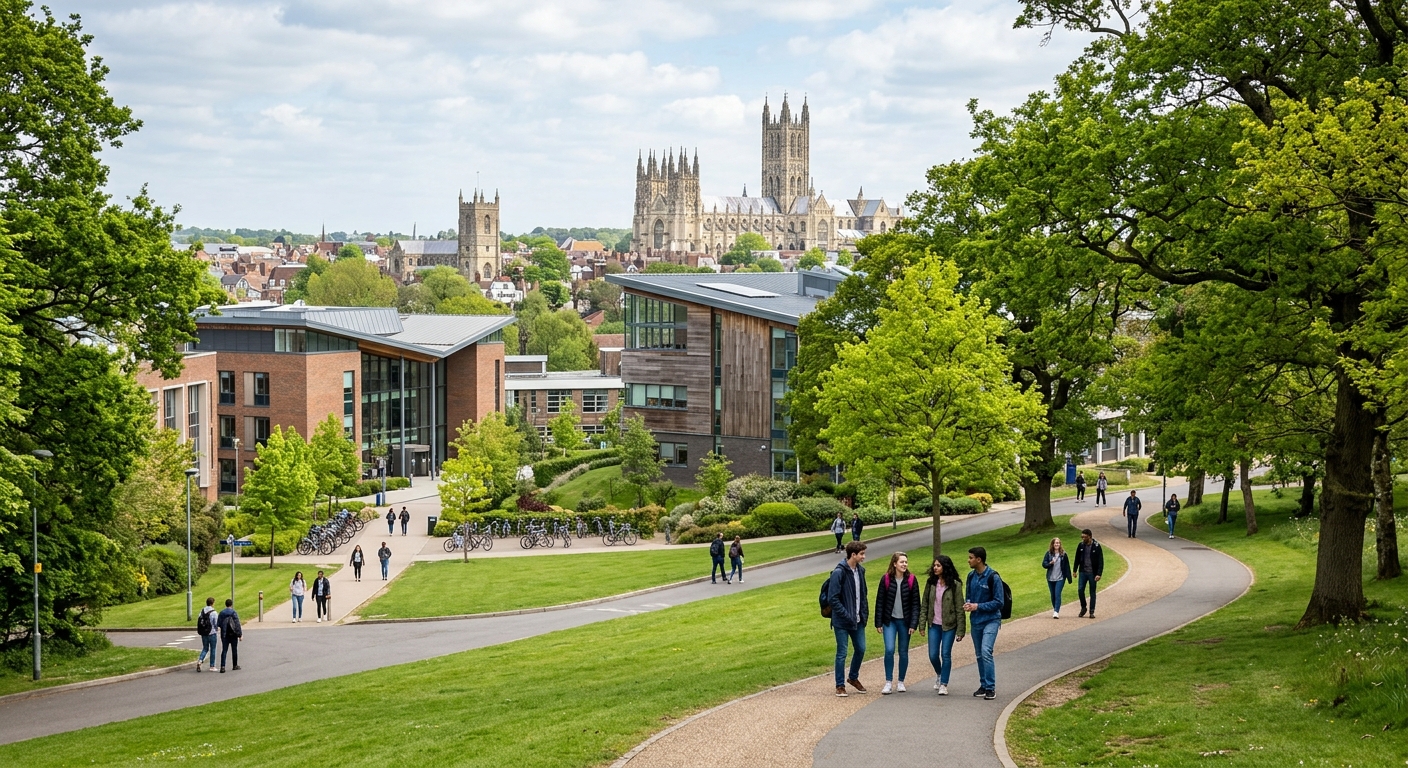
Master of Science in Conservation Science
University of Kent
Conservation Science
Program Overview: MSc Conservation Science at the University of Kent
The MSc Conservation Science at the University of Kent is delivered by the Durrell Institute of Conservation and Ecology (DICE), which received the prestigious Queen's Anniversary Prize for Higher and Further Education in 2019 for its research and training in conservation science. You will collaborate with leading conservation scientists and gain the interdisciplinary knowledge, skills, and practical experience needed to address the global biodiversity crisis.
Drawing on over 30 years of DICE expertise, this program provides state-of-the-art training across the full breadth of conservation disciplines. You will learn approaches for conserving natural habitats and ecosystems where local communities also depend on natural resource use, as well as the skills required to restore threatened species and habitats.
The program offers flexible pathways, including Conservation Biology and Conservation Science and International Wildlife Trade, allowing you to tailor your studies to your interests and career goals. A residential field course at the Durrell Conservation Academy in Jersey and the opportunity to conduct fieldwork anywhere in the world further distinguish this program.
Key Program Highlights
- Delivered by DICE, recipient of the Queen's Anniversary Prize for Higher and Further Education (2019)
- Over 500 MSc graduates from 75 countries since 1991, most in full-time conservation careers
- Residential field course at the Durrell Wildlife Conservation Trust in Jersey
- Access to modern molecular genetics and wildlife ecology laboratories plus the DICE campus field site
Curriculum and Modules
The MSc Conservation Science curriculum combines compulsory core modules with a choice of elective modules, allowing you to specialise according to your interests. You will take all compulsory modules and select two optional modules, culminating in an independent research dissertation written in the format of a paper for publication.
Conservation Science Principles
Core ModuleIntroduces the key concepts underpinning conservation science and biodiversity management. You will explore how natural and social science approaches to conservation differ and how they can be applied in the real world, while developing essential professional skills.
Species Conservation and Population Biology
Core ModuleExamines how to prioritize species conservation when resources are limited, using both quantitative and qualitative methods. Topics include captive breeding, health monitoring, translocation, reintroduction, conservation genetics, and extinction risk assessment.
Spatial Analysis and GIS for Conservation
Core ModuleProvides practical expertise in Geographic Information Systems (GIS) and spatial data analysis for solving conservation problems. You will learn to work with large spatial and remote sensing datasets, gaining highly marketable skills valued by employers in the conservation sector.
Research Dissertation
Core ModuleAn independent research project carried out under the guidance of an experienced academic supervisor. You will review relevant literature, collect or analyse field or laboratory data, and write up your findings as a research paper suitable for publication.
Durrell Field Course (Jersey)
Core ModuleA residential field course at the Durrell Conservation Academy based at the Durrell Wildlife Conservation Trust in Jersey. You will gain insight into cutting-edge population recovery techniques and hands-on experience with conservation practice.
Conservation and Human Communities
Core ModuleExplores the complex relationships between biodiversity conservation and local communities that depend on natural resources. You will develop interdisciplinary solutions that integrate social and ecological perspectives for effective conservation management.
Elective Modules
Admission Requirements
Admission to the MSc Conservation Science program is competitive and considers academic qualifications, relevant experience, and individual circumstances. All applicants are assessed on an individual basis, and professional qualifications or practical experience may also be taken into account. To begin your application, reach out to Uni4Edu for guidance and support.
Academic Requirements
- Undergraduate DegreeA first or second class honours degree (2:1 or above) in Biological Sciences, Conservation, or another relevant subject
- Alternative QualificationsA good honours degree in other subjects together with relevant practical experience in conservation
- Professional ExperienceIn exceptional circumstances, applicants without a first degree may be admitted if their professional career demonstrates academic achievement of a high standard
- International QualificationsEquivalent international qualifications are accepted; contact Uni4Edu for country-specific entry requirements
- Individual AssessmentAll applicants are considered individually; additional qualifications and relevant experience may strengthen your application
English Language Requirements
- IELTSContact Uni4Edu for the current minimum overall and component scores required
- TOEFL iBTContact Uni4Edu for the current minimum score required
- PTE AcademicContact Uni4Edu for the current minimum score required
Required Documents
Application Deadlines
For personalized admission guidance, document verification, and application support, please contact Uni4Edu
Scholarships and Funding
A range of scholarships and funding opportunities are available to support students pursuing the MSc Conservation Science at the University of Kent. From fully funded awards to partial fee waivers, these scholarships recognise academic excellence and commitment to conservation. Contact Uni4Edu for help identifying the best funding options for your profile.
DICE MSc Burnett Scholarships
Fully funded (tuition fees, stipend, and travel expenses)Launched by the Notsew Orm Sands Foundation, these fully funded scholarships support applicants from Africa's KAZA region (Angola, Botswana, Namibia, Zambia, Zimbabwe) to study the taught MSc in Conservation Science at DICE. Applicants must have at least two years of conservation sector experience and a minimum 2:1 degree.
Commonwealth Shared Scholarships
Full tuition fees, return airfare, and living costsAvailable to citizens of eligible Commonwealth countries who hold an unconditional offer for a taught Master's programme at the University of Kent. Candidates must demonstrate academic excellence and financial need. Contact Uni4Edu for eligibility details and application guidance.
For detailed tuition fee information, please contact Uni4Edu — we will guide you through the costs and available funding options for this program.
Career Prospects
DICE programmes combine academic theory with practical field experience to develop graduates who are highly employable within government, NGOs, and the private sector. Since 1991, over 500 MSc graduates from 75 countries have gone on to successful full-time conservation careers, with several winning prestigious international prizes for their achievements.
Typical Career Roles
Where DICE Graduates Work
Rankings and Recognition
The University of Kent is a well-established UK research university with strong rankings across multiple national and international league tables. DICE is recognised as one of the UK's leading research centres dedicated to conserving biodiversity, and its staff are ranked first in the UK for research publications in conservation.
| Subject | Ranking Body | Rank |
|---|---|---|
| Environmental Science | EduRank | #51 in UK |
| Biology | EduRank | #46 in UK |
| Conservation Research Publications | DICE / REF | #1 in UK |
| Overall UK Ranking | EduRank | #38 in UK |
How to Apply
Applying for this program is easy with Uni4Edu. Our team will guide you through every step of the process — from document preparation to final enrolment.
Contact Uni4Edu
Reach out to our team via email or phone. We will assess your profile and confirm your eligibility for this program.
Prepare Your Documents
Our advisors will provide you with a personalised checklist of required documents and help you prepare your application package.
Submit Your Application
Uni4Edu will submit your application on your behalf and keep you updated on its progress throughout the review period.
Receive Your Offer
Once accepted, we will help you understand your offer, arrange visa support if needed, and guide you through the enrolment process.
Similar Programmes

Bachelor's Degree
48 months
Environmental Science

Manhattan University, Bronx, United States
Earliest Intake
June 2026
Gross Tuition
44100 $

Master's & Postgraduate
12 months
Climate Change, Management and Finance MSc
Imperial College London, , United Kingdom
Earliest Intake
January 2027
Gross Tuition
45500 £


Master's & Postgraduate
12 months
Conservation and Land Management
Prifysgol Bangor University, Bangor, United Kingdom
Earliest Intake
May 2027
Gross Tuition
19500 £
Master's & Postgraduate
12 months
Engineering Fluid Mechanics for the Offshore, Coastal and Built Environments MSc
Imperial College London, , United Kingdom
Earliest Intake
January 2027
Gross Tuition
45000 £


Bachelor's Degree
48 months
BSc (Hons) Environmental Studies
San Francisco State University, San Francisco, United States
Earliest Intake
October 2026
Gross Tuition
16400 $



Uni4Edu AI Assistant