Imperial College London
United Kingdom
Imperial College London
London, United Kingdom
Founded
1907
Institution Type
Public Research University
Total Students
19,400+
QS World Ranking
#2 (2026)
Discover Imperial College London: A Global Leader in Science, Engineering and Medicine
Discover Imperial College London: A Global Leader in Science, Engineering and Medicine
Imperial College London is a public research university founded in 1907 by Royal Charter, bringing together the Royal College of Science, the Royal School of Mines, and later the City and Guilds College. Located in the heart of South Kensington, the university focuses exclusively on science, engineering, medicine, and business, making it a uniquely specialised institution in the United Kingdom.
The university is organised into four faculties — Engineering, Natural Sciences, Medicine, and the Imperial College Business School — and operates across nine campuses in London and the South East. With over 50% of its student body coming from outside the UK, Imperial is one of the most international universities in the world, fostering a truly global academic community.
Imperial's graduates and academics include 14 Nobel Prize winners, three Fields Medal winners, and numerous Fellows of the Royal Society and the Royal Academy of Engineering. The university became fully independent from the University of London in 2007, marking its centenary, and continues to be recognised as one of the top universities globally for research impact and graduate employability.
Key Milestones
- 1907: Imperial College of Science and Technology founded by Royal Charter, merging the Royal College of Science and the Royal School of Mines.
- 1988: Imperial merged with St Mary's Hospital Medical School, beginning the formation of the Imperial College School of Medicine.
- 2003: The Imperial College Business School was established and officially opened by Queen Elizabeth II.
- 2007: Imperial became an independent university, leaving the University of London on its centenary year.
Academic Structure and Faculties at Imperial College London
Academic Structure and Faculties at Imperial College London
Imperial College London is organised into four world-leading faculties, each encompassing multiple departments that deliver research-led teaching across science, engineering, medicine, and business. The university encourages interdisciplinary collaboration and integrates entrepreneurship across all its programmes.
Faculty of Engineering
One of the largest engineering faculties in Europe, covering disciplines from aeronautics to bioengineering, with strong ties to industry and a focus on solving real-world challenges.
- Mechanical Engineering
- Electrical and Electronic Engineering
- Computing
Faculty of Natural Sciences
Brings together departments spanning the physical, mathematical, and life sciences, driving fundamental research and discovery with global impact.
- Physics
- Mathematics
- Chemistry
Faculty of Medicine
Formed through mergers with leading London medical schools, the Faculty operates across six teaching hospitals and is a powerhouse for clinical research and medical education.
- Medicine (MBBS/BSc)
- Biomedical Science
- Public Health
Imperial College Business School
A triple-accredited business school that blends scientific rigour with business education, consistently ranked among the top business schools in Europe and the world.
- MBA
- MSc Finance
- MSc Management
Dyson School of Design Engineering
Established in 2014 with support from the James Dyson Foundation, this school trains creative engineers to develop innovative solutions through human-centred design.
- MEng Design Engineering
- MA Innovation Design Engineering
- MRes Medical Device Design and Entrepreneurship
National Heart and Lung Institute
A leading centre for cardiovascular and respiratory research within the Faculty of Medicine, conducting pioneering work in heart, lung, and vascular disease.
- MSc Genomic Medicine
- MRes Respiratory and Cardiovascular Science
- PhD Cardiology
Admission Requirements for Imperial College London
Admission Requirements for Imperial College London
Undergraduate Admission
- A-LevelsA*A*A to AAA depending on programme, with specific subject requirements
- IB Diploma38-42 points overall with 6-7 in Higher Level subjects
- English Language (Standard)IELTS 6.5 overall (min 6.0 per component) or TOEFL iBT 92 (min 20 per section)
- English Language (Higher)IELTS 7.0 overall (min 6.5 per component) or TOEFL iBT 100 (min 22 per section)
- Admissions TestsMay be required depending on programme (e.g. ESAT, UCAT, STEP)
Postgraduate Admission
- Academic RequirementMinimum 2:1 honours degree (or international equivalent) in a relevant subject
- English LanguageIELTS 6.5-7.0 overall depending on programme
- ReferencesTwo academic or professional references required
- Supporting DocumentsPersonal statement, CV, academic transcripts, and research proposal (for research degrees)
- Standardised TestsGMAT/GRE required for MBA and some Business School programmes
Deadline for undergraduate Medicine (MBBS) applications via UCAS.
Final deadline for all other undergraduate programme applications via UCAS for equal consideration.
Deadlines vary by department and programme. Early application is strongly recommended as popular courses fill quickly.
International students are advised to apply by this date to allow sufficient time for CAS issuance and UK student visa processing.
Tuition Fees and Scholarships at Imperial College London
Tuition Fees and Scholarships at Imperial College London
Tuition fees at Imperial vary depending on your fee status (Home or Overseas) and your chosen programme. Home fees are capped by the UK government, while overseas fees are set by Imperial and differ by course. All figures below are approximate annual amounts for the 2026-27 academic year.
| Fee Category | Home Students (GBP) | Overseas Students (GBP) |
|---|---|---|
| Undergraduate Tuition | GBP 9,790 | GBP 38,000 - GBP 54,500 |
| Postgraduate Taught (MSc) | GBP 15,500 - GBP 44,000 | GBP 22,000 - GBP 54,500 |
| MBA Programme | GBP 44,000 | GBP 44,000 |
| Estimated Living Costs (London) | GBP 12,000 - GBP 20,000 | GBP 12,000 - GBP 20,000 |
| Total | Contact the university for programme-specific totals | Contact the university for programme-specific totals |
Imperial Inspires Scholarships
Imperial's transformative scholarships programme designed to support talented students from around the globe in accessing an Imperial education, covering tuition fees and living costs.
- Eligibility: UK and international undergraduate students based on academic merit and financial need
- Award Value: Varies; can include full tuition fee coverage and living cost support
- Application: Use Imperial's scholarships search tool; some are automatic, others require a separate application
President's PhD Scholarships
Fully funded scholarships for outstanding doctoral candidates, covering tuition fees and providing a generous stipend for living expenses throughout the PhD programme.
- Eligibility: Outstanding applicants to PhD programmes across all four faculties
- Award Value: Full tuition fees plus an enhanced stipend for up to 3.5 years
- Selection Criteria: Academic excellence, research potential, and leadership qualities
Campus and Facilities at Imperial College London
Campus and Facilities at Imperial College London
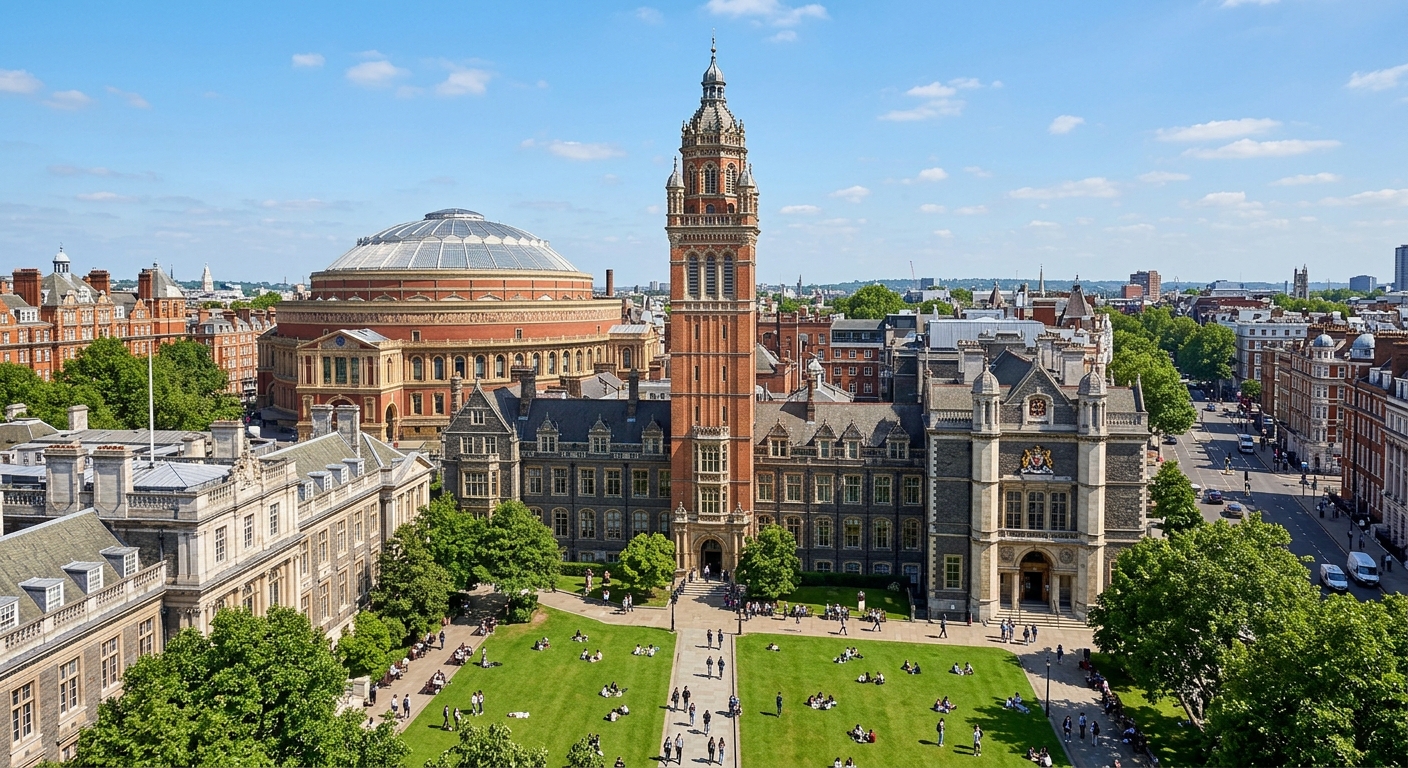
Imperial's main campus is located in South Kensington, in the cultural district known as Albertopolis. The university also operates campuses at White City, Silwood Park in Berkshire, and across multiple hospital sites in London, offering students access to cutting-edge research facilities in an inspiring setting.
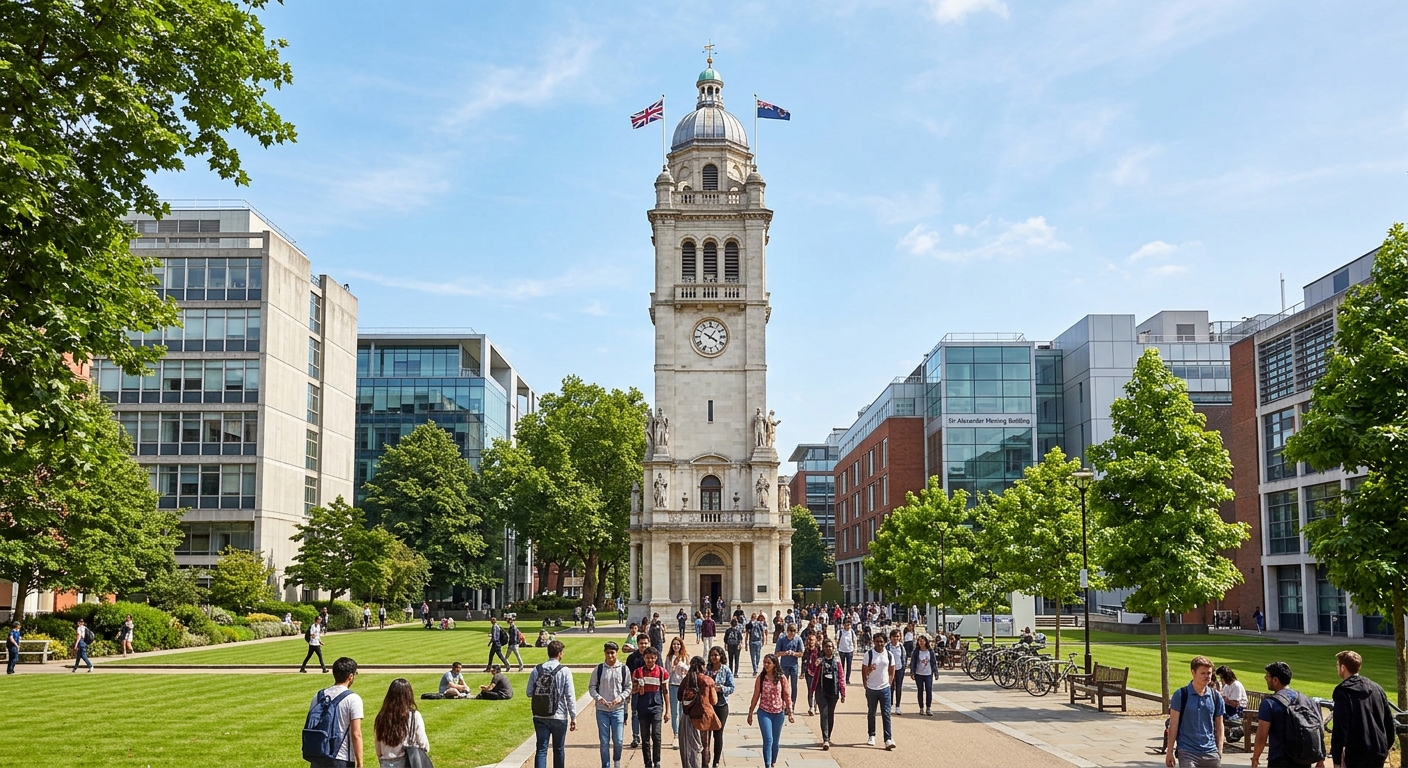
The iconic Queen's Tower stands at the heart of campus, overlooking Queen's Lawn and surrounded by world-class teaching and research facilities.
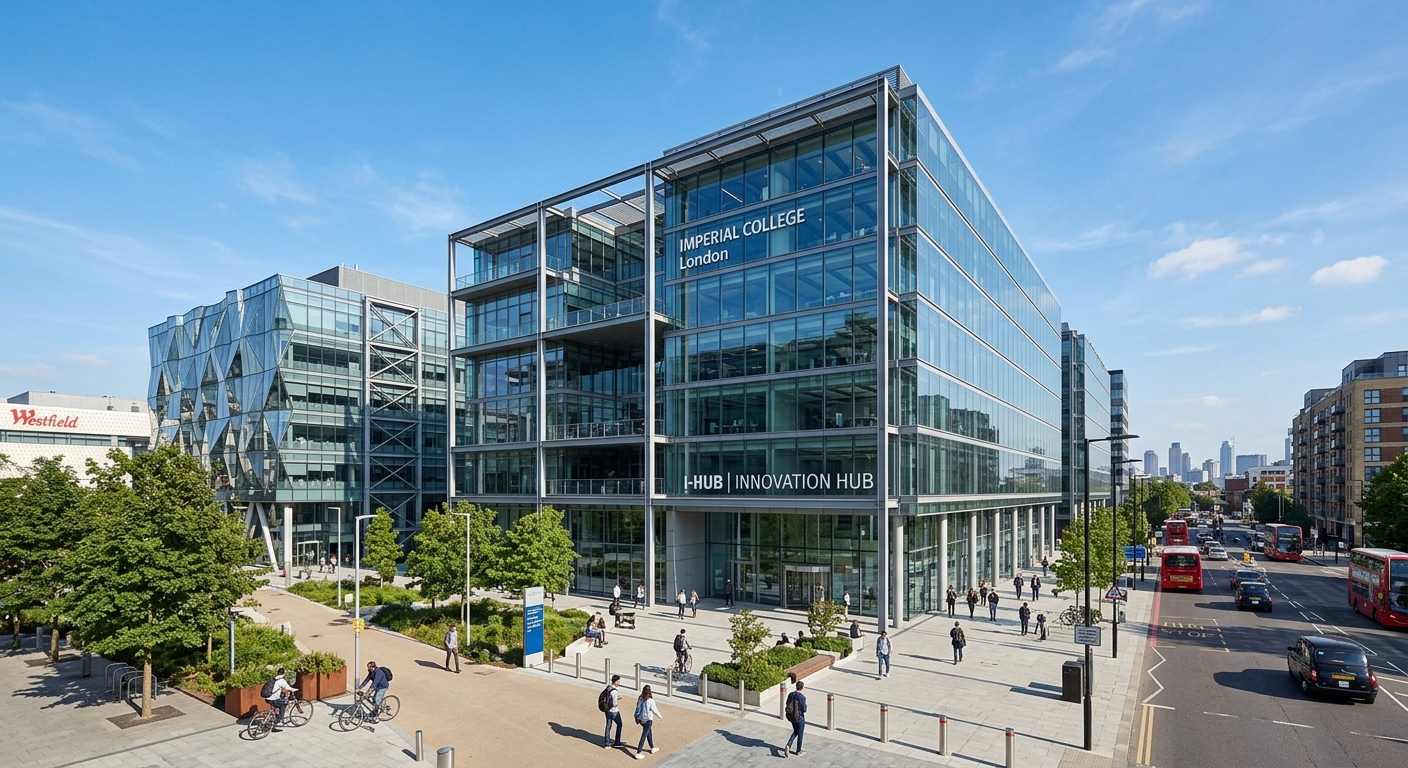
Imperial's expanding White City campus houses research and innovation facilities, including plans for a new AI campus with a 12-storey building.
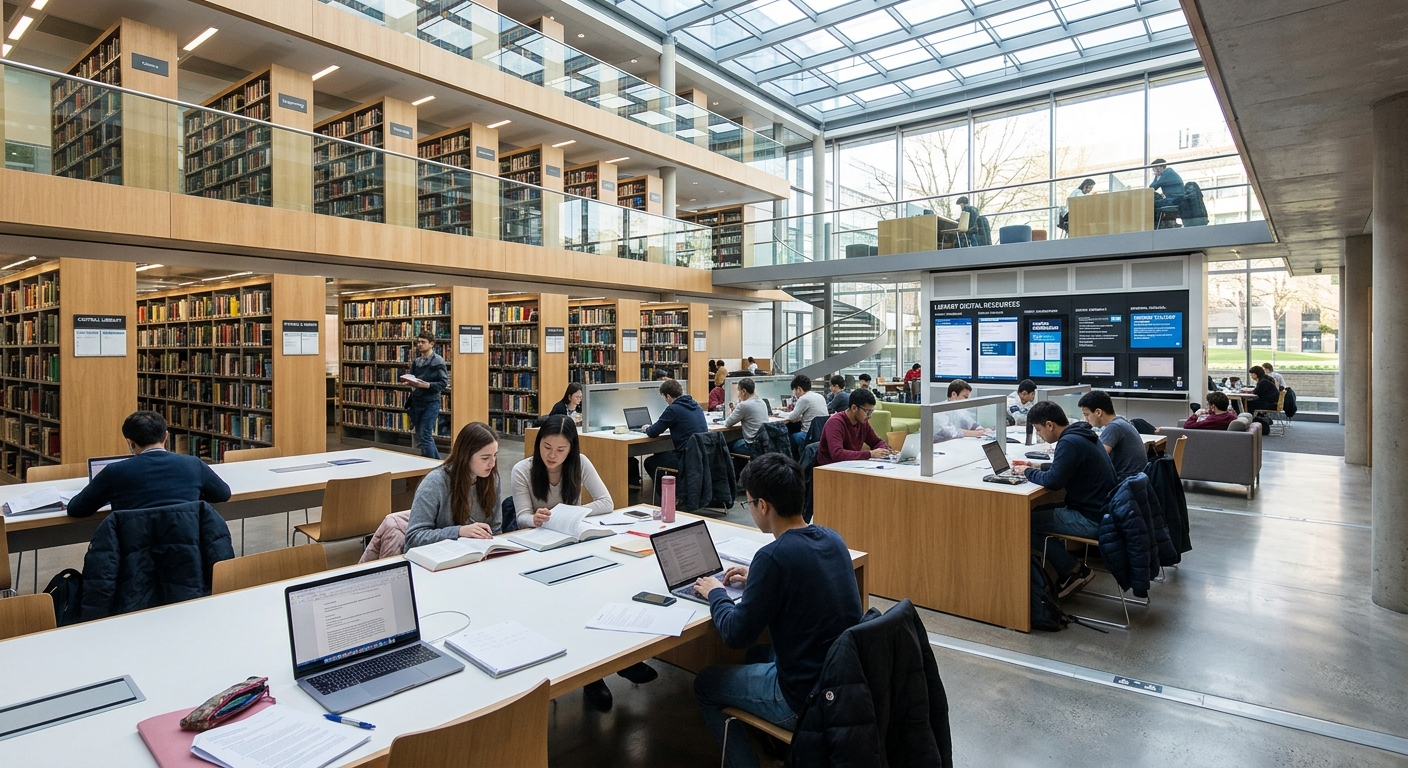
The main library next to Queen's Lawn provides extensive study spaces, digital resources, and access to the university's comprehensive research collections.
Housing and Student Services
Accommodation
Imperial owns and manages ten halls of residence across Inner London, Acton, and Ascot. Housing is guaranteed for first-year undergraduate students.
- Guaranteed first-year undergraduate accommodation
- Halls in South Kensington, Acton, and surrounding areas
- Postgraduate housing available at Silwood Park campus
Student Hub and Support
The Student Hub consolidates key support services into a single accessible location, offering help with finances, exchange programmes, exam arrangements, and more.
- Dedicated Student Hub for centralised support
- Enterprise Lab used by one in eight students
- Libraries on every campus including Fleming Library at St Mary's
Student Life at Imperial College London
Student Life at Imperial College London
Imperial offers a vibrant student experience in one of the world's most dynamic cities. With over 380 student clubs and societies, a strong culture of entrepreneurship, and London's cultural riches on the doorstep, there is no shortage of ways to get involved beyond the lecture hall.
Living in London: Imperial's Location Advantage
Living in London: Imperial's Location Advantage
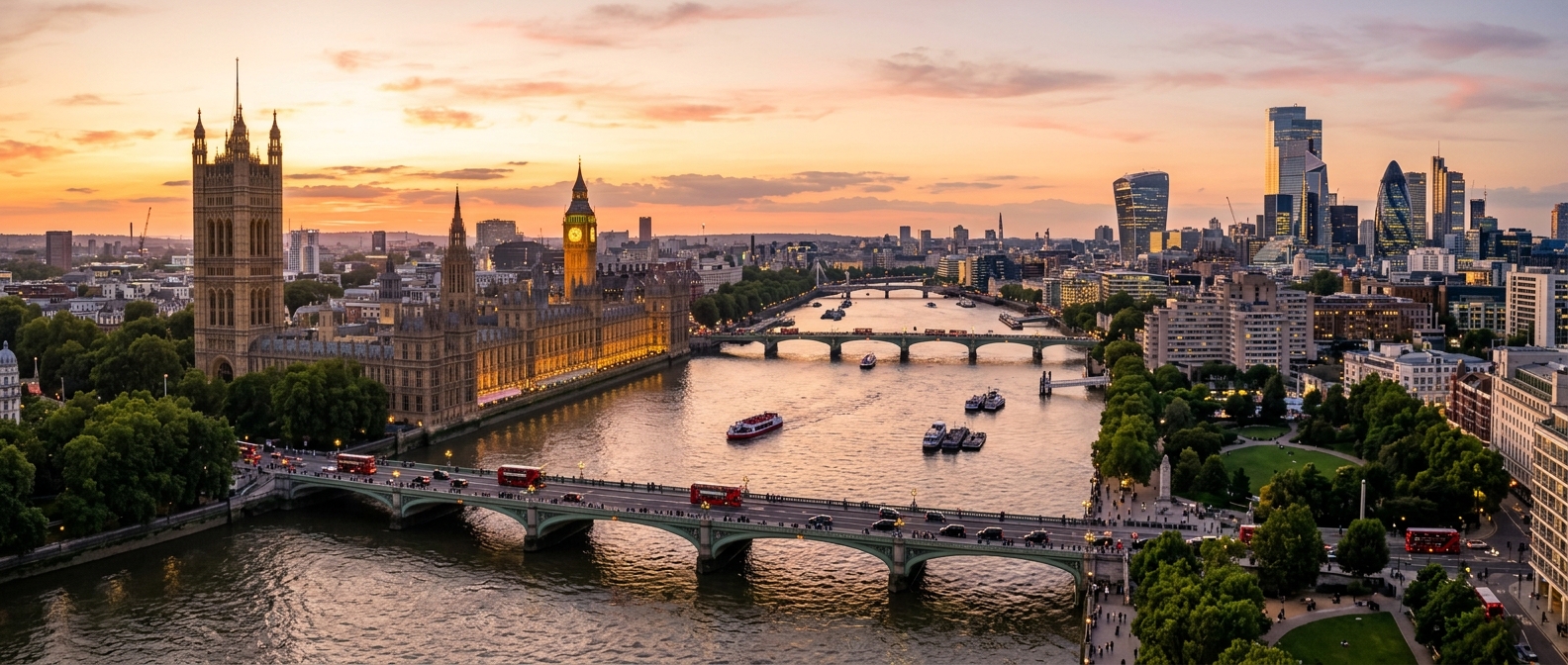
London, United Kingdom
London is a global hub where industry, policy, art, entertainment, and cultures from around the world converge. As an Imperial student in South Kensington, you are at the centre of it all — surrounded by museums, parks, and excellent transport links, with Hyde Park and Kensington Gardens just a 10-minute walk from campus.
Cultural Neighbours
Imperial sits alongside the Natural History Museum, Science Museum, Victoria and Albert Museum, the Royal Albert Hall, and the Royal Colleges of Art and Music.
Transport Connections
South Kensington is served by three London Underground lines and numerous bus routes, making it easy to travel across the city and beyond.
Green Spaces
Hyde Park and Kensington Gardens are within walking distance, offering expansive green spaces for relaxation, sport, and socialising.
Global Career Hub
London is home to the headquarters of major global companies, financial institutions, hospitals, and tech firms, providing unparalleled internship and career opportunities.
Career Outcomes and Alumni Network
Career Outcomes and Alumni Network
Top Employers of Imperial Graduates
Practical Information for Prospective Students
Practical Information for Prospective Students
For International Students
Imperial's International Student Support team assists with Student visa applications, CAS issuance, and compliance guidance. International students should apply by 30 June to allow sufficient visa processing time.
Pre-sessional English language courses are available for students who need to improve their English proficiency before starting their degree programme at Imperial.
After completing your degree, international graduates may be eligible for the UK Graduate Route visa, allowing you to stay and work in the UK for up to two years after graduation.
Key Contacts
- +90 5435286292
- +44 7868736984
- [email protected]
- [email protected]
Imperial College London World University Rankings
Imperial College London World University Rankings
Imperial College London is consistently ranked among the top 10 universities in the world and is the highest-ranked university in the UK and Europe in the QS World University Rankings. The university's strength in research quality, graduate employability, and international outlook underpins its elite global standing.
| Subject | Ranking Body | Rank |
|---|---|---|
| Engineering and Technology | QS World Rankings by Subject | Top 10 Globally |
| Clinical and Health Sciences | Times Higher Education | Top 10 Globally |
| Natural Sciences | QS World Rankings by Subject | Top 10 Globally |
| Business and Management | Financial Times / QS Rankings | Top 20 Globally |


Features
Imperial College London was founded in 1907 and stands today as a highly regarded public research university centered on science, engineering, medicine, and business. The institution currently educates approximately 22,500 students enrolled in a wide range of undergraduate and postgraduate programs. To support this extensive academic environment and its global research initiatives, the university employs around 8,700 academic and administrative staff members.

Accommodation
Off-Campus Accommodations Students wishing to live off-campus need to research availability on their own, and should arrive well before the start of term to do so.

Work While Studying
See guidelines on working while studying here.

Co-op/Internship Participation
Even if you do NOT meet our minimum English requirement (IELTS or TOEFL), you still can get conditionally accepted in the program of your choice with the condition of completing our English program prior to starting your chosen program.
Featured Programmes




Average Time To Receive Acceptance Letter
May - January
6 week
Location
Exhibition Rd, South Kensington, London SW7 2AZ, United Kingdom

Map not found.

Uni4Edu AI Assistant