
Conservation and Land Management
Bangor , United Kingdom

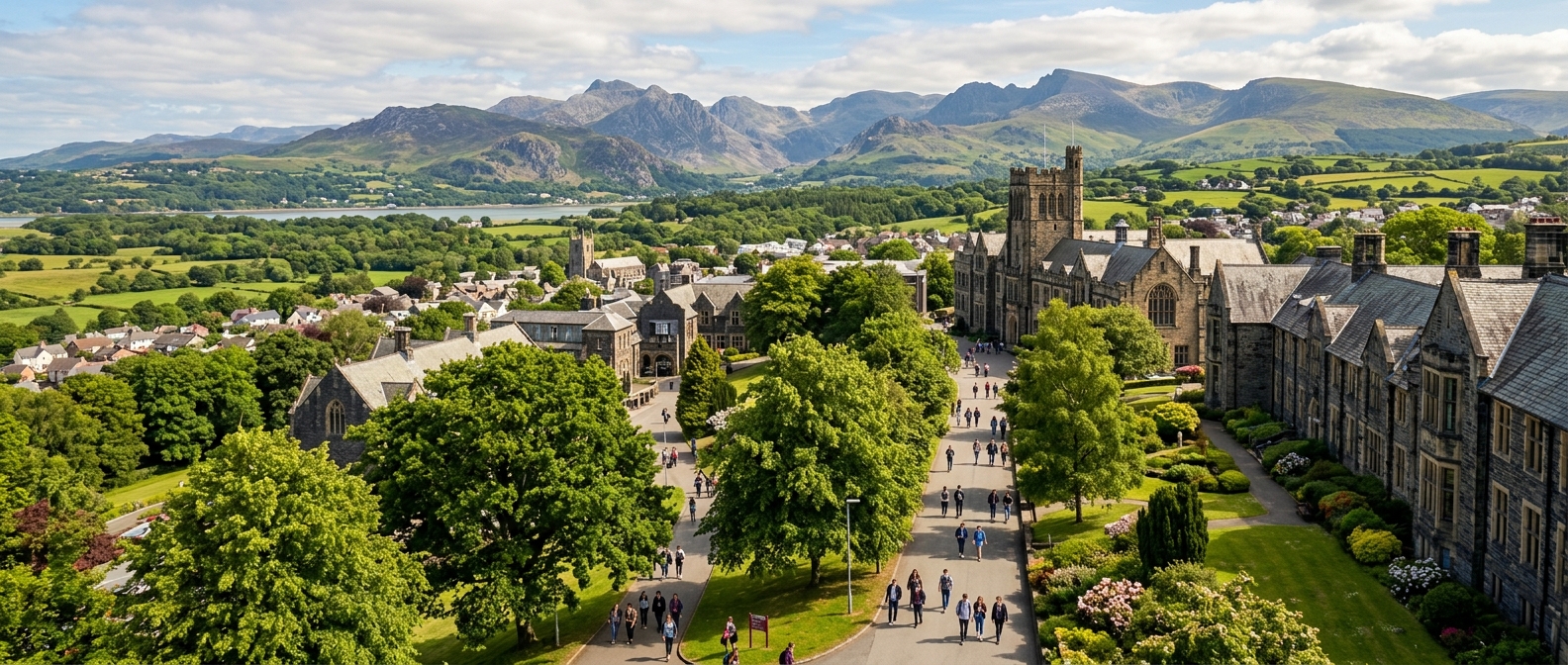
MSc Conservation and Land Management
Prifysgol Bangor University
Conservation and Land Management
MSc Conservation and Land Management at Bangor University
The MSc Conservation and Land Management at Bangor University is a one-year programme designed for students with a strong interest in land use who want to deepen their knowledge of conservation issues. The course provides a broad and balanced understanding of the fundamental science underpinning conservation and land use, addressing issues concerned with the sustainable use of the countryside.
The programme examines habitats, wildlife, landscapes, and the natural and human factors influencing them. It also explores how economic activities such as farming and forestry can be managed in an environmentally acceptable way, and how human enjoyment of the countryside can be incorporated within an integrated land use approach.
This MSc is embedded within the Conservation at Bangor research group and has close links with conservation-related research across the College of Science and Engineering. The programme benefits from strong research links with organisations such as the Environment Agency, the RSPB, Coed Cymru, and local land-based industries.
Key Programme Highlights
- Located in North Wales between Snowdonia and the Menai Strait, offering unparalleled access to diverse habitats and landscapes for fieldwork
- Embedded within the Conservation at Bangor research group with strong links to national and international conservation organisations
- Combines ecological science with economic, social, and policy perspectives on land management and sustainability
- Supervised dissertation phase allowing specialisation in your chosen area of conservation research
Curriculum and Modules
The programme is structured in two parts: Part 1 (120 credits) runs from September to May and consists of four taught modules, a field visit, and a research methods module component. Part 2 (60 credits) is the dissertation phase running from end of May to September, providing a supervised project for further specialisation.
Conservation Science
20 creditsExamines the current and emerging drivers of biodiversity loss worldwide, exploring the relative roles of ecology, economics, and social science in conservation. Topics include the focus of conservation attention in a post-wild world and market-like mechanisms in conservation policy.
Land Management and Sustainability
20 creditsExplores how farming, forestry, and other economic activities can be managed in environmentally sustainable ways. Covers integrated land use approaches that balance productivity with habitat and landscape conservation.
Research Methods
20 creditsProvides an introduction to hypothesis generation, sampling, study design, spatial methods, social research methods, and quantitative and qualitative analysis. Includes practicals and field visits to illustrate research principles, preparing students for the dissertation phase.
Field Visit Module
20 creditsAn annual programme of scientific visits related to conservation and land management. Students engage with different conservation organisations to understand their management approaches, challenges, and practical field techniques.
Habitat and Wildlife Ecology
20 creditsFocuses on the ecology of habitats, wildlife populations, and landscapes, examining the natural and human factors that influence them. Covers species conservation, habitat restoration, and ecological assessment methods.
MSc Dissertation
60 creditsA supervised research project allowing students to specialise in their chosen field. Dissertation topics are related to individual interests and must demonstrate wide reading, critical analysis, and appropriate use of advanced techniques.
Elective and Specialisation Options
Admission Requirements
The MSc Conservation and Land Management programme welcomes applicants from a range of academic backgrounds. Applications from mature applicants with relevant professional experience in forestry, agriculture, conservation, or land use are actively encouraged.
Academic Requirements
- Minimum Degree ClassificationAt least a 2:2 (Lower Second Class Honours) undergraduate degree in a relevant subject
- Relevant Subject AreasBiology, agriculture, environmental studies, geography, economics, law, social sciences, or psychology
- Professional ExperienceMature applicants with relevant experience in forestry, agriculture, conservation, or land use are actively encouraged to apply
- Non-Standard BackgroundsApplications from people with other backgrounds wishing to develop an understanding of rural development issues are welcomed and considered individually
- International QualificationsEquivalent international qualifications are accepted; contact Uni4Edu for country-specific requirements
English Language Requirements
- IELTSOverall 6.0 with no element below 5.5
- TOEFL iBTContact Uni4Edu for accepted equivalent score
- PTE AcademicContact Uni4Edu for accepted equivalent score
Required Documents
Application Deadlines
For personalized admission guidance, document verification, and application support, please contact Uni4Edu
Scholarships and Funding
Bangor University offers a range of scholarships and financial support to help international and home students fund their postgraduate studies. Contact Uni4Edu for personalised guidance on available funding opportunities for this programme.
Bangor University International Scholarship
Up to GBP 3,000Available for international postgraduate taught students. All international applicants are automatically considered based on criteria including academic performance, personal statement, and references. No separate application is required.
Commonwealth Shared Scholarships
Full funding (tuition, living costs, travel)Jointly funded by Bangor University and the Commonwealth Scholarship Commission, these scholarships support students from eligible Commonwealth countries pursuing taught Masters programmes at Bangor.
Inclusive Bangor Scholarships
Up to GBP 9,500Supports graduating students continuing their studies at Bangor at Masters level, particularly in areas where student numbers show underrepresentation. One scholarship per College is awarded, covering payment towards tuition fees.
For detailed tuition fee information, please contact Uni4Edu — we will guide you through the costs and available funding options for this program.
Career Prospects
Graduates of the MSc Conservation and Land Management programme have gone on to successful careers with conservation agencies, NGOs, government organisations, and academic institutions both in the UK and internationally. The programme has also produced scientists working in climate change, sustainable agriculture, renewable energy, and related fields.
Potential Career Roles
Typical Employers
Rankings and Recognition
Bangor University is recognised internationally for its research and teaching excellence, particularly in environmental and natural sciences. Founded in 1884, the university has over 140 years of academic heritage and is consistently ranked among the top universities in the UK and Wales.
| Subject | Ranking Body | Rank |
|---|---|---|
| Agriculture and Forestry | QS World University Rankings by Subject | Top 150 |
| Environmental Sciences | QS World University Rankings by Subject | Top 350 |
| Psychology | QS World University Rankings by Subject | Top 350 |
| Biology | QS World University Rankings by Subject | Top 650 |
How to Apply
Applying for this program is easy with Uni4Edu. Our team will guide you through every step of the process — from document preparation to final enrolment.
Contact Uni4Edu
Reach out to our team via email or phone. We will assess your profile and confirm your eligibility for this program.
Prepare Your Documents
Our advisors will provide you with a personalised checklist of required documents and help you prepare your application package.
Submit Your Application
Uni4Edu will submit your application on your behalf and keep you updated on its progress throughout the review period.
Receive Your Offer
Once accepted, we will help you understand your offer, arrange visa support if needed, and guide you through the enrolment process.
Similar Programmes


Bachelor's Degree
48 months
Environmental Science

Manhattan University, Bronx, United States
Earliest Intake
June 2026
Gross Tuition
44100 $

Master's & Postgraduate
12 months
Climate Change, Management and Finance MSc
Imperial College London, , United Kingdom
Earliest Intake
January 2027
Gross Tuition
45500 £
Master's & Postgraduate
12 months
Engineering Fluid Mechanics for the Offshore, Coastal and Built Environments MSc
Imperial College London, , United Kingdom
Earliest Intake
January 2027
Gross Tuition
45000 £


Bachelor's Degree
48 months
BSc (Hons) Environmental Studies
San Francisco State University, San Francisco, United States
Earliest Intake
October 2026
Gross Tuition
16400 $

Master's & Postgraduate
12 months
Environmental Data Science and Machine Learning MSc
Imperial College London, , United Kingdom
Earliest Intake
January 2027
Gross Tuition
46000 £



Uni4Edu AI Assistant