
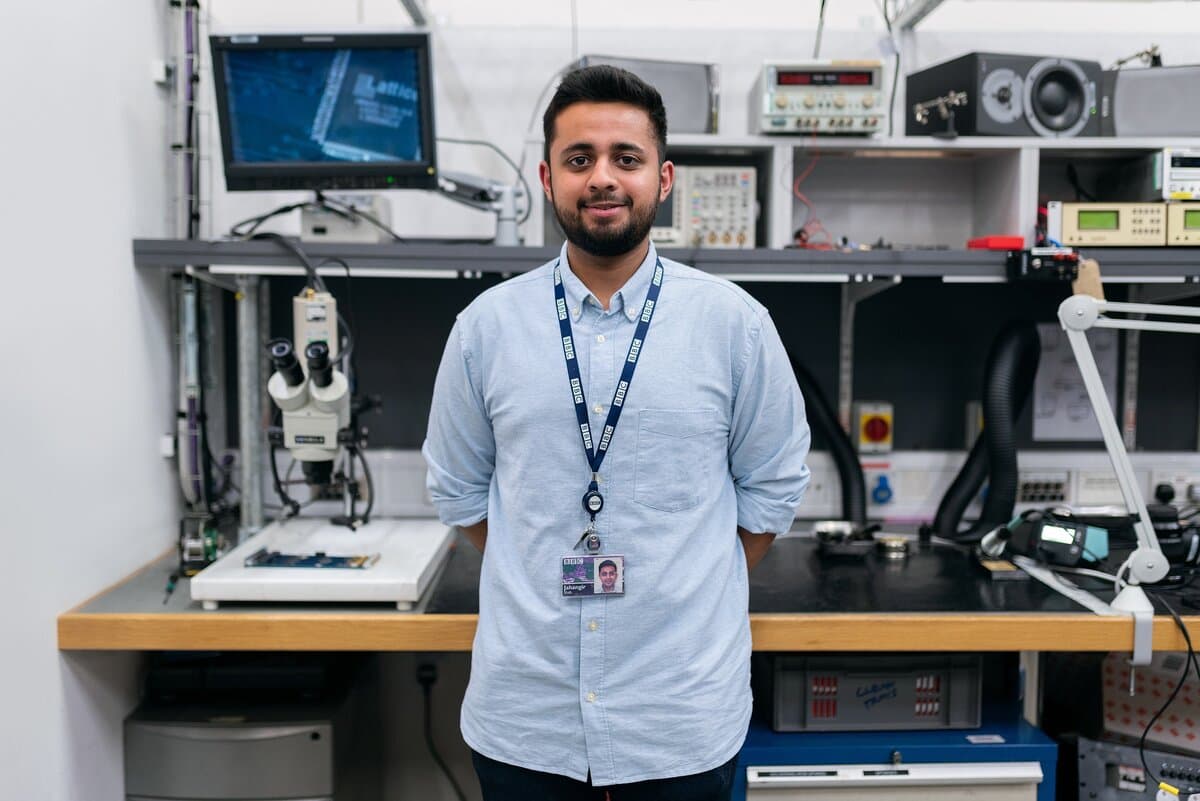
Bioengineering
Central / Historical Campus, Italy
Master's Degree in Bioengineering (Laurea Magistrale in Bioingegneria)
University of Messina (Università degli Studi di Messina)
Biomedical Engineering / Bioengineering
Program Overview: Master's in Bioengineering at UniME
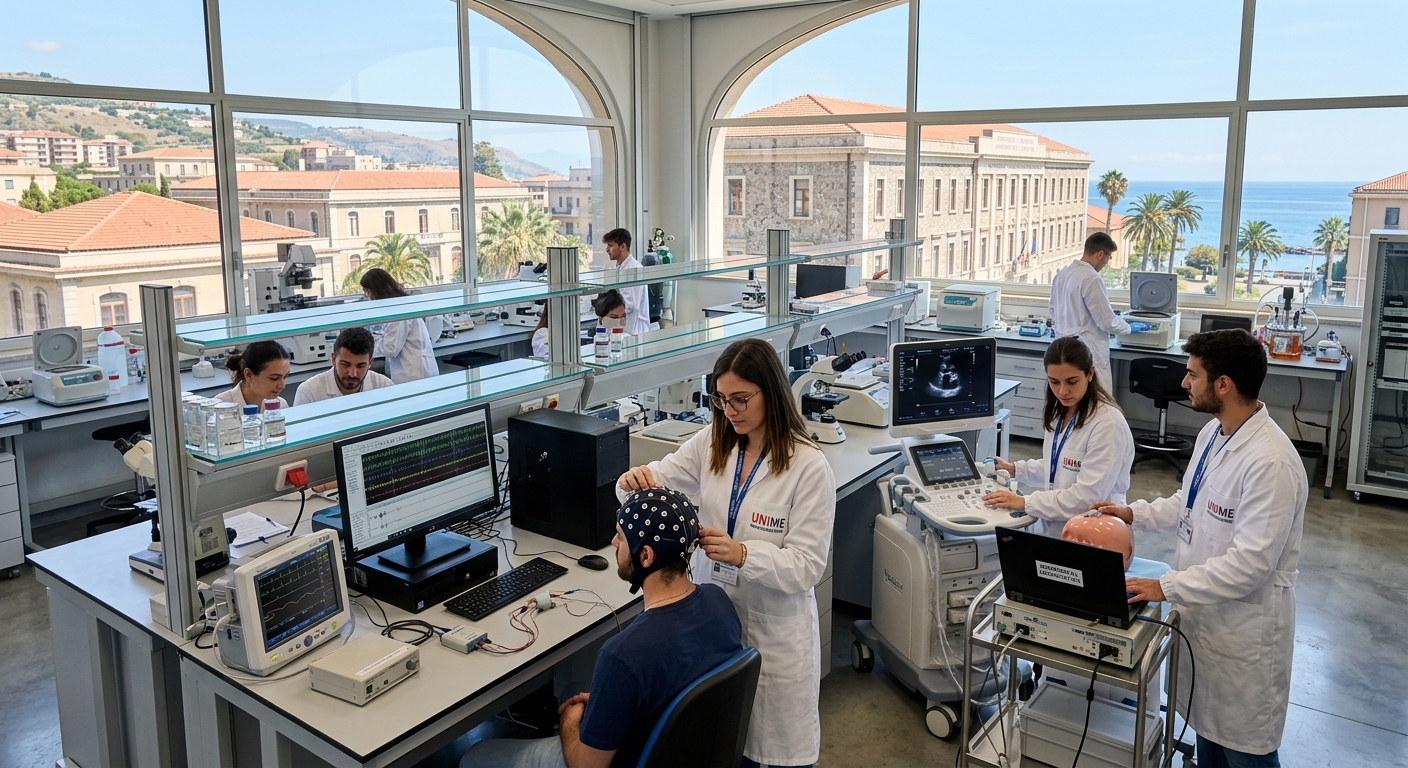
The Master's Degree in Bioengineering (Laurea Magistrale, class LM-21) at the University of Messina is designed to train biomedical engineers with strong methodological foundations and high professional qualifications. The program focuses on designing and developing products and systems in the broader field of bioengineering, with a special emphasis on solutions and technologies addressing the complex challenges related to the human brain and nervous system.
Students develop an interdisciplinary education that bridges Information Engineering and Industrial Engineering on one side, and Medical-Biological and legal-regulatory fields on the other. This comprehensive approach prepares graduates for diverse career paths in both public and private sectors, including research institutions, industry, and healthcare organizations.
Housed within the Department of Engineering at UniME, one of Italy's oldest universities founded in 1548, this program completes a full bioengineering educational pathway that begins with the Bachelor's in Biomedical Engineering (L-8) and can continue into the PhD program in Bioengineering Applied to Medical Sciences. The program features open admission and is coordinated by Professor Nicola Donato.
Key Program Highlights
- Specialized focus on neuroengineering, brain-computer interfaces, and nervous system technologies, setting this program apart within the Italian bioengineering landscape
- Interdisciplinary curriculum integrating information engineering, industrial engineering, medical-biological sciences, and legal-regulatory frameworks
- Hands-on learning through laboratory work, simulations, design projects, and internship opportunities with healthcare and industry partners
- Seamless progression pathway from Bachelor's through Master's to PhD in Bioengineering Applied to Medical Sciences within the same university
Curriculum and Modules
The two-year, 120-ECTS curriculum is structured to provide a strong foundation in biomedical diagnostics, electrical measurements, neuroengineering, and medical device technology. Year one focuses on core methodologies and principles, while year two advances into specialized topics such as bio-inspired robotics and rehabilitation engineering, culminating in a final thesis project.
Methodologies for Medical Diagnostics (Metodologie per la Diagnostica Medica)
12 ECTSA comprehensive module covering advanced diagnostic methodologies used in medical practice, including imaging techniques, signal processing for clinical data, and the design of diagnostic systems for healthcare applications.
Electrical Measurements for Bioengineering (Misure Elettriche per la Bioingegneria)
9 ECTSThis module covers the design and application of electrical measurement systems in bioengineering contexts, including sensor technologies, signal acquisition, calibration, and measurement uncertainty analysis for biomedical instrumentation.
Neuroengineering and Rehabilitation (Neuroingegneria e Riabilitazione)
9 ECTSExplores the intersection of engineering and neuroscience, focusing on neural interfaces, brain-computer interaction, neuroprosthetics, and assistive technologies for rehabilitation of patients with neurological conditions.
Bio-Inspired Robotics (Robotica Bioispirata)
6 ECTSExamines the principles of robotics systems inspired by biological organisms, covering topics such as biomechanics, soft robotics, actuator design, and applications in surgical assistance and rehabilitation.
Diagnostic and Therapeutic Instrumentation (Strumentazione Diagnostica e Terapeutica)
9 ECTSFocuses on the design, operation, and evaluation of medical instrumentation used for both diagnostic and therapeutic purposes, including ultrasound systems, electrophysiological devices, and therapeutic delivery systems.
Principles of Neurological Sciences (Principi di Scienze Neurologiche)
6 ECTSProvides bioengineering students with essential knowledge of the human nervous system, neuroanatomy, neurophysiology, and common neurological pathologies, forming the medical foundation for neuroengineering applications.
Elective Modules
Admission Requirements
The Master's in Bioengineering at UniME has open admission (numero aperto), meaning there is no fixed cap on student numbers. However, all applicants must meet specific curricular requirements and pass a personal preparation assessment conducted by a committee appointed by the program. Reach out to Uni4Edu for personalized guidance on your eligibility and application.
Academic Requirements
- Primary QualificationBachelor's degree (Laurea Triennale) in Biomedical Engineering (class L-8), Electronic Engineering (L-8), or Information Engineering (L-8), or equivalent foreign qualification recognized as suitable
- Foundational Sciences RequirementMinimum 18 ECTS in foundational disciplines including Mathematics, Physics, Chemistry, Computer Science, Anatomy, or Physiology (sectors MAT/02, MAT/05, FIS/01, FIS/03, CHIM/07, INF/01, ING-INF/05, BIO/16, BIO/09)
- Engineering Core RequirementMinimum 18 ECTS in engineering disciplines (sectors ING-INF/06, ING-IND/34, ING-INF/07, ING-IND/12, ING-IND/22, ING-INF/04, ING-INF/01, ING-INF/03, ING-IND/31), with at least 6 ECTS in Bioengineering-specific sectors
- Personal Preparation AssessmentVerification of personal preparation conducted by a program committee before enrollment, as outlined in the program's academic regulations
- International ApplicantsHolders of foreign qualifications must obtain an admission letter issued through the specific pre-evaluation procedure. Contact Uni4Edu for assistance with this process.
Language Requirements
- Italian ProficiencyB2 level or equivalent is recommended, as the program is taught entirely in Italian
- English ProficiencyEnglish language skills (6 ECTS) are part of the curriculum; a B2 level is expected by graduation
- Language CertificationAccepted certifications include CILS, CELI, or PLIDA for Italian; contact Uni4Edu for specific accepted tests and minimum scores
Required Documents
Application Deadlines
For personalized admission guidance, document verification, and application support, please contact Uni4Edu
Scholarships and Funding
The University of Messina and regional authorities in Sicily offer several financial support options for both Italian and international students. These include merit-based scholarships, need-based grants, and housing assistance programs. Contact Uni4Edu for guidance on which funding opportunities best match your profile.
ERSU Sicily Regional Grant (Borsa di Studio ERSU)
A need-based grant administered by the regional authority ERSU Messina, covering financial support for living expenses and, for eligible students, accommodation allowances. Awards are based on family income (ISEE) and academic merit criteria.
For detailed tuition fee information, please contact Uni4Edu — we will guide you through the costs and available funding options for this program.
Career Prospects
Graduates of the Master's in Bioengineering from UniME are qualified to work as biomedical engineers (ISTAT code 2.2.1.8.0) in a wide range of public and private settings. The program prepares you for roles in healthcare technology, medical device design, clinical engineering, and research, with the option to continue into doctoral studies or enter the profession after passing the Italian state examination for engineers.
Potential Career Roles
Typical Employer Sectors
Rankings and Recognition
The University of Messina is a historically significant institution founded in 1548 and recognized internationally for its research output, particularly in life sciences and medical technologies. UniME consistently appears in major global university rankings and has been noted for the quality of its faculty research citations and its commitment to sustainability and health-related initiatives.
| Subject | Ranking Body | Rank |
|---|---|---|
| Life Sciences and Medicine | QS World University Rankings by Subject | #451-500 |
| Medical Technologies | ARWU (Shanghai Ranking) | #201-300 |
| Electrical and Electronic Engineering | ARWU (Shanghai Ranking) | #301-400 |
| Pharmacy and Pharmacology | QS World University Rankings by Subject | #251-300 |
How to Apply
Applying for this program is easy with Uni4Edu. Our team will guide you through every step of the process — from document preparation to final enrolment.
Contact Uni4Edu
Reach out to our team via email or phone. We will assess your profile and confirm your eligibility for this program.
Prepare Your Documents
Our advisors will provide you with a personalised checklist of required documents and help you prepare your application package.
Submit Your Application
Uni4Edu will submit your application on your behalf and keep you updated on its progress throughout the review period.
Receive Your Offer
Once accepted, we will help you understand your offer, arrange visa support if needed, and guide you through the enrolment process.
Similar Programmes

Master's & Postgraduate
12 months
Biotechnology and Bioengineering\t

University of Kent, Canterbury, United Kingdom
Earliest Intake
October 2026
Gross Tuition
23500 £

Bachelor's Degree
48 months
Applied Biotechnology (BS)
University Of Arizona, Tucson, United States
Earliest Intake
May 2027
Gross Tuition
39958 $
Master's & Postgraduate
12 months
Medical Device Design and Entrepreneurship MSc
Imperial College London, , United Kingdom
Earliest Intake
January 2027
Gross Tuition
45000 £
Bachelor's Degree
48 months
Molecular Biology, Genetics and Bioengineering
Sabancı University, Tuzla, Turkey
Earliest Intake
December 2026
Gross Tuition
36500 $
Master's & Postgraduate
12 months
Neurotechnology MRes
Imperial College London, , United Kingdom
Earliest Intake
January 2027
Gross Tuition
45000 £



Uni4Edu AI Assistant
