

Earthquake Engineering MSc
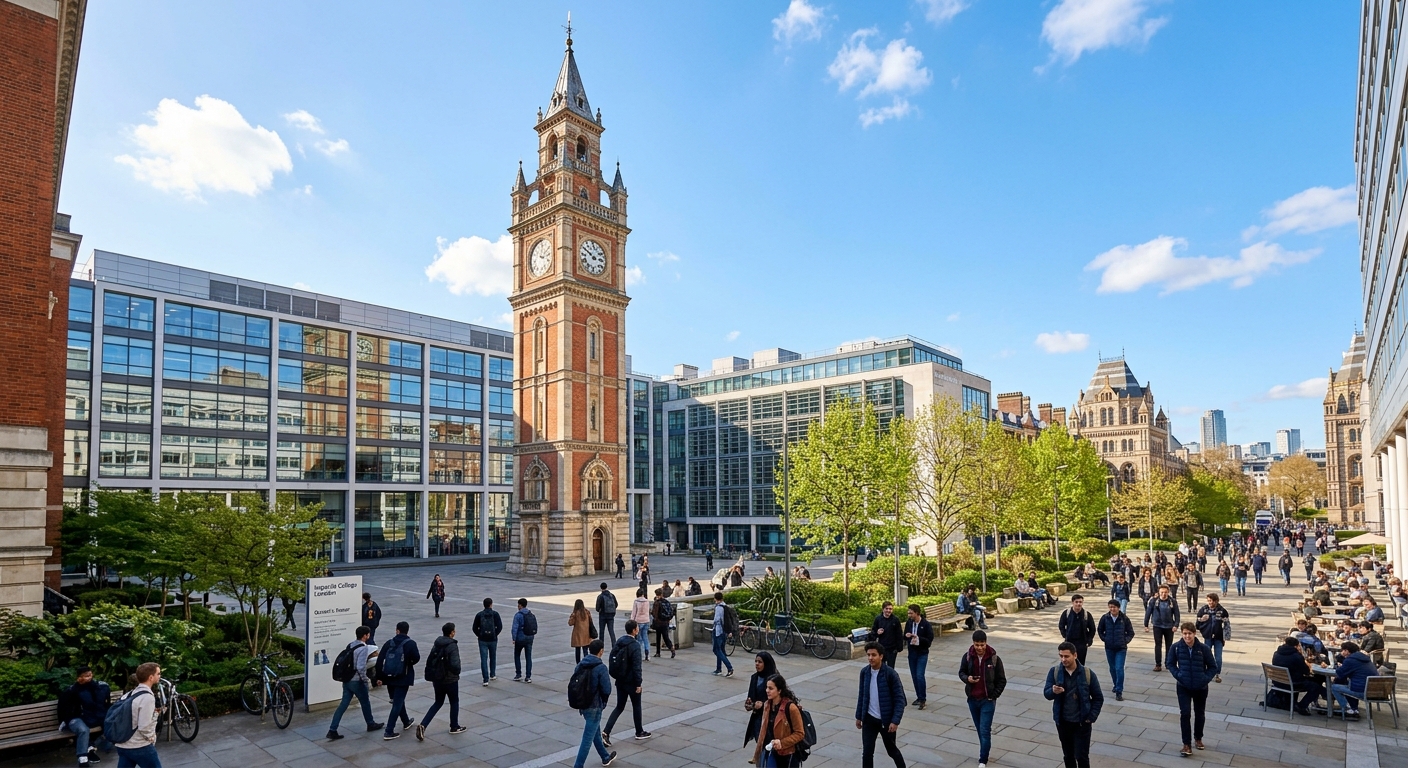
Imperial College London, South Kensington Campus, United Kingdom
Master of Science in Earthquake Engineering
Imperial College London
Earthquake Engineering
Program Overview: MSc Earthquake Engineering at Imperial College London
The MSc Earthquake Engineering at Imperial College London provides comprehensive training in the analysis, design, and assessment of structures under seismic actions. You will explore a broad range of topics related to structural engineering, earthquake engineering, engineering seismology, soil dynamics, and advanced numerical techniques throughout this intensive one-year program.
This career-oriented program covers both theoretical background knowledge and practical design considerations, preparing you for further PhD study or a professional career in seismic engineering. The program is suitable for both practising engineers and recent graduates, equipping you to pursue careers in seismic analysis and design across industry, the public sector, and non-governmental organisations.
You will benefit from insights shared by leading academics and industry experts in the Department of Civil and Environmental Engineering, including guest lectures from visiting professors and eminent industrialists. In the summer term, you will undertake a design project dissertation with regular guidance from a College supervisor, which may incorporate practical lab experience in Imperial's Structures Laboratory.
Key Program Highlights
- Accredited by the Joint Board of Moderators (JBM) on behalf of the Engineering Council, supporting your path toward Chartered Engineer (CEng) registration
- Hands-on experience in Imperial's Structures Laboratory with extensive testing facilities and access to advanced numerical modelling tools
- Strong industry connections with guest lectures from eminent industrialists and visiting professors at the forefront of earthquake engineering
- Located at Imperial's South Kensington campus in Central London, providing access to a global hub for engineering research and professional networking
Curriculum and Modules
The MSc Earthquake Engineering curriculum is structured around core modules delivered in the autumn and spring terms, followed by a summer design project dissertation. You will take all core modules and complete a substantial research or design project under the supervision of an academic advisor.
Understand the finite element method for structural analysis and investigate the accuracy and convergence characteristics of various finite elements used in engineering practice.
Explore the fundamental elements of engineering seismology and seismic hazard assessment, developing your ability to evaluate seismic risk for structural design applications.
Examine the design and behaviour of reinforced concrete structures at the design ultimate limit state, with a focus on seismic detailing and ductile design principles.
Deepen your understanding of the behaviour of steel structures and learn to design structural steel members and connections for seismic and extreme loading conditions.
Become familiar with the fundamental concepts and principles of dynamics as applied to structural engineering problems, including single and multi-degree-of-freedom systems.
Elective Modules
Admission Requirements
Imperial College London considers all applicants on an individual basis, welcoming students from all over the world. To be eligible for the MSc Earthquake Engineering, you must meet the academic, mathematical, and English language requirements outlined below. Contact Uni4Edu for guidance on your specific qualifications and to begin your application.
Academic Requirements
- Minimum Degree ClassificationUpper Second-Class Honours (2:1) or international equivalent
- Eligible Degree SubjectsCivil Engineering, Natural Sciences, Earth Sciences, or other numerate disciplines
- Mathematics RequirementA suitable grounding in mathematics (e.g., A-level Mathematics grade A or B)
- Professional ExperienceApplicants with substantial relevant industry experience may be admitted via a Special Qualifying Exam (SQE)
- International QualificationsA wide variety of international qualifications are accepted; contact Uni4Edu for equivalency guidance
English Language Requirements
- IELTS Academic6.5 overall (minimum 6.0 in all elements) for Standard level; 7.0 overall (minimum 6.5 in all elements) for Higher level
- TOEFL iBT92 overall (minimum 20 in all elements) for Standard level; 100 overall (minimum 22 in all elements) for Higher level
- Other TestsPTE Academic and other approved English language tests are also accepted; contact Uni4Edu for details
Required Documents
For personalized admission guidance, document verification, and application support, please contact Uni4Edu
Scholarships and Funding
Imperial College London and its Department of Civil and Environmental Engineering offer a range of scholarships and funding opportunities for postgraduate taught students. Contact Uni4Edu to explore which funding options may be available for your specific circumstances and nationality.
GREAT - Imperial College London Scholarship
GBP 15,000 towards tuition feesOffered in partnership with the British Council and the UK government's GREAT Britain Campaign, this partial scholarship supports students from eligible countries pursuing one-year postgraduate study at Imperial in STEM and business subjects.
Imperial College Departmental MSc Scholarships
The Department of Civil and Environmental Engineering offers a range of scholarships for MSc students. Some cover full home tuition fees, while others provide partial fee support for overseas students.
Imperial President's Scholarships
Full funding including tuition and living expensesHighly competitive awards available across the university for outstanding postgraduate students. These prestigious scholarships are designed to attract exceptional talent from around the world to Imperial College London.
For detailed tuition fee information, please contact Uni4Edu — we will guide you through the costs and available funding options for this program.
Career Prospects
Graduates of the MSc Earthquake Engineering program are well-positioned for careers in seismic analysis, structural design, and related engineering fields worldwide. Over 75% of Imperial Civil and Environmental Engineering graduates go into employment, with around 15% choosing to pursue further study such as a PhD.
Potential Career Roles
Top Employers of Graduates
Rankings and Recognition
Imperial College London is consistently ranked among the top universities in the world, with particular strength in engineering and technology. The MSc Earthquake Engineering program sits within the highly regarded Department of Civil and Environmental Engineering, which benefits from Imperial's exceptional research output and industry connections.
| Subject | Ranking Body | Rank |
|---|---|---|
| Civil Engineering | The Guardian University Guide | #2 in the UK |
| Engineering and Technology | QS World Rankings by Subject | Top 10 |
| Earth and Marine Sciences | The Guardian University Guide | #8 in the UK |
| Engineering | US News Best Global Universities | Top 20 |
How to Apply
Applying for this program is easy with Uni4Edu. Our team will guide you through every step of the process — from document preparation to final enrolment.
Contact Uni4Edu
Reach out to our team via email or phone. We will assess your profile and confirm your eligibility for this program.
Prepare Your Documents
Our advisors will provide you with a personalised checklist of required documents and help you prepare your application package.
Submit Your Application
Uni4Edu will submit your application on your behalf and keep you updated on its progress throughout the review period.
Receive Your Offer
Once accepted, we will help you understand your offer, arrange visa support if needed, and guide you through the enrolment process.
Similar Programmes

Bachelor's Degree
48 months
Environmental Geoscience B.S.

Syracuse University, Syracuse, United States
Earliest Intake
September 2026
Gross Tuition
66580 $


Bachelor's Degree
52 months
Environmental Engineering (Joint UNBC and UBC) (Co-Op) Bachelor
University of Northern British Columbia, Prince George, Canada
Earliest Intake
October 2026
Gross Tuition
26750 C$

Bachelor's Degree
48 months
Geography with Applied GIS (with Professional Placement) BSc
University of Exeter, Exeter, United Kingdom
Earliest Intake
January 2027
Gross Tuition
31200 £


Master's & Postgraduate
12 months
Volcanology MSc
Lancaster University, Lancaster, United Kingdom
Earliest Intake
January 2027
Gross Tuition
30000 £


Master's & Postgraduate
24 months
Resource Efficient and Sustainable Building (M.Sc.)
Technical University of Munich (TUM), Munich, Germany
Earliest Intake
April 2026
Gross Tuition
6000 €



Uni4Edu AI Assistant
