
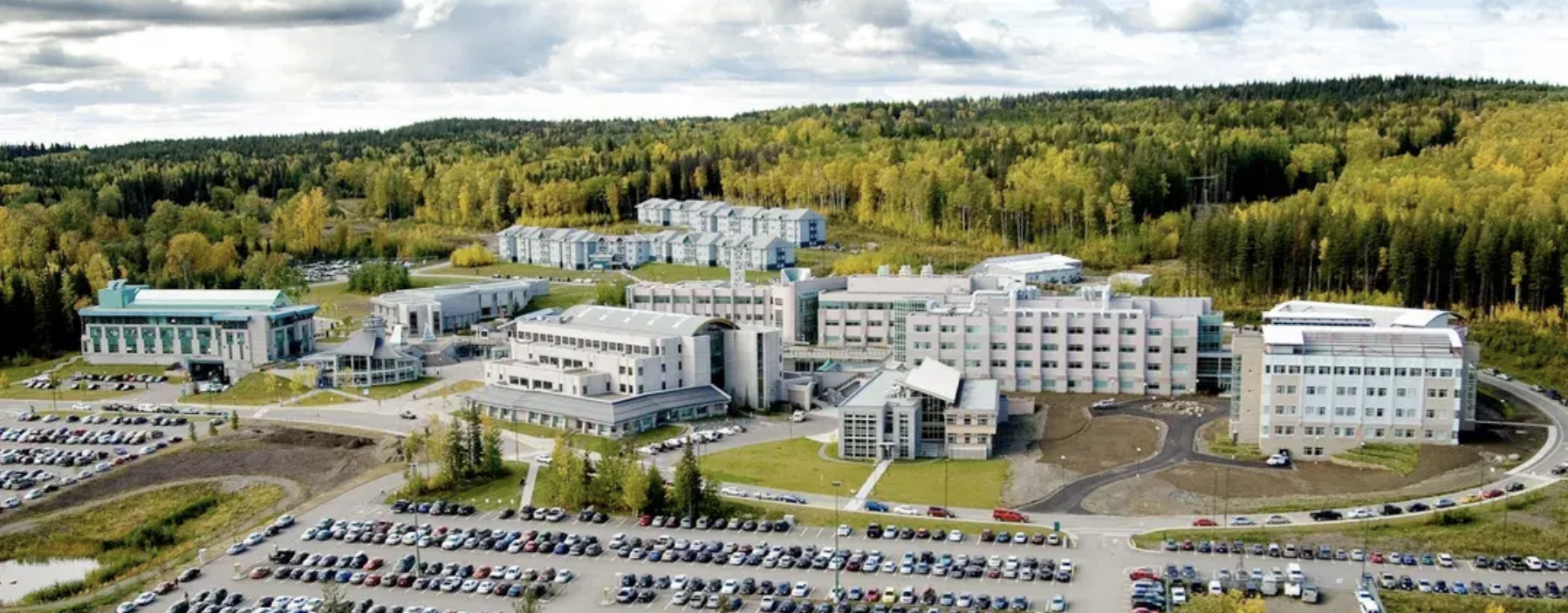
Environmental Engineering (Joint UNBC and UBC) (Co-Op) Bachelor
Prince George (Main Campus), Canada

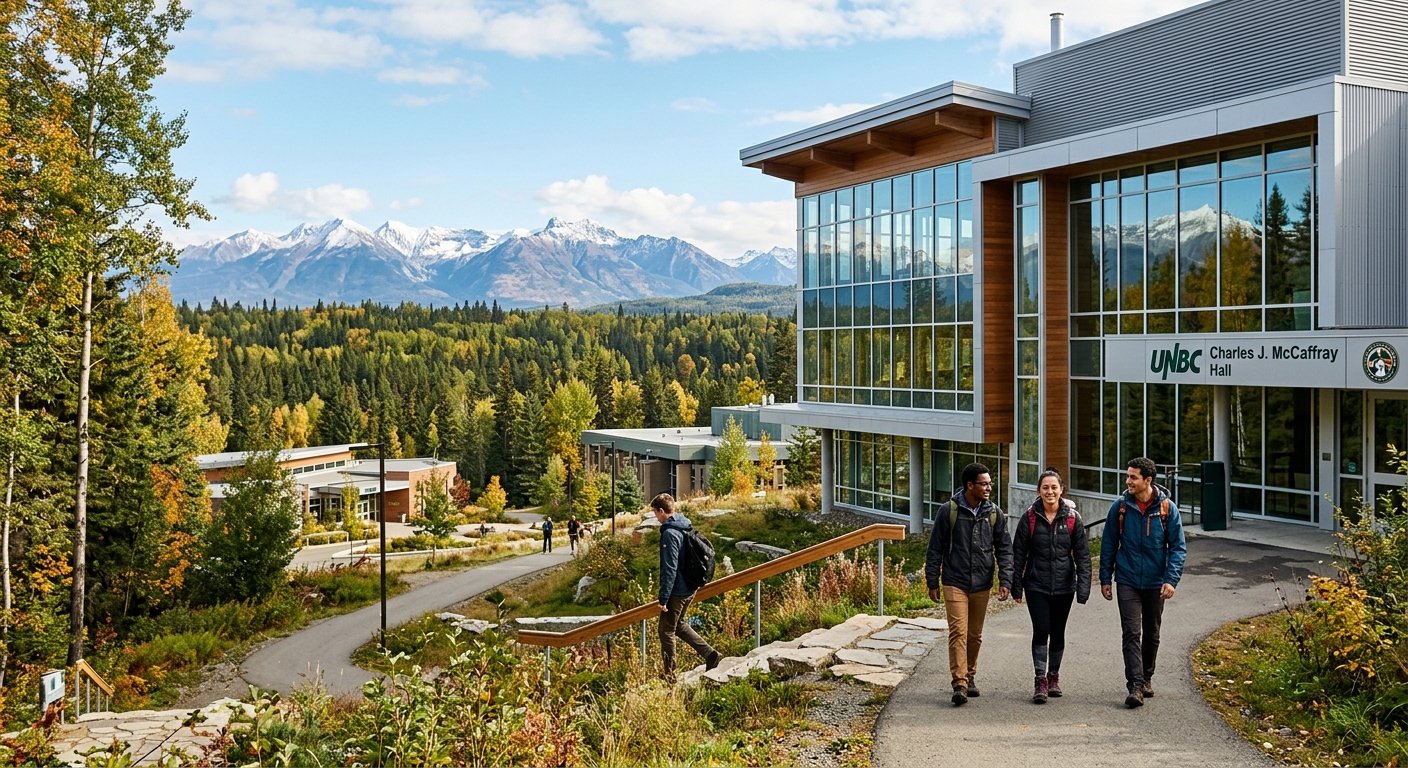
Bachelor of Applied Science in Environmental Engineering (Joint UNBC and UBC) (Co-Op)
University of Northern British Columbia
Environmental Engineering
Program Overview
The Bachelor of Applied Science in Environmental Engineering is a unique 4.5-year (nine academic semester) joint degree between the University of Northern British Columbia (UNBC) and the University of British Columbia (UBC). The program applies science and engineering principles to improve air, land, water, and living systems for a healthy environment, with a focus on sustainable development, wastewater management, and remediation of contaminated sites.
Students begin with a two-year foundation in mathematics, biology, chemistry, and environmental science at UNBC in Prince George. In the third and fourth years, students transition to UBC in Vancouver for comprehensive training in engineering fundamentals, analysis, and design through courses in Civil Engineering and Chemical and Biological Engineering.
The final semester brings students back to UNBC to complete courses in professional practice and environmental law, along with a capstone design project addressing practical environmental engineering problems. With the optional Co-Op component, students complete five paid four-month work placements, extending the total program duration to approximately 5.5 years.
Key Program Highlights
- Joint degree awarded by both UNBC and UBC, combining UNBC's strength in Environmental Science with UBC's strength in Engineering
- Accredited by the Canadian Engineering Accreditation Board (CEAB), qualifying graduates for Professional Engineer (P.Eng.) licensure
- Optional Co-Op program with five paid work terms at consulting firms, industrial plants, and government offices
- Unique dual-campus experience living and learning in both Prince George and Vancouver, British Columbia
Curriculum and Modules
The Environmental Engineering curriculum is structured across nine academic semesters spanning two campuses. The first two years at UNBC build a strong foundation in sciences and mathematics, years three and four at UBC deliver core engineering training, and the final semester at UNBC focuses on applied environmental engineering practice and a capstone project.
Mathematics and Calculus
Core FoundationA comprehensive sequence covering differential and integral calculus, linear algebra, and differential equations, providing the mathematical foundation essential for all engineering analysis and design courses.
Chemistry and Environmental Science
Core FoundationCourses in general chemistry, organic chemistry, and environmental science that establish understanding of chemical processes, pollutant behavior, and ecological systems relevant to environmental engineering applications.
Fluid Mechanics and Engineering Hydrology
Core EngineeringStudy of fluid properties, hydrostatic forces, kinematics of flow, and flow in closed conduits, along with engineering hydrology principles for water resource management and environmental systems design.
Soil Mechanics and Geotechnical Engineering
Core EngineeringCovers the behavior of soils under loading, site characterization, and geotechnical design principles essential for environmental remediation, landfill design, and contaminated site management.
Water and Wastewater Treatment
SpecializationIn-depth study of water quality criteria and standards, treatment techniques for surface water and groundwater sources, wastewater collection systems, and municipal and industrial wastewater treatment technologies.
Capstone Design Project
Final SemesterA comprehensive design project completed during the final semester at UNBC, where students apply their engineering knowledge to solve a practical environmental engineering problem under professional supervision.
Elective Areas
Admission Requirements
Admission to the Environmental Engineering (Joint UNBC and UBC) program is competitive, with entry based on academic performance in required high school courses. International applicants must demonstrate an acceptable level of English proficiency and meet subject-specific prerequisites. Contact Uni4Edu for personalized guidance on your application.
Academic Requirements
- Minimum Admission Average75% average required among five designated courses (competitive entry; meeting the minimum does not guarantee admission)
- English 12English 12 or English First Peoples 12 (or local equivalent) required
- MathematicsPre-Calculus 12 and Calculus 12 (or equivalents) required
- SciencesPhysics 12 and Chemistry 11 required (Chemistry 11 must be completed but is not used in admission average calculation)
- International BaccalaureateIB diploma holders may receive up to 30 credit hours of transfer credit; overall standing of 4 with no course below 3 required
English Language Requirements
- IELTS AcademicMinimum overall score of 6.5
- TOEFL iBTMinimum score of 90, with a writing subscore of at least 20
- Duolingo English TestMinimum score of 105
Required Documents
Application Deadlines
For personalized admission guidance, document verification, and application support, please contact Uni4Edu
Scholarships and Funding
International students in the Environmental Engineering program may be eligible for various scholarships and financial awards from both UNBC and UBC. Since this is a joint program, funding opportunities from both institutions may apply at different stages of study. Contact Uni4Edu for guidance on available scholarships and application procedures.
UNBC International Excellence Entrance Scholarship
CAD 2,500 - CAD 10,000Awarded to international students entering their first year of study at UNBC based on outstanding academic achievements. The scholarship value varies depending on the applicant's academic profile.
UBC Outstanding International Student (OIS) Award
CAD 10,000 - CAD 25,000A one-time, merit-based entrance scholarship awarded to qualified international students upon admission to UBC. Recipients demonstrate strong academic achievement and significant extracurricular involvement.
For detailed tuition fee information, please contact Uni4Edu — we will guide you through the costs and available funding options for this program.
Career Prospects
Graduates of the Environmental Engineering program are prepared for a wide range of employment opportunities in resource-based industries, government agencies, environmental consulting firms, and the growing environmental economy. The program's CEAB accreditation qualifies graduates for Professional Engineer (P.Eng.) registration, opening doors to licensed engineering practice across Canada and internationally.
Potential Career Roles
Typical Employer Sectors
Rankings and Recognition
The University of Northern British Columbia is recognized as one of Canada's top small universities, with particular strength in environmental science and sustainability. UNBC consistently ranks highly in the Maclean's university rankings and has been included in major global rankings by Times Higher Education and QS.
| Subject | Ranking Body | Rank |
|---|---|---|
| Environment / Ecology | US News | #648 |
| Sustainability Metrics | QS | Top 300 |
| Primarily Undergraduate Universities (Canada) | Maclean's | #2 |
| AASHE Sustainability Rating | AASHE STARS | Gold |
How to Apply
Applying for this program is easy with Uni4Edu. Our team will guide you through every step of the process — from document preparation to final enrolment.
Contact Uni4Edu
Reach out to our team via email or phone. We will assess your profile and confirm your eligibility for this program.
Prepare Your Documents
Our advisors will provide you with a personalised checklist of required documents and help you prepare your application package.
Submit Your Application
Uni4Edu will submit your application on your behalf and keep you updated on its progress throughout the review period.
Receive Your Offer
Once accepted, we will help you understand your offer, arrange visa support if needed, and guide you through the enrolment process.
Similar Programmes

Master's & Postgraduate
12 months
Earthquake Engineering MSc

Imperial College London, , United Kingdom
Earliest Intake
January 2027
Gross Tuition
45000 £

Bachelor's Degree
48 months
Environmental Geoscience B.S.
Syracuse University, Syracuse, United States
Earliest Intake
September 2026
Gross Tuition
66580 $
Bachelor's Degree
48 months
Geography with Applied GIS (with Professional Placement) BSc
University of Exeter, Exeter, United Kingdom
Earliest Intake
January 2027
Gross Tuition
31200 £


Master's & Postgraduate
12 months
Volcanology MSc
Lancaster University, Lancaster, United Kingdom
Earliest Intake
January 2027
Gross Tuition
30000 £


Master's & Postgraduate
24 months
Resource Efficient and Sustainable Building (M.Sc.)
Technical University of Munich (TUM), Munich, Germany
Earliest Intake
April 2026
Gross Tuition
6000 €



Uni4Edu AI Assistant
