Bioengineering
Toledo, Ohio, United States, United States

Master of Science in Bioengineering
University of Toledo
Bioengineering
Master of Science in Bioengineering at the University of Toledo
The Master of Science in Bioengineering at the University of Toledo prepares you to work at the interface of engineering and living systems. You will gain graduate-level proficiency in the three principal areas of bioengineering — biomechanical, bioelectrical, and biochemical — a distinctive approach that sets this program apart from most others that focus on only one subdiscipline.
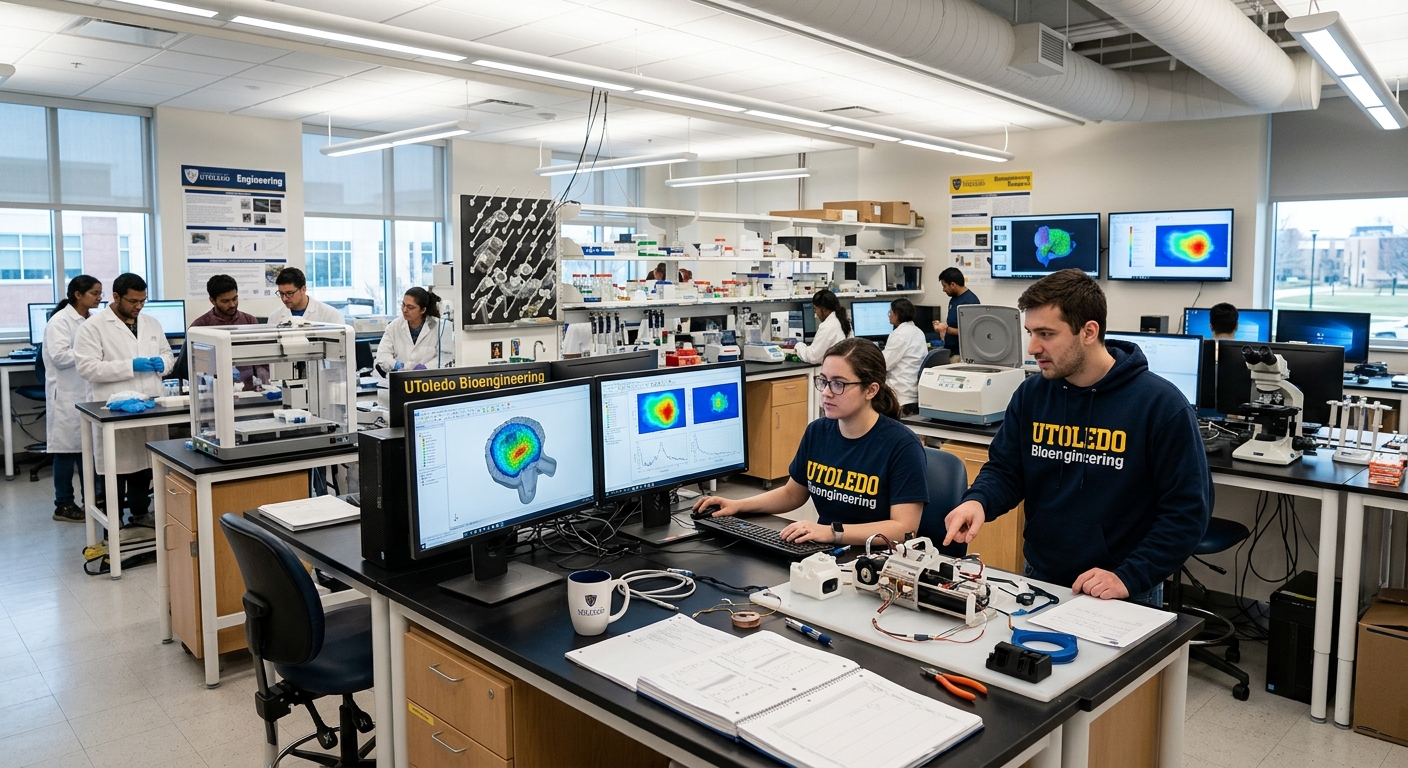
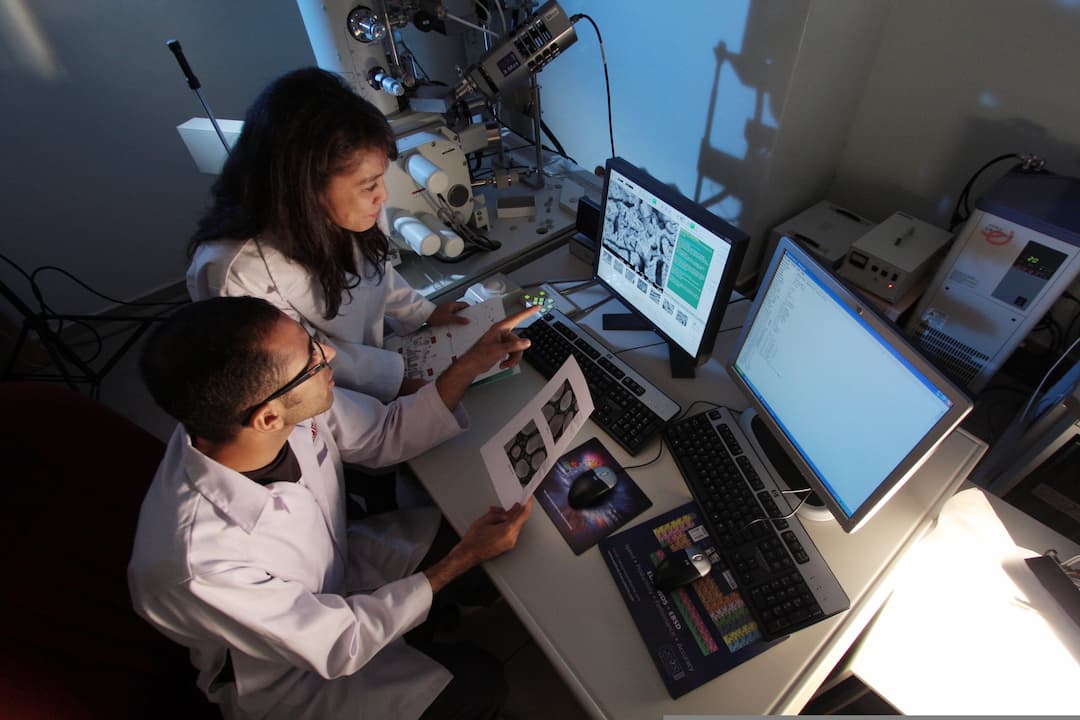
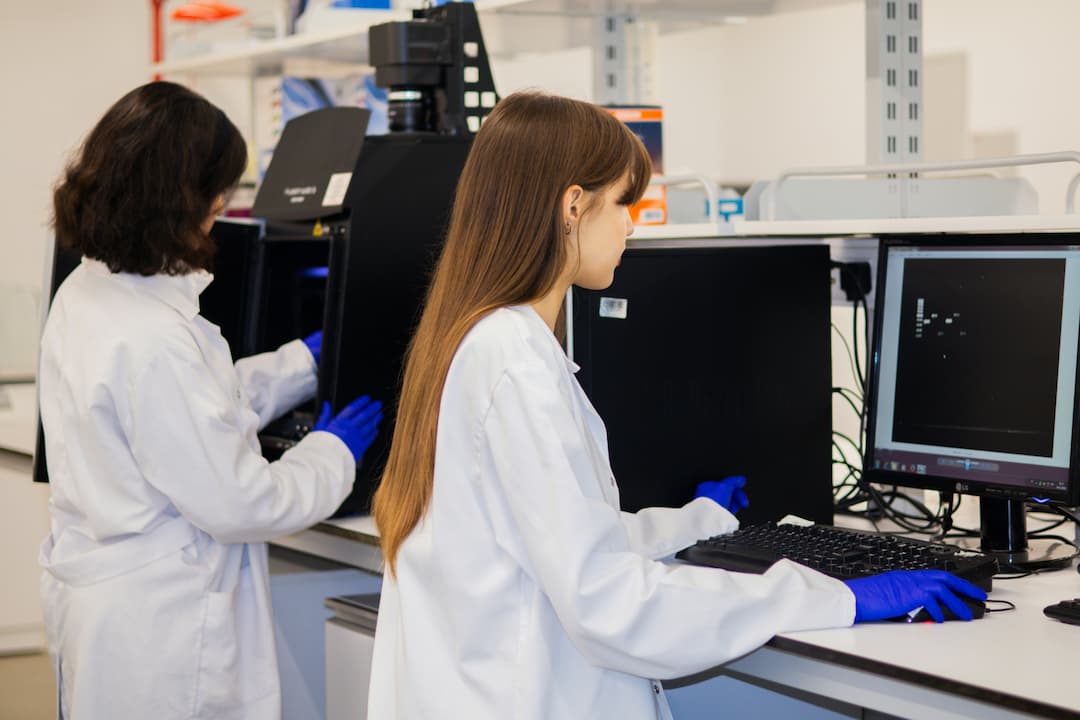
Students can choose from three degree pathways: a thesis option, a project option, or a coursework-only option. The majority of students pursue the thesis track and conduct original research in their advisor's laboratory, with access to four teaching and 13 research laboratories including the Center for Materials and Sensor Characterization.
The University of Toledo is a Carnegie R1 research institution founded in 1872, located in Toledo, Ohio. The Bioengineering faculty collaborate closely with clinicians, engineers, and scientists across disciplines such as medicine and materials science, giving you ample opportunities for creative problem-solving, entrepreneurship, and intellectual property generation.
Key Program Highlights
- Unique curriculum requiring proficiency in all three bioengineering subdisciplines: biomechanics, bioelectronics, and bioprocessing
- One of the few programs nationally to offer a required lecture and laboratory course in tissue engineering
- Nationally acclaimed spine research program with internationally recognized faculty including endowed chair Dr. Vijay Goel
- Three flexible degree pathways — thesis, project, or coursework — to match your career goals
Curriculum and Modules
The M.S. in Bioengineering requires a minimum of 30 credit hours of approved graduate coursework. The curriculum is designed to provide a general, flexible framework that allows you to select coursework relevant to your specific area of research while building proficiency across all three bioengineering subdisciplines.
Bioengineering Core Coursework
12 Credit HoursCore courses covering the three principal areas of bioengineering: biomechanics, bioelectronics, and bioprocessing. These foundational courses ensure graduate-level competence across all subdisciplines.
Mathematics Requirement
3 Credit HoursGraduate-level mathematics coursework selected to support your research area, providing the quantitative foundation needed for advanced bioengineering analysis and modeling.
Tissue Engineering
3 Credit HoursA distinctive required lecture and laboratory course in tissue engineering, one of only a few such offerings nationwide. This course covers principles of cell biology, scaffolding, and regenerative medicine applications.
Elective Coursework
6 Credit HoursAdvisor-approved elective courses supporting your research focus. Students may take graduate-level courses in other departments and colleges to broaden their knowledge base.
Thesis Research
9 Credit HoursFor thesis-track students, original research conducted under faculty supervision culminating in a written thesis and successful defense before a committee of at least three members.
Bioengineering Seminar
Required Each SemesterMandatory weekly departmental seminar attendance every semester, exposing you to cutting-edge bioengineering research and fostering scholarly engagement with faculty and peers.
Elective Focus Areas
Admission Requirements
The M.S. in Bioengineering program is open to qualified individuals holding a Bachelor of Science or Master of Science in Engineering. Applicants with degrees in related fields such as biology, chemistry, physics, or mathematics are also eligible, provided they meet prerequisite coursework requirements. All applications are processed through Uni4Edu.
Academic Requirements
- Undergraduate DegreeB.S. or M.S. in Engineering, or B.S./B.A. in a related science field from an accredited institution
- Minimum GPA3.0 on a 4.0 scale for undergraduate work; 3.3 on a 4.0 scale for previous graduate work
- GRE ScoresRequired for all applicants; minimum combined verbal and quantitative score of 300
- Prerequisite CourseworkTwo years of calculus through differential equations and one year of engineering physics
- Letters of RecommendationTwo to three letters of recommendation from academic or professional references
English Language Requirements
- TOEFL iBTMinimum score of 80
- IELTSMinimum overall band score of 6.5
- Duolingo / PTEDuolingo minimum 110; PTE Academic minimum 58
Required Documents
Application Deadlines
For personalized admission guidance, document verification, and application support, please contact Uni4Edu
Scholarships and Funding
The University of Toledo offers several funding opportunities for graduate students in the Bioengineering program. Eligible students may receive assistantships, fellowships, and tuition support to help finance their studies. Contact Uni4Edu for personalized guidance on available funding options.
Graduate Research Assistantship
Research assistantships provide a stipend and may include tuition support. Students work alongside faculty on funded research projects in areas such as spine biomechanics, biosensors, and biofuels.
For detailed tuition fee information, please contact Uni4Edu — we will guide you through the costs and available funding options for this program.
Career Prospects
Graduates of the M.S. in Bioengineering program at the University of Toledo are well-positioned for careers in bio-industries and beyond. Employers value the program's distinctive training across all three bioengineering subdisciplines combined with hands-on research experience. Graduates also pursue further education in medicine, law, business, and doctoral programs.
Potential Career Roles
Types of Employers
Rankings and Recognition
The University of Toledo is a Carnegie R1 research institution recognized among the top research universities in the world. Its engineering and bioengineering programs benefit from nationally acclaimed research, particularly in spine biomechanics, biosensors, and materials science.
| Subject | Ranking Body | Rank |
|---|---|---|
| Materials Science | U.S. News Global | Top Quarter Globally |
| Engineering | U.S. News Best Graduate Schools | Nationally Ranked |
| Medicine (Primary Care) | U.S. News Best Graduate Schools | #86 |
| Employability | QS | #651-700 |
How to Apply
Applying for this program is easy with Uni4Edu. Our team will guide you through every step of the process — from document preparation to final enrolment.
Contact Uni4Edu
Reach out to our team via email or phone. We will assess your profile and confirm your eligibility for this program.
Prepare Your Documents
Our advisors will provide you with a personalised checklist of required documents and help you prepare your application package.
Submit Your Application
Uni4Edu will submit your application on your behalf and keep you updated on its progress throughout the review period.
Receive Your Offer
Once accepted, we will help you understand your offer, arrange visa support if needed, and guide you through the enrolment process.
Similar Programmes

Master's & Postgraduate
12 months
Biotechnology and Bioengineering\t

University of Kent, Canterbury, United Kingdom
Earliest Intake
October 2026
Gross Tuition
23500 £

Bachelor's Degree
48 months
Applied Biotechnology (BS)
University Of Arizona, Tucson, United States
Earliest Intake
May 2027
Gross Tuition
39958 $
Master's & Postgraduate
12 months
Medical Device Design and Entrepreneurship MSc
Imperial College London, , United Kingdom
Earliest Intake
January 2027
Gross Tuition
45000 £
Bachelor's Degree
48 months
Molecular Biology, Genetics and Bioengineering
Sabancı University, Tuzla, Turkey
Earliest Intake
December 2026
Gross Tuition
36500 $
Master's & Postgraduate
12 months
Neurotechnology MRes
Imperial College London, , United Kingdom
Earliest Intake
January 2027
Gross Tuition
45000 £



Uni4Edu AI Assistant