Energy Technologies MPhil
University of Cambridge, United Kingdom

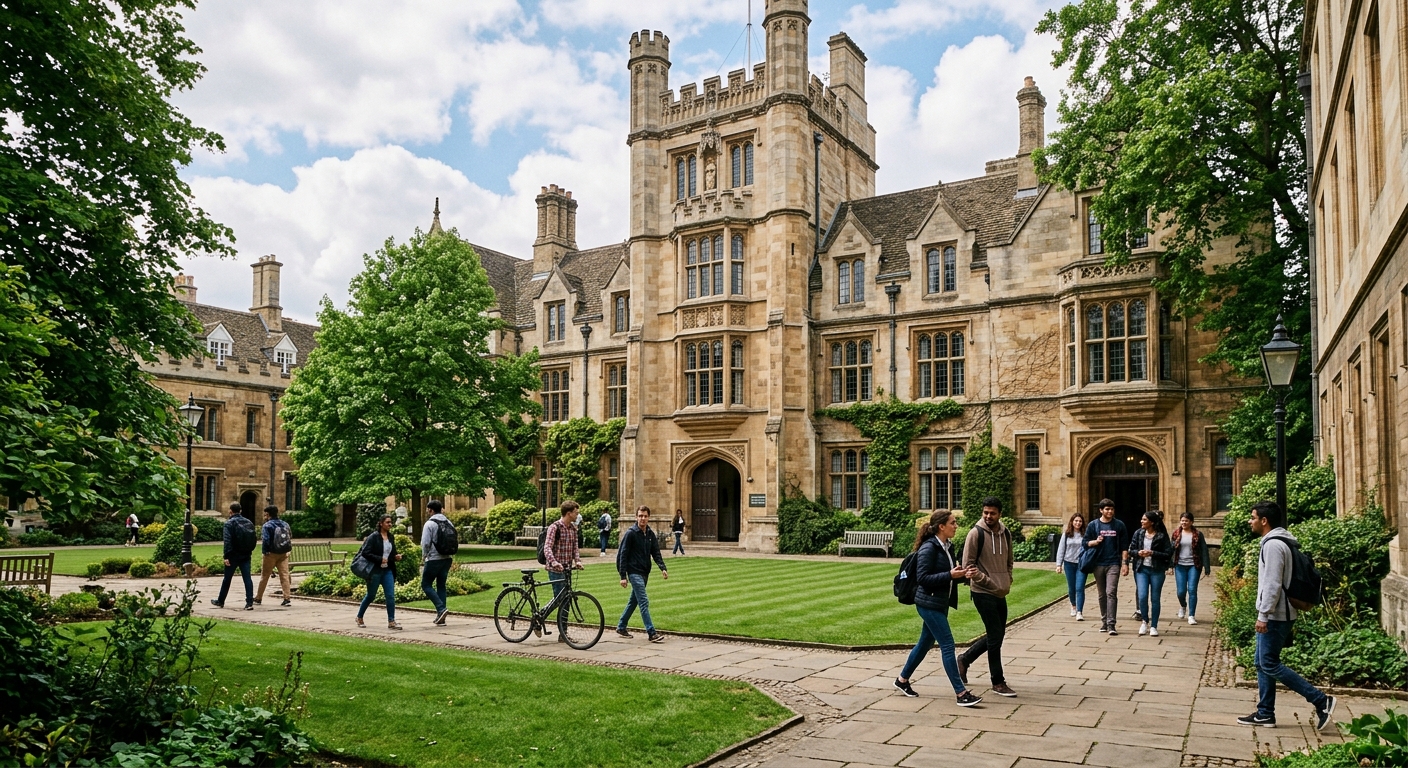
MPhil in Energy Technologies
University of Cambridge
Energy Engineering
MPhil in Energy Technologies at Cambridge: Program Overview
The MPhil in Energy Technologies at the University of Cambridge is a one-year program designed for graduates who want to develop practical engineering solutions to the world's most pressing energy challenges. It covers the fundamental science and technologies involved in energy utilisation, electricity generation, energy efficiency, and alternative energy sources.
The program is centred around core and elective taught courses, mainly delivered by the Cambridge University Engineering Department (CUED) with input from other departments. Students also undertake a substantial research project chosen from a list offered by academic staff, linked to the principal areas of energy research across the university.
Graduates from this MPhil are well-prepared for both doctoral study and professional careers in a wide variety of sectors, including industrial research and development, policy-making bodies, utilities, manufacturing, and energy equipment manufacturing. Students who achieve an overall mark of 70 percent or above may also be considered for continuation to a PhD at Cambridge.
Key Program Highlights
- Comprehensive coverage of primary and secondary energy sources, energy transformation, and utilisation technologies
- Research project linked to leading energy research groups within Cambridge's Department of Engineering
- Flexible dissertation options: short or long dissertation to suit career or doctoral ambitions
- Develops proficiencies in project management, teamwork, research skills, and advanced calculation methods
Curriculum and Modules
The curriculum is structured around core taught courses, elective modules, and a research dissertation. Core areas cover fundamental energy concepts, mathematical and computational skills, communication skills, and a range of energy technologies, while electives allow specialisation in areas of personal interest.
A foundational review of primary and secondary energy sources, thermodynamic principles, and energy conversion processes that underpin all modern energy technologies.
Covers the science and engineering of cleaner fossil fuel utilisation, including advanced combustion techniques, carbon capture, and emissions reduction strategies.
Examines solar, wind, and biofuel energy systems, focusing on the underlying physics, engineering design, and integration of renewable sources into energy networks.
Explores systems-level approaches to energy efficiency, including building energy performance, industrial processes, and demand-side management strategies.
Develops advanced mathematical and computational skills essential for modelling energy systems, performing simulations, and analysing complex engineering data.
Elective Modules
Admission Requirements
The MPhil in Energy Technologies welcomes a wide range of graduates, including those with backgrounds in mechanical, chemical, civil, or environmental engineering, as well as physics and chemistry. Electrical engineers interested in the thermo-fluid aspects of energy technologies are also encouraged to apply through Uni4Edu.
Academic Requirements
- Degree Requirement (UK applicants)First Class Honours degree or MEng; a First Class BEng may be considered with demonstrated commitment to the field
- Degree Requirement (International applicants)Bachelor's degree equivalent to a UK First Class, depending on the standard length of undergraduate study in your country
- Relevant DisciplinesMechanical, Chemical, Civil, Environmental Engineering, Physics, Chemistry, or Electrical Engineering
- Academic Performance (indicative for some countries)Overall grade of 75% or CGPA 8.0+ from well-ranked institutions
- PhD Continuation ThresholdAn overall mark of 70% or above is normally expected for continuation to the PhD
English Language Requirements
- IELTSMinimum overall score of 7.0 (contact Uni4Edu for component requirements)
- TOEFL iBTMinimum overall score of 100 (contact Uni4Edu for component requirements)
- Cambridge C1 Advanced (CAE)Grade A or B (contact Uni4Edu for detailed requirements)
Required Documents
Application Deadlines
For personalized admission guidance, document verification, and application support, please contact Uni4Edu
Scholarships and Funding
The University of Cambridge offers a range of competitive scholarships and bursaries for postgraduate students. Funding opportunities are available for both UK and international students, and Uni4Edu can guide you through the options most relevant to your profile and nationality.
Gates Cambridge Scholarship
Full cost of study (tuition, maintenance, and travel)One of the most prestigious international scholarships, the Gates Cambridge Scholarship is open to outstanding applicants from outside the UK pursuing a full-time postgraduate degree at Cambridge. It covers the full cost of studying at Cambridge.
Cambridge Trust Scholarships
Varies (partial to full funding)The Cambridge Trust offers a range of scholarships for international and UK students based on academic merit and financial need. Awards can cover tuition fees and provide a maintenance allowance.
Department of Engineering Studentships
Varies by awardThe Department of Engineering occasionally offers studentships and bursaries for postgraduate students. Contact Uni4Edu for the latest information on departmental funding available for the Energy Technologies MPhil.
For detailed tuition fee information, please contact Uni4Edu — we will guide you through the costs and available funding options for this program.
Career Prospects
Graduates of the MPhil in Energy Technologies are highly sought after across a broad spectrum of industries. The program equips you with the technical expertise and research skills needed to contribute to the global energy transition, whether in industry, policy, or academia.
Potential Career Roles
Typical Employers
Rankings and Recognition
The University of Cambridge is consistently ranked among the top universities in the world, with particular strength in engineering and technology. Its Department of Engineering is one of the largest and most respected in Europe, providing an outstanding environment for the study of energy technologies.
| Subject | Ranking Body | Rank |
|---|---|---|
| Engineering and Technology | QS World Rankings by Subject | Top 5 |
| Engineering | EduRank | #1 in UK, #9 globally |
| Environmental Science | EduRank | #2 in UK, #10 globally |
| Physics | EduRank | #1 in UK, #7 globally |
How to Apply
Applying for this program is easy with Uni4Edu. Our team will guide you through every step of the process — from document preparation to final enrolment.
Contact Uni4Edu
Reach out to our team via email or phone. We will assess your profile and confirm your eligibility for this program.
Prepare Your Documents
Our advisors will provide you with a personalised checklist of required documents and help you prepare your application package.
Submit Your Application
Uni4Edu will submit your application on your behalf and keep you updated on its progress throughout the review period.
Receive Your Offer
Once accepted, we will help you understand your offer, arrange visa support if needed, and guide you through the enrolment process.
Similar Programmes

Master's & Postgraduate
16 months
Satellite Systems Engineering MSc

University of Bradford, Bradford, United Kingdom
Earliest Intake
August 2026
Gross Tuition
19500 £

Master's & Postgraduate
12 months
Electronic Engineering
Prifysgol Bangor University, Bangor, United Kingdom
Earliest Intake
May 2026
Gross Tuition
21000 £

Master's & Postgraduate
12 months
Marine Renewable Energy
Prifysgol Bangor University, Bangor, United Kingdom
Earliest Intake
May 2026
Gross Tuition
19500 £


Master's & Postgraduate
12 months
MSc Engineering Management
BPP University, City of London, United Kingdom
Earliest Intake
July 2026
Gross Tuition
17100 £


Bachelor's Degree
48 months
Engineering (BS)
University Of Arizona, Tucson, United States
Earliest Intake
May 2026
Gross Tuition
39958 $



Uni4Edu AI Assistant