
University of Cambridge
United Kingdom
University of Cambridge
Cambridge, United Kingdom
Founded
1209
Institution Type
Public Collegiate Research University
Total Students
24,912
Nobel Laureates
126
Discover the University of Cambridge: Over 800 Years of Academic Excellence
Discover the University of Cambridge: Over 800 Years of Academic Excellence
Founded in 1209 by scholars who left the University of Oxford following a dispute with local townspeople, the University of Cambridge is the world's third-oldest university in continuous operation and one of the most prestigious academic institutions on the planet. It operates as a self-governed community of scholars organised into 31 semi-autonomous constituent colleges and more than 150 academic departments, faculties, and institutions across six schools.
Cambridge is renowned for its unique collegiate system, where students live, eat, and socialise within their college while receiving small-group supervisions — a teaching model widely regarded as one of the finest in the world. The university sits at the heart of one of the world's largest technology clusters, with over 5,000 knowledge-intensive companies in the surrounding Cambridge ecosystem.
With 126 Nobel Prize laureates, 47 heads of state, and 217 Olympic medallists among its alumni and affiliates, Cambridge continues to shape global thought across the sciences, humanities, and arts. As of December 2024, the university had more than 333,629 living alumni spread across every continent.
Key Milestones
- 1209: University founded by scholars arriving from Oxford, later recognised by royal charter from King Henry III in 1231.
- 1546: King Henry VIII founded Trinity College, which remains the largest college at Cambridge to this day.
- 1584: Cambridge University Press established, becoming the world's oldest university press still in operation.
- 1869: Girton College founded as the first Cambridge college for women, beginning the path toward full gender inclusion.
Academic Structure: Six Schools Spanning Every Discipline
Academic Structure: Six Schools Spanning Every Discipline
The University of Cambridge organises its more than 150 departments, faculties, and institutions into six academic schools. Each school acts as an administrative grouping of related subjects, with an elected council overseeing its constituent faculties. Teaching combines university-wide lectures and seminars with the distinctive college supervision system of small-group tutorials.
School of Arts and Humanities
Covers the study of languages, literature, music, philosophy, history of art, and classics. The school fosters critical thinking and cultural understanding across ancient and modern traditions.
- English
- Modern and Medieval Languages
- Music
School of the Humanities and Social Sciences
Encompasses the social sciences including economics, law, politics, history, and education. This school addresses society's most pressing questions through rigorous research and interdisciplinary collaboration.
- Economics
- Law
- History
School of the Biological Sciences
Brings together departments studying life at every scale, from molecular biology to ecology. Cambridge's biological sciences have a storied legacy including the discovery of the DNA double helix.
- Genetics
- Biochemistry
- Veterinary Medicine
School of Clinical Medicine
Based at the Cambridge Biomedical Campus, one of Europe's largest centres of medical research and health science. The school trains future doctors and conducts pioneering clinical research.
- Medicine (Clinical)
- Public Health
- Psychiatry
School of the Physical Sciences
Home to departments including Physics, Chemistry, Earth Sciences, and Mathematics. The Cavendish Laboratory has been the site of groundbreaking discoveries in physics for over 150 years.
- Natural Sciences (Physical)
- Mathematics
- Chemistry
School of Technology
Encompasses engineering, computer science, chemical engineering and biotechnology, and the Judge Business School. The school drives innovation and entrepreneurship in the Cambridge technology cluster.
- Engineering
- Computer Science
- Chemical Engineering and Biotechnology
Admission Requirements for International Students
Admission Requirements for International Students
Undergraduate Admission
- Application RouteUCAS application plus My Cambridge Application supplementary form
- Typical A-Level OfferA*A*A to A*AA depending on the course
- English LanguageIELTS 7.5 overall (minimum 7.0 per component) or equivalent
- Admission TestsCourse-dependent: ESAT, TMUA, UCAT, LNAT, or written assessments
- InterviewMost shortlisted applicants are invited for an academic interview (in person or online)
Graduate Admission
- Minimum DegreeA strong upper second-class (2:1) honours degree or international equivalent
- English LanguageIELTS 7.5 overall (minimum 7.0 per component) or TOEFL 110+ (minimum 25 per section)
- Application FeeGBP 50 (GBP 150 for MBA)
- Supporting DocumentsTranscripts, two academic references, research proposal (if applicable), CV
- Standardised TestsGRE or GMAT required for some programmes (e.g., MBA, MFin, certain PhDs)
All undergraduate applications must be submitted via UCAS by 6pm UK time. My Cambridge Application is due shortly after.
The supplementary application form must be completed within approximately one week after the UCAS deadline.
Many graduate programmes have an early December deadline for applicants seeking Cambridge Trust or Gates Cambridge scholarships.
Remaining graduate programme deadlines vary; some extend into May. Check each course page for specific dates.
Tuition Fees and Scholarships at Cambridge
Tuition Fees and Scholarships at Cambridge
Tuition fees at Cambridge vary significantly depending on your fee status (Home or International) and your chosen programme. International students also pay an annual College fee in addition to university tuition fees. The university spends considerably more per student than the regulated fee amount, ensuring access to exceptional teaching and resources.
| Fee Category | Home Students (Annual) | International Students (Annual) |
|---|---|---|
| Undergraduate Tuition | GBP 9,535 | GBP 25,734 - GBP 67,194 |
| College Fee | Not applicable | Approx. GBP 12,650 |
| Living Costs (estimated) | GBP 11,000 - GBP 12,000 | GBP 11,000 - GBP 12,000 |
| Graduate Tuition (typical range) | GBP 12,000 - GBP 35,000 | GBP 24,789 - GBP 69,000 |
| Total | Contact the university for programme-specific totals | Contact the university for programme-specific totals |
Gates Cambridge Scholarships
One of the most prestigious international scholarships in the world, funded by a donation from the Bill and Melinda Gates Foundation. It provides full-cost funding for outstanding postgraduate applicants from outside the UK.
- Coverage: Full tuition fees, living allowance, and travel costs
- Eligibility: International applicants applying for any full-time postgraduate degree
- Selection Criteria: Outstanding academic achievement, leadership, and commitment to improving the lives of others
Cambridge Trust Scholarships
The Cambridge Trust is the largest provider of funding for international students at Cambridge, working with partners worldwide. It awards approximately 500 scholarships annually, supporting between 1,100 and 1,400 students in residence each year.
- Coverage: Varies — partial to full tuition and maintenance funding
- Eligibility: Both undergraduate and postgraduate international students
- Application: Automatic consideration upon applying to Cambridge by the funding deadline
Campus and Facilities: A Living Heritage
Campus and Facilities: A Living Heritage
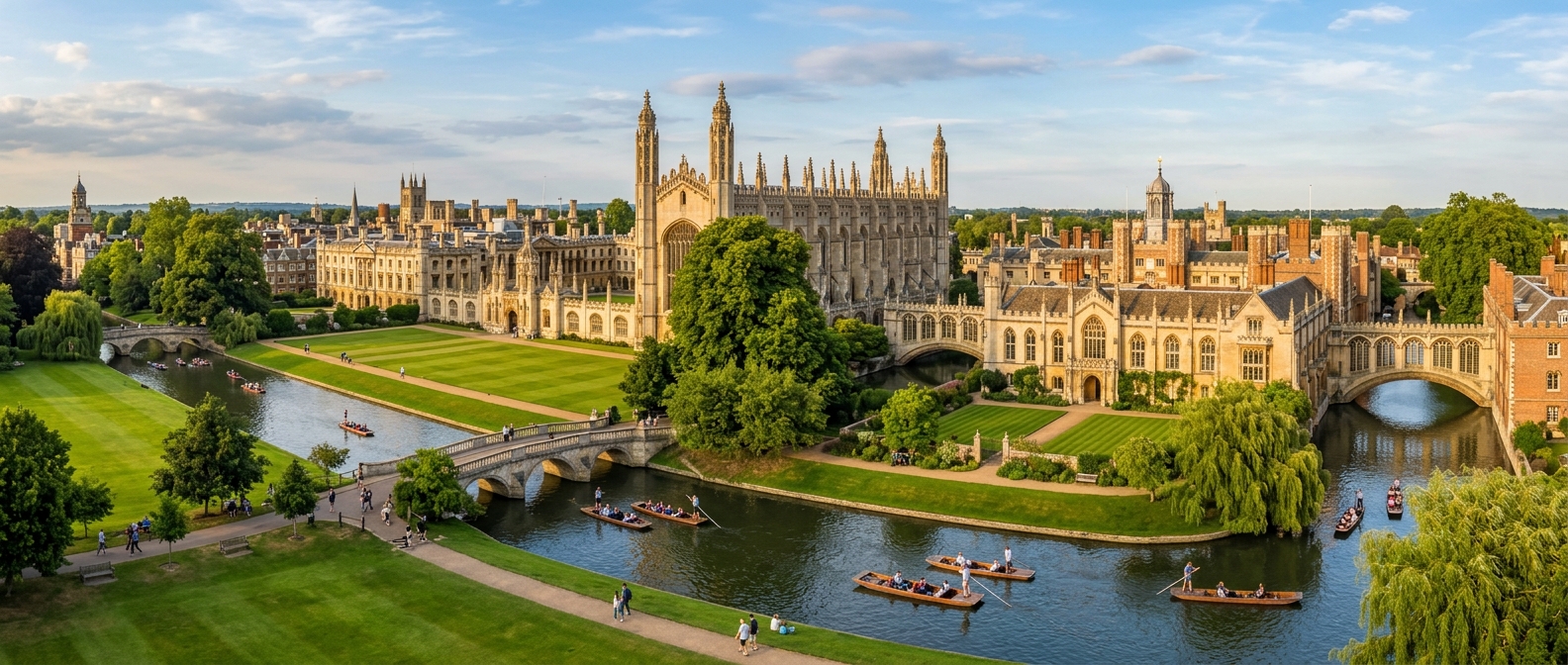
Unlike a traditional campus university, Cambridge is woven into the fabric of its historic city. The 31 colleges are spread across Cambridge, each with their own courtyards, gardens, libraries, chapels, and dining halls. From medieval stone buildings to cutting-edge research facilities on the West Cambridge site, the university offers an extraordinary blend of tradition and innovation.
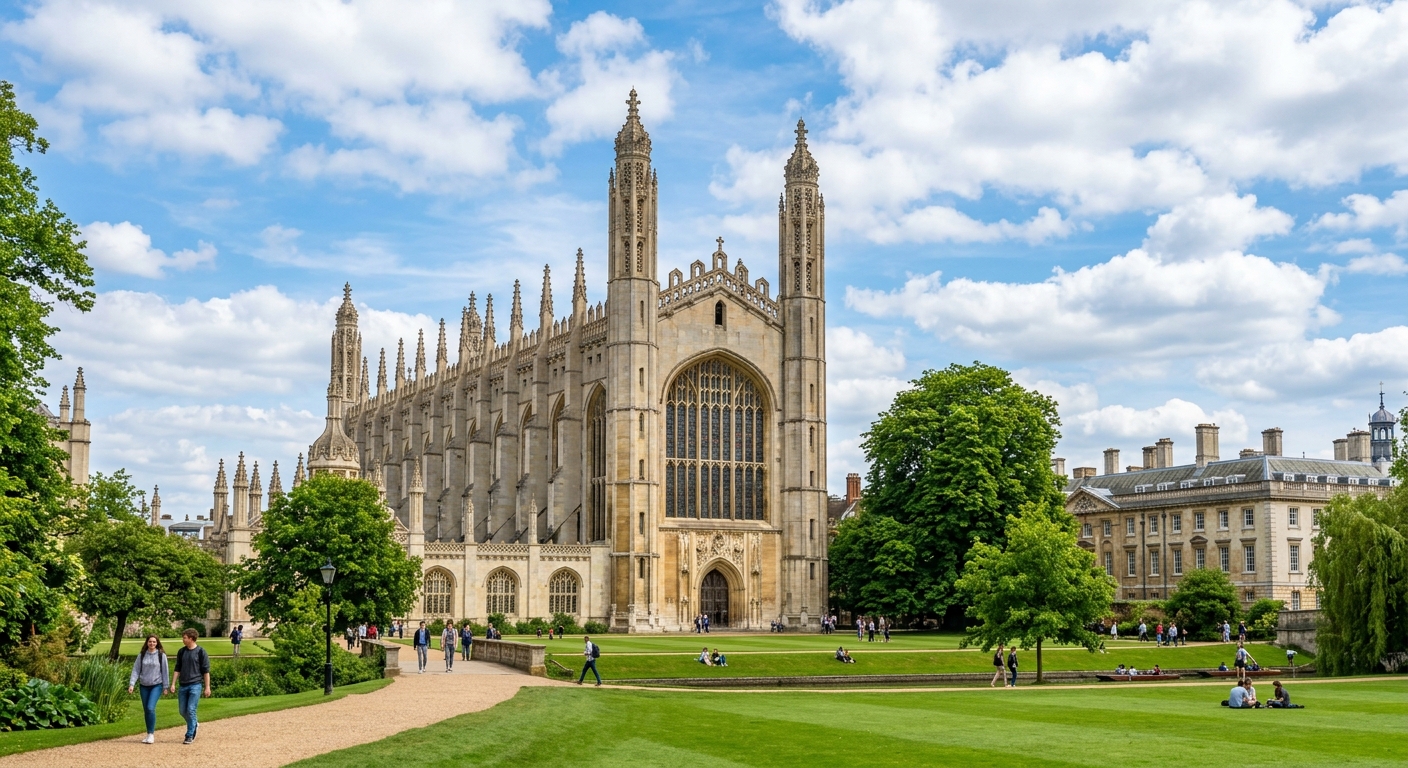
One of Britain's most iconic buildings, begun in 1446, renowned for its fan-vaulted ceiling and world-famous choir.
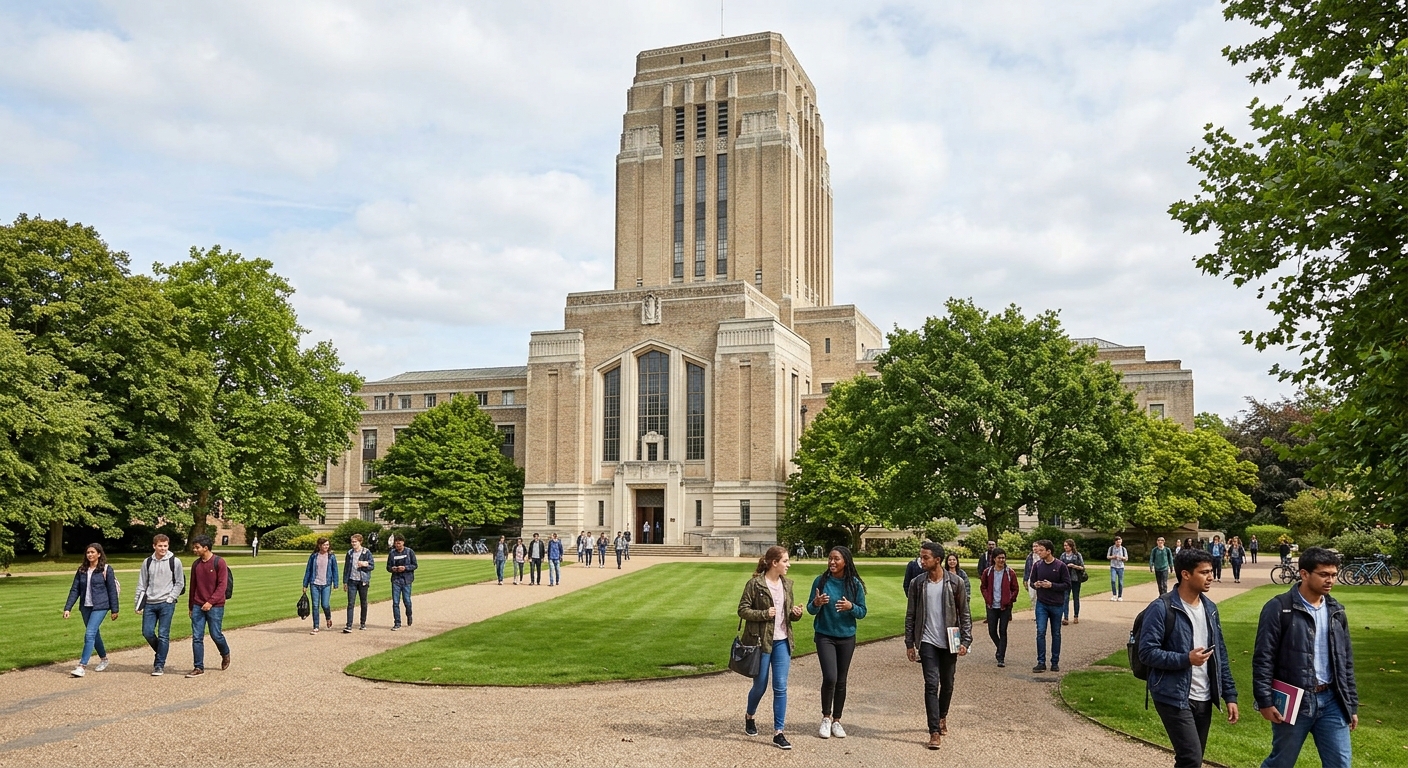
A legal deposit library holding over 10 million items, serving as the university's primary research library.
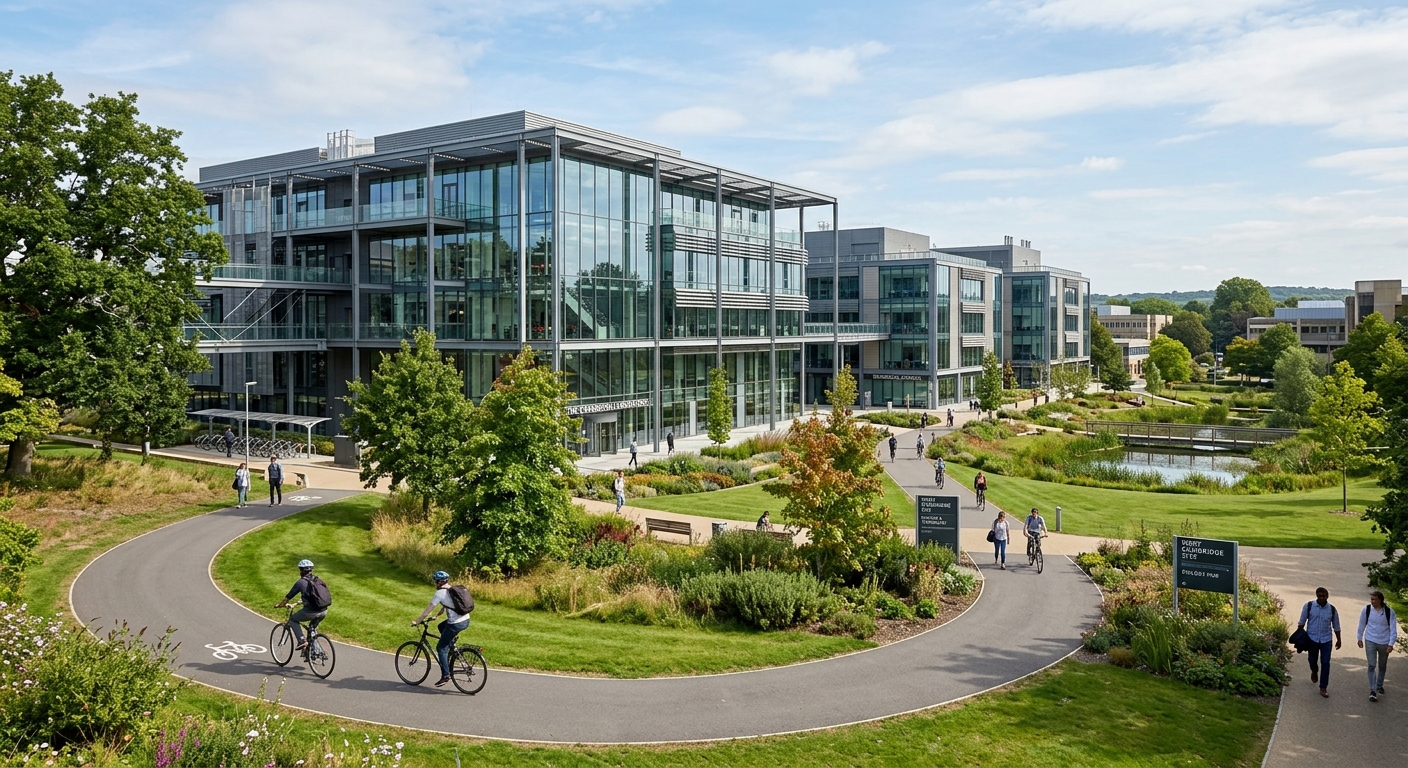
Home to the Cavendish Laboratory and other cutting-edge research facilities in physics, engineering, and technology.
Housing and Dining
College Accommodation
Most first-year undergraduates are guaranteed accommodation within their college. Rooms range from historic chambers to modern en-suite options, with contracts typically covering the academic terms.
- 31 colleges offering on-site or nearby housing
- Single-occupancy rooms with options for shared or en-suite facilities
- Graduate housing available through colleges and university-managed properties
Dining and Daily Life
Each college operates its own dining hall, many of which host the tradition of formal hall — a multi-course dinner served in a centuries-old setting. Catered and self-catered options are available.
- Formal Hall dinners in historic college dining rooms
- College cafeterias and buttery bars for casual meals
- Over 100 libraries across colleges and departments
Student Life at Cambridge
Student Life at Cambridge
Student life at Cambridge is shaped by the unique college system, which provides a close-knit community within a large research university. Beyond academics, students have access to hundreds of clubs, societies, and cultural activities that make the Cambridge experience truly distinctive.
Cambridge: A Historic City of Innovation
Cambridge: A Historic City of Innovation
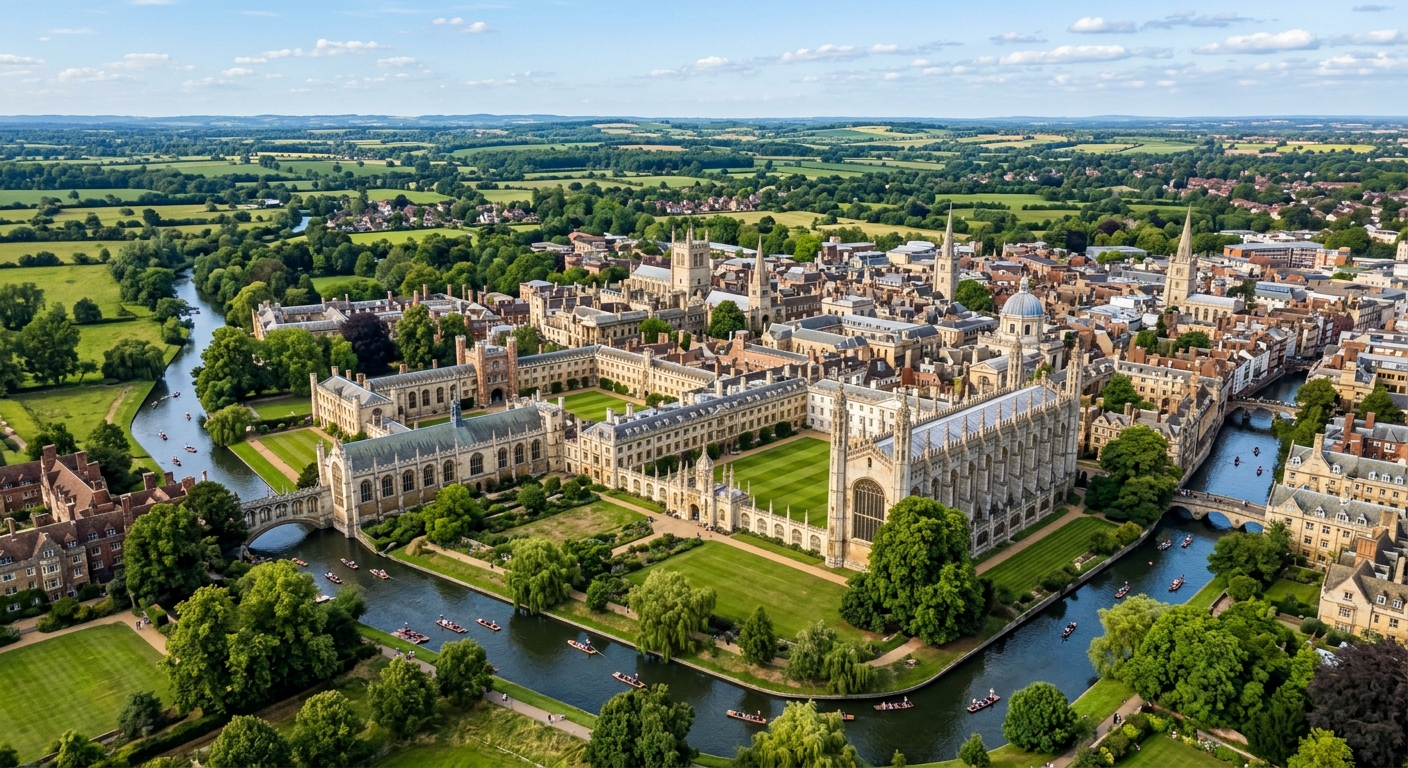
Living in Cambridge
Cambridge is a compact, bike-friendly city located about 60 miles north of London, with a population of approximately 145,000. The city blends centuries of academic heritage with a vibrant modern economy, sitting at the heart of one of the world's largest technology clusters known as Silicon Fen.
Silicon Fen Tech Cluster
Over 5,000 knowledge-intensive companies are based in the Cambridge cluster, including 24 businesses valued at more than USD 1 billion, creating exceptional internship and career opportunities.
Cultural Attractions
The Fitzwilliam Museum, Kettle's Yard gallery, and numerous college chapels and gardens offer rich cultural experiences. Punting on the River Cam is a quintessential Cambridge tradition.
Transport Links
Cambridge is well connected by direct trains to London King's Cross (under 50 minutes), London Stansted Airport, and other major UK cities. The city is also highly walkable and cycle-friendly.
Quality of Life
Cambridge offers a safe, green, and compact environment with excellent dining, independent shops, weekly markets, and easy access to the English countryside.
Career Outcomes and Distinguished Alumni
Career Outcomes and Distinguished Alumni
Where Cambridge Graduates Work
Practical Information for International Students
Practical Information for International Students
For International Students
Provides immigration advice, visa support, and orientation programmes to help international students settle into life at Cambridge. New students should allow for settling-in costs including visas, travel, and equipment.
The Language Centre offers in-sessional English courses and academic writing support for non-native speakers. Students can also access language learning resources for over 15 languages.
Students must prove they can finance their entire course before arrival. The Cambridge Trust and Gates Cambridge are the largest scholarship providers, and the university restricts working during term time.
Key Contacts
- +90 5435286292
- +44 7868736984
- [email protected]
- [email protected]
University of Cambridge: World Rankings
University of Cambridge: World Rankings
The University of Cambridge consistently ranks among the top universities in the world across all major ranking systems. Its excellence spans the sciences, humanities, engineering, and social sciences, reflecting centuries of academic leadership and continued research innovation.
| Subject | Ranking Body | Rank |
|---|---|---|
| Engineering and Technology | QS Subject Rankings | Top 5 |
| Natural Sciences | Times Higher Education | Top 5 |
| Law | QS Subject Rankings | Top 5 |
| Business and Management | QS Subject Rankings | #3 |


Features
University of Cambridge is a world-renowned institution located in Cambridge, United Kingdom, with a history dating back to around 1096. Hosting approximately 25,000 students, including a large number of international students from over 140 countries, Cambridge offers a vibrant academic environment supported by more than 13,000 staff. Its graduates enjoy a high employment rate, and the university continues to produce accomplished alumni across the globe. The academic year runs from October to June, structured across three main terms: Michaelmas, Lent, and Easter.

Accommodation
Off-Campus Accommodations Students wishing to live off-campus need to research availability on their own, and should arrive well before the start of term to do so.

Work While Studying
See guidelines on working while studying here.

Co-op/Internship Participation
Even if you do NOT meet our minimum English requirement (IELTS or TOEFL), you still can get conditionally accepted in the program of your choice with the condition of completing our English program prior to starting your chosen program.
Featured Programmes





Average Time To Receive Acceptance Letter
October - June
2 week
Location
The Old Schools, Trinity Ln, Cambridge CB2 1TN, United Kingdom

Map not found.

Uni4Edu AI Assistant