

Living Planet with Computational Methods in Ecology and Evolution MSc
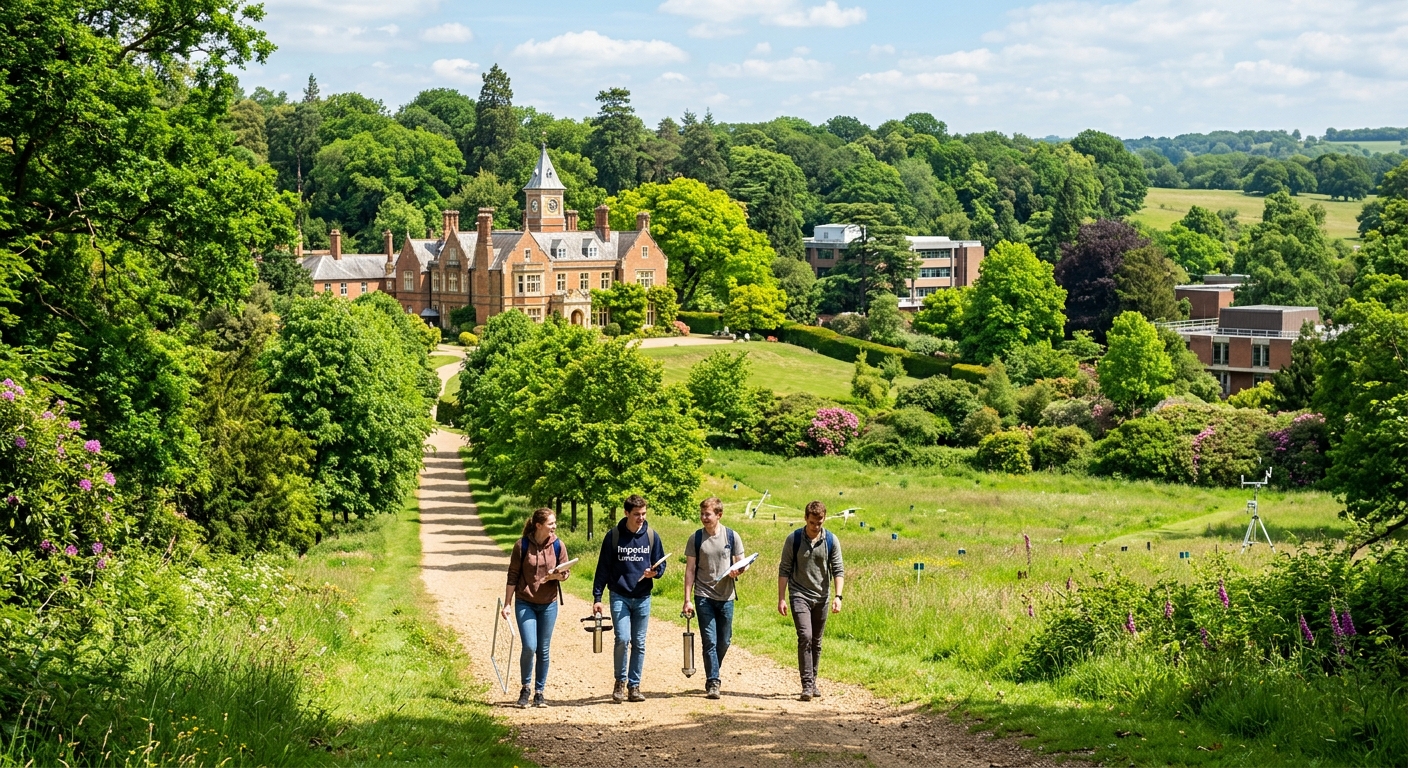
Imperial College London Silwood Park, United Kingdom
Living Planet with Computational Methods in Ecology and Evolution MSc
Imperial College London
Computational Ecology and Evolution
Program Overview
The MSc Living Planet with Computational Methods in Ecology and Evolution (CMEE) at Imperial College London trains you in cutting-edge quantitative techniques with applications to a wide range of real-world ecological and evolutionary problems. You will learn to apply mathematical modelling, computing, data science, and statistical methods to biological research questions at one of the leading institutions for quantitative biology.
Based at Imperial's Silwood Park campus, a renowned centre for ecological and environmental research, you will study alongside active researchers and benefit from access to extensive research facilities. The program covers applications including ecosystem-based solutions for industrial bioprocessing, improving food production in agroecosystems, nature-based carbon capture, and biodiversity conservation.
A major component of the program is an extended five-month independent research project, where you will develop and lead your own research question while applying the quantitative and analytical skills gained throughout the taught modules. You will graduate with highly transferable skills in data science, computing, statistics, machine learning and AI, and mathematical modelling.
Key Program Highlights
- Five-month independent research project allowing you to apply computational skills to a biological topic of your choice
- Training in data science, programming, statistics, machine learning, and mathematical modelling for ecology and evolution
- Based at Silwood Park, Imperial's dedicated campus for ecological and environmental research with extensive facilities
- Suitable for both life scientists expanding quantitative skills and physical scientists with a strong interest in environmental science
Curriculum and Modules
The CMEE MSc curriculum combines intensive training in computational and quantitative methods with their application to ecological and evolutionary biology. The taught component spans Terms 1 and 2, followed by the extended research project in Term 3 and over the summer. Many practicals are computer-based and may include web-based programming interfaces.
Introduces core programming skills in Python and R for biological data analysis, covering scripting, data manipulation, visualisation, and reproducible research workflows essential for modern quantitative biology.
Covers foundational and advanced statistical methods including generalised linear modelling, enabling you to select and apply appropriate techniques for analysing ecological, evolutionary, and environmental datasets.
Provides the mathematical foundations needed for biological modelling, including calculus, linear algebra, and differential equations as applied to population dynamics and ecological processes.
Explores mathematical and computational approaches to modelling ecological and evolutionary systems, from population dynamics and species interactions to evolutionary processes and adaptation.
Introduces machine learning and AI techniques as applied to ecological and conservation challenges, including classification, regression, and pattern recognition in biological datasets.
Elective and Specialist Modules
Admission Requirements
Admission to the CMEE MSc is competitive and assessed on an individual basis. The program welcomes applicants from a range of scientific backgrounds including biology, mathematics, physics, chemistry, engineering, statistics, and computer science. Shortlisted applicants are invited for an interview lasting approximately 10 to 20 minutes.
Academic Requirements
- Degree ClassificationMinimum 2:1 (Upper Second Class) UK honours degree or international equivalent
- Subject BackgroundDegree in life sciences, mathematics, physical sciences, or engineering
- Mathematics RequirementA suitable grounding in mathematics is required, e.g. A-level Mathematics grade A or B or equivalent
- InterviewShortlisted candidates are invited for a 10-20 minute interview after initial application review
- Work ExperienceNot required, but relevant research or professional experience is valued
English Language Requirements
- IELTS AcademicOverall 7.0 with minimum 6.5 in all elements (Higher requirement)
- TOEFL iBTOverall 100 with minimum 22 in all elements (tests before Jan 2026); new banded scores apply for tests after Jan 2026
- PTE AcademicContact Uni4Edu for current score requirements at the Higher level
Required Documents
Application Deadlines
For personalized admission guidance, document verification, and application support, please contact Uni4Edu
Scholarships and Funding
Imperial College London offers a range of scholarships and funding opportunities for postgraduate students, including those on MSc Living Planet programs. Funding may be awarded based on academic merit, financial need, or a combination of both. Contact Uni4Edu for guidance on identifying and applying for scholarships relevant to your profile.
Imperial College President's Scholarships
Prestigious merit-based scholarships available to exceptional postgraduate students regardless of nationality, supporting outstanding academic talent across Imperial's programs.
Department of Life Sciences Scholarships
Departmental funding opportunities specifically for students in the Faculty of Natural Sciences, which may cover partial fees or provide stipend support for high-achieving applicants.
External Funding and Research Council Awards
Varies by schemeVarious external scholarships from bodies such as NERC, Commonwealth Scholarships, Chevening, and Fulbright may be available to eligible students. Uni4Edu can help you identify suitable options based on your nationality and background.
For detailed tuition fee information, please contact Uni4Edu — we will guide you through the costs and available funding options for this program.
Career Prospects
Graduates of the CMEE MSc leave with highly sought-after skills in data science, computing, statistics, machine learning, and mathematical modelling that provide a competitive edge for careers in academia, NGOs, government agencies, and the private sector. Many graduates go on to pursue PhD research at leading institutions worldwide, while others enter roles in environmental consultancy, data science, and conservation management.
Potential Career Roles
Typical Employers and Destinations
Rankings and Recognition
Imperial College London is consistently ranked among the top universities globally, with particular strengths in science, engineering, and life sciences. The university's Silwood Park campus, where this program is based, is internationally recognised as a leading centre for ecological and environmental research with formal links to the Natural History Museum, Royal Botanic Gardens Kew, and the Zoological Society of London.
| Subject | Ranking Body | Rank |
|---|---|---|
| Biological Sciences | QS World Rankings by Subject | Top 20 |
| Environmental Sciences | QS World Rankings by Subject | Top 20 |
| Earth and Marine Sciences | The Guardian University Guide | Top 10 UK |
| Life Sciences and Medicine | QS Faculty Rankings | Top 10 |
How to Apply
Applying for this program is easy with Uni4Edu. Our team will guide you through every step of the process — from document preparation to final enrolment.
Contact Uni4Edu
Reach out to our team via email or phone. We will assess your profile and confirm your eligibility for this program.
Prepare Your Documents
Our advisors will provide you with a personalised checklist of required documents and help you prepare your application package.
Submit Your Application
Uni4Edu will submit your application on your behalf and keep you updated on its progress throughout the review period.
Receive Your Offer
Once accepted, we will help you understand your offer, arrange visa support if needed, and guide you through the enrolment process.
Similar Programmes


Bachelor's Degree
36 months
Physical Geography And Environment BSc (Hons)

University of York, York, United Kingdom
Earliest Intake
January 2027
Gross Tuition
32350 £

Master's & Postgraduate
12 months
Living Planet with Computational Methods in Ecology and Evolution MRes
Imperial College London, , United Kingdom
Earliest Intake
January 2027
Gross Tuition
36000 £

Master's & Postgraduate
24 months
Advanced Materials
Constructor University, Bremen, Germany
Earliest Intake
October 2026
Gross Tuition
20000 €
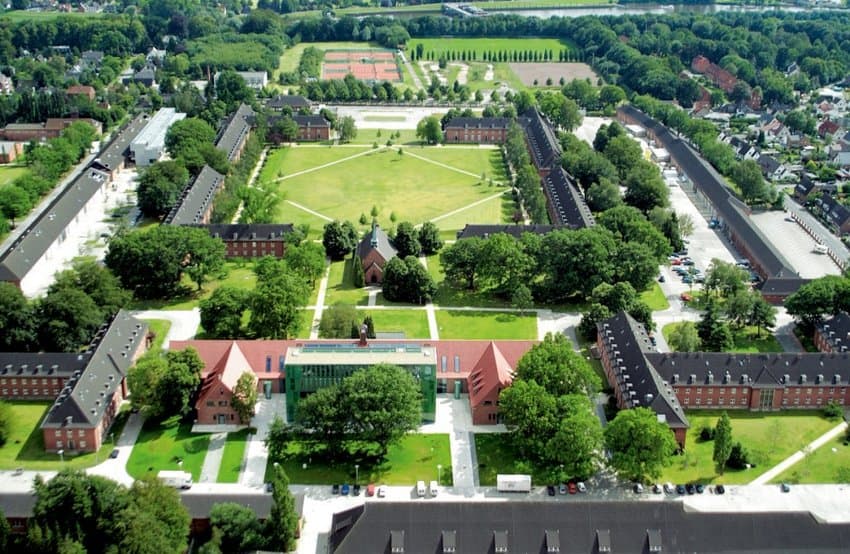
Master's & Postgraduate
24 months
Quantitative Life Science
Constructor University, Bremen, Germany
Earliest Intake
October 2026
Gross Tuition
20000 €


Bachelor's Degree
36 months
Natural Sciences
University of Magdeburg (Otto-von-Guericke University), Magdeburg, Germany
Earliest Intake
September 2026
Gross Tuition
623 €



Uni4Edu AI Assistant
