Mathematics
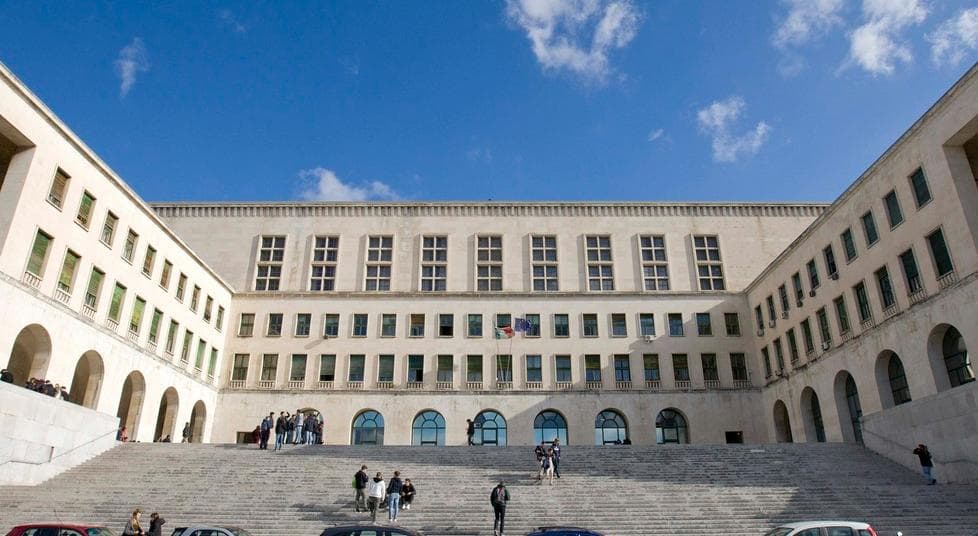
Trieste Campus, Italy
To be admitted to the degree program, students must possess a high school diploma or other equivalent qualification obtained abroad. Requirements for successful entry into the degree program include, in addition to comprehension and communication skills, basic mathematical knowledge developed in secondary school courses, and a propensity for rigorous reasoning.
Students enrolling in the first year of the Degree Program in Mathematics must take a non-selective orientation and assessment test designed to assess their aptitude and preparation for mathematics studies and identify any gaps.
The Mathematics Degree Program has chosen to use the CISIA TOLC-S test for this purpose ( https://www.cisiaonline.it/). A score of 15 is required to pass the test.
The test can be taken at the University of Trieste at the beginning of September; a retake test is held in October. Students who have not passed the entrance exam by October will be assigned an Additional Learning Obligation. The TOLC-I test will also be recognized. TOLC-S or TOLC-I tests taken at other university locations will also be recognized, both in the early and fall sessions. The procedures are defined annually in the Study Plan.
A preparatory course for first-year students is offered in September before the regular start of classes. This course reviews and discusses topics from the secondary school curriculum that form the basis of the courses taught in the first year of the program. A remedial course is also offered between October and December for those who experience difficulties at the beginning of classes. These courses also serve to fulfill the OFA (Additional Learning Requirements) for those who have not passed the TOLC test.
Students who for any reason have not passed the tests fulfill the OFA by attending at least 50% of the remedial course.
The degree program is divided into two curricula:General Curriculum and Didactic Curriculum.
The General Curriculum is designed for students wishing to acquire a solid foundation in various areas of mathematics. It prepares students specifically for the Master's Degree in Mathematics, the Advanced Mathematics curriculum, and the Computational Mathematics and Modeling curriculum.
The Didactic Curriculum is designed for students interested in secondary school teaching and the communication of mathematics and science. It prepares students specifically for the Master's Degree in Mathematics, the Mathematical Education curriculum. Students must choose their curriculum and submit a study plan at the beginning of their third year.
The academic year consists of two academic terms and three exam periods.
The curriculum is structured to provide a broad range of basic mathematics courses, along with foundations in physics and computer science. The curriculum is complemented by courses in related or complementary subjects and free-choice courses, designed to enhance the effectiveness of the program.
The final exam consists of preparing a written dissertation under the guidance of a supervisor and presenting it in a public seminar.
Part-time enrollment is available for working students, earning either 30 or 40 credits per year.
Since the University of Trieste's Master's degree program is taught entirely in English, the program places particular emphasis on the linguistic preparation of undergraduate students for the subsequent study cycle.
A collaboration agreement with the University of Ljubljana is in place to award a double degree in Mathematics. The agreement stipulates that each year, a maximum of five students enrolled at each of the two universities will attend third-year classes and take the relevant exams at the partner university. Full recognition by the host university of the exams taken by the student in the first two years of the program is also provided.
The "Luciano Fonda" University College in Trieste annually hosts deserving students from around the world, allowing them to attend courses at the University of Trieste, a city home to important international and national scientific institutions. Admission to the College is based on merit, following a selection process. Students who meet certain requirements are granted a three-year renewal of their stay in the College until they graduate with a Bachelor's Degree in Mathematics.
Similar Programmes
Master's & Postgraduate
48 months
Mathematics and Philosophy (4 Years)

University of Bristol, Bristol, United Kingdom
Earliest Intake
January 2026
Gross Tuition
31300 £

Bachelor's Degree
36 months
Mathematics (B.Sc.)
University of Göttingen, Göttingen, Germany
Earliest Intake
March 2026
Gross Tuition
7800 €

Master's & Postgraduate
48 months
Mathematics and Physics (4 Years)
University of Bristol, Bristol, United Kingdom
Earliest Intake
January 2026
Gross Tuition
31300 £
Bachelor's Degree
48 months
Primary Mathematics Teaching
İstanbul Sabahattin Zaim University, Küçükçekmece, Turkey
Earliest Intake
August 2026
Gross Tuition
7000 $
Master's & Postgraduate
48 months
Mathematics with Statistics (4 Years)
University of Bristol, Bristol, United Kingdom
Earliest Intake
January 2026
Gross Tuition
31300 £



Uni4Edu AI Assistant