University of Rostock
Rostock, Germany
University of Rostock
Rostock, Germany
Founded
1419
Institution Type
Public Research University
Total Students
13,000+
Degree Programs
170+
Discover the University of Rostock: Over 600 Years of Tradition and Innovation
Discover the University of Rostock: Over 600 Years of Tradition and Innovation
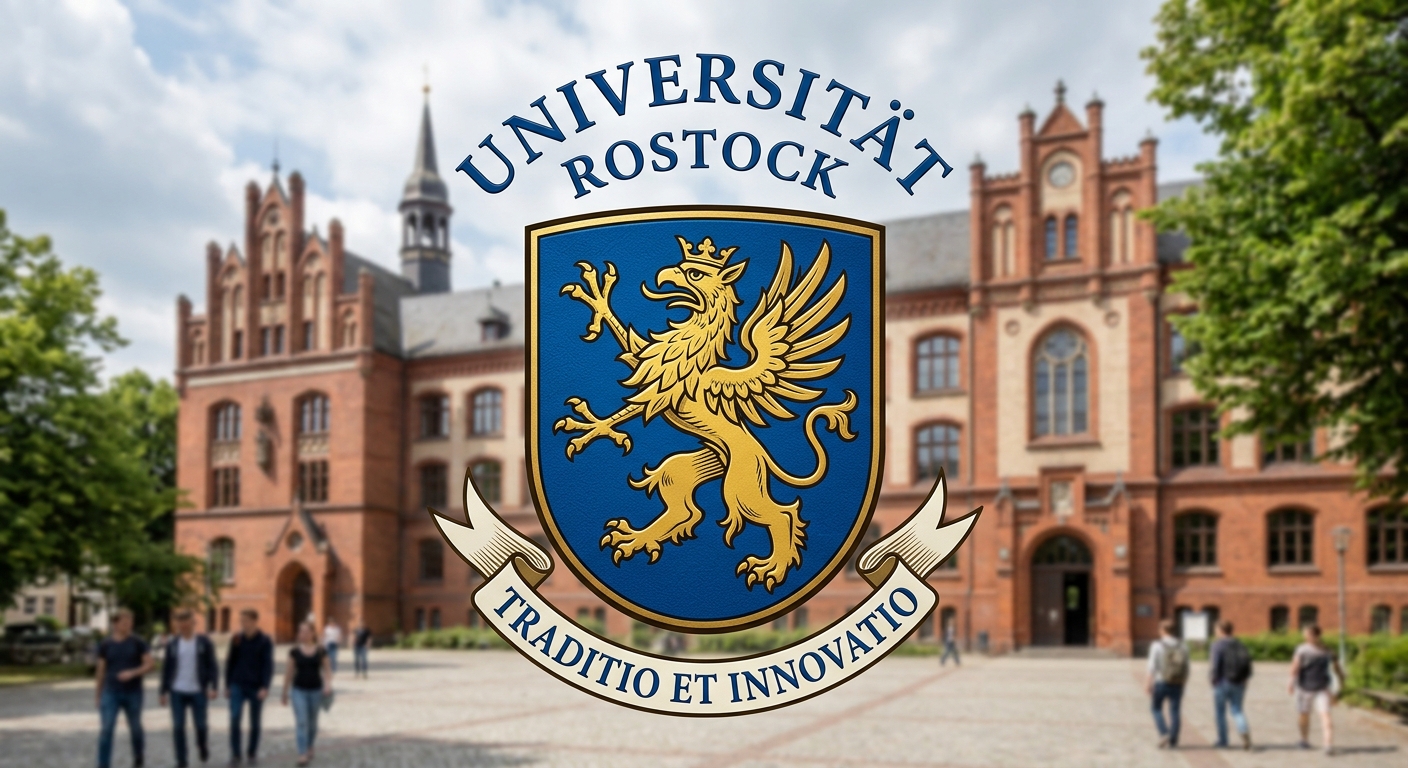
Founded in 1419 by confirmation of Pope Martin V, the University of Rostock is the third-oldest university in Germany and the oldest in the Baltic Sea region. As a public research university located in the historic Hanseatic city of Rostock in Mecklenburg-Vorpommern, it carries the motto Traditio et Innovatio, reflecting its commitment to blending centuries of academic heritage with forward-looking research and teaching.
The university offers over 170 degree programs across nine traditional faculties and one unique Interdisciplinary Faculty (INF), serving more than 13,000 students. Its cross-faculty research focuses on four major interdisciplinary fields: Life, Light and Matter; Maritime Systems; Ageing of Individuals and Society; and Knowledge, Culture and Transformation. The university collaborates with leading research organizations including the Max Planck Society, Helmholtz Association, Fraunhofer Society, and Leibniz Association.
Three Nobel laureates are associated with the University of Rostock: Albrecht Kossel (Physiology or Medicine, 1910), Karl von Frisch (Physiology or Medicine, 1973), and Otto Stern (Physics, 1943). The university also holds the distinction of being the first institution in the world to award an honorary doctorate to Albert Einstein, presented in 1919 alongside Max Planck during the university's 500th anniversary celebrations.
Key Milestones
- 1419: Founded by papal decree of Pope Martin V, becoming the oldest university in the Baltic Sea region and the fifth in the Holy Roman Empire.
- 1542: The university became Protestant, with Humanism and Lutheranism becoming defining characteristics of its academic identity.
- 1919: First university in the world to award honorary doctorates to Albert Einstein and Max Planck during the 500th anniversary celebrations.
- 2007: Establishment of the Interdisciplinary Faculty (INF), a unique cross-faculty institution in Germany bundling research across four major thematic departments.
Academic Structure and Faculties
Academic Structure and Faculties
The University of Rostock comprises nine traditional faculties and one central Interdisciplinary Faculty, offering a comprehensive range of bachelor's, master's, state examination, and doctoral programs. The university is known for its wide subject range spanning humanities, natural sciences, engineering, law, medicine, theology, and agricultural sciences.
Faculty of Mathematics and Natural Sciences
Uniting the institutes of Biosciences, Chemistry, Mathematics, and Physics, this faculty is a cornerstone of the university's research in natural sciences with strong international rankings in chemistry and biology.
- B.Sc. / M.Sc. in Chemistry
- B.Sc. / M.Sc. in Physics
- B.Sc. / M.Sc. in Biological Sciences
Faculty of Computer Science and Electrical Engineering
Operating under the motto Technology for People, this faculty serves around 1,400 students from over 56 countries and offers programs in electrical engineering, computer science, and business informatics.
- M.Sc. in Computer Science International (English-taught)
- M.Sc. in Electrical Engineering
- B.Sc. in Business Informatics
Faculty of Mechanical Engineering and Marine Technologies
Offering disciplines such as mechanical engineering, biomedical technology, and marine technology, this faculty leverages Rostock's maritime heritage and includes an endowed chair for wind energy technology established in 2014.
- B.Sc. / M.Sc. in Mechanical Engineering
- M.Sc. in Biomedical Engineering
- B.Sc. in Marine Technology
Rostock University Medicine
As the regional maximum-care provider, the university's medical faculty offers full-spectrum therapies, cutting-edge research in health technology and medical biotechnology, and practice-based teaching for future healthcare leaders.
- State Examination in Medicine
- State Examination in Dentistry
- M.Sc. in Medical Biotechnology
Faculty of Agricultural and Environmental Sciences
Focusing on the sustainable use of resources in coastal agricultural landscapes, this faculty covers plant science, soil science, water systems, and geodesy, with strong ties to regional environmental research.
- B.Sc. in Agricultural Sciences
- M.Sc. in Environmental Engineering
- M.Sc. in Crop Science
Faculty of Economics and Social Sciences
Comprising five institutes covering Business Administration, Economics, Political Science, Sociology and Demography, and Business Education, this faculty serves approximately 1,500 students across multiple bachelor's and master's programs.
- B.Sc. in Business Administration
- M.Sc. in Economics
- B.A. in Political Science and Sociology
Admission Requirements for International Students
Admission Requirements for International Students
Undergraduate Admission
- Secondary EducationRecognized secondary school certificate equivalent to the German Abitur; non-equivalent credentials may require one year of Studienkolleg preparation
- German LanguageC1 level proficiency (TestDaF, DSH-2, or Goethe-Zertifikat C1) for German-taught programs
- English LanguageIELTS 6.5+ or TOEFL 80+ for English-taught programs
- Application PortalApply via uni-assist for non-German qualifications
- Financial ProofEUR 992 per month for visa application (non-EU students)
Graduate Admission
- Bachelor's DegreeRecognized bachelor's degree in a relevant field with strong academic record
- German LanguageC1 level for German-taught programs (TestDaF/DSH-2)
- English LanguageIELTS 6.5-7.0 or TOEFL 80-90+ for English-taught master's programs
- Application DocumentsOfficial transcripts, degree certificates, CV, motivation letter, and language certificates
- Application FeeNo application fee at the university; uni-assist may charge a processing fee
Application deadline for non-EU international students for the winter semester starting in October.
Application deadline for non-EU international students for the summer semester starting in April.
Extended deadline for EU and German applicants for certain unrestricted winter semester programs.
Programs with restricted admission (e.g., Medicine, Dentistry) may have earlier deadlines. Check the specific program page for details.
Tuition Fees and Cost of Attendance
Tuition Fees and Cost of Attendance
As a public university in Germany, the University of Rostock does not charge tuition fees for undergraduate or consecutive master's programs, regardless of nationality. Students only pay a semester contribution fee that covers administrative services, the student union, and a public transportation pass.
| Cost Item | EU Students (per semester) | Non-EU Students (per semester) |
|---|---|---|
| Tuition Fees | EUR 0 | EUR 0 |
| Semester Contribution | EUR 329 | EUR 329 |
| Health Insurance (approx.) | EUR 120/month | EUR 120/month |
| Living Costs (approx.) | EUR 980/month | EUR 980/month |
| Total | Approx. EUR 6,929 per year (semester fees + living costs) | Approx. EUR 6,929 per year (semester fees + living costs) |
DAAD Scholarships
The German Academic Exchange Service (DAAD) offers a range of scholarships for international students pursuing studies or research in Germany, including at the University of Rostock.
- Coverage: Monthly stipend, travel allowance, health insurance
- Eligibility: International students with strong academic records
- Application: Apply through the DAAD portal; deadlines vary by program
Deutschlandstipendium
A national merit-based scholarship funded jointly by the German federal government and private donors, awarded to high-achieving students regardless of nationality.
- Amount: EUR 300 per month for at least two semesters
- Criteria: Academic excellence and social engagement
- Application: Apply directly through the University of Rostock
Campus and Facilities
Campus and Facilities
The University of Rostock's campus is spread across the city of Rostock, with main locations in the historic city center at Universitaetsplatz and the modern Suedstadt campus. The university combines historic Gothic and Baroque architecture with state-of-the-art research facilities, all within easy reach of the Baltic Sea coast.
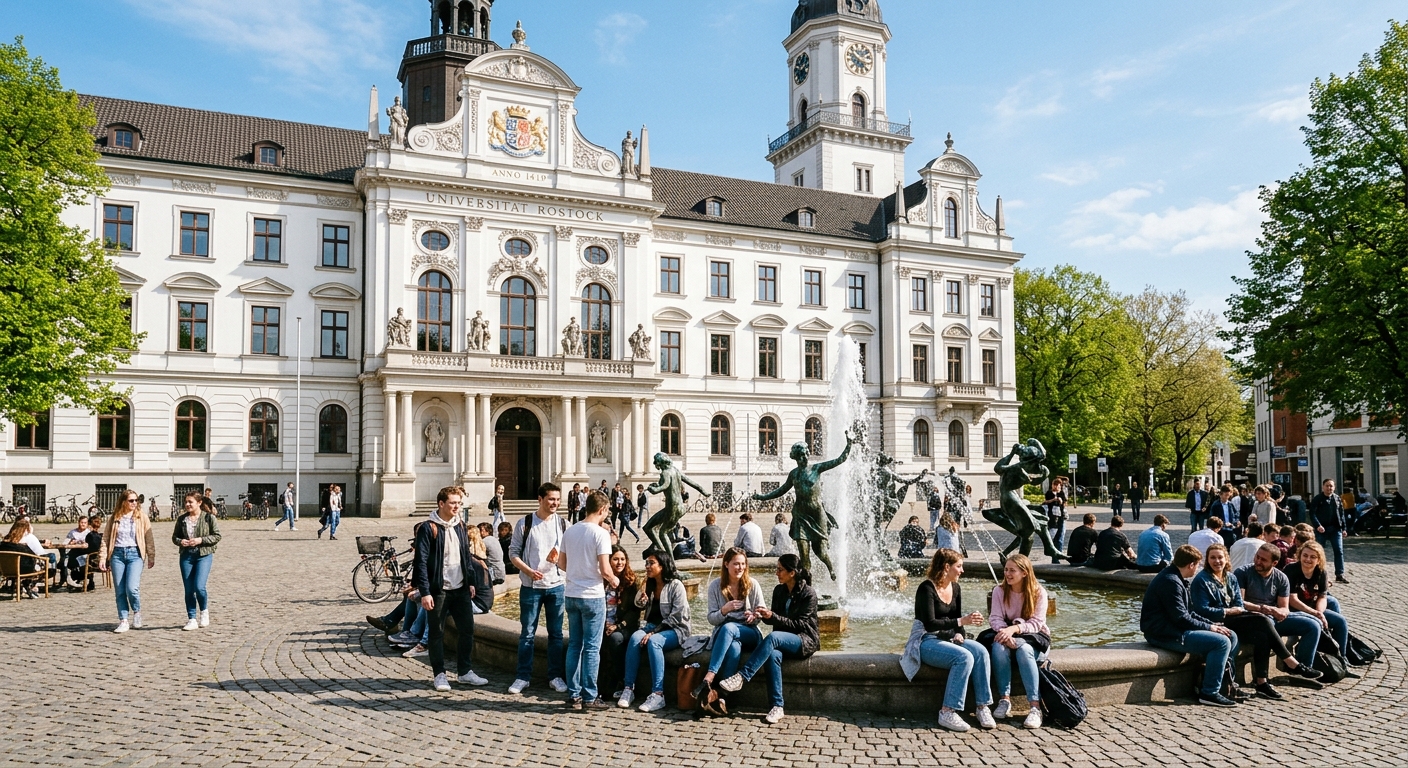
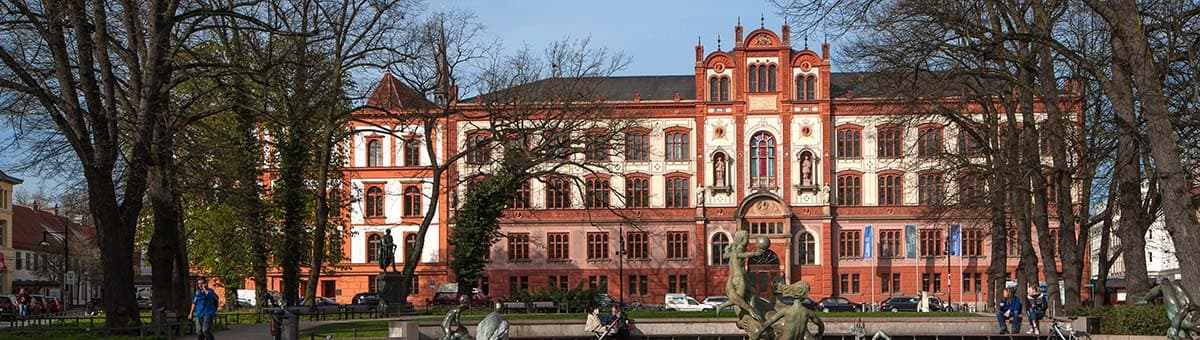
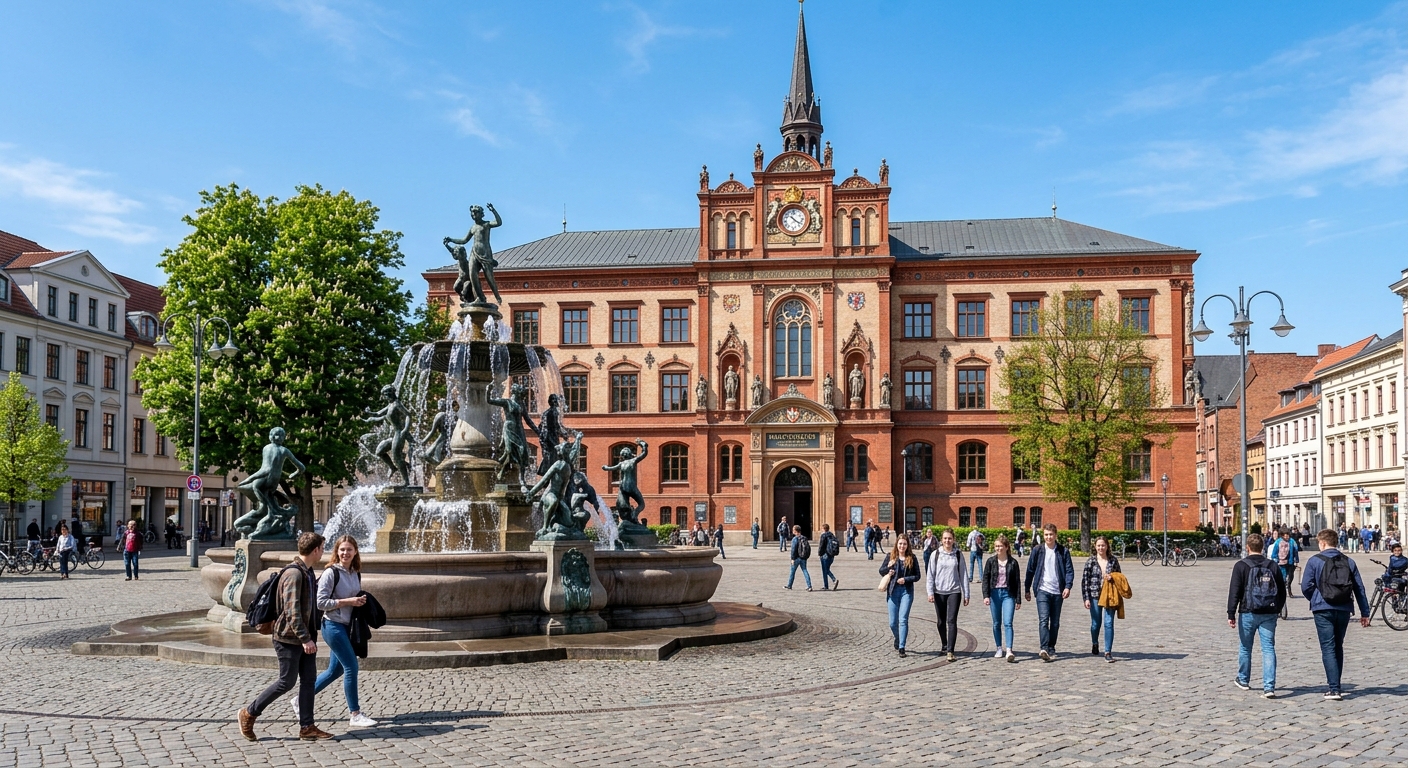
The historic heart of the university on Kroepeliner Strasse, featuring the main building and the iconic Fountain of Zest for Life.
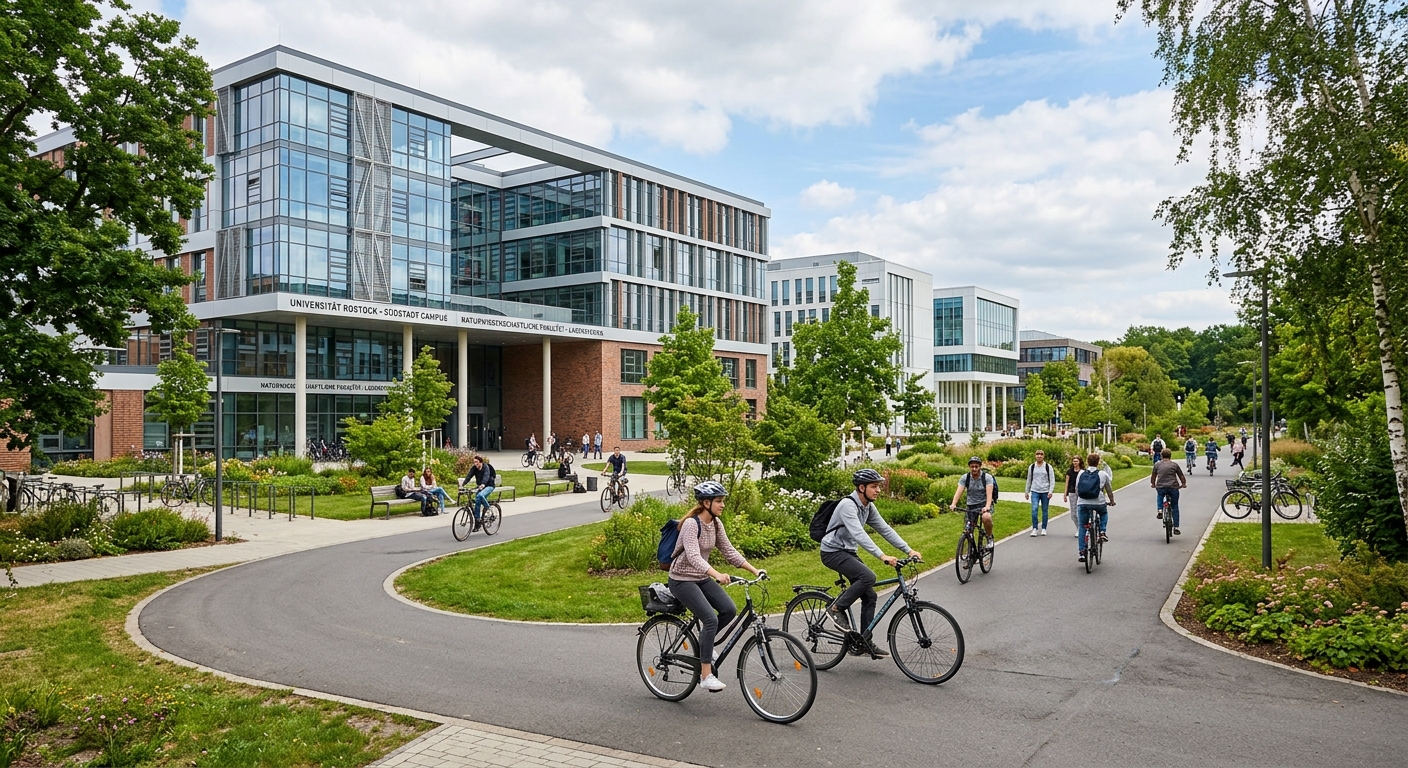
The modern science campus with vibration-protected laboratories and cutting-edge research facilities for natural sciences and engineering.
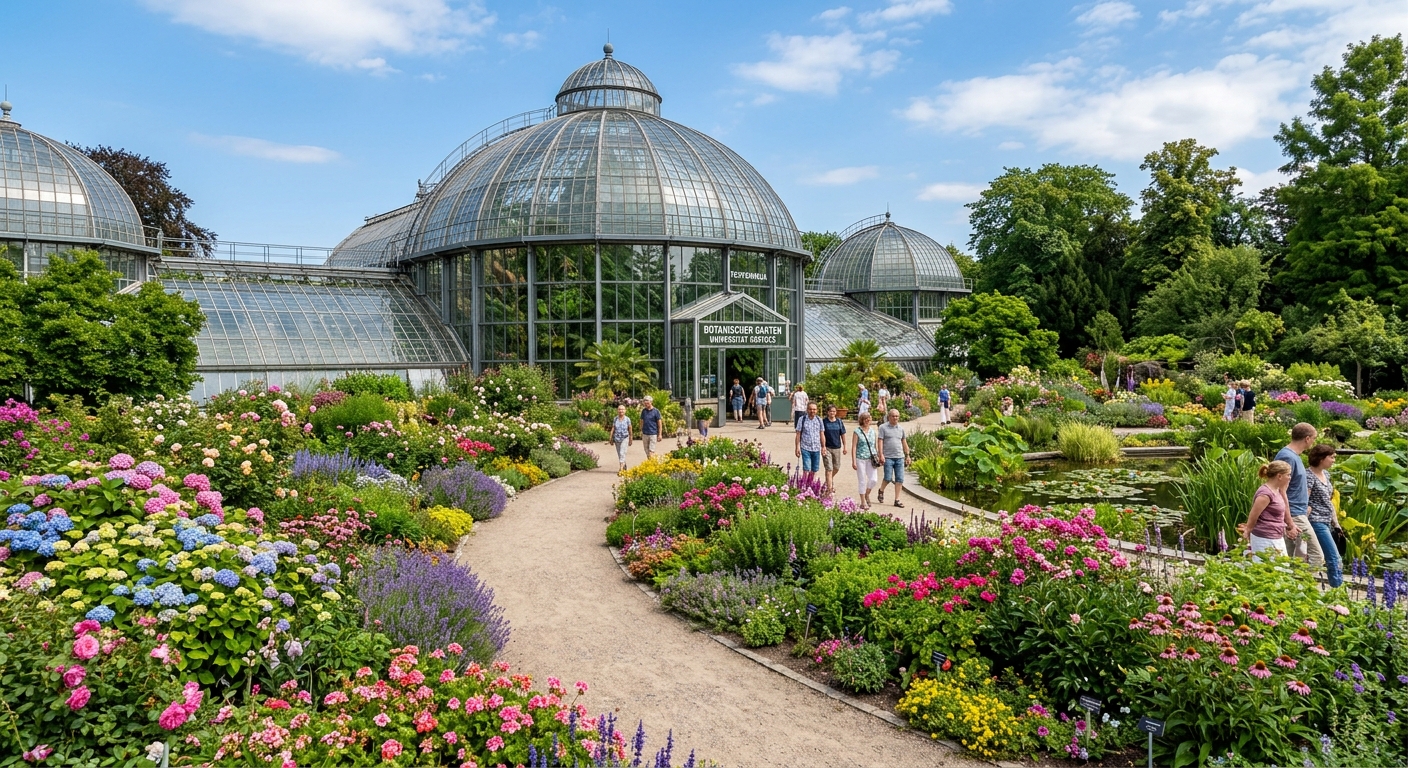
Established in 1885, the 7.8-hectare Botanical Garden houses nearly 10,000 plant species and serves as a living laboratory for research and teaching.
Housing and Dining
Student Housing
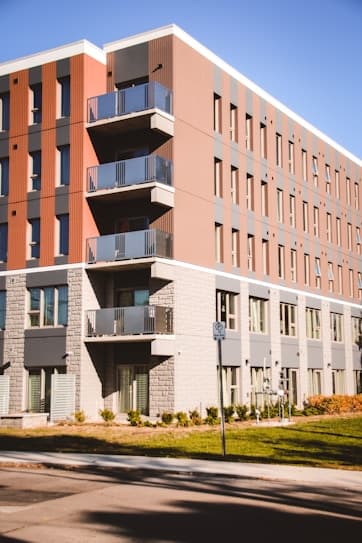
The Studierendenwerk Rostock-Wismar manages student dormitories across Rostock, offering affordable accommodation for both domestic and international students.
- Multiple dormitory locations across the city
- Affordable rents compared to other German cities
- Starter packages available for newly arriving international students
Dining and Libraries
The university operates several dining halls (Mensen) and cafeterias, plus a comprehensive library system with over 3.2 million volumes and full digital access.
- Multiple Mensa locations with affordable student meals
- University Library with two campus libraries and specialized collections
- Modern study rooms with campus-wide internet access
Student Life at the University of Rostock
Student Life at the University of Rostock
Student life in Rostock is enriched by the city's coastal charm, vibrant cultural scene, and a close-knit academic community. The popular Kroepeliner-Tor-Vorstadt (KTV) district serves as the social hub for students, offering cafes, bars, and cultural venues just minutes from campus.
Rostock: A Historic Hanseatic City by the Baltic Sea
Rostock: A Historic Hanseatic City by the Baltic Sea
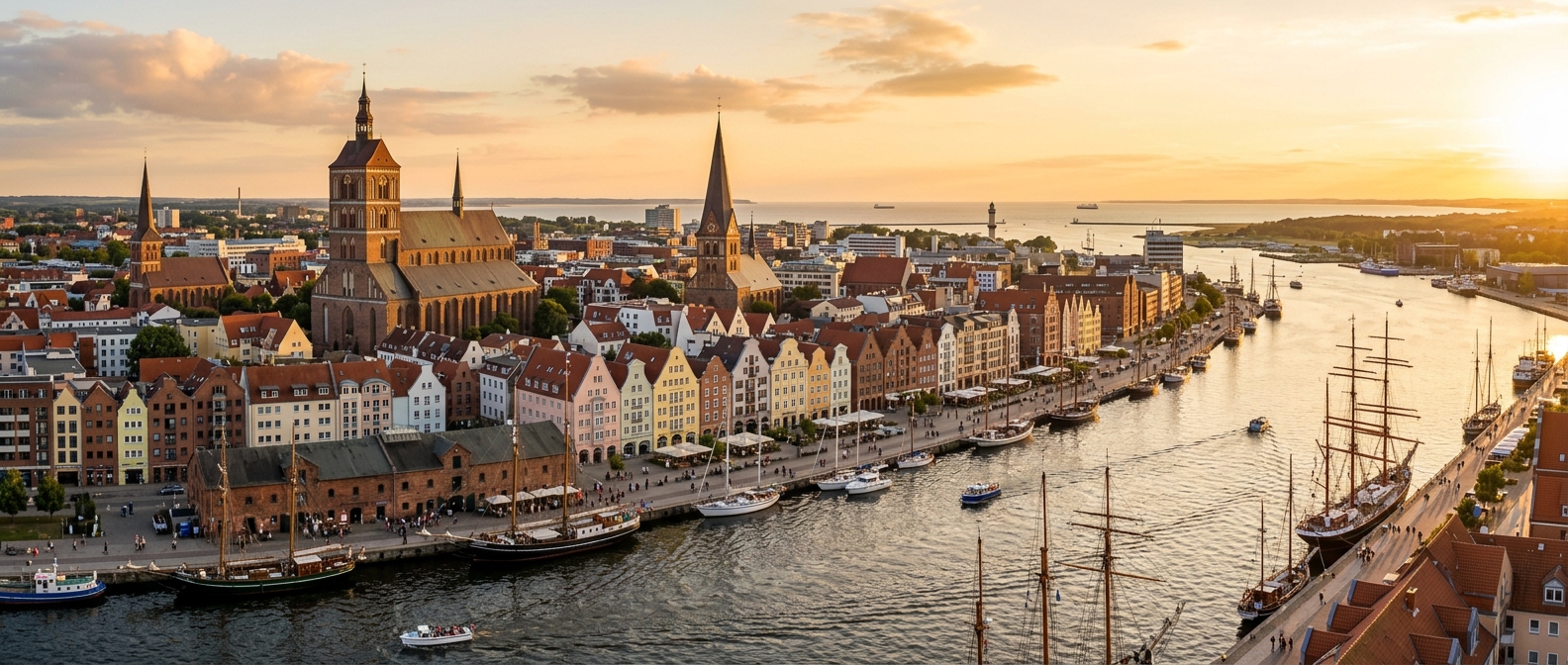
Life in Rostock
With approximately 200,000 inhabitants, Rostock is the largest city and economic center of Mecklenburg-Western Pomerania. This historic Hanseatic port city offers a unique blend of medieval architecture, a lively cultural scene, and proximity to the beautiful Baltic Sea coastline, which is just a 30-minute bicycle ride from the city center.
Baltic Sea Coast
The seaside resort of Warnemuende and miles of sandy beaches are easily accessible, offering swimming, sailing, and relaxation throughout the warmer months.
Hanse Sail Festival
Every August, Rostock hosts the Hanse Sail, one of the largest maritime festivals in the world, attracting sailing ships from around the globe and over one million visitors.
Affordable Living
Compared to larger German cities, Rostock offers affordable rents and living costs, making it an attractive destination for students on a budget. The estimated monthly cost of living is approximately EUR 980.
Cultural Scene
Rostock features theaters, museums, the IGA Park, a zoo, and the lively KTV student district with its popular cafes, bars, and clubs, ensuring a rich social and cultural experience.
Career Outcomes and Alumni Network
Career Outcomes and Alumni Network
Notable Research and Industry Partners
Practical Information for International Students
Practical Information for International Students
For International Students
The International House offers comprehensive support including orientation weeks, cultural events, buddy programs, German language courses, and assistance with residence permits and registration.
The university's Careers Service assists students and alumni with national and international job searches, providing access to job platforms, one-on-one mentorship, and employer events like Company on Campus and IT Career Night.
For doctoral and postdoctoral researchers, the Graduate Academy provides training programs, research funding alerts, and connections with platforms like EURAXESS and DFG for career development in academia and research.
Key Contacts
- +90 5435286292
- +44 7868736984
- corporate@uni4edu.com
- info@uni4edu.com
University of Rostock: Worldwide Rankings
University of Rostock: Worldwide Rankings
The University of Rostock is consistently ranked among the top universities globally and nationally. As one of Germany's oldest and most established institutions, it holds strong positions across multiple international ranking systems, with particular strengths in chemistry, medicine, and natural sciences.
| Subject | Ranking Body | Rank |
|---|---|---|
| Medicine | EduRank | #34 in Germany |
| Chemistry | EduRank | #42 in Germany |
| Biology | EduRank | #39 in Germany |
| Engineering | EduRank | #45 in Germany |


Features
The University of Rostock is the oldest universities in the Baltic Sea Region. It comprises of nine faculties. In addition, the interdisciplinary faculty as scientific key institution connects researchers and students from all disciplines in currently four profile lines: “Life, Light and Matters”, “Maritime Systems”, Ageing of Individual and Society” and “Knowledge - Culture - Transformation”.\nScientists of the University of Rostock have worked in a special research area financed by the DFG since 2016, but also in two research teams. In addition, five postgraduate programs provided junior scientists with the opportunity to participate in strongly interdisciplinary oriented research work. The University of Rostock’s third party funding volume amounted to about 50.7 Mio Euros in 2016.
Accommodation
Accommodation service is available.\n

Work While Studying
Students can work while studying.\n

Co-op/Internship Participation
There is an internship service.\n
Featured Programmes




Average Time To Receive Acceptance Letter
May - July
Location
University of Rostock 18051 Rostock

Map not found.

Uni4Edu AI Assistant