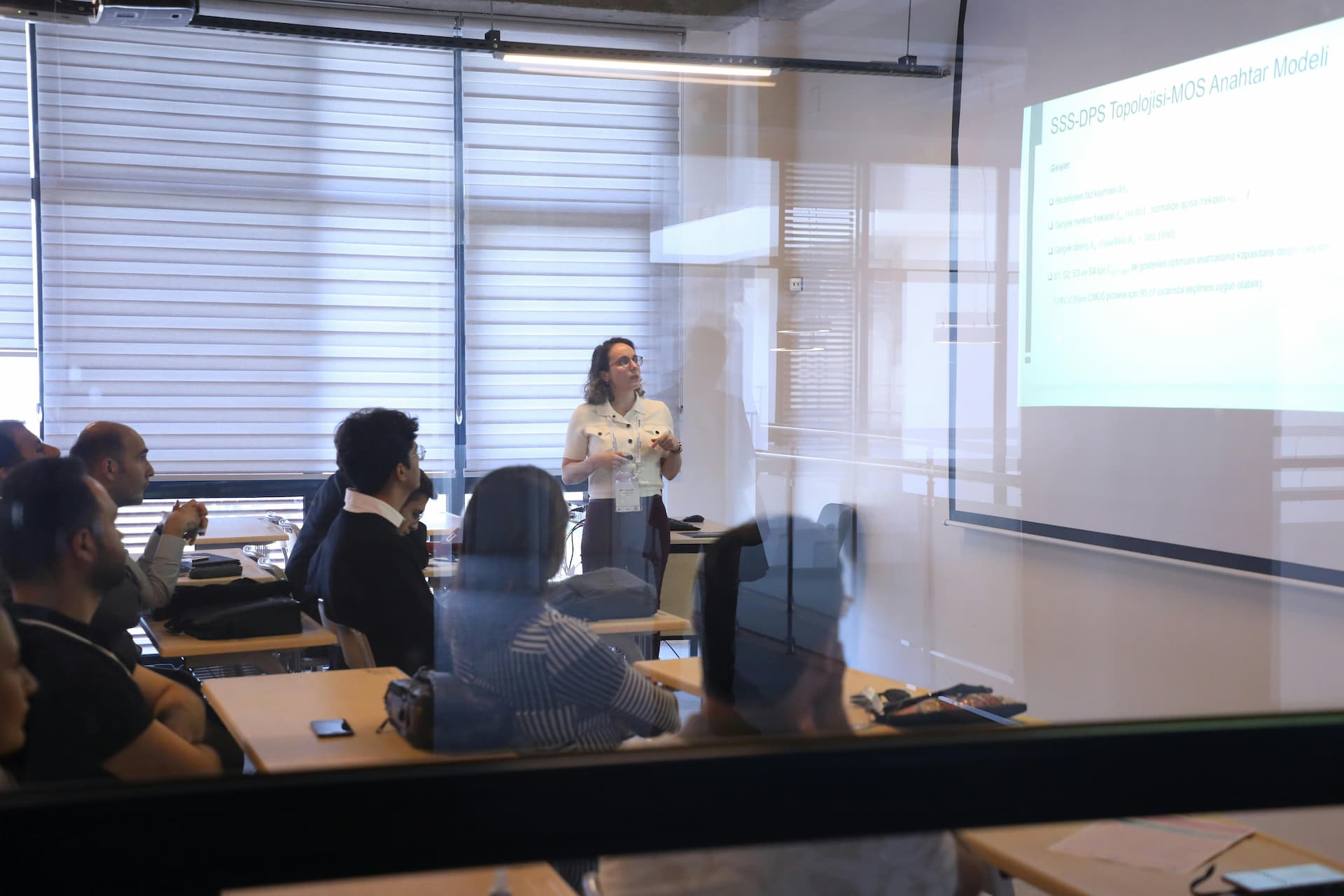
Centre for Doctoral Training - Sensing, Processing, and AI for Defence and Security PhD
King's Buildings Campus, United Kingdom


Centre for Doctoral Training - Sensing, Processing, and AI for Defence and Security PhD with Integrated Study
University of Edinburgh
Artificial Intelligence, Signal Processing & Defence Technology
Program Overview: CDT in Sensing, Processing, and AI for Defence and Security (SPADS)
The EPSRC and MoD Centre for Doctoral Training in Sensing, Processing, and AI for Defence and Security (SPADS) is a prestigious doctoral programme jointly hosted by the University of Edinburgh and Heriot-Watt University. It focuses on generation-after-next technologies for information processing in defence and security, spanning the entire range from hardware development to algorithmic AI development.
This doctoral programme with integrated study trains the next generation of UK defence engineers, computer scientists, and mathematicians in cutting-edge technologies across artificial intelligence, sensing and processing, and hardware design. Through training co-designed with industry and government partners, you will develop solid technical foundations and critical regulation and security knowledge required to work within multidisciplinary projects.
All students graduate with a joint degree awarded by both the University of Edinburgh and Heriot-Watt University. You will have access to over 50 academic supervisors from Engineering, Informatics, Mathematics and other disciplines, as well as facilities including the Edinburgh International Data Facility, the National Robotarium, and the Scottish Microelectronics Centre.
Key Program Highlights
- Joint degree awarded by both the University of Edinburgh and Heriot-Watt University, with access to 50+ academic supervisors across multiple disciplines
- Industry and government placements of 3 to 6 months with leading defence sector organisations including Dstl and MoD partners
- Access to state-of-the-art facilities including the Edinburgh International Data Facility, National Robotarium, and Scottish Microelectronics Centre
- Cohort-based training with summer schools, specialised theme meetings, innovation sandpits, and knowledge transfer events with Dstl
Curriculum & Program Structure
SPADS offers a cohesive 4-year training package centring around a PhD research project with 180 credits of mandatory integrated study. The taught component builds key skills across diverse STEM backgrounds, while the research component starts from day one and becomes increasingly dominant over the years. Opportunities for continuous professional development are available throughout, with elective courses chosen from over 100 options across participating universities.
Foundational Taught Component
Core (Year 1)An intensive taught course providing a solid understanding of fundamental concepts from hardware, sensing, and processing to software, designed to welcome applicants from different STEM backgrounds and build up key skills.
Specialist Elective Courses
Elective (Years 1-4)Choose from 100+ elective courses across the University of Edinburgh and Heriot-Watt University, spanning specialist themes such as systems engineering, AI and machine learning, signal processing, and hardware design.
PhD Research Project
Core (Years 1-4)Conduct original research tackling real-world defence and security challenges, producing new knowledge and documenting findings through academic publications and a final thesis, culminating in a viva voce examination.
Industry or Government Placement
Core (3-6 Months)Complete a placement at a partner organisation in industry, government, or academia, providing on-the-job training and connecting you with potential future employers and collaborators in the defence sector.
Cohort Development Activities
Core (Years 1-4)Participate in summer schools, specialised theme meetings, innovation and commercialisation sandpits, hackathons, and knowledge transfer meetings with Dstl and industry partners to develop skills and professional networks.
Block Training and CPD
Core (Years 2-4)Engage in co-created professional training courses delivered outside normal term times in block format, simulating the style of professional development courses encountered in engineering careers.
Specialist Theme Areas
Admission Requirements
The SPADS CDT welcomes applicants from a diverse range of STEM backgrounds. All applications are processed through Uni4Edu, and shortlisted candidates will be invited to an online or in-person interview with up to three members of academic staff from the SPADS team. Please note that applicants who require an ATAS certificate are not eligible for this programme.
Academic Requirements
- Minimum DegreeA UK 2:1 honours degree, or its international equivalent, in computer science, mathematics, physics, engineering, or a related discipline
- Prior Research DegreeNot required; applicants with only a bachelor's degree are eligible to apply
- Industrial ExperienceApplicants with significant industrial experience or relevant professional qualifications and a minimum bachelor's degree will be considered on a case-by-case basis
- Security ClearanceAll admitted students must pass a Baseline Personnel Security Standard (BPSS) check as a condition of enrolment
- ATAS RequirementApplicants who require an ATAS certificate to study in the UK are not eligible for this programme
English Language Requirements
- IELTS AcademicTotal 6.5 with at least 6.0 in each component
- TOEFL iBTTotal 92 with at least 20 in each component
- C1 Advanced (CAE) / C2 Proficiency (CPE)Total 176 with at least 169 in each component
Required Documents
Application Deadlines
For personalized admission guidance, document verification, and application support, please contact Uni4Edu
Scholarships & Funding
The SPADS CDT offers comprehensive funding packages to successful applicants, covering tuition fees and providing generous stipends. Funded places are available for both home and international students, with international places limited in number. You do not need to apply separately for funding; all admitted students are automatically considered.
SPADS CDT Studentship (Home Fee Rate - TechExpert Enhanced)
Home fee rate students are eligible for the TechExpert Enhanced Stipend, a pilot scheme funded by EPSRC as part of the UK's modern industrial strategy. This covers full tuition fees for four years plus a generous tax-free annual stipend and research training support grant.
SPADS CDT Studentship (International)
A limited number of fully funded places are available for international students who do not require ATAS clearance. The package includes full tuition fees for four years, a tax-free annual stipend, and a research training and support grant.
SPADS Research Training and Support Grant (RTSG)
Included in studentship packageAll SPADS students receive a substantial research training and support grant over the 4-year PhD, providing funding for access to key facilities, conference attendance, equipment, and other research-related expenses beyond what typical PhD scholarships offer.
For detailed tuition fee information, please contact Uni4Edu — we will guide you through the costs and available funding options for this program.
Career Prospects
SPADS is specifically designed to build a lasting talent pipeline for the UK defence and security sector. Through industry placements, co-supervision with government and industry partners, and extensive networking opportunities, graduates are exceptionally well-prepared for careers in defence technology, AI research, and advanced engineering. The programme's co-design with the Ministry of Defence and leading defence companies ensures that research projects address real industry needs.
Potential Career Roles
Key Industry and Government Partners
Rankings & Recognition
The University of Edinburgh is consistently ranked among the top universities in the world, with particular strength in engineering, informatics, and artificial intelligence. As a Russell Group university and one of Scotland's ancient institutions founded in 1583, Edinburgh offers an exceptional research environment for doctoral study in defence technology and AI.
| Subject | Ranking Body | Rank |
|---|---|---|
| Electrical and Electronic Engineering | National Rankings | #1 in UK |
| Computer Science and Information Systems | QS Subject Rankings | Top 50 |
| Engineering and Technology | THE Subject Rankings | Top 50 |
| Mathematics | QS Subject Rankings | Top 50 |
How to Apply
Applying for this program is easy with Uni4Edu. Our team will guide you through every step of the process — from document preparation to final enrolment.
Contact Uni4Edu
Reach out to our team via email or phone. We will assess your profile and confirm your eligibility for this program.
Prepare Your Documents
Our advisors will provide you with a personalised checklist of required documents and help you prepare your application package.
Submit Your Application
Uni4Edu will submit your application on your behalf and keep you updated on its progress throughout the review period.
Receive Your Offer
Once accepted, we will help you understand your offer, arrange visa support if needed, and guide you through the enrolment process.
Similar Programmes

Master's & Postgraduate
16 months
Satellite Systems Engineering MSc

University of Bradford, Bradford, United Kingdom
Earliest Intake
August 2026
Gross Tuition
19500 £


Master's & Postgraduate
12 months
Electronic Engineering
Prifysgol Bangor University, Bangor, United Kingdom
Earliest Intake
May 2027
Gross Tuition
21000 £

Master's & Postgraduate
12 months
Marine Renewable Energy
Prifysgol Bangor University, Bangor, United Kingdom
Earliest Intake
May 2027
Gross Tuition
19500 £


Master's & Postgraduate
12 months
MSc Engineering Management
BPP University, City of London, United Kingdom
Earliest Intake
July 2027
Gross Tuition
17100 £


Bachelor's Degree
48 months
Engineering (BS)
University Of Arizona, Tucson, United States
Earliest Intake
May 2027
Gross Tuition
39958 $



Uni4Edu AI Assistant