Experimental and Clinical Neuroscience MA
Cologne Campus, Germany

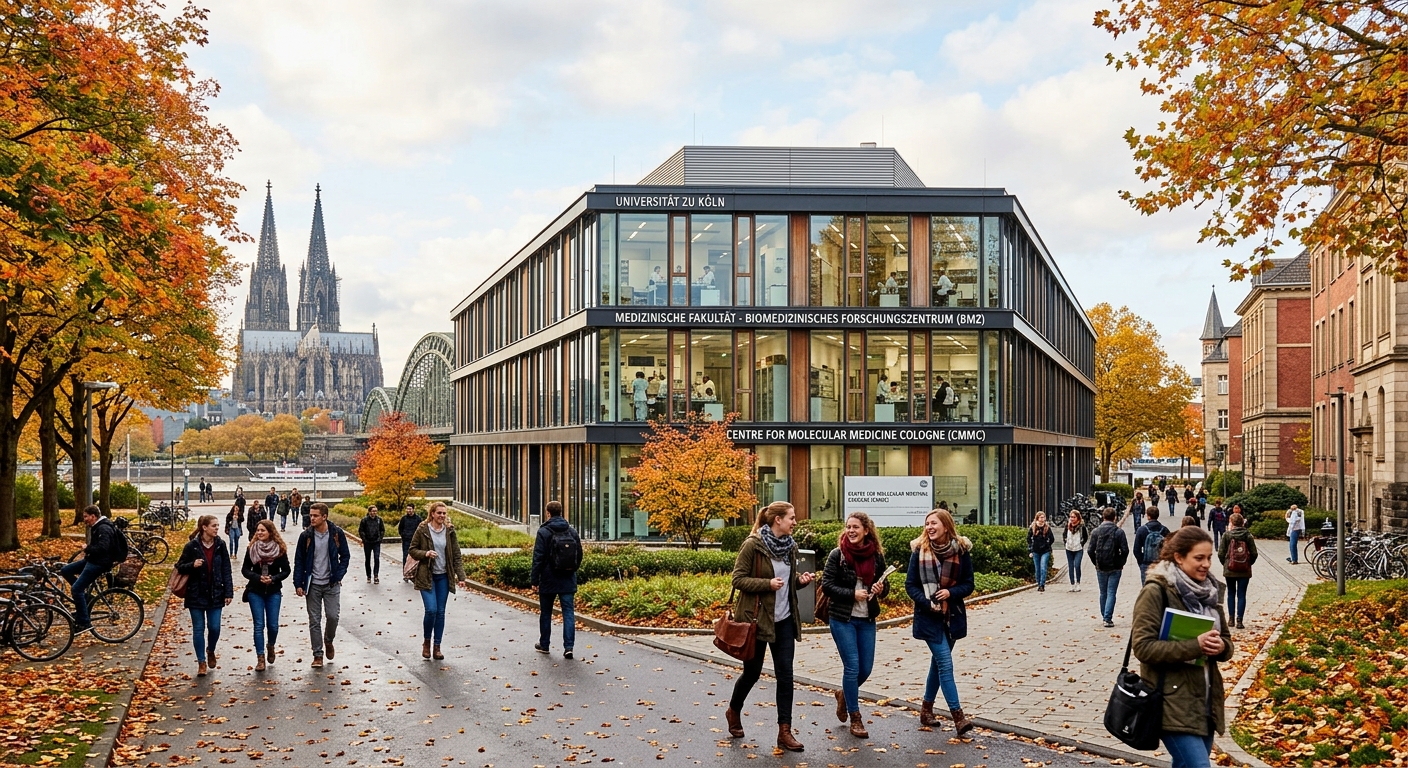
Master of Science in Experimental and Clinical Neuroscience
University of Cologne
Neuroscience
Program Overview: M.Sc. Experimental and Clinical Neuroscience
The Master of Science in Experimental and Clinical Neuroscience at the University of Cologne is an interfaculty and interdisciplinary research-oriented degree program jointly offered by the Faculty of Medicine and the Faculty of Mathematics and Natural Sciences. It enables students to specialize in experimental and/or clinical neurosciences on a flexible, individually shaped modular basis.
The program combines theoretical and practical training through lectures, seminars, demonstrations, and obligatory laboratory projects spread across four semesters. With 24 advanced modules to choose from, students can tailor their studies to their scientific background and career goals, focusing on either molecular or clinical neuroscience pathways.
Graduates are qualified to work with a repertoire of scientific methods that exceed traditional neuroscientific disciplines, preparing them for careers in academic research, the pharmaceutical industry, scientific publishing, and coordinative positions in neuroscientific organizations. The program also provides strong pathways to doctoral studies through collaborations such as the European Graduate School in Neurosciences (EURON).
Key Program Highlights
- Interfaculty program bridging the Faculty of Medicine and the Faculty of Mathematics and Natural Sciences, incorporating all relevant institutes and clinics
- Highly flexible modular structure with 24 advanced modules allowing individualized specialization in molecular or clinical neuroscience
- Strong practical component with obligatory laboratory internships, project work, and research-oriented training in cutting-edge facilities
- Direct pathway to Ph.D. programs through collaborations with the European Graduate School in Neurosciences (EURON) and Marie Curie Training Sites
Curriculum and Modules
The M.Sc. Experimental and Clinical Neuroscience curriculum is structured around advanced modules (66 credit points), supplementary project modules (24 credit points), and a master's thesis (30 credit points). Students select their advanced modules from a pool of 24 available courses offered by both faculties, allowing them to build a personalized study path aligned with their research interests and scientific background.
Neural Function I: Analyzing the Neural Underpinning of Behavior
Varies (part of 66 CP advanced modules)This module explores the relationship between neural structure, function, and behavior using in vivo and ex vivo approaches. Students gain hands-on experience with electrophysiology and imaging techniques at the single-cell and network levels.
Neurophysiological and Genetic Approaches for Brain Function Analysis
Varies (part of 66 CP advanced modules)Covers advanced neurophysiological recording methods and genetic manipulation techniques used to investigate brain function. Students learn to apply modern molecular and genetic tools for analyzing neural circuits.
Cellular Signal Transmission and Repair Mechanisms
Varies (part of 66 CP advanced modules)Focuses on the molecular mechanisms of cellular signaling in the nervous system and repair processes following neural damage. Includes practical laboratory work on signal transduction pathways and neuroregeneration.
Cognitive Neuroscience
Varies (part of 66 CP advanced modules)Examines the neural basis of cognitive processes such as perception, attention, memory, and decision-making. Students explore current research paradigms and brain imaging methodologies used in cognitive neuroscience.
Supplementary Modules (Project Work I and II)
24 CP (total for two projects)Two six-week research internships completed in laboratories at the University of Cologne or internationally. Each project concludes with a written report and provides hands-on experience in scientific research methodology.
Master's Thesis
30 CPAn independent research project conducted under the supervision of two examiners from different research groups and institutions. The thesis demonstrates the student's ability to carry out original neuroscientific research and present findings according to scientific standards.
Elective Specialization Areas
Admission Requirements
Admission to the M.Sc. Experimental and Clinical Neuroscience program is competitive and subject to a Numerus Clausus (limited number of places). The admissions committee evaluates each application based on academic qualifications, relevant coursework, and an assessment procedure that may include an interview. Reach out to Uni4Edu for personalized guidance on preparing a strong application.
Academic Requirements
- Bachelor's DegreeCompleted Bachelor of Science (or equivalent) in a biomedical field, psychology, mathematics, or computer sciences
- Academic BackgroundRelevant coursework in natural or neurosciences, or biomedicine is required
- Selection ProcedureIncludes an assessment procedure; an interview may be required as part of the selection process
- Credential EvaluationApplicants with non-German degrees require a preliminary review documentation (VPD) for grade conversion
- School Leaving CertificateSchool leaving certificate or equivalent qualification granting access to German universities
Language Requirements
- English ProficiencyProof of English proficiency is required for non-native speakers; contact Uni4Edu for accepted certificates and minimum scores
- German ProficiencyGerman language skills may be beneficial for clinical modules; contact Uni4Edu for specific requirements
- Instruction LanguageProgram modules are offered in English and German depending on the course selection
Required Documents
Application Deadlines
For personalized admission guidance, document verification, and application support, please contact Uni4Edu
Scholarships and Funding
The University of Cologne does not charge tuition fees for this program, making it an affordable option for international students. However, students are responsible for a semester contribution fee and living expenses. Several scholarship opportunities are available to help cover these costs. Contact Uni4Edu for personalized assistance in identifying and applying for funding opportunities.
DAAD Scholarships for International Students
Varies (typically EUR 861 per month for Master's students plus allowances)The German Academic Exchange Service (DAAD) offers a range of scholarships for international Master's students studying in Germany. These awards typically cover living expenses, health insurance, and travel costs. Eligibility and amounts vary by program and country of origin.
Deutschlandstipendium (Germany Scholarship)
EUR 300 per monthA merit-based scholarship available to high-performing students at German universities, funded jointly by the federal government and private sponsors. The scholarship is awarded regardless of nationality and supports students for at least two semesters.
Cologne Graduate School Funding
The University of Cologne offers various funding opportunities through its graduate schools and research centers, particularly for students transitioning into doctoral programs. These may include research assistantships and project-based stipends connected to the Faculty of Medicine and Faculty of Mathematics and Natural Sciences.
For detailed tuition fee information, please contact Uni4Edu — we will guide you through the costs and available funding options for this program.
Career Prospects
Graduates of the M.Sc. Experimental and Clinical Neuroscience program are equipped with advanced scientific methods and interdisciplinary expertise that open doors to diverse career paths. The program qualifies students for professional roles in academic research, the pharmaceutical industry, clinical settings, scientific publishing, and neuroscientific organizations. Many graduates also pursue doctoral studies, benefiting from the strong Ph.D. pathways available through the University of Cologne's research networks.
Potential Career Roles
Typical Employers and Sectors
Rankings and Recognition
The University of Cologne is one of Germany's oldest and most research-intensive public universities, founded in 1388. It consistently ranks among the top universities globally, with particular strengths in Life Sciences, Medicine, and Neuroscience and Behavior. The university's strong international reputation and collaborative research environment make it an outstanding choice for advanced neuroscience studies.
| Subject | Ranking Body | Rank |
|---|---|---|
| Life Sciences and Medicine | QS World University Rankings | Top 200 |
| Neuroscience and Behavior | U.S. News Best Global Universities | Top 200 |
| Clinical Medicine | U.S. News Best Global Universities | Top 200 |
| Molecular Biology and Genetics | U.S. News Best Global Universities | Top 250 |
How to Apply
Applying for this program is easy with Uni4Edu. Our team will guide you through every step of the process — from document preparation to final enrolment.
Contact Uni4Edu
Reach out to our team via email or phone. We will assess your profile and confirm your eligibility for this program.
Prepare Your Documents
Our advisors will provide you with a personalised checklist of required documents and help you prepare your application package.
Submit Your Application
Uni4Edu will submit your application on your behalf and keep you updated on its progress throughout the review period.
Receive Your Offer
Once accepted, we will help you understand your offer, arrange visa support if needed, and guide you through the enrolment process.
Similar Programmes

Bachelor's Degree
36 months
Neuroscience Bsc

University of Roehampton, London, United Kingdom
Earliest Intake
January 2026
Gross Tuition
17628 £


Bachelor's Degree
12 months
Neuropharmacology and Behaviour (Intercalated) BMSc (Hons)
University of Dundee, Dundee City, United Kingdom
Earliest Intake
July 2026
Gross Tuition
22500 £

Bachelor's Degree
48 months
Neuroscience
Loyola University New Orleans, New Orleans, United States
Earliest Intake
October 2026
Gross Tuition
47390 $

Bachelor's Degree
48 months
BS in Neuroscience with a Biology concentration
Loyola University New Orleans, New Orleans, United States
Earliest Intake
March 2027
Gross Tuition
47390 $

Bachelor's Degree
48 months
BS in Neuroscience with a Psychology concentration
Loyola University New Orleans, New Orleans, United States
Earliest Intake
March 2027
Gross Tuition
47390 $



Uni4Edu AI Assistant