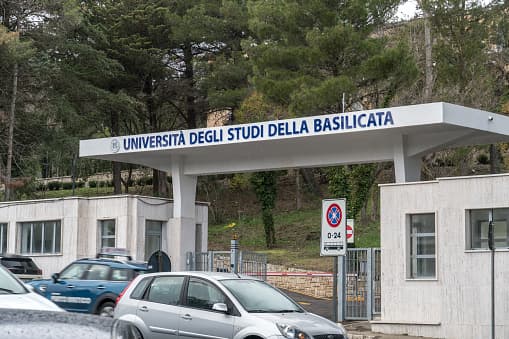
Forestry and Environmental Sciences Graduate
Matera Campus, Italy
Upon completion of their studies, graduates will develop personal communication skills, multidisciplinary teamwork, and judgmental abilities, both technically and economically, as well as humanly and ethically. They will be able to use, both in writing and orally, at least one European Union language, preferably English, in addition to Italian, with specific reference to disciplinary vocabulary.
These skills can be fostered by creating opportunities for students to present publicly, that is, in the presence of colleagues and faculty. This is achieved through oral presentations on topics and themes being explored, reports on educational experiences
(technical educational visits, company internships, etc.), and, of course, through careful preparation for the final dissertation, which represents the culmination of their university career. Study experiences and internships abroad clearly allow students to develop or enhance their linguistic skills, which, in addition to broadening their potential communication skills, open up further opportunities to acquire new knowledge that would otherwise be precluded.
Even for this descriptor, the assessment of these skills can be monitored by the teacher during the aforementioned activities.
Autonomy of judgment.
Graduates with a Master's degree in Forestry and Environmental Sciences must possess the ability to use the scientific method to acquire the necessary information and assess its implications in a production and market context, formulating independent judgments and implementing interventions to improve the quality and efficiency of forestry production and all other related activities, ensuring their environmental sustainability and eco-compatibility.
Creativity and innovation thrive when critical thinking, awareness, and independent interpretation are integrated into a solid foundation of knowledge. Any experience that broadens horizons beyond strictly local contexts allows for significant empowerment in independent judgment; in this regard, study and work placements at other universities, both domestically and especially abroad, are encouraged through well-established mobility programs such as LLP/Erasmus, Leonardo da Vinci, International Cooperation (TEMPUS Community Program), etc., as well as collaborations between research groups and interdisciplinary teams of scholars, including those undertaken by thesis or graduate students. Within the same scope of experience, other opportunities include technical educational visits, pre-employment contacts with companies, brief but intensive research collaborations at university departments, internships at university or private laboratories and studios, etc.
Although it is extremely difficult to directly assess the achievement of this learning outcome on a per-person basis, it is possible to indirectly assume that the richer and more diverse the educational experience evidenced by a student's curriculum, the more complete and informed the acquired knowledge should be. The discussion encouraged by the instructor during practical exercises on topics requiring independent decision-making is a useful tool both for training students in independent judgment and for assessing their level of maturity. This is a very useful indicator at a general level, capable of highlighting the consistency and effectiveness of training opportunities at research institutes and institutions, both internal and external to the faculty of reference, and even abroad. Certificates relating to attendance at courses, seminars, and conferences organized alongside institutional courses and having a markedly integrative purpose constitute further evidence of a cultural interest that leads to the acquisition of strong independent judgment as well as solid professional preparation.
The program prepares graduates for careers as specialists in the fields of Forestry and Environmental Sciences.
The most significant career opportunities are in agriculture, forestry, environmental and land planning and management, and the wood industry. Specifically, graduates in Forestry and Environmental Sciences will be able to pursue professional activities with complete decision-making autonomy in forest management, land and environmental monitoring and planning, the production and marketing of forestry products, and environmental and technical-professional education and training, as well as in land appraisal, cadastral, cartographic, and planning. Given the close connection between the master's degree program and research in the relevant field, graduates will possess the skills and abilities necessary to perform advanced research support activities at public and private institutions. They will be able to access subsequent levels of training and hold positions of responsibility within public bodies and private companies.
Similar Programmes


Bachelor's Degree
48 months
Environmental Science

Manhattan University, Bronx, United States
Earliest Intake
June 2025
Gross Tuition
44100 $

Bachelor's Degree
48 months
Environmental Science
North Park University, Chicago, United States
Earliest Intake
May 2026
Gross Tuition
36070 $


Bachelor's Degree
48 months
Environmental Sciences
University of Toledo, Toledo, United States
Earliest Intake
June 2026
Gross Tuition
37119 $

Master's & Postgraduate
12 months
Marine Systems and Policies MSc
University of Edinburgh, Edinburgh, United Kingdom
Earliest Intake
January 2026
Gross Tuition
40800 £
Bachelor's Degree
48 months
BS in Field Biology
Loyola University New Orleans, New Orleans, United States
Earliest Intake
October 2026
Gross Tuition
47390 $



Uni4Edu AI Assistant