Microbiology (BS)
Main Campus, Tucson, United States


Bachelor of Science in Microbiology
University of Arizona
Microbiology
Program Overview: BS in Microbiology
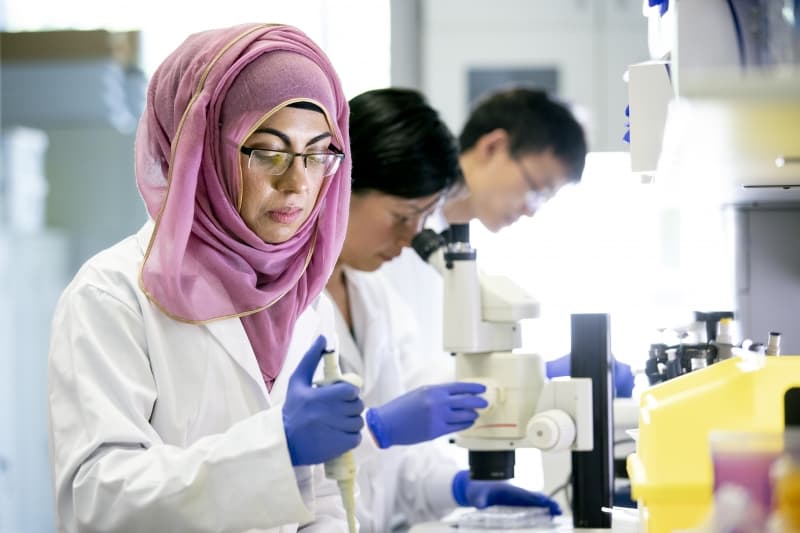
The Bachelor of Science in Microbiology at the University of Arizona prepares you to apply systems thinking and develop solutions to protect our planet, its plant life, and its human and other inhabitants from microbial threats. This major is ideal for students pursuing careers in scientific research, medicine, and veterinary care.
Developed in partnership with the Department of Environmental Science and the School of Plant Sciences, this program focuses on environmental and medical microbiology, as well as food safety, consumer health, and plant pathology. You will study microorganisms including bacteria, viruses, fungi, and protozoa while exploring how these small organisms make a big impact on everyday life.
Students may choose to specialize in medical microbiology, infectious disease, food safety, consumer health, plant pathology, environmental microbiology, or microbial genomics and biotechnology. The program also offers an accelerated master's pathway, allowing exceptional undergraduates to earn both a BS and MS within approximately five years.
Key Program Highlights
- Housed within the College of Agriculture, Life and Environmental Sciences with interdisciplinary faculty across multiple departments
- Multiple specialization tracks including medical microbiology, infectious disease, environmental microbiology, and food safety
- Accelerated BS-to-MS pathway allowing completion of a master's degree in just one additional year after the bachelor's
- Hands-on laboratory, field, and research experiences integrated throughout the curriculum with active Microbiology Club
Curriculum and Modules
The BS in Microbiology requires a minimum of 120 units, including at least 42 upper-division units. The curriculum integrates foundational sciences with specialized microbiology coursework, providing both theoretical knowledge and practical laboratory skills across diverse microbial disciplines.
Pathogenic Bacteriology
3 UnitsExamine key mechanisms of bacterial pathogenesis through human and veterinary pathogens, covering virulence factors, host-pathogen interactions, and disease outcomes.
One Health Microbial Perspective
3 UnitsUse case studies to understand connections between human, animal, and environmental health through the lens of microbiology and the One Health framework.
Antibiotics: A Biological Perspective
3 UnitsExplore antibiotic and anti-infective research by identifying major classes, modes of action, antibiotic resistance mechanisms, biosynthesis, and industrial production of antibiotics.
General Microbiology
4 UnitsFoundational course covering the biology of bacteria, archaea, viruses, and eukaryotic microorganisms, including their structure, metabolism, genetics, and ecological roles.
Immunology
3 UnitsStudy the immune system's structure and function, including innate and adaptive immunity, host defense mechanisms against microbial infection, and immunological disorders.
Scientific Writing for Environmental and Agricultural Sciences
3 UnitsDevelop professional scientific writing skills through drafting research proposals, reports, and manuscripts relevant to the environmental and agricultural sciences.
Microbiology Electives
Admission Requirements
The University of Arizona welcomes applications from both domestic and international students for the BS in Microbiology program. Admission is based on a holistic review of your academic credentials, and all applications are processed through Uni4Edu for streamlined support and guidance.
Academic Requirements
- High School DiplomaCompletion of an accredited secondary school program or equivalent
- Minimum GPA3.0 on a 4.0 scale (approximately 85%) for first-year applicants
- MathematicsFour years of high school mathematics
- Laboratory SciencesThree years of laboratory science coursework
- Standardized TestsSAT or ACT scores are optional; average SAT is approximately 1265 and average ACT is approximately 25
English Language Requirements
- TOEFL iBTMinimum score of 70
- IELTSMinimum overall band score of 6.0
- Duolingo English TestAccepted; contact Uni4Edu for minimum score details
Required Documents
Application Deadlines
For personalized admission guidance, document verification, and application support, please contact Uni4Edu
Scholarships and Funding
The University of Arizona is committed to making education accessible, with 9 out of 10 students receiving some form of financial aid. International and domestic students alike can explore a variety of merit-based and need-based funding opportunities through Uni4Edu.
Arizona Excellence Award
A merit-based tuition scholarship available to incoming first-year students who demonstrate outstanding academic achievement in their high school coursework and standardized test scores.
For detailed tuition fee information, please contact Uni4Edu — we will guide you through the costs and available funding options for this program.
Career Prospects
A BS in Microbiology opens doors to a wide range of careers in healthcare, research, agriculture, and industry. According to the U.S. Bureau of Labor Statistics, the median pay for microbiologist careers was USD 85,470 per year, with faster-than-average job growth projected overall.
Potential Career Roles
Top Employers and Sectors
Rankings and Recognition
The University of Arizona is a leading public research institution classified as R1: Doctoral Universities with Very High Research Activity. It is the only Arizona member of the Association of American Universities, placing it among the top research universities in North America.
| Subject | Ranking Body | Rank |
|---|---|---|
| Biological Sciences | QS World Subject Rankings | Top 200 |
| Life Sciences and Medicine | QS World Subject Rankings | Top 200 |
| Earth and Marine Sciences | U.S. News & World Report | Top 30 |
| Most Innovative Schools | U.S. News & World Report | #48 |
How to Apply
Applying for this program is easy with Uni4Edu. Our team will guide you through every step of the process — from document preparation to final enrolment.
Contact Uni4Edu
Reach out to our team via email or phone. We will assess your profile and confirm your eligibility for this program.
Prepare Your Documents
Our advisors will provide you with a personalised checklist of required documents and help you prepare your application package.
Submit Your Application
Uni4Edu will submit your application on your behalf and keep you updated on its progress throughout the review period.
Receive Your Offer
Once accepted, we will help you understand your offer, arrange visa support if needed, and guide you through the enrolment process.
Similar Programmes


Bachelor's Degree
48 months
Microbiology (with a year in industry) BSc (Hons)

University of Dundee, Dundee City, United Kingdom
Earliest Intake
July 2027
Gross Tuition
27400 £

Bachelor's Degree
36 months
Microbiology BSc (Hons)
University of Dundee, Dundee City, United Kingdom
Earliest Intake
July 2027
Gross Tuition
27400 £


Doctoral & PhD
60 months
Histology And Embryology Ph.D. TR
Istinye University, Sarıyer, Turkey
Earliest Intake
March 2026
Gross Tuition
12500 $


Master's & Postgraduate
24 months
Microbiology
University of Mainz, Mainz, Germany
Earliest Intake
April 2026
Gross Tuition
686 €


Master's & Postgraduate
24 months
Microbiology
University of Jena, Jena, Germany
Earliest Intake
April 2026
Gross Tuition
610 €



Uni4Edu AI Assistant