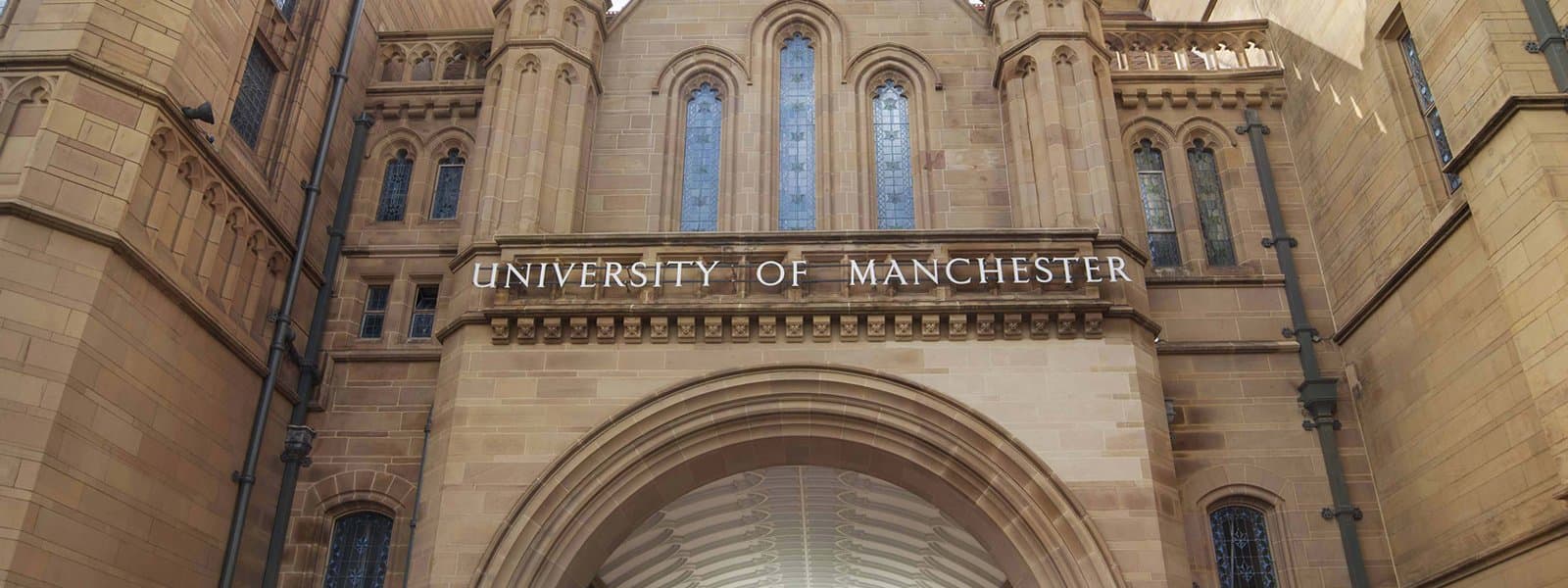
The University of Manchester
Manchester, United Kingdom

The University of Manchester
Manchester, United Kingdom
Founded
1824
Institution Type
Public Research University
Total Students
46,000+
Nobel Laureates
25
Discover The University of Manchester: A Legacy of Innovation
Discover The University of Manchester: A Legacy of Innovation
The University of Manchester is a prestigious public research university located in the heart of Manchester, England. Formed in its current configuration in 2004 through the merger of the Victoria University of Manchester and the University of Manchester Institute of Science and Technology (UMIST), the institution traces its roots back to 1824 when the Mechanics' Institute was founded during the city's rise as the world's first industrial city.
As a proud member of the Russell Group of leading UK research universities, Manchester is recognised globally for its pioneering contributions to science, engineering, humanities, and medicine. The university is home to 25 Nobel laureates among its past and present staff and students, and it was at Manchester that Ernest Rutherford first split the atom and where the world's first stored-program computer was built.
Today, the university is one of the largest single-site universities in the United Kingdom, with a vibrant community of more than 44,000 students and 12,000 staff from over 190 countries. It operates major cultural institutions including the Manchester Museum, the Whitworth art gallery, the John Rylands Research Institute and Library, and the Jodrell Bank Observatory, a UNESCO World Heritage Site.
Key Milestones
- 1824: The Mechanics' Institute (later UMIST) was founded in Manchester, establishing the university's earliest roots during the Industrial Revolution.
- 1851: Owens College was established with a bequest from textile merchant John Owens, later becoming the Victoria University of Manchester.
- 2004: The current University of Manchester was officially created through the merger of UMIST and the Victoria University of Manchester, receiving its Royal Charter from Queen Elizabeth II.
- 2012: The university was chosen as the home for the National Graphene Institute, building on the Nobel Prize-winning graphene research by Andre Geim and Konstantin Novoselov.
Academic Structure and Faculties
Academic Structure and Faculties
The University of Manchester is organised into three major faculties, each comprising multiple schools that deliver teaching and research across a vast range of disciplines. With over 1,000 degree programmes available, the university offers unparalleled opportunities for interdisciplinary study and collaborative research.
Faculty of Biology, Medicine and Health
This faculty encompasses the School of Biological Sciences, the School of Medical Sciences, and the School of Health Sciences. It is globally recognised for its contributions to health and life sciences research and maintains extensive ties with Manchester's major teaching hospitals.
- Medicine (MBChB)
- Biomedical Sciences (BSc)
- Nursing (BSc/MSc)
Faculty of Science and Engineering
Comprising the School of Engineering and the School of Natural Sciences, this faculty covers subjects including computer science, chemistry, physics, mathematics, and all branches of engineering. It is home to the National Graphene Institute and the Jodrell Bank Centre for Astrophysics.
- Computer Science (BSc/MEng)
- Mechanical Engineering (BEng/MEng)
- Physics with Astrophysics (MPhys)
School of Arts, Languages and Cultures
Part of the Faculty of Humanities, this school offers a rich variety of programmes across the humanities and creative arts, including history, music, drama, modern languages, and English literature. It is one of the largest arts schools in the UK.
- English Literature (BA)
- History (BA)
- Linguistics (BA/MA)
Alliance Manchester Business School
One of the UK's leading business schools and part of the Faculty of Humanities, Alliance Manchester Business School (AMBS) is triple-accredited and attracts students from around the world. It offers a comprehensive range of undergraduate, postgraduate, and MBA programmes.
- BSc Management
- MSc Finance
- Global MBA
School of Social Sciences
Also within the Faculty of Humanities, this school covers politics, economics, philosophy, sociology, law, and criminology. It has a strong tradition of research excellence and policy engagement, producing graduates who go on to shape public discourse and governance.
- Law (LLB)
- Politics and International Relations (BA)
- Economics (BSc)
School of Environment, Education and Development
Known as SEED, this school within the Faculty of Humanities brings together development studies, architecture, planning, geography, and education. Its Development Studies programme is consistently ranked among the top globally.
- Architecture (BA/MArch)
- Development Studies (MA)
- Planning and Environmental Management (BSc)
Admission Requirements for International Students
Admission Requirements for International Students
Undergraduate Admissions
- Application PlatformUCAS (UK) or Common Application (International)
- Academic RequirementsA-levels (AAA–ABB typical), IB (32–37 points), or equivalent international qualifications
- English LanguageIELTS 6.0–7.0 overall (minimum 5.5–6.5 per component, depending on programme)
- Personal StatementRequired via UCAS; should demonstrate subject passion and relevant experience
- Additional TestsUCAT required for Medicine and Dentistry; portfolio for Architecture
Postgraduate Admissions
- Degree RequirementUK upper second-class honours (2:1) degree or international equivalent
- English LanguageIELTS 6.5–7.5 overall (varies by programme); TOEFL and PTE also accepted
- ReferencesTwo academic or professional references typically required
- Supporting DocumentsCV, personal statement, transcripts, and research proposal (for research degrees)
- Application PlatformUniversity of Manchester online application portal
Deadline for undergraduate applications to be guaranteed equal consideration by all programmes.
Final deadline for most UCAS undergraduate applications for September entry.
Most postgraduate taught programmes accept applications on a rolling basis until places are filled. Apply early for the best chance.
The Global MBA programme has multiple application rounds from September through May. Check the Alliance Manchester Business School website for specific dates.
Tuition Fees and Scholarship Opportunities
Tuition Fees and Scholarship Opportunities
The University of Manchester offers competitive tuition fees that reflect the quality of its teaching and research. Fees vary depending on whether you are a UK home student or an international student, and by programme of study. Below is a general guide to annual tuition costs.
| Fee Category | UK Home (Annual) | International (Annual) |
|---|---|---|
| Undergraduate (Arts/Humanities) | GBP 9,250 | GBP 27,000 – GBP 29,000 |
| Undergraduate (Science/Engineering) | GBP 9,250 | GBP 31,500 – GBP 36,500 |
| Postgraduate Taught (Typical) | GBP 12,000 – GBP 17,000 | GBP 27,000 – GBP 36,000 |
| Medicine (MBChB) | GBP 9,250 | GBP 39,000+ |
| Total | GBP 9,250 – GBP 17,000 per year (varies by level) | GBP 27,000 – GBP 48,500 per year (varies by programme) |
Global Futures Scholarship
A merit-based scholarship for high-achieving international students enrolling in undergraduate or postgraduate taught programmes at the university.
- Award Value: Up to GBP 6,000 per year
- Eligibility: International fee-paying students with strong academic records
- Application: Automatically considered upon admission; no separate application needed for most awards
GREAT Scholarships (British Council Partnership)
Funded jointly with the British Council, these scholarships support students from selected countries pursuing one-year taught master's programmes at Manchester.
- Award Value: GBP 10,000 towards tuition fees
- Eligible Countries: Selected countries including India, China, and others (varies annually)
- Application: Separate application required; check the university's scholarship portal for deadlines
Campus and Facilities
Campus and Facilities
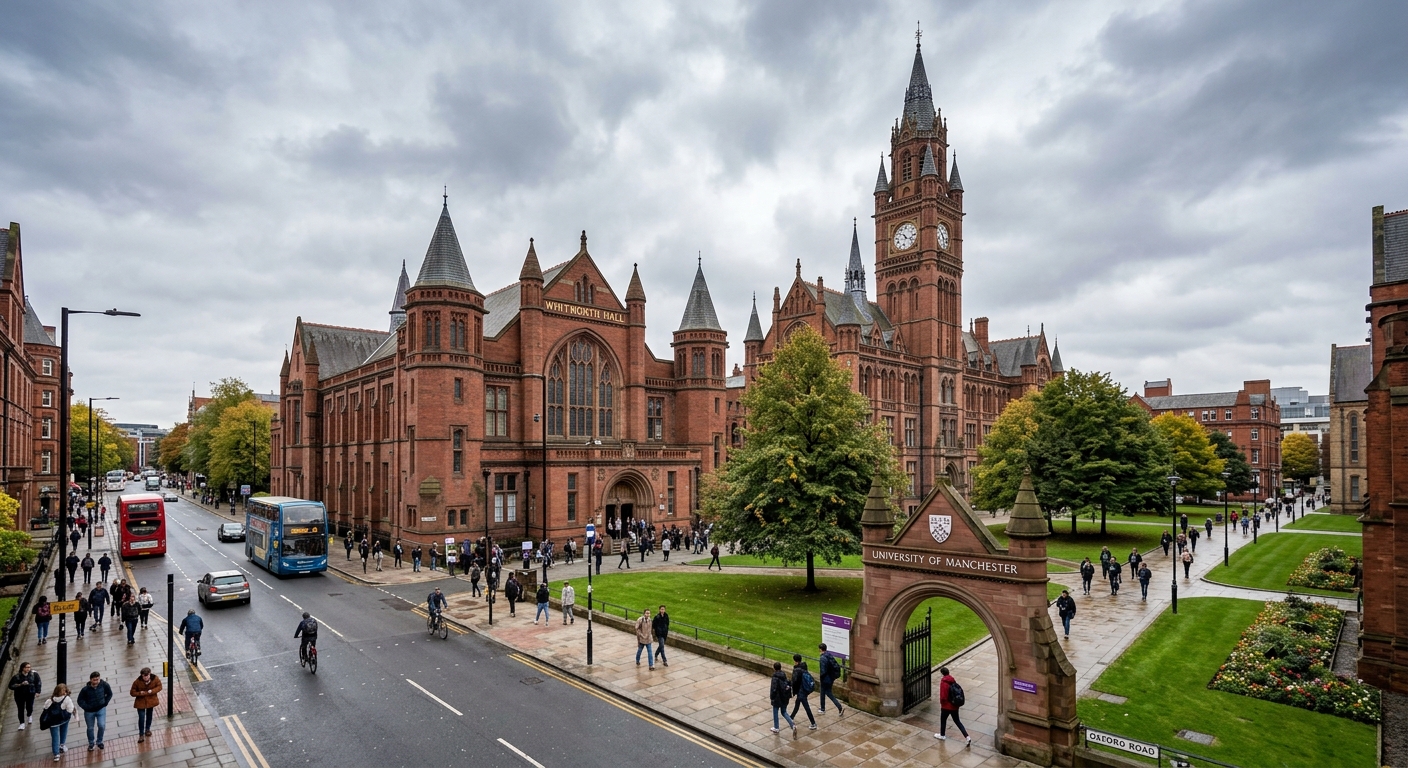
The University of Manchester's main campus stretches along Oxford Road, just south of Manchester city centre, blending stunning Victorian Gothic architecture with modern research facilities. The campus has benefited from a GBP 1 billion capital investment programme, creating state-of-the-art learning environments alongside beautiful heritage buildings.
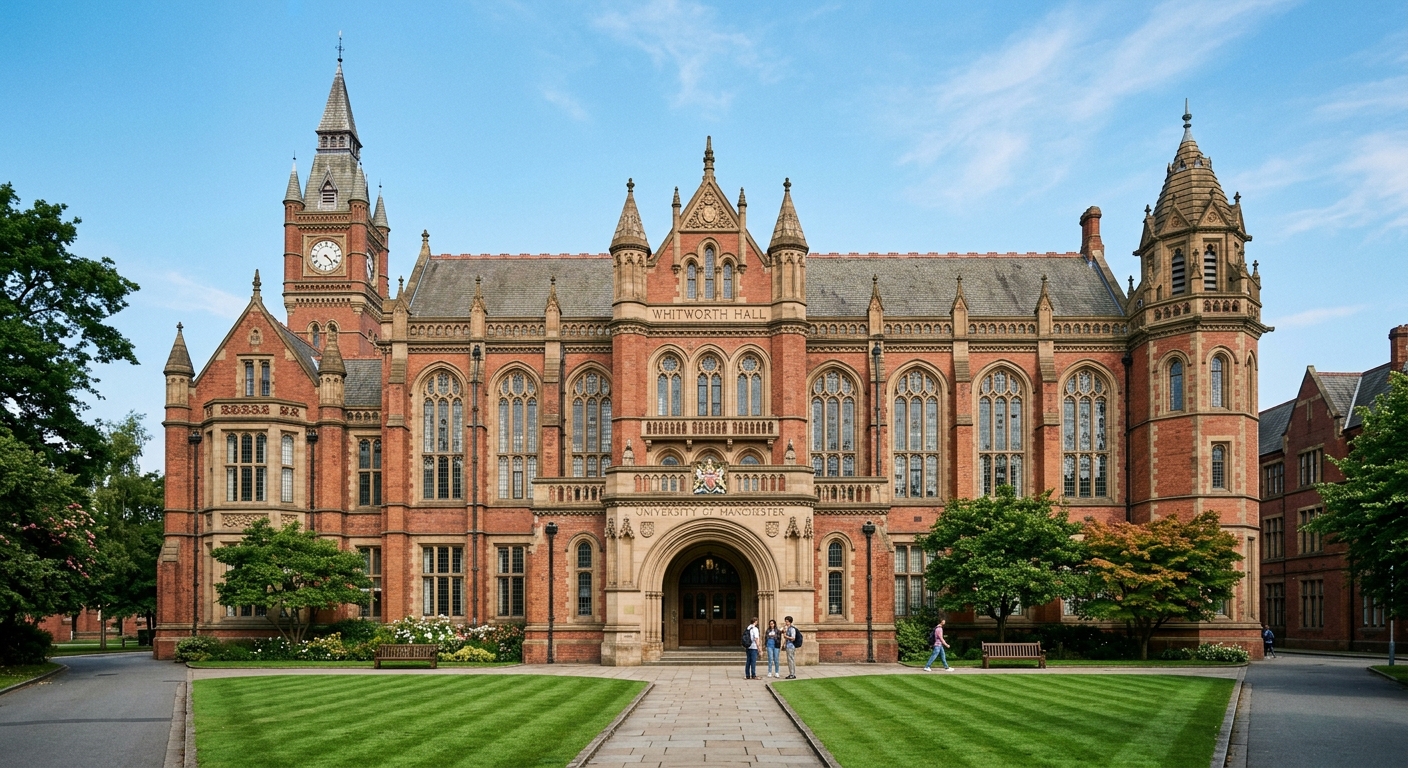
The iconic Whitworth Hall hosts graduation ceremonies and major university events, and is one of the finest examples of Victorian Gothic architecture on campus.
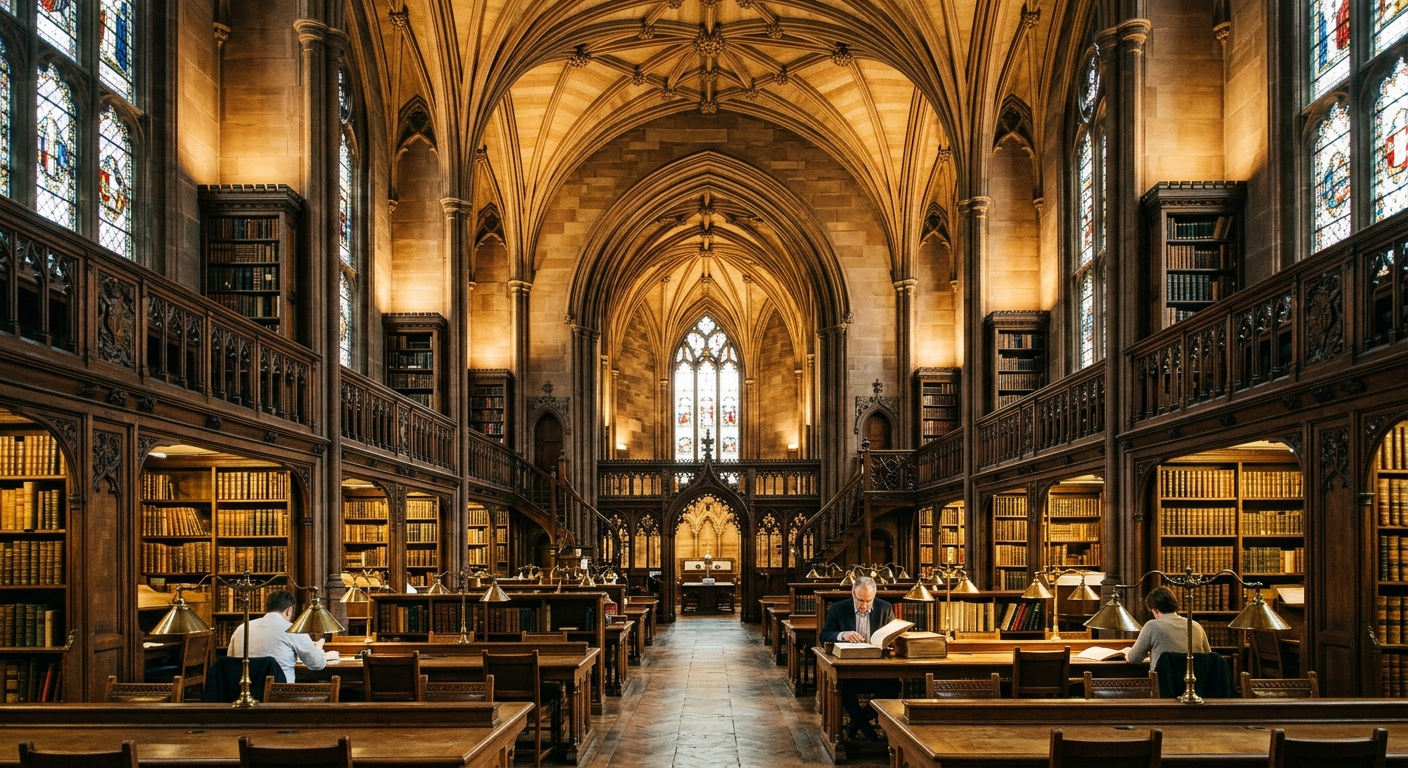
This stunning neo-Gothic library on Deansgate houses rare manuscripts and books, including the oldest known New Testament fragment, and is open to the public.
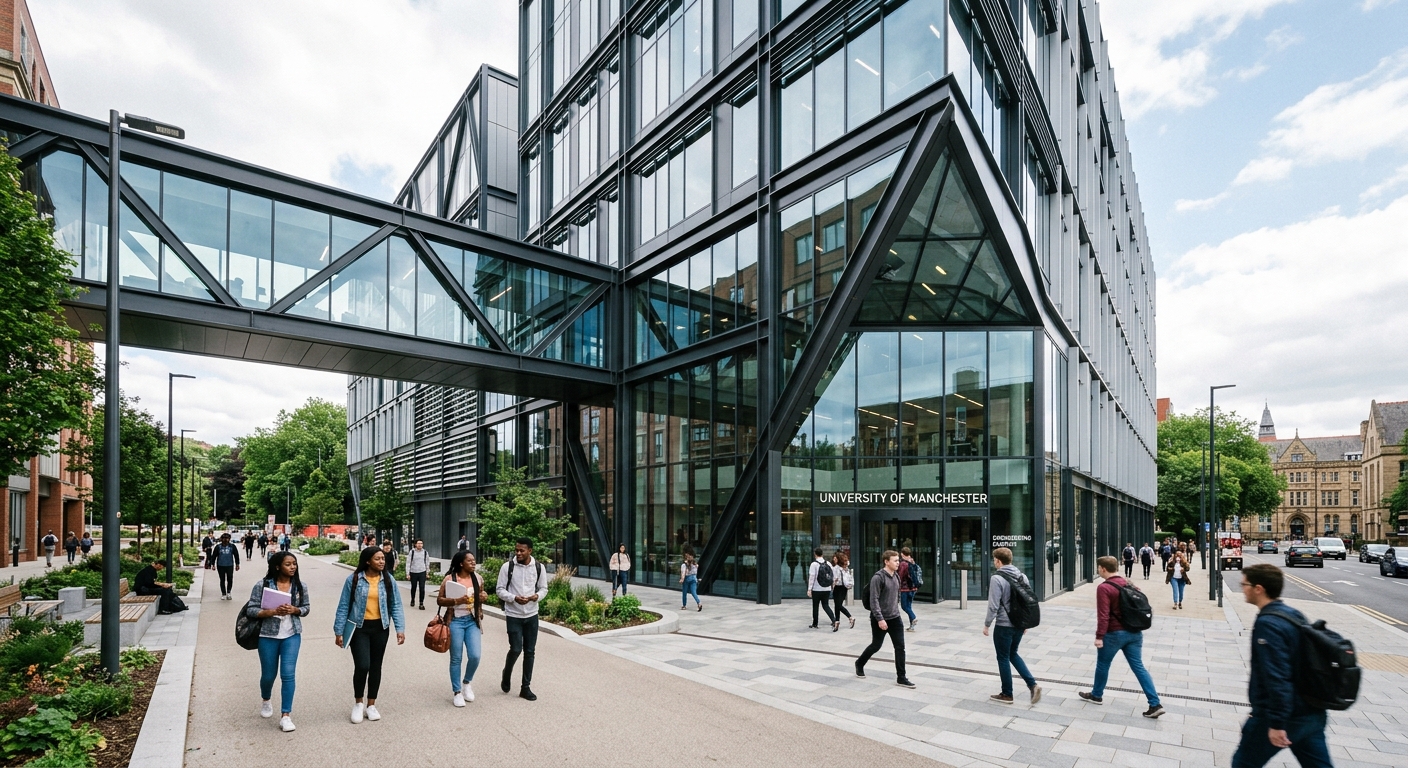
MECD is the single largest home for engineering in any UK university, featuring cutting-edge laboratories, collaborative learning spaces, and innovation hubs.
Housing and Dining
Accommodation
The university offers over 8,000 rooms across 19 halls of residence, with a guarantee of accommodation for first-year international students who apply by the deadline.
- Self-catered and catered options available
- En-suite and shared bathroom rooms from approximately GBP 98–175 per week
- Most halls are within walking distance of the main campus
Dining and Campus Services
The campus features numerous cafes, restaurants, and food outlets catering to a wide range of dietary requirements and cuisines, reflecting the diversity of the student body.
- Multiple on-campus cafes and food courts
- Proximity to Manchester's Curry Mile and city centre restaurants
- 24/7 library access and dedicated study spaces across campus
Student Life at Manchester
Student Life at Manchester
The University of Manchester boasts one of the most vibrant student communities in the UK, supported by the largest Students' Union in the country. With over 400 clubs and societies, world-class sports facilities, and a dynamic city on your doorstep, there is always something to do beyond the classroom.
Manchester: A World-Class Student City
Manchester: A World-Class Student City
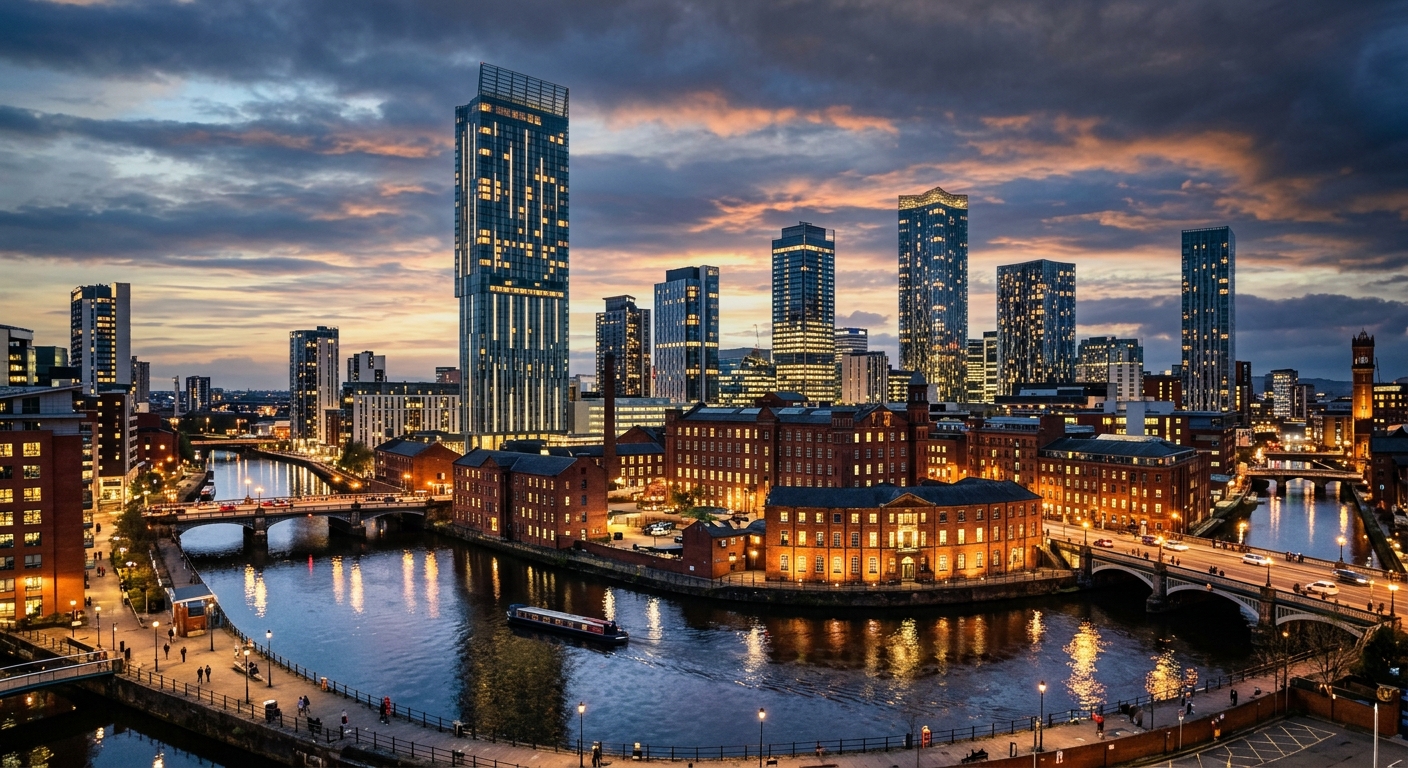
Life in Manchester
Manchester is one of Europe's most exciting and diverse cities, known for its rich industrial heritage, legendary music scene, and thriving cultural landscape. It is significantly more affordable than London while offering excellent transport links, a cosmopolitan atmosphere, and a strong graduate job market that makes it an ideal city for students.
Cultural Capital
Home to the Manchester Art Gallery, the Lowry, the Royal Exchange Theatre, and a legendary live music scene that has produced globally renowned bands and artists.
Sporting Heritage
Manchester is world-famous for football, home to Manchester United and Manchester City, as well as international cricket at Old Trafford and the National Cycling Centre.
Affordability
Student living costs in Manchester are considerably lower than in London, with estimated monthly living expenses of GBP 850–1,100 including rent, food, and transport.
Transport and Connectivity
Manchester Airport is the UK's third-busiest airport with direct flights worldwide. The city has excellent rail links to London (2 hours) and an extensive Metrolink tram network.
Career Outcomes and Alumni Network
Career Outcomes and Alumni Network
Top Employers Recruiting Manchester Graduates
Practical Information for International Students
Practical Information for International Students
For International Students
The Student Services Centre provides comprehensive guidance on Tier 4 (Student) visa applications, CAS letters, and immigration compliance. The university also supports access to the Graduate Visa route, allowing you to stay and work in the UK for up to two years after graduation.
Pre-sessional English courses are available for students who need to improve their language skills before starting their degree. In-sessional academic English support is also provided free of charge throughout the academic year.
The university offers a 24/7 mental health helpline, free counselling appointments, and the Qwell online platform for anonymous support. Student Support Hubs across campus provide in-person assistance with academic and personal matters.
Key Contacts
- +90 5435286292
- +44 7868736984
- [email protected]
- [email protected]
Worldwide University Rankings
Worldwide University Rankings
The University of Manchester is consistently ranked among the top universities in the world across all major international ranking systems. Its strong performance reflects excellence in research, teaching quality, employer reputation, and global impact.
| Subject | Ranking Body | Rank |
|---|---|---|
| Nursing | QS World Rankings by Subject | #10 |
| Petroleum Engineering | QS World Rankings by Subject | #10 |
| Architecture | QS World Rankings by Subject | #5 |
| Materials Science | QS World Rankings by Subject | #21 |


Features
The University of Manchester is a world-renowned public research university, ranked among the top 30 globally and a member of the prestigious Russell Group. With over 40,000 students from 160+ countries, it offers a diverse range of undergraduate, postgraduate, and research programs across disciplines. The university is known for its groundbreaking research, including the discovery of graphene, and boasts 25 Nobel Prize winners. Located in the heart of Manchester, its modern campus includes top-tier libraries, labs, and cultural institutions. It has a strong focus on employability, with up to 94% of graduates in work or further study within six months. The university also leads in sustainability and social responsibility, making it a place where academic excellence meets real-world impact.
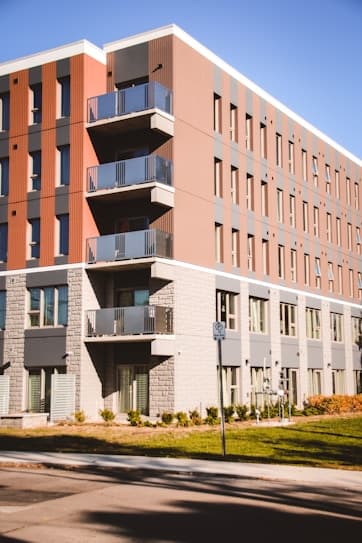
Accommodation
Yes — the University of Manchester offers a comprehensive accommodation service, with options both on-campus (halls of residence) and via approved private providers.

Work While Studying
Yes — students at the University of Manchester can work while studying, both to support themselves and gain experience.

Co-op/Internship Participation
Yes — the University of Manchester offers a comprehensive suite of internship services to support students in gaining valuable work experience during their studies.
Featured Programmes




Location
Oxford Rd, Manchester M13 9PL, United Kingdom

Uni4Edu AI Assistant