
Food Technology B.Sc.
Technical University of Munich (TUM), Germany

Bachelor of Science in Food Technology
Technical University of Munich (TUM)
Food Technology
Program Overview: B.Sc. Food Technology at TUM
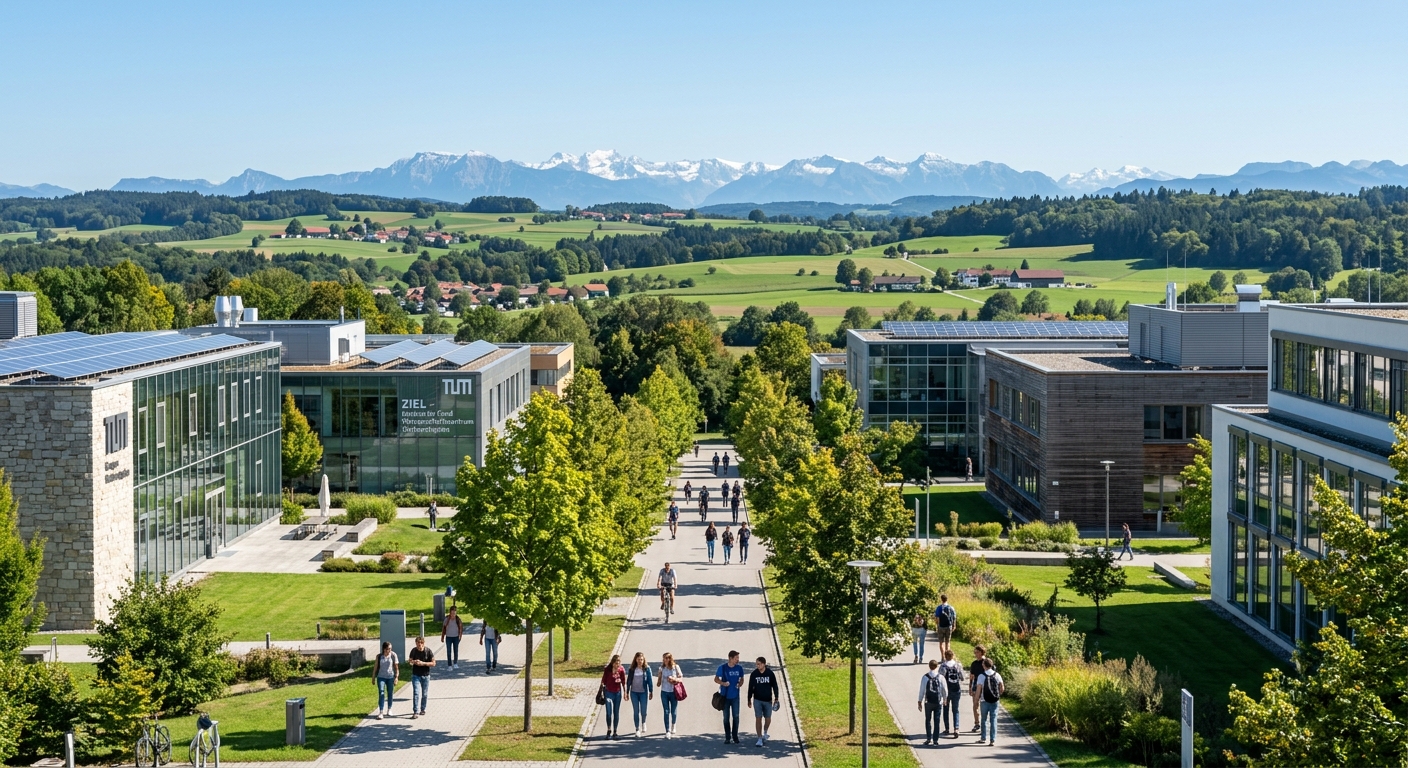
The Bachelor of Science in Food Technology at the Technical University of Munich covers all aspects of the industrial production of food, integrating engineering, biological, technological, biochemical, and economic processes across the entire value chain. Based at TUM's renowned Weihenstephan campus, this program equips you with comprehensive knowledge spanning raw material management, manufacturing processes, automation, product development, and packaging technology.
During the first two semesters, you build a strong foundation in the natural sciences and engineering, studying mathematics, physics, chemistry, and cell biology. From the third semester onward, you specialize in core food technology subjects including technical mechanics, apparatus construction, biochemistry, microbiology, food chemistry, and food technology, with laboratory internships that bridge theory and practice.
As a graduate, you will deeply understand the biological and chemical properties of food and know how to process them in compliance with technological, hygienic, and legal requirements. You will be prepared to plan production facilities, analyze and optimize food production processes, and conduct chemical, microbiological, sensory, and technical analyses of food products.
Key Program Highlights
- Taught at TUM's Weihenstephan campus, one of Europe's leading centers for life sciences and food research with decades of expertise
- Hands-on laboratory internships and practical training integrated throughout the curriculum to connect theory with real-world application
- Covers the complete food production value chain from raw materials and quality management to automation, digitalization, and packaging
- Seamless pathway to the consecutive Master's program in Food Technology at TUM School of Life Sciences for advanced specialization
Curriculum and Modules
The B.Sc. Food Technology program comprises 180 ECTS credits over six semesters, with 149 credits in compulsory modules and additional elective modules. The program is divided into a foundational phase (semesters 1-2) and a specialization phase (semesters 3-6), culminating in a Bachelor's thesis in the sixth semester.
Mathematics and Physics
Approx. 20 ECTSFoundational modules in higher mathematics and physics providing the quantitative and analytical skills essential for engineering and food science applications. These courses form the scientific backbone of the program during the first two semesters.
General and Organic Chemistry
Approx. 15 ECTSComprehensive study of general, inorganic, and organic chemistry with laboratory components. You gain essential knowledge of chemical reactions and molecular structures relevant to food composition and processing.
Biology, Cell Biology and Microbiology
Approx. 15 ECTSCovers fundamental biological principles including cell biology and microbiology, preparing you to understand the biological processes involved in food production, preservation, and safety.
Food Chemistry and Biochemistry
Approx. 15 ECTSIn-depth study of the chemical and biochemical composition of foods, including analysis methods for food quality assessment. You learn to perform chemical, microbiological, and sensory analyses of food products.
Food Technology and Process Engineering
Approx. 20 ECTSCore specialization modules covering industrial food production processes, thermal and mechanical processing, preservation techniques, and food process engineering. These modules form the technical heart of the program.
Technical Mechanics and Apparatus Construction
Approx. 15 ECTSEngineering modules focused on the mechanical principles and equipment design used in food production facilities. You learn to plan and evaluate industrial supply and manufacturing systems.
Elective Modules
Admission Requirements
Admission to the B.Sc. Food Technology program at TUM is open for the winter semester intake. Since the program is taught entirely in German, proof of German language proficiency is a mandatory requirement. Contact Uni4Edu for personalized guidance on your eligibility and application process.
Academic Requirements
- Educational QualificationGeneral or subject-specific higher education entrance qualification (Hochschulzugangsberechtigung) or recognized international equivalent
- Subject PrerequisitesStrong background in natural sciences, particularly chemistry and physics, is recommended
- Admission TypeNo numerus clausus (NC-frei); aptitude-based admission process
- International ApplicantsApplicants with international qualifications must obtain a preliminary documentation (VPD) via uni-assist
- Program StartWinter semester only
Language Requirements
- German ProficiencyDSH-2, TestDaF 4x4, or equivalent German language certificate required
- Language of InstructionAll coursework and examinations are conducted in German
- Additional LanguagesEnglish proficiency is beneficial for accessing scientific literature but is not a formal admission requirement
Required Documents
Application Deadlines
For personalized admission guidance, document verification, and application support, please contact Uni4Edu
Scholarships and Funding
TUM and various German organizations offer financial support to international students. While public universities in Germany have traditionally had low or no tuition fees for EU/EEA students, international students from non-EU/EEA countries may be subject to semester-based fees. Several scholarship and waiver options are available to help manage costs.
TUM Scholarship for International Students
EUR 500 – EUR 1,800 per semesterA need- and merit-based financial aid program available to enrolled international Bachelor's and Master's students at TUM. This scholarship can be reapplied for each semester, providing ongoing support throughout your studies.
TUM Tuition Fee Waiver Scholarship
Full tuition fee waiver for two semesters (renewable)Designed for international students from non-EU/EEA countries who demonstrate financial hardship. Successful applicants receive a waiver of tuition fees starting from their first semester, with the option to reapply.
DAAD Scholarships for International Students
Varies by programThe German Academic Exchange Service (DAAD) offers various scholarships for international students studying in Germany, including monthly stipends, travel allowances, and health insurance contributions. Contact Uni4Edu for details on available DAAD programs.
For detailed tuition fee information, please contact Uni4Edu — we will guide you through the costs and available funding options for this program.
Career Prospects
The food production industry is one of Germany's largest and most crisis-resistant sectors, offering diverse and stable career opportunities for Food Technology graduates. Your broad-based education opens numerous career paths, and many graduates choose to further specialize through TUM's consecutive Master's program in Food Technology.
Potential Job Roles
Top Employers in the Field
Rankings and Recognition
The Technical University of Munich is consistently ranked among the top universities worldwide and is recognized as Germany's leading technical university. TUM's School of Life Sciences, which houses the Food Technology program, benefits from the university's outstanding research reputation, particularly in agricultural and life sciences.
| Subject | Ranking Body | Rank |
|---|---|---|
| Agricultural Sciences | ARWU Shanghai Rankings | Top 10 |
| Engineering and Technology | THE World University Rankings | #22 |
| Life Sciences | QS World University Rankings | Top 50 |
| Food Science and Technology | ARWU Shanghai Rankings | Top 50 (Contact Uni4Edu for current data) |
How to Apply
Applying for this program is easy with Uni4Edu. Our team will guide you through every step of the process — from document preparation to final enrolment.
Contact Uni4Edu
Reach out to our team via email or phone. We will assess your profile and confirm your eligibility for this program.
Prepare Your Documents
Our advisors will provide you with a personalised checklist of required documents and help you prepare your application package.
Submit Your Application
Uni4Edu will submit your application on your behalf and keep you updated on its progress throughout the review period.
Receive Your Offer
Once accepted, we will help you understand your offer, arrange visa support if needed, and guide you through the enrolment process.
Similar Programmes


Master's & Postgraduate
9 months
Barrister Training Course (Masters)

BPP University, City of London, United Kingdom
Earliest Intake
July 2027
Gross Tuition
15500 £


Bachelor's Degree
48 months
Gastronomy and Culinary Arts (TR)
Istinye University, Sarıyer, Turkey
Earliest Intake
March 2026
Gross Tuition
6700 $


Master's & Postgraduate
18 months
Gastronomy (Master) (Non Thesis)
Istanbul Gelisim University, Avcılar, Turkey
Earliest Intake
February 2027
Gross Tuition
3500 $

Bachelor's Degree
48 months
Gastronomy and Culinary Arts
Istanbul Topkapı University, Zeytinburnu, Turkey
Earliest Intake
June 2026
Gross Tuition
4500 $
Bachelor's Degree
48 months
Gastronomy and Culinary Arts
Ankara Medipol University, Altındağ, Turkey
Earliest Intake
January 2026
Gross Tuition
4000 $



Uni4Edu AI Assistant