
Robotics MSc
Homewood Campu, United States

Master of Science in Engineering in Robotics
Johns Hopkins University
Robotics
Robotics MSE Program Overview
The Master of Science in Engineering in Robotics (Robotics MSE) at Johns Hopkins University is designed to advance interdisciplinary robotics knowledge in students coming from a wide variety of engineering, scientific, and mathematical backgrounds. Housed within the Laboratory for Computational Sensing and Robotics (LCSR), the program leverages one of the top robotics research sites in the world, particularly renowned in the area of medical robotics.
The program offers two completion pathways: a coursework option consisting of 10 full-time academic courses, and a research essay/internship option comprising 8 courses plus a master's essay or internship with report. Students select a specialization track and complete foundation, track, and elective course requirements tailored to their career goals.
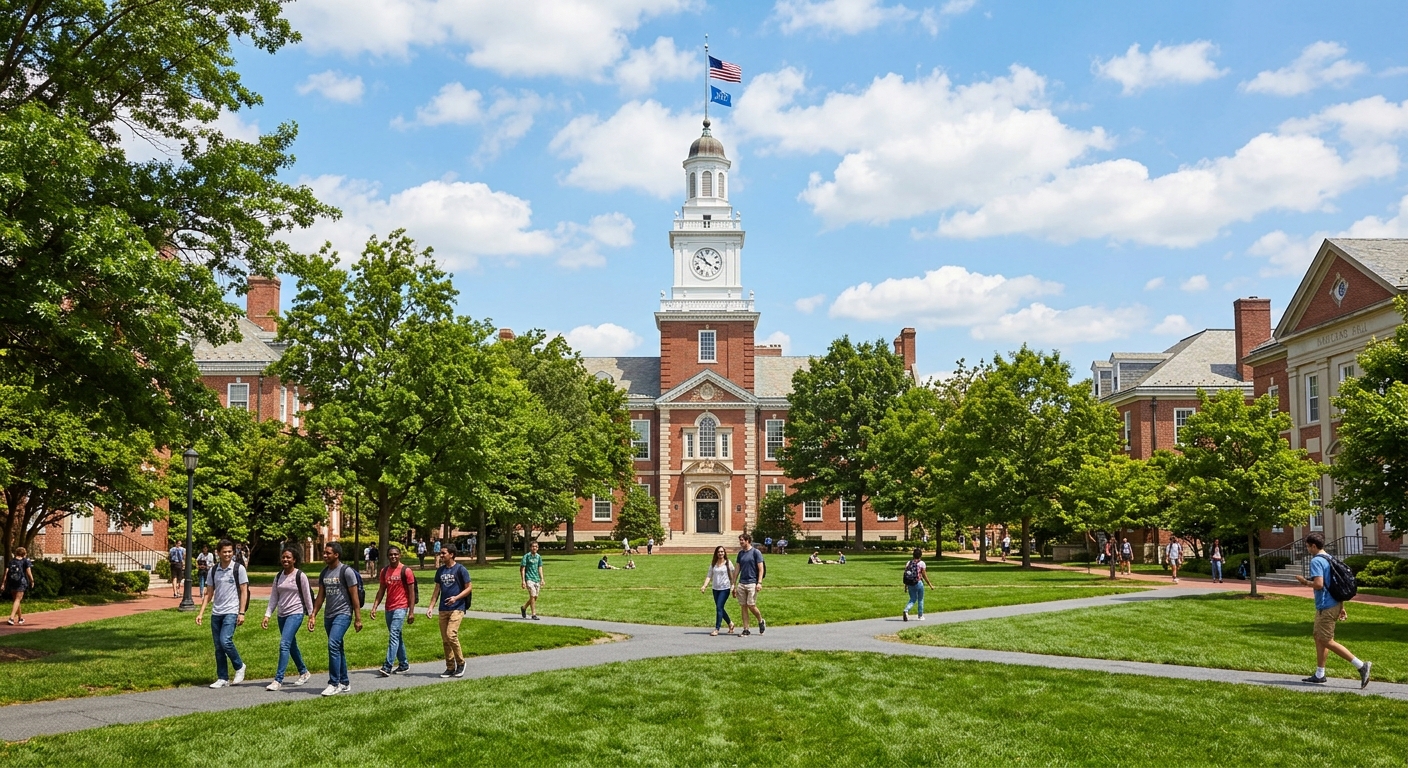
Located in Baltimore, Maryland, Johns Hopkins University is recognized as the first research university in the United States and consistently ranks among the top institutions globally. The Whiting School of Engineering provides a dynamic environment where cutting-edge research meets rigorous academic training, preparing graduates for leadership roles in the rapidly growing robotics industry.
Key Program Highlights
- Hosted by LCSR, one of the world's leading robotics research laboratories with particular strength in medical robotics
- Two completion pathways: a 10-course coursework option or an 8-course plus master's essay/internship option
- Multiple specialization tracks including Medical Robotics, BioRobotics, Automation Science and Engineering, and more
- Access to paid summer internship opportunities at the Johns Hopkins Applied Physics Laboratory
Curriculum and Modules
The Robotics MSE curriculum is structured around foundation core courses, specialization track courses, and electives. Students must complete a minimum of 30 credit-hours across 10 courses (coursework option) or 24 credit-hours across 8 courses plus a master's essay or internship report. At least six courses must be at the graduate level, and all courses must be at the 400-level or above.
Robot Systems Programming
3 CreditsA core foundation course covering fundamental concepts in programming robotic systems, including software architectures, real-time control, and integration of sensing and actuation components.
Robot Devices, Kinematics, Dynamics, and Control
3 CreditsA core foundation course addressing the mathematical and physical principles underlying robotic mechanisms, including kinematics, dynamics modeling, and feedback control strategies.
Robot Mathematics
3 CreditsA recommended course for all Robotics MSE students that provides the essential mathematical tools used in robotics, including linear algebra, optimization, and probability theory applied to robotic systems.
Computer Integrated Surgery
3 CreditsA track course within the Medical Robotics specialization covering the design, implementation, and evaluation of computer-assisted surgical systems, image-guided procedures, and surgical robotics.
Machine Learning for Robotics
3 CreditsExplores the application of machine learning and artificial intelligence techniques to robotic perception, decision-making, and autonomous behavior in complex environments.
Robotics MSE Graduate Research
3 CreditsSupervised research under a faculty advisor, allowing students to contribute to ongoing LCSR research projects. Up to one semester of graduate research may count toward degree requirements.
Elective Course Options
Admission Requirements
The Robotics MSE program at Johns Hopkins welcomes applicants from diverse engineering, scientific, and mathematical backgrounds. The Admissions Committee evaluates candidates holistically, considering professional knowledge, academic excellence, letters of reference, and the statement of purpose. Contact Uni4Edu for guidance on preparing a competitive application.
Academic Requirements
- Degree RequirementBachelor's degree in engineering, science, or mathematics (or demonstrated equivalent knowledge)
- Mathematics ProficiencyIntegral and differential calculus, classical physics, linear algebra, ordinary differential equations, probability and statistics
- Programming ProficiencyAbility to write well-structured programs in C++, Java, or MATLAB, including basic numerical methods
- GRE RequirementNot required
- Statement of PurposeShort statement explaining your interest in the Robotics MSE, learning goals, and post-graduation plans
Language Requirements
- IELTSAccepted and strongly preferred by the Robotics program
- TOEFLAccepted for international applicants
- Language ExemptionNative English speakers or graduates of English-medium institutions may be exempt; contact Uni4Edu to confirm
Required Documents
Application Deadlines
For personalized admission guidance, document verification, and application support, please contact Uni4Edu
Scholarships and Funding
Johns Hopkins University offers several funding opportunities for graduate engineering students. While funding for terminal master's students is more limited than for doctoral candidates, there are meaningful avenues to help offset costs. Contact Uni4Edu for personalized guidance on securing financial support for your Robotics MSE studies.
Dean's Master's Fellowship
50% tuition coverage per semesterAvailable to students who completed their undergraduate degree at Johns Hopkins University and have finished eight full-time semesters. This fellowship covers half of tuition for each semester of full-time residential enrollment in a WSE master's program.
Teaching and Research Assistantships
Varies by program and departmentIndividual graduate programs within the Whiting School of Engineering award teaching and research assistantships. Limited assistantship support is available for terminal master's students, and amounts vary by department.
APL Summer Internship Program
Paid internship (amount varies)Exceptional master's students at the Whiting School of Engineering may earn a paid summer internship at the Johns Hopkins Applied Physics Laboratory in Laurel, Maryland, working alongside expert scientists and engineers on cutting-edge projects.
For detailed tuition fee information, please contact Uni4Edu — we will guide you through the costs and available funding options for this program.
Career Prospects
Graduates of the Johns Hopkins Robotics MSE program are well-prepared for careers across the rapidly expanding robotics and autonomous systems industry. The program's strong ties to the Johns Hopkins Applied Physics Laboratory, leading medical institutions, and top technology companies create robust pathways to employment. The interdisciplinary training equips graduates to develop and deploy advanced robotics systems in healthcare, defense, manufacturing, and beyond.
Potential Career Roles
Top Employers of Graduates
Rankings and Recognition
Johns Hopkins University is consistently recognized as one of the top research universities in the world. As the first research university established in the United States, it continues to lead in research expenditure and academic excellence across multiple disciplines, including engineering and computer science.
| Subject | Ranking Body | Rank |
|---|---|---|
| Biomedical Engineering | U.S. News & World Report | #1 |
| Computer Science | THE World University Rankings | #25 |
| Artificial Intelligence (Undergraduate) | U.S. News & World Report | #20 |
| Engineering | QS World University Rankings | Top 50 |
How to Apply
Applying for this program is easy with Uni4Edu. Our team will guide you through every step of the process — from document preparation to final enrolment.
Contact Uni4Edu
Reach out to our team via email or phone. We will assess your profile and confirm your eligibility for this program.
Prepare Your Documents
Our advisors will provide you with a personalised checklist of required documents and help you prepare your application package.
Submit Your Application
Uni4Edu will submit your application on your behalf and keep you updated on its progress throughout the review period.
Receive Your Offer
Once accepted, we will help you understand your offer, arrange visa support if needed, and guide you through the enrolment process.
Similar Programmes


Bachelor's Degree
48 months
Computer Engineering

Colorado State University, , United States
Earliest Intake
August 2026
Gross Tuition
31054 $

Master's & Postgraduate
24 months
Computer Engineering (Master's Degree)
Manhattan University, Bronx, United States
Earliest Intake
June 2025
Gross Tuition
20160 $

Bachelor's Degree
48 months
Computer Engineering
Manhattan University, Bronx, United States
Earliest Intake
October 2025
Gross Tuition
44100 $


Bachelor's Degree
36 months
Computer Systems Engineering (Hons)
Queen Mary, University of London, London, United Kingdom
Earliest Intake
January 2026
Gross Tuition
32950 £


Bachelor's Degree
48 months
Software Engineering
Beykent University, Sarıyer, Turkey
Earliest Intake
January 2026
Gross Tuition
4000 $



Uni4Edu AI Assistant