Study in Ireland
Step Into Europe's Silicon Valley
 Explore Other Destinations
Why Ireland?
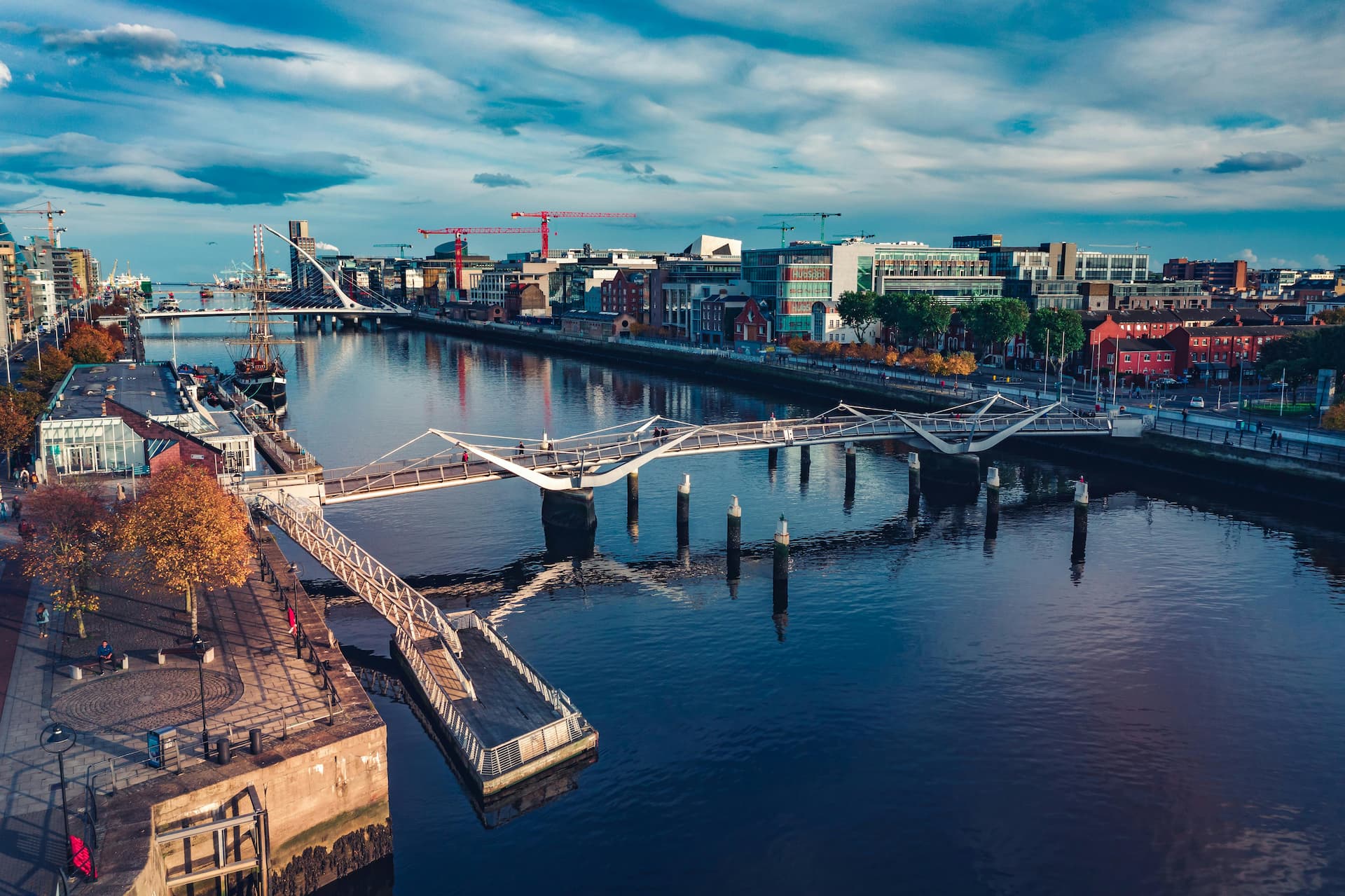
Ireland provides NFQ-backed English education and a booming tech ecosystem. Use the 2-year post-study work visa to launch your career in Europe's Silicon Valley.
Higher Education in Ireland

Ireland is one of Europe’s most attractive destinations for students seeking a high-quality education in English and strong international career opportunities. With its excellent academic standards, safe environment, and thriving economy, Ireland welcomes thousands of international students each year. As one of the leading English-speaking countries in the European Union, Ireland is home to globally recognized universities and institutions. Programs in fields such as technology, business, engineering, and health sciences combine academic excellence with industry-focused learning, preparing students for success in a competitive global job market. Studying in Ireland offers the opportunity to build an international network, experience a vibrant multicultural environment, and gain access to one of Europe’s most innovative economies. Competitive tuition fees, shorter postgraduate programs, and valuable internship opportunities make Ireland an excellent choice for international students. At Uni4Edu, we support you throughout every stage of your educational journey, helping you find the program that best matches your academic and career goals.
2-Year Stay Back Option
Post-Study Work Visa
Post-Study Work Visa
The Stamp 1G visa allows master's and PhD graduates to stay and work full-time in Ireland for up to 24 months. This lets you gain invaluable experience in Europe without needing employer sponsorship.
Direct Industry Connections
Europe's Silicon Valley
Europe's Silicon Valley
Dublin hosts the European headquarters of global giants like Google, Meta, and Microsoft. Universities offer paid internships and joint projects, turning education into a direct pathway to lucrative tech roles.
High ROI & Scholarships
Cost-Effective Excellence
Cost-Effective Excellence
Compared to the US or UK, Ireland offers highly competitive tuition and 10-15% lower living costs than London. With 1-year master's degrees, government scholarships, and part-time work rights, it delivers great ROI.
The Easiest Way to Study Abroad
Find Your School
Explore universities and programs that match your goals.
Submit Your Application
Complete the application form and upload the required documents.
Get Your Acceptance Letter
Receive confirmation and prepare for next steps.
Start Your Journey
Apply for your visa and prepare to start your academic journey
Most Preferred Programs
The program focuses on construction management and engineering, covering topics such as sustainability, construction technology, and project planning. It also includes modules on structural mechanics, building services, and professional practice.
Duration
48 Months
Cost of Living
1250 EUR
Start Date
01/09/2027
Apply Date
01/01/2027
The program focuses on building secure systems and protecting vital information through key concepts in computer and web security. It includes modules on software development, data forensics, ethical hacking, encryption, and cloud computing security.
Duration
48 Months
Cost of Living
1250 EUR
Start Date
01/09/2027
Apply Date
01/01/2027
The Bachelor of Business Studies program offers a comprehensive business education with core disciplines such as accounting, economics, finance, human resource management, marketing, and risk management. Students specialize in a major area in the second semester of Year 2 and have opportunities for work placements, international exchanges, and dual degree pathways.
Duration
48 Months
Cost of Living
1250 EUR
Start Date
01/09/2027
Apply Date
01/01/2027
Universities in Ireland
Technological University of the Shannon: Midlands Midwest Profile
Ireland
Technological University of the Shannon: Midlands Midwest is known for celebrating campus diversity. International students at TUS represent over 100 nationalities, showcasing the university’s metropolitan atmosphere. The university international committee and the student unit oversee the newly-enrolled students’ orientation process. The University’s director of international relations is responsible for accommodating students at the campuses. The Student Union is active, and there are various clubs and societies, including drama, dancing, film and computers. From learning support to pastoral care and career counselling to student health assistance, a range of services is available for TUS students.\n

Academic Stuff:
1200

Students:
14000
Independent College Dublin
Ireland
\nWe are Independent College\n\nWe are a specialist business and law college situated in the heart of Dublin city, Ireland
Academic Stuff:
30
Students:
1000
Dundalk Institute of Technology
Ireland
DkIT is the leading higher education institute of the North Leinster South Ulster Region. Our expansive campus is packed with excellent facilities and services and within easy reach of the bustling town centre of Dundalk, not to mention the island of Ireland’s 2 major cities.
Academic Stuff:
450
Students:
5000
Griffith College
Ireland
Griffith College is Ireland's largest independent third-level institution with locations in Dublin, Cork and Limerick. The College offers internationally recognised postgraduate and undergraduate degree programmes, complemented by a wide range of professional, short term and corporate training educational solutions. Over the past 40 years, Griffith College has developed an enviable reputation for producing successful, prize-winning students, many of whom have gone on to prominent careers both nationally and internationally. The major faculties are business, journalism & media, computing, counselling and psychotherapy, languages, law, music & multimedia, pharmaceutical science and teaching and learning.
Academic Stuff:
480

Students (Int'l):
1400
Students:
8000
Letterkenny Institute of Technology
Ireland
Letterkenny Institute of Technology (LYIT) fosters one of the most progressive learning environments in Ireland, attracting a diverse student body of more than 4,000 students from Ireland and 31 countries across the globe. LYIT offers a number of courses ranging from Business, Engineering, Computers and Science to Medicine. The non-profit public institute has partnerships with over 60 universities world over and offers courses ranging from undergraduate and postgraduate to doctoral level. The Letterkenny campus is the main one with another campus in Killybegs, Ireland’s prime seaport. The modern campuses provide academic learning along with practical experiences, focused on increasing the economic prospects of the youth. \n
Academic Stuff:
2200
Students (Int'l):
125
Students:
4000
South East Technological University
Ireland
South East Technological University (SETU) is the first technological university in the southeastern region of Ireland. SETU is among the newest universities in the country, established in May 2022 following the merger of Waterford Institute of Technology and Institute of Technology, Carlow (IT Carlow). The university operates in Carlow (Leinster Province) and Waterford (Munster Province).
Academic Stuff:
1500
Students:
18000
Dublin Business School
Ireland
Dublin Business School (DBS) specialises in the provision of career focused business and law education as well as the delivery of contemporary programmes in the areas of arts, media, social science, humanities and psychology. The School have developed our courses in collaboration with industry and professional bodies, so that when you graduate, in addition to your academic qualifications, you will have the skills and knowledge to begin a successful career.
Academic Stuff:
1186
Students:
9000
TU Dublin
Ireland
Students at TU Dublin can enjoy recreation and social activities of interest, with more than 150 different clubs and societies available to join. More than 35 different annual events and competitions on and off campus allow students to participate in social nights, drama festivals, conferences, debating, trips and exhibitions. TU Dublin offers a variety of sports activities for students as well, including football, basketball and gymnastics.\n
Academic Stuff:
3500
Students (Int'l):
2854
Students:
28500
University of Limerick
Ireland
The University of Limerick (UL) is a leading institution known for outstanding research and is based in the heart of Ireland. Formerly named Irish University of the Year by The Sunday Times Good University Guide, UL has also been ranked as one of the top 100 Young Universities in the World by the Times Higher Education. Limerick has developed into one of the top universities in Ireland since being founded in 1972 and provides unrivalled graduate employment rates, with the highest rate in all of Ireland. This is helped by its tremendous work placement programme, the largest of any university in Ireland, and the largest international exchange programme.
Academic Stuff:
1000
Students (Int'l):
3000
Students:
18000
Language Proficiency
1
IELTS Academic
Irish universities typically require a minimum TOEFL score of 90 on the internet-based test or 580 on the paper-based version for international applicants.
2
TOEFL iBT
The general IELTS requirement for Irish universities is an overall score of 6.5, with no individual component falling below 6.0, though some programmes may demand higher scores.
Frequently Asked Questions
FAQ's
Uni4Edu offers a wide range of undergraduate and postgraduate university programs across leading study destinations worldwide. Students can choose from disciplines such as business, engineering, health sciences, social sciences, and many more based on their academic goals and career plans. With programs available in multiple countries, you can compare study options by field, degree level, and location to find the best-fit university program for your future.
Through Uni4Edu, students can access university programs in over 10 international study destinations. These countries offer diverse academic systems, cultural experiences, and career opportunities. Whether you are looking to study in Europe or North America, you can explore programs based on your preferred country, field of study, and long-term career goals. Uni4Edu makes it easy to compare universities and apply directly through a single digital platform.
Most university programs have specific intake periods, typically aligning with the academic calendar of the host country. However, some programs may offer multiple intakes throughout the year. It's advisable to check the specific start dates for each program on the Uni4Edu platform.
Yes, university programs generally require prior academic qualifications. For undergraduate programs, a high school diploma or equivalent is typically required. Postgraduate programs usually require a bachelor's degree in a relevant field. Specific entry requirements can be found on each program's page.
Yes, most university programs have minimum age requirements, often starting at 17 or 18 years old. Some programs may have specific age criteria, so it's important to review the requirements for each program individually.