University of Osnabrück
Osnabrück, Germany
University of Osnabrück
Osnabrück, Germany
Founded
1974
Institution Type
Public Research University
Total Students
14,000+
Schools & Institutes
10 Schools, 4 Institutes
University of Osnabrück: Overview & History
University of Osnabrück: Overview & History
The University of Osnabrück (Universität Osnabrück) is a public research university located in the city of Osnabrück in Lower Saxony, Germany. Founded in 1974, the university is renowned for its interdisciplinary degree programmes, including rare and unique offerings such as European Studies, Migration Studies, Applied Systems Science, and Cognitive Science.
The university is particularly noted for its research strengths in peace and conflict studies, artificial intelligence, computational linguistics, and comparative law. Its European Legal Studies Institute (ELSI) is one of Europe's most important research facilities in the field of comparative law and the harmonization of law. The German Research Centre for Artificial Intelligence (DFKI) also established a branch office at the university in 2011.
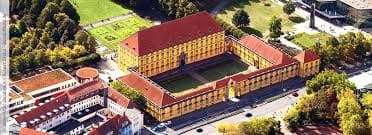
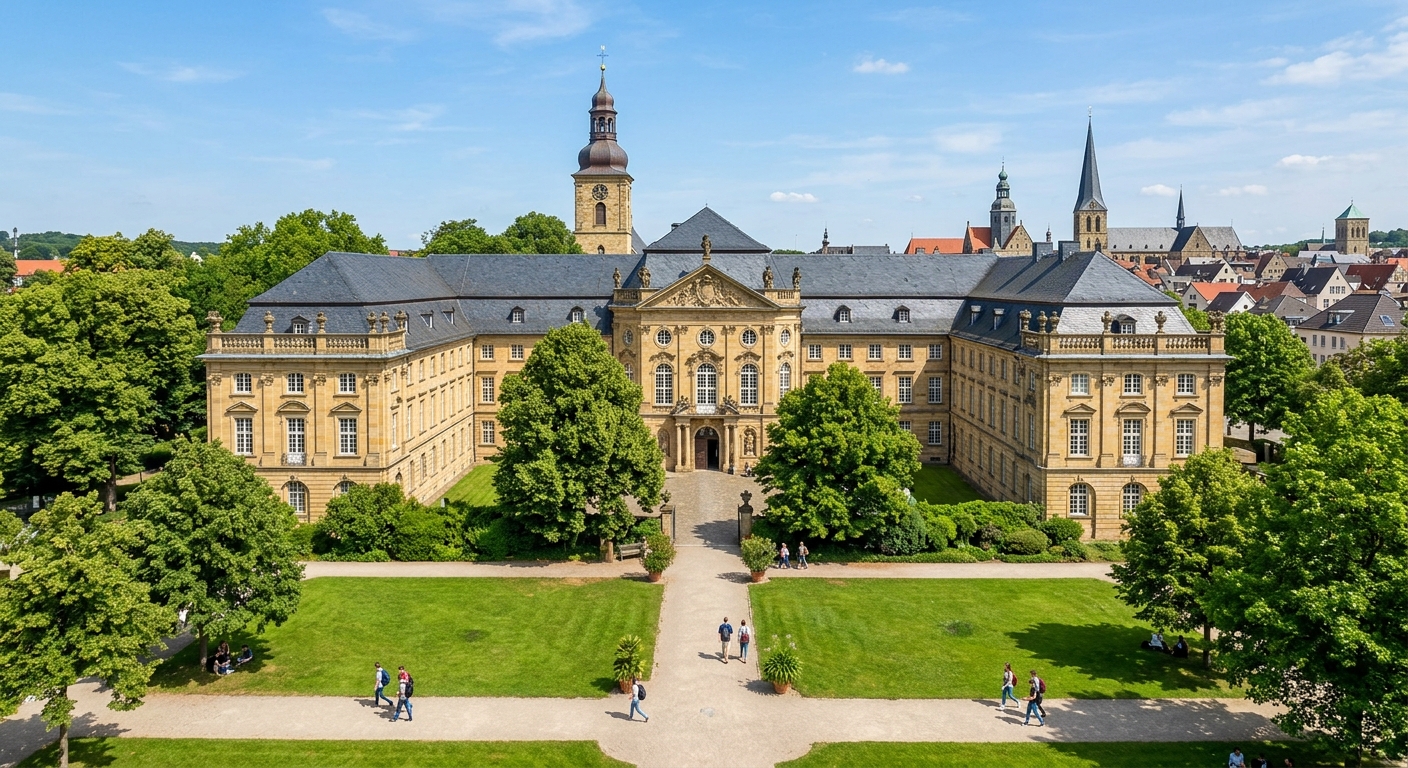
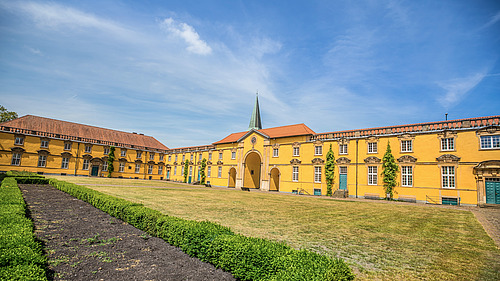
Housed partly in a stunning baroque castle built between 1667 and 1675, the university is harmoniously embedded in the historic city of Osnabrück, known as the 'City of Peace' for its role in the Peace of Westphalia of 1648. With around 14,000 students benefiting from a research-based learning approach, the university combines historical charm with forward-looking academic innovation.
Key Milestones
- 1632: Higher education began in Osnabrück when the Gymnasium Carolinum was upgraded into a Catholic Jesuit university (Academia Carolina Osnabrugensis).
- 1970: The state government of Lower Saxony formally decided to establish Osnabrück University on August 25, 1970.
- 1974: Teaching officially began in the summer semester of 1974, succeeding the Adolf Reichwein Teachers' College.
- 2011: The German Research Centre for Artificial Intelligence (DFKI) established a branch office at the university, strengthening its AI research profile.
Academic Structure & Faculties
Academic Structure & Faculties
The University of Osnabrück consists of ten schools (Fachbereiche) and four interdisciplinary institutes, offering a comprehensive range of programmes across the humanities, social sciences, natural sciences, law, and economics. Its interdisciplinary approach fosters collaboration across traditional academic boundaries.
School of Law
Home to the European Legal Studies Institute (ELSI), one of Europe's leading facilities for comparative law and harmonization of law. The school offers programmes in German and European law.
- First State Examination in Law (Staatsexamen)
- European Legal Studies (LL.M.)
- International and European Business Law
School of Business Administration and Economics
Offers research-driven programmes in business and economics with strong ties to regional industry. The school ranks among the top in Germany for business administration according to ShanghaiRanking.
- Business Administration (B.Sc.)
- Economics (M.Sc.)
- Taxation and Accounting (M.Sc.)
School of Biology / Chemistry
Renowned for its Collaborative Research Centre on the physiology and dynamics of cellular micro-compartments (CRC 944). The school is located on the Westerberg campus with modern laboratory facilities.
- Biology (B.Sc.)
- Chemistry (B.Sc.)
- Nanosciences – Molecules, Cells, and Materials (M.Sc.)
School of Mathematics / Computer Science
Combines foundational mathematics with cutting-edge computer science research, particularly in artificial intelligence and machine learning. The school benefits from its proximity to the DFKI branch office.
- Computer Science (B.Sc.)
- Mathematics (B.Sc.)
- Cognitive Computing (M.Sc.)
School of Cultural Studies and Social Sciences
Offers interdisciplinary programmes that bridge cultural studies, political science, and sociology. The school is closely linked to the Institute of Migration Research and Intercultural Studies (IMIS).
- European Studies (B.A.)
- Political Science (B.A.)
- Sociology (B.A.)
School of Human Sciences
Focuses on psychology, cognitive science, and related disciplines. The school collaborates with the Institute of Cognitive Science, one of the university's flagship interdisciplinary institutes.
- Cognitive Science (B.Sc.)
- Psychology (B.Sc.)
- Cognitive Science (M.Sc.)
Admission Requirements
Admission Requirements
Undergraduate Admission
- Secondary School CertificateAbitur or recognized international equivalent (e.g. IB Diploma, A-Levels)
- German Language ProficiencyDSH-2 or TestDaF 4x4 for German-taught programmes
- English Language ProficiencyIELTS 6.0+ or TOEFL 80+ for English-taught programmes
- StudienkollegRequired for applicants whose secondary education is not directly recognized in Germany
- Application PortalVia uni-assist for international applicants (fee: EUR 75)
Graduate Admission
- Bachelor's DegreeCompleted undergraduate degree in a relevant field from a recognized institution
- German Language ProficiencyDSH-2 or TestDaF 4x4 for German-taught programmes
- English Language ProficiencyIELTS 6.5+ or TOEFL 90+ for English-taught Master's programmes
- Academic TranscriptsOfficial transcripts with certified translations if not in German or English
- Application PortalVia uni-assist or directly through the university portal, depending on programme
Application deadline for German and EU applicants for restricted-admission programmes starting in October.
Application deadline for non-EU international students applying through uni-assist for the winter semester.
Application deadline for German and EU applicants for programmes with a summer semester start in April.
Application deadline for non-EU international students applying through uni-assist for the summer semester.
Tuition Fees & Cost of Studying
Tuition Fees & Cost of Studying
As a public university in Lower Saxony, the University of Osnabrück does not charge tuition fees for regular degree programmes. Students are required to pay a semester fee each semester, which includes contributions for student services, administration, and a public transportation ticket (Deutschlandticket).
| Cost Category | Per Semester (EUR) | Per Year (EUR) |
|---|---|---|
| Semester Fee (incl. Deutschlandticket) | EUR 394.30 | EUR 788.60 |
| Rent (approx.) | EUR 1,500 - 3,000 | EUR 3,000 - 6,000 |
| Meals (approx.) | EUR 1,020 - 1,500 | EUR 2,040 - 3,000 |
| Health Insurance (approx.) | EUR 600 - 700 | EUR 1,200 - 1,400 |
| Total | EUR 3,514 - 5,594 | EUR 7,029 - 11,189 |
Lower Saxony Scholarship (Niedersachsenstipendium)
Osnabrück University awards scholarships of EUR 500 each (one-off payment) every year as part of a programme set up by the state of Lower Saxony for international students.
- Amount: EUR 500 (one-time)
- Eligibility: International students enrolled at the university
- Funded By: State of Lower Saxony
DAAD Scholarships
The university participates in DAAD programmes including the Helmut-Schmidt-Programme (Public Policy and Good Governance) for students from developing countries, offering full funding for Master's studies.
- Coverage: Full funding including living allowance
- Eligibility: Students from Asia, Latin America, and Africa
- Funded By: German Academic Exchange Service (DAAD)
Campus & Facilities
Campus & Facilities
The University of Osnabrück is an urban university spread across two main locations in the city. The historic Schloss (Castle) campus near the city center houses the humanities, social sciences, and administration, while the Westerberg campus in the western part of the city hosts the natural sciences, mathematics, and computer science faculties.
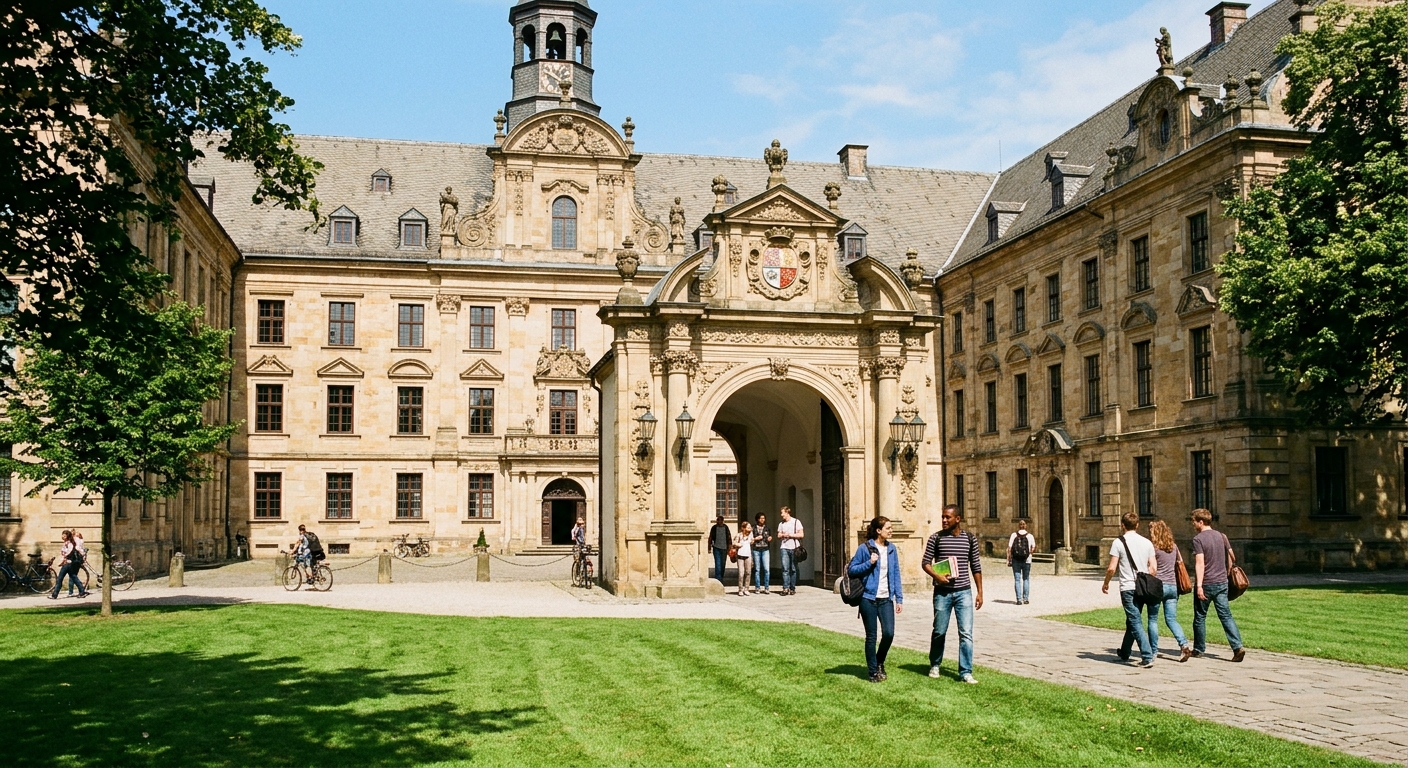
The baroque castle, built 1667-1675, serves as the university's main building and houses the administration. Its courtyard hosts open-air cinema and concerts in summer.
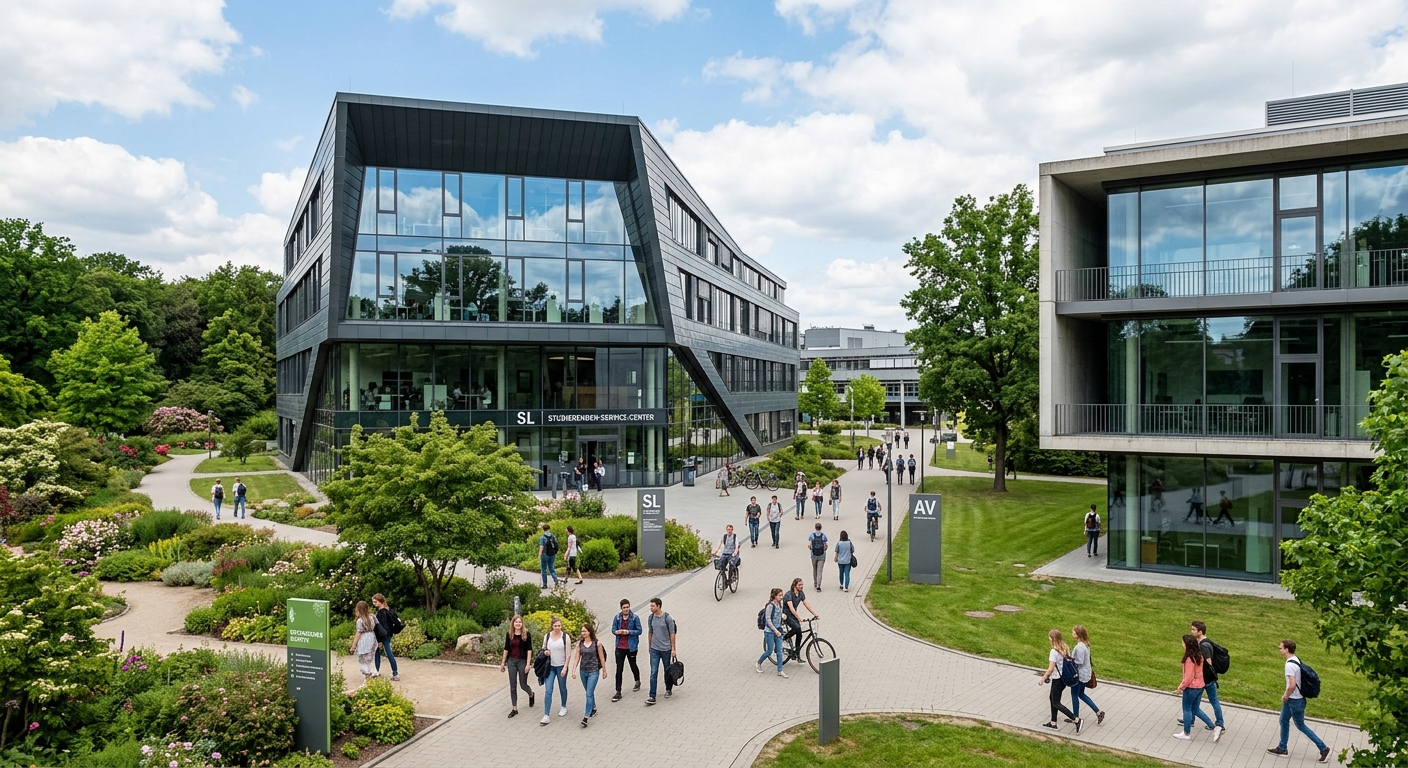
The Westerberg campus features modern facilities for the natural sciences and mathematics, along with the university's renowned Botanical Garden.

The library system offers over 1.67 million printed volumes, 600,000 e-books, and 1,650 workspaces across the city center and Westerberg locations.
Housing & Dining
Student Housing
The Studentenwerk Osnabrück operates several student residences throughout the city, offering affordable accommodation for students. Private housing is also available in this mid-sized city.
- Student dormitories managed by Studentenwerk Osnabrück
- Monthly rent approx. EUR 250-500 depending on accommodation type
- University Guest House with 10 furnished apartments for visiting scholars
Dining Options
The university canteen (Mensa) provides affordable meals for students, with multiple dining locations across both campuses. A typical lunch costs approximately EUR 4.
- University Mensa with daily hot meals from approx. EUR 4
- Cafeterias at both Castle and Westerberg campuses
- Numerous restaurants and cafes in the surrounding city center
Student Life at the University of Osnabrück
Student Life at the University of Osnabrück
Student life at the University of Osnabrück benefits from the city's compact size and welcoming atmosphere. With a vibrant community of over 14,000 students, the university offers a wide range of extracurricular activities, cultural events, and social opportunities that enrich the academic experience.
Osnabrück: The City of Peace
Osnabrück: The City of Peace
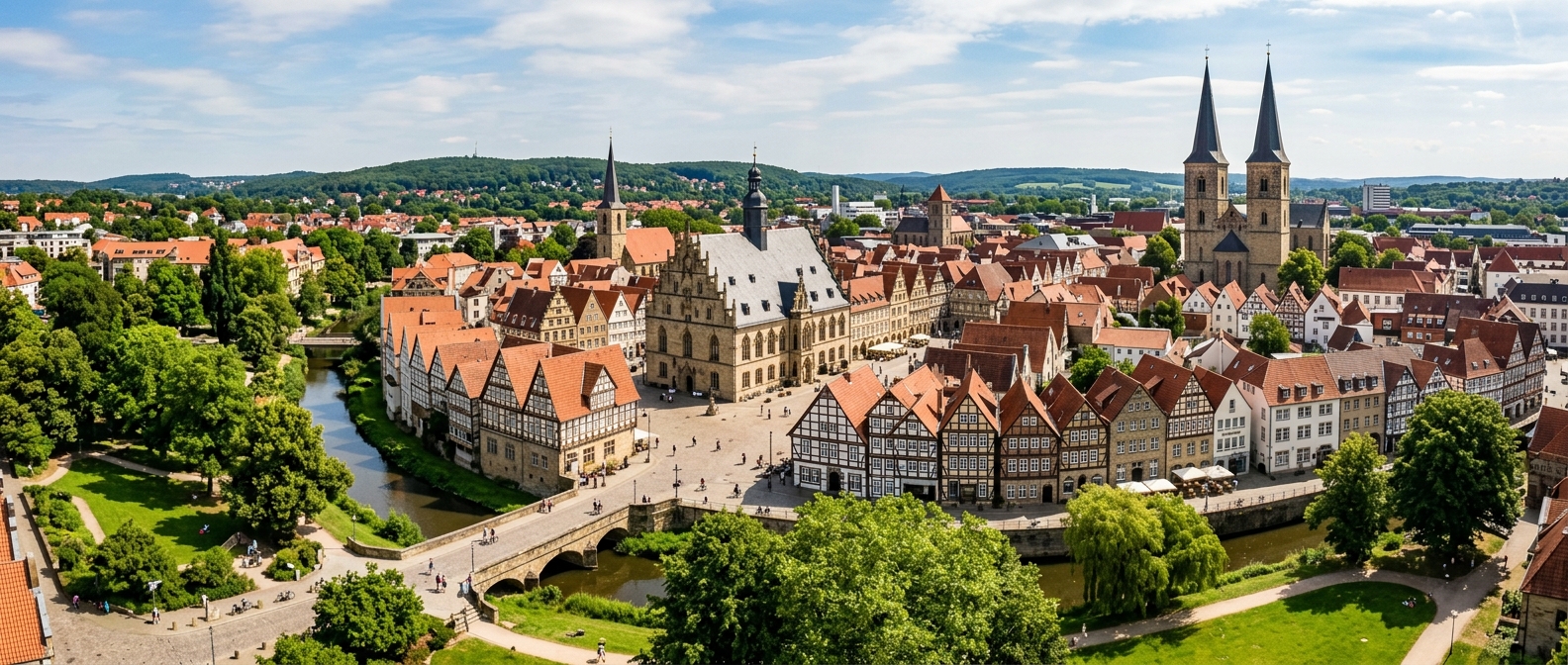
Living in Osnabrück
Osnabrück is a historic city in Lower Saxony with a population of approximately 165,000. Known as the 'City of Peace' for its role in the Peace of Westphalia (1648), it offers a rich cultural life, affordable living costs, and a welcoming atmosphere for students. The city is home to over 25,000 students across its two universities.
Rich History & Culture
Explore landmarks such as St. Peter's Cathedral (11th century), the historic Town Hall where the Peace of Westphalia was signed, and the Felix Nussbaum Haus museum designed by Daniel Libeskind.
Affordable Cost of Living
Compared to larger German cities, Osnabrück offers significantly lower rent and living costs, making it an attractive destination for students on a budget.
Excellent Connectivity
Osnabrück is well connected by rail and road, with direct train connections to major cities including Hamburg, Hanover, Cologne, and Amsterdam. The Deutschlandticket included in the semester fee provides nationwide public transport access.
Green & Liveable
The city features numerous parks, the university's Botanical Garden, and proximity to the Teutoburg Forest, offering abundant opportunities for outdoor recreation and nature exploration.
Career Outcomes & Alumni Network
Career Outcomes & Alumni Network
Notable Employers & Career Connections
Practical Information for Students
Practical Information for Students
For International Students
The International Office provides comprehensive support for international students, including guidance on visa applications, residence permits, health insurance, and settling into life in Osnabrück.
The Foreign Language Centre offers courses in 16 languages including German as a Foreign Language, English, French, Spanish, Chinese, Japanese, Arabic, and Korean.
International students can access resources on job searching and applying for positions in Germany, as well as information about the regional job market in Lower Saxony. Non-EU students need EUR 11,904 per year (EUR 992/month) in a blocked account for visa purposes.
Key Contacts
- +90 5435286292
- +44 7868736984
- corporate@uni4edu.com
- info@uni4edu.com
University of Osnabrück: Worldwide Rankings
University of Osnabrück: Worldwide Rankings
The University of Osnabrück is recognized in several international ranking systems, particularly for its strengths in social sciences, humanities, business administration, and natural sciences. As a medium-sized German research university, it consistently appears in global rankings and is especially noted for its interdisciplinary approach.
| Subject | Ranking Body | Rank |
|---|---|---|
| Business Administration | ShanghaiRanking (GRAS) | #151 |
| Political Sciences | ShanghaiRanking (GRAS) | #151 |
| Liberal Arts & Social Sciences | EduRank | #747 World / #53 Germany |
| Biology | EduRank | #990 World / #53 Germany |


Features
Osnabrück University, established in 1974, is a dynamic public institution in Lower Saxony, Germany, renowned for its interdisciplinary research and teaching. With around 14,000 students and approximately 981 academic staff, the university offers a diverse range of programs across humanities, social sciences, natural sciences, law, and economics. Key research areas include artificial intelligence, cognitive science, migration studies, and comparative law. The university's main campus is situated in the historic Osnabrück Castle, while the Westerberg campus hosts faculties like natural sciences and mathematics. Emphasizing "research-based learning," Osnabrück University fosters close integration between research and education, providing students with practical experience and strong career prospects.
Accommodation
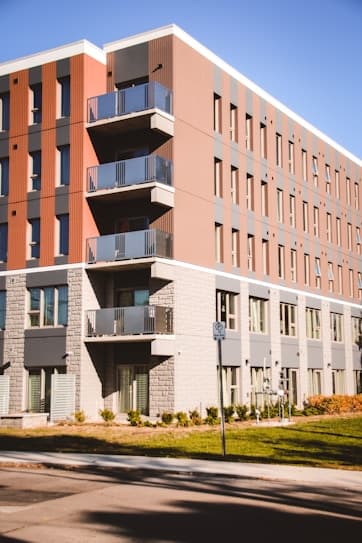
Yes, Osnabrück University offers accommodation services for international students through the Studentenwerk Osnabrück (Student Services). They manage approximately 1,700 spots in student dormitories, providing a range of options from single rooms to shared flats and family apartments.

Work While Studying
Yes students can work up to 20 hours per week.

Co-op/Internship Participation
Yes, Osnabrück University provides various internship opportunities and support services for enrolled students, though offerings vary by faculty and program.
Featured Programmes



Average Time To Receive Acceptance Letter
May - June
July - August
Location
Seminarstraße 20, 49074 Osnabrück, Germany

Uni4Edu AI Assistant