
Forensic Osteology and Field Recovery Methods
Canterbury Campus, United Kingdom


MSc in Forensic Osteology and Field Recovery Methods
University of Kent
Forensic Science / Biological Anthropology
Program Overview: MSc Forensic Osteology and Field Recovery Methods
The MSc in Forensic Osteology and Field Recovery Methods at the University of Kent is a one-year taught Master's program that provides the theoretical knowledge and advanced practical skills needed to identify, excavate, and recover human skeletal remains, and reconstruct biological profiles from hard tissue. Housed within the School of Anthropology and Conservation, this program is delivered by internationally respected academics with extensive professional and research experience in excavation, osteology, taphonomy, and histology.
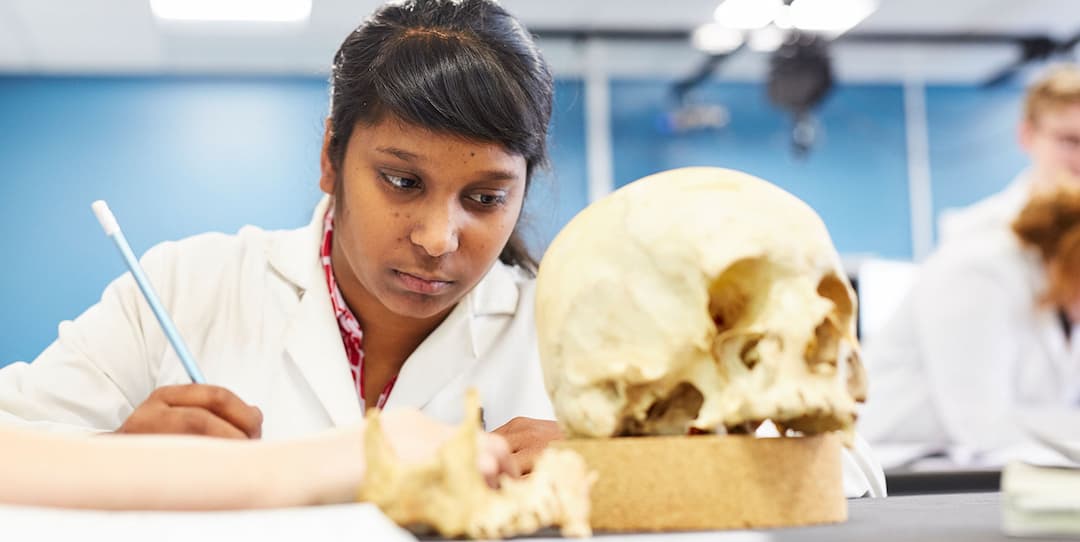
You will gain hands-on training at Kent's dedicated outdoor forensic facility, Crime Scene House, and Taphonomy Site, while also accessing one of the largest human skeletal collections in the UK, curated by the Skeletal Biology Research Centre in the School's Human Osteology Research Laboratory. The program is supported by laboratory-based training that deepens your knowledge of osteology and anatomy, the growth and disease of the human skeleton, and forensic identification methods.
This MSc is suited for students from a wide range of BA and BSc backgrounds and provides a firm foundation for continued work or PhD research in anthropology, archaeology, and related forensic fields. The program prepares you for careers in the police force, forensic practice, archaeology, anthropology, and beyond.
Key Program Highlights
- Forensic Science at Kent is ranked 2nd in the UK in The Complete University Guide 2025, reflecting the strength of its forensic programs.
- Access one of the largest human skeletal collections in the UK, with extensive pathology specimens and accompanying radiographs housed in the Human Osteology Research Laboratory.
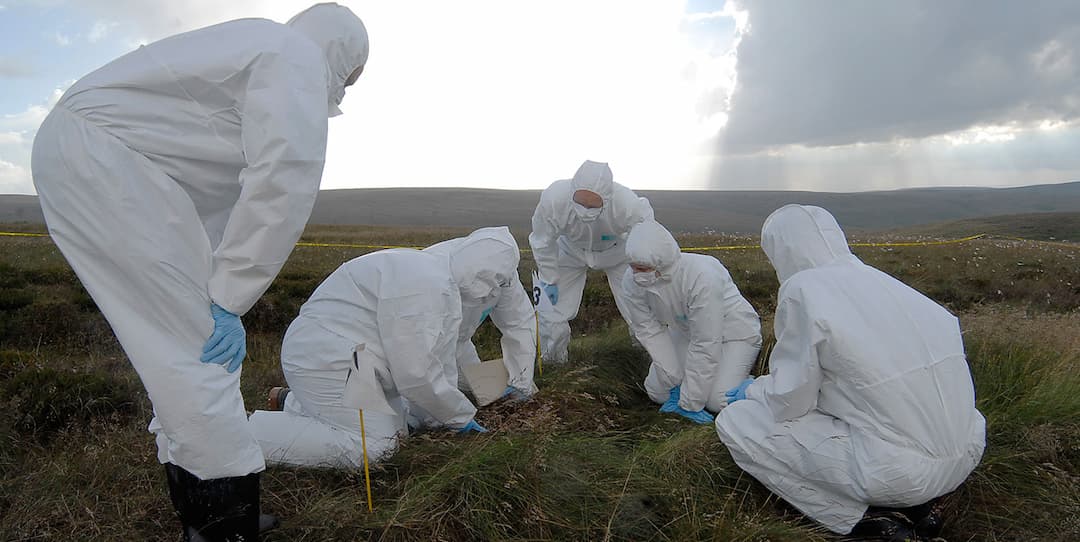
- Gain authentic field training in excavation and recovery techniques at the outdoor Forensic facility, Crime Scene House, and Taphonomy Site.
- Benefit from the Skeletal Biology Research Centre (SBRC) and Kent Osteological Research and Analysis (KORA), which bring together innovative research, novel methodologies, and international collaborations.
Curriculum and Modules
The MSc in Forensic Osteology and Field Recovery Methods combines compulsory core modules with optional electives, allowing you to build expertise in human skeletal biology, forensic identification, and field recovery. Supported by extensive laboratory and practical-based training, the curriculum prepares you for both professional practice and advanced research.
Research Design and Advanced Analytical Methods
15 creditsThis module provides expert training in research methodologies and advanced analytical techniques essential for conducting independent forensic and anthropological research at the postgraduate level.
Advanced Human Osteology and Anatomy
15 creditsYou will learn to identify morphological structures from human hard and soft tissues using one of the UK's largest skeletal collections, gaining systematic training in the biological science underpinning all human skeletal biology and forensic anthropology.
Advanced Practical Skills in Forensic Osteology and Field Recovery Methods
15 creditsBuilding upon earlier modules, you will learn how to determine age-at-death, biological sex, and stature from hard tissue, as well as protocols for disaster victim identification and biometric identification methods.
Growth, Disease and Taphonomy
15 creditsThis module covers various stages of post-mortem decay, focusing on environmental effects including decomposition in soil, interaction with plants, insects, and other animals, as well as post-mortem interval estimation methods and geotaphonomy.
Forensic Methods of Identification
15 creditsA practical-based module where you learn and practice methods of human identification, specifically methods used to build a biological profile, including identifying multiple individuals and disaster victim identification (DVI) protocols.
MSc Dissertation / Independent Research Project
60 creditsYou will specialise in your chosen area of expertise through an independent research project with one-to-one supervision, developing command, control, and management skills to present expert evidential incident reports to the highest standard.
Elective Modules and Optional Pathways
Admission Requirements
The MSc in Forensic Osteology and Field Recovery Methods welcomes applicants from diverse academic backgrounds. All applications are processed through Uni4Edu, where our team guides you through every step of the admissions process.
Academic Requirements
- Undergraduate DegreeA first or second class honours degree (2:1 or above) in biological anthropology or an associated field such as Forensic Science, Archaeology, or Anatomy.
- Non-Traditional ApplicantsStudents who have not followed a conventional education path may be considered on a case-by-case basis with relevant professional experience.
- Professional QualificationsAdditional qualifications, professional credentials, and relevant work experience may be taken into account when assessing applications.
- International QualificationsInternational applicants should hold an equivalent undergraduate degree; country-specific requirements may apply. Contact Uni4Edu for guidance on your qualifications.
- Visa RequirementsStudents requiring a student visa to study in the UK must enrol on a full-time basis for this program.
English Language Requirements
- CEFR LevelB2 (Good level of English language proficiency required)
- IELTSOverall 6.5 with minimum 6.0 in each component (typical for this level; confirm with Uni4Edu)
- PTE AcademicAccepted; contact Uni4Edu for the minimum score requirement for this program.
Required Documents
Application Deadlines
For personalized admission guidance, document verification, and application support, please contact Uni4Edu
Scholarships and Funding
The University of Kent offers a range of scholarships and funding opportunities to support international postgraduate students. Uni4Edu can help you identify and apply for the most suitable awards for your circumstances.
International Scholarships for Taught Masters Students
GBP 6,000 tuition fee reductionCompetitive merit-based scholarships open to international fee-paying students on full-time taught Master's programs. Selection is based on academic achievement and supporting application materials.
Kent Future Students Global Scholarship
GBP 2,000 tuition fee reductionAutomatically awarded to eligible international postgraduate taught students from a wide range of countries who meet the tuition deposit deadline. No separate application required.
For detailed tuition fee information, please contact Uni4Edu — we will guide you through the costs and available funding options for this program.
Career Prospects
Graduates of the MSc in Forensic Osteology and Field Recovery Methods are well-prepared for diverse careers across forensic science, law enforcement, archaeology, and academia. The program's combination of theoretical knowledge and practical field skills makes graduates highly sought after in both the public and private sectors.
Typical Graduate Career Roles
Typical Employers and Sectors
Rankings and Recognition
The University of Kent is a well-established UK research university with strong global recognition. Its forensic science programs are particularly highly regarded in national league tables, and the university consistently ranks among the top institutions in the United Kingdom.
| Subject | Ranking Body | Rank |
|---|---|---|
| Forensic Science | Complete University Guide | #2 in the UK |
| Forensic Science | Guardian University Guide | Top 5 in the UK |
| Anthropology | Complete University Guide | Top 10 in the UK |
| Biological Sciences | EduRank Global | #46 in the UK |
How to Apply
Applying for this program is easy with Uni4Edu. Our team will guide you through every step of the process — from document preparation to final enrolment.
Contact Uni4Edu
Reach out to our team via email or phone. We will assess your profile and confirm your eligibility for this program.
Prepare Your Documents
Our advisors will provide you with a personalised checklist of required documents and help you prepare your application package.
Submit Your Application
Uni4Edu will submit your application on your behalf and keep you updated on its progress throughout the review period.
Receive Your Offer
Once accepted, we will help you understand your offer, arrange visa support if needed, and guide you through the enrolment process.
Similar Programmes


Bachelor's Degree
48 months
Forensic and Medical Sciences BSc (Hons)

University of Bradford, Bradford, United Kingdom
Earliest Intake
June 2026
Gross Tuition
24456 £
Bachelor's Degree
48 months
Forensic Archaeology and Anthropology BSc (Hons)
University of Bradford, Bradford, United Kingdom
Earliest Intake
June 2026
Gross Tuition
23290 £

Bachelor's Degree
48 months
Forensic Science BSc (Hons)
University of Bradford, Bradford, United Kingdom
Earliest Intake
June 2026
Gross Tuition
24456 £
Master's & Postgraduate
12 months
Forensic Archaeology and Crime Scene Investigation MSc
University of Bradford, Bradford, United Kingdom
Earliest Intake
August 2026
Gross Tuition
23290 £


Bachelor's Degree
48 months
Forensic Science with Foundation Year\t
University of Kent, Canterbury, United Kingdom
Earliest Intake
June 2026
Gross Tuition
23500 £



Uni4Edu AI Assistant