

Biomedical Engineering - BEng (Hons)
Canterbury Campus, United Kingdom

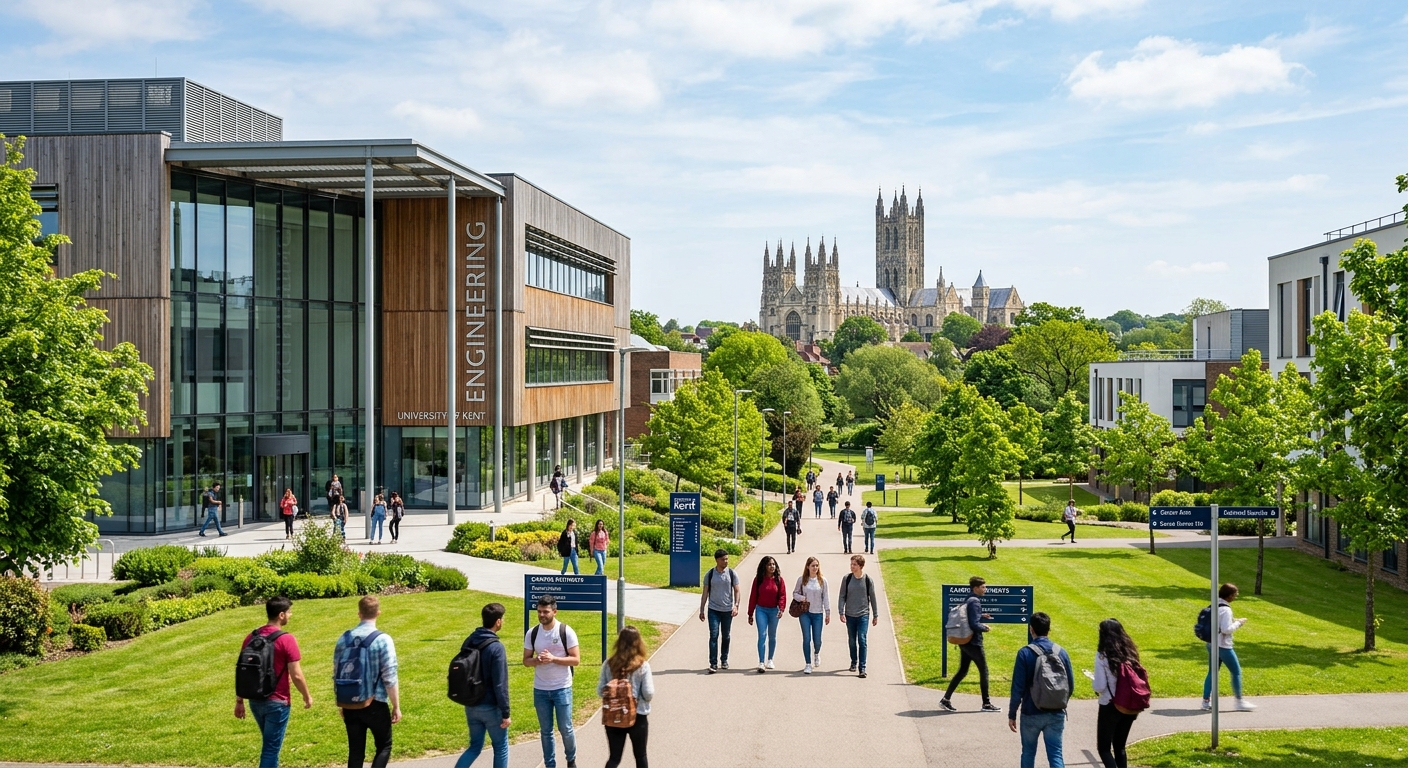
Biomedical Engineering - BEng (Hons)
University of Kent
Biomedical Engineering
Program Overview: Biomedical Engineering at the University of Kent
The BEng (Hons) Biomedical Engineering program at the University of Kent is a cross-disciplinary degree designed for students with a strong interest in both engineering and biology or medicine. Drawing from established expertise in engineering technologies and research synergies with the School of Biosciences, this degree produces engineers with solid knowledge in biology and medical science.
Throughout the program, you gain a broad grounding in biomedical engineering, including human physiology, biomedical skills, robotics, and engineering mathematics. You also undertake laboratory-based practical work, building bioscience-related electronic devices under the supervision of academics from both engineering and biosciences.
The curriculum is developed in collaboration with industrial employers, the university's Industrial Panel, the IET, graduates, and current students. Teaching is based on leading-edge research using case studies that incorporate current industry topics and emerging technologies, with guest speakers from private companies, research centres, and NHS institutions.
Key Program Highlights
- Accredited by the Institution of Engineering and Technology (IET) on behalf of the Engineering Council, meeting the academic requirement for registration as an Incorporated Engineer
- Hands-on laboratory experience building bioscience-related electronic devices from the first year through to final year projects
- Cross-disciplinary curriculum combining engineering technologies with biological and medical sciences
- Optional Year in Industry placement between second and final year for real-world professional experience
Curriculum and Modules
The Biomedical Engineering BEng program is structured across three years, progressing from foundational engineering and biology principles to advanced specialised topics. In your first year, you gain a broad foundation, while the second and third years allow you to develop deeper expertise and select your specialism through compulsory and optional modules.
Covers key mathematical techniques including complex numbers, calculus, linear algebra, statistics, and probability. You apply these tools to real-world engineering problems such as analysing electrical circuits and experimental data.
Focuses on three core components: Physiological Systems of the Human Body, Biomedical Laboratory Skills including microscopy and bioinformatics, and Technical Approach to Medical Electronics covering instrumentation and electronic circuits for medical applications.
Explores the mechanical and physiological aspects of biological bodies, blending theoretical study with practical application. You learn the interplay between physics, physiology, and engineering as they relate to human movement and rehabilitation devices.
Covers advanced instrumentation methods, signal processing techniques, and data analysis algorithms tailored for biomedical applications. Key areas include biosensors, bioelectric signals, and vital sign monitoring.
Provides essential knowledge of signal processing and control system theory applicable to biomedical engineering contexts, enabling you to analyse and design systems for medical device applications.
Elective Modules
Admission Requirements
The University of Kent considers applications on an individual basis from students holding a wide range of qualifications. All prospective students should apply through Uni4Edu, which handles the full application process on your behalf and can advise on eligibility for this program.
Academic Requirements
- A-LevelsABB including Mathematics plus two other STEM subjects (preferably Biology or Chemistry and Electronics, Physics, or Computing)
- BTECExtended Diploma or National Diploma in an Engineering subject including Further Maths; considered on a case-by-case basis
- International BaccalaureateContact Uni4Edu for specific IB requirements for this program
- Access to HE DiplomaAccepted; applicants may need to achieve a proportion of level 3 credits at merit grade or above
- GCSE EnglishGrade C or 4 in English Language GCSE or equivalent
English Language Requirements
- CEFR LevelB2 (Good level of English language proficiency required)
- IELTSContact Uni4Edu for the specific IELTS score requirement for this program
- Alternative EvidenceA-Level grade C or above in English Language or English Literature, or other approved qualifications
Required Documents
For personalized admission guidance, document verification, and application support, please contact Uni4Edu
Scholarships and Funding
The University of Kent offers a range of scholarships and funding opportunities for both domestic and international students. Uni4Edu can help you identify which scholarships you may be eligible for and assist with the application process.
Kent International Scholarship
Available to international students demonstrating strong academic achievement. Uni4Edu can advise on eligibility criteria and guide you through the application process.
Kent Future Student Scholarship
Up to GBP 5,000Awarded to international students based on academic merit and potential. Contact Uni4Edu to check your eligibility and receive support with your scholarship application.
For detailed tuition fee information, please contact Uni4Edu — we will guide you through the costs and available funding options for this program.
Career Prospects
A Biomedical Engineering degree from the University of Kent prepares you for diverse roles across healthcare, research, and medical technology sectors. Graduates find employment in a wide range of industries including medical engineering, aerospace, automotive, government agencies, manufacturing, and research establishments.
Potential Career Roles
Sectors and Employers Hiring Graduates
Rankings and Recognition
The University of Kent is a well-established institution founded in 1965, consistently ranked among the top UK universities. It holds strong positions in both national and international league tables, with particular strengths in research quality and student satisfaction.
| Subject | Ranking Body | Rank |
|---|---|---|
| Engineering | EduRank | #45 in UK |
| Engineering | THE | #401 globally |
| Biology | EduRank | #46 in UK |
| Computer Science | EduRank | #37 in UK |
How to Apply
Applying for this program is easy with Uni4Edu. Our team will guide you through every step of the process — from document preparation to final enrolment.
Contact Uni4Edu
Reach out to our team via email or phone. We will assess your profile and confirm your eligibility for this program.
Prepare Your Documents
Our advisors will provide you with a personalised checklist of required documents and help you prepare your application package.
Submit Your Application
Uni4Edu will submit your application on your behalf and keep you updated on its progress throughout the review period.
Receive Your Offer
Once accepted, we will help you understand your offer, arrange visa support if needed, and guide you through the enrolment process.
Similar Programmes


Master's & Postgraduate
48 months
MEng Biomedical Engineering (Hons)

Queen Mary, University of London, London, United Kingdom
Earliest Intake
January 2027
Gross Tuition
32950 £

Bachelor's Degree
48 months
Biomedical Engineering with Industrial Experience BEng
Queen Mary, University of London, London, United Kingdom
Earliest Intake
January 2027
Gross Tuition
32950 £

Master's & Postgraduate
12 months
Biomedical Engineering MSc
Queen Mary, University of London, London, United Kingdom
Earliest Intake
January 2027
Gross Tuition
31450 £


Master's & Postgraduate
12 months
Engineering for Biomedicine MSc
Imperial College London, , United Kingdom
Earliest Intake
January 2027
Gross Tuition
45000 £


Master's & Postgraduate
12 months
Biomedical Engineering (by Research and Thesis) - MSc
University of Kent, Canterbury, United Kingdom
Earliest Intake
July 2025
Gross Tuition
23500 £



Uni4Edu AI Assistant
