Physics Bachelor
University of Genoa Campuses, Italy
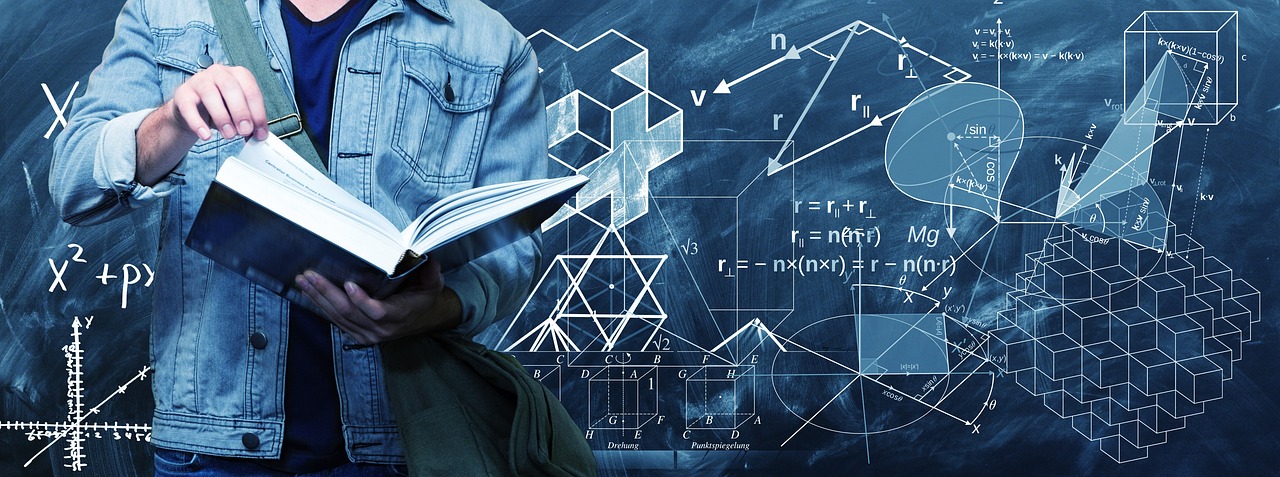
Laboratory courses provide hands-on experience with the scientific method, using state-of-the-art instruments for measuring physical quantities and analyzing data. The courses offer the opportunity for internships in industry.
Career opportunities
More than 90% of students who complete the Physics degree program in Genoa continue their studies with a master's degree.
100% (Almalaurea 2016) of master's degree graduates in Physics in Genoa are in paid employment three years after graduation. The program opens the door to scientific research, teaching, and industrial employment. The following sectors require physicists: energy, transportation, space and defense, biomedical, information technology, and nanotechnology.
What you will learn
classical physics
the principles of mechanics, thermodynamics and electromagnetism
modern physics
quantum mechanics and the theory of relativity
build physical models
to offer a conceptual representation of a phenomenon
work in the laboratory
take measurements, analyze them, evaluate their reliability and interpret them
problem solving
weave together multidisciplinary skills to solve complex problems
work in a group
study, design and carry out experiments together
The Physics degree program allows you to gain familiarity with the scientific method of inquiry and a solid cultural background in the various fields of classical and modern physics. You will explore the fundamental laws of physics and encounter the main phenomenological and applied mathematical models.
Experimental capabilities
You'll spend many hours in the laboratory, where you'll have an initial exposure to the experimental method. There, you'll learn to use cutting-edge technology and analyze large data sets with the aid of computer tools. Interpreting and presenting results is a key aspect of experimental work, which you'll learn to approach with a critical mind and clear presentation.
Mathematical skills
The study of classical and modern physics requires an adequate knowledge of mathematics in its fundamental, algebraic, geometric, and analytical structures, as well as the main computational, analytical, numerical, and simulation tools.
Applied research capacity
Alongside its cultural objectives, the professionalizing goal of the degree program is to provide graduates with adequate skills to operate in various research and development fields, in the environmental, energy, transportation, medical and healthcare sectors, cultural heritage, and scientific communication.
Similar Programmes
Bachelor's Degree
48 months
Physics (BA,BS)

University of Toledo, Toledo, United States
Earliest Intake
June 2026
Gross Tuition
37119 $
Master's & Postgraduate
12 months
PGCE Secondary Science with Physics - PGCE
London Metropolitan University, London, United Kingdom
Earliest Intake
April 2025
Gross Tuition
15500 £
Master's & Postgraduate
60 months
Physics with Astrophysics (with a Year in Industry) MPhys (Hons)
University of York, York, United Kingdom
Earliest Intake
January 2026
Gross Tuition
32350 £
Bachelor's Degree
48 months
Physics with Astrophysics BSc (Hons)
University of York, York, United Kingdom
Earliest Intake
January 2026
Gross Tuition
32350 £
Master's & Postgraduate
60 months
Physics (with a year in industry) MPhys (Hons)
University of York, York, United Kingdom
Earliest Intake
January 2026
Gross Tuition
32350 £



Uni4Edu AI Assistant