
Zoology PhD
University of Cambridge, United Kingdom

PhD in Zoology
University of Cambridge
Zoology / Biological Sciences
PhD in Zoology at the University of Cambridge — Program Overview
The PhD in Zoology at the University of Cambridge is the principal research degree offered by the Department of Zoology, and the great majority of postgraduate students in the department are registered for it. The program involves a minimum of three years of full-time research under the guidance of an individual supervisor, culminating in the submission of a written thesis assessed by independent experts and examined through a viva voce.
The Department of Zoology brings together researchers from a great diversity of disciplines, ranging from cell biology to field ecology, united by an interest in the whole organism and how systems interact across different levels of organisation. Research is broadly structured around four themes: Ecology and Conservation Science, Evolution, Behaviour and Neuroscience, and a fourth integrative theme spanning developmental biology and biomechanics.
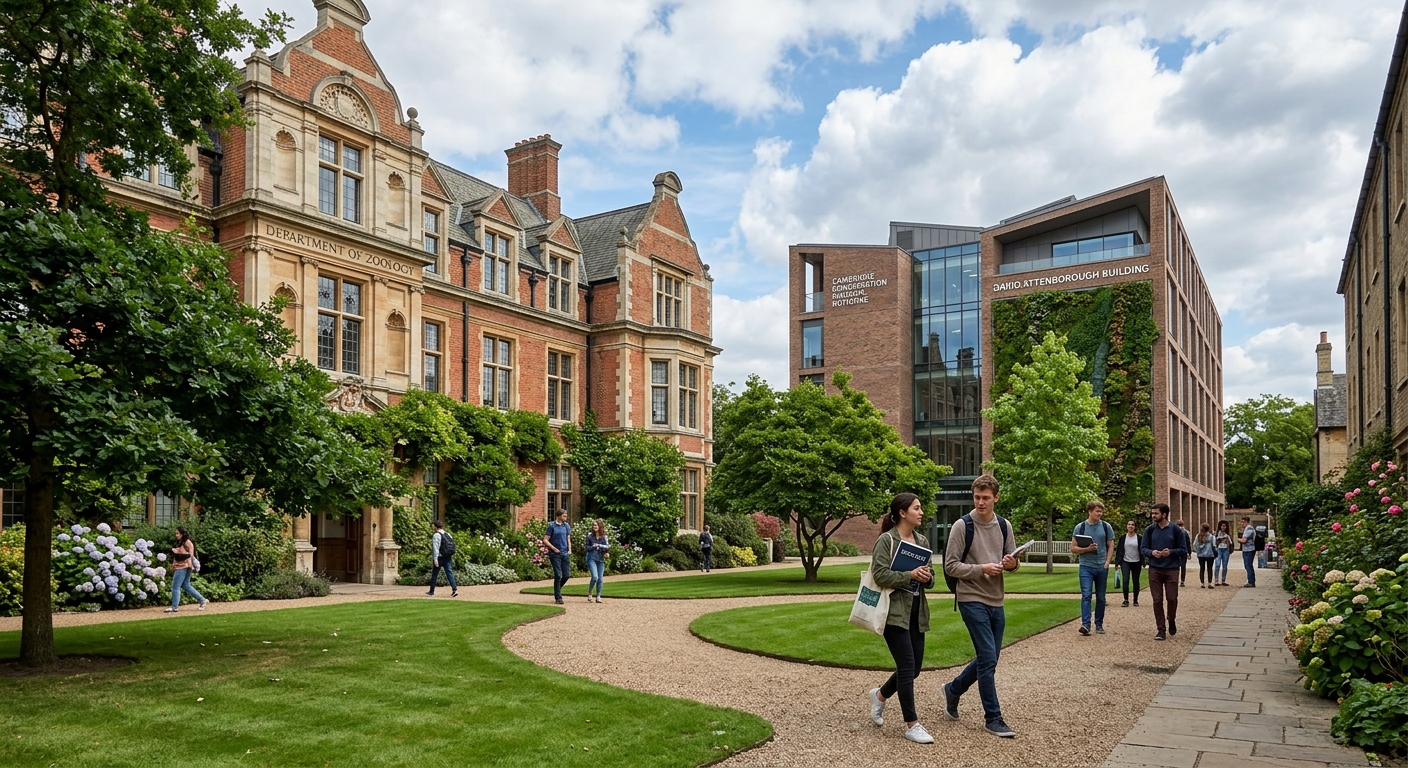
The department is closely integrated with the Cambridge Conservation Initiative and shares the David Attenborough Building with leading internationally focused biodiversity conservation organisations. With roughly two million specimens in the Museum of Zoology — including collections associated with Charles Darwin and Alfred Russel Wallace — PhD students benefit from extraordinary research resources and a vibrant community of around 100 MPhil and PhD students.
Key Program Highlights
- Research-intensive PhD at one of the world's top-ranked universities for biological sciences, with approximately 35 active research groups across six research areas.
- Access to the Museum of Zoology's two million specimens, cutting-edge imaging facilities, and the Cambridge Biotomography Centre's industry-leading X-ray and CT systems.
- Integration with the Cambridge Conservation Initiative in the David Attenborough Building, connecting research directly to global conservation policy and practice.
- A supportive postgraduate community with cohort-building events, dedicated training opportunities, and pastoral support overseen by a deputy Head of Department for Postgraduate Education.
Research Themes & Training Structure
As a research-only doctoral program, the PhD in Zoology does not follow a traditional taught curriculum. Instead, students pursue original research within one of the department's four major research themes, supplemented by optional lectures, seminars, and transferable skills training offered across the university.
Ecology and Conservation Science
Research ThemeInvestigates patterns of biodiversity and ecosystem change, characterises pressures driving loss or degradation, and identifies effective conservation responses from local land management to international convention.
Evolution
Research ThemeUses the full history of life on Earth to analyse how evolution works, investigating the genetic origins of adaptive diversity, new mutations, and how species thrive or go extinct in response to environmental change.
Behaviour and Neuroscience
Research ThemeExplores how animal behaviour provides a first line of defence for coping with environmental challenges, analysing social interactions, sensory perception, neural mechanisms, and the development of behaviour under changeable conditions.
Cell and Developmental Biology
Research ThemeExamines how organisms develop, function, and interact at the cellular level, integrating molecular and genetic approaches to understand the complexity of form and function in living organisms.
Research Skills and Methodology Training
Training ComponentStudents attend appropriate lectures and courses including research methodology, data analysis, scientific writing, and other transferable skills offered by the department and the university's Postgraduate School of Life Sciences.
Thesis and Viva Voce Examination
Final AssessmentAt the end of the program, students produce a written thesis presenting original research findings. The thesis is assessed by independent experts and defended through a formal viva voce examination.
Supplementary Training Opportunities
Admission Requirements for the PhD in Zoology
Admission to the PhD in Zoology at Cambridge is highly competitive. The university has high academic entry requirements for postgraduate study, and applicants are expected to have identified a potential supervisor and discussed their proposed research project before submitting an application through Uni4Edu.
Academic Requirements
- Degree RequirementA first-class or strong upper second-class (2:1) honours degree in a relevant subject, or an international equivalent.
- Master's DegreeA relevant Master's degree (e.g., MPhil, MSc) is often expected, though exceptional candidates with a strong undergraduate record may be considered.
- Research ExperienceDemonstrated research experience in zoology, ecology, evolutionary biology, or a closely related field is strongly preferred.
- Research ProposalA clear research proposal aligned with the department's research themes and an identified potential supervisor within the Department of Zoology.
- ReferencesTwo strong academic references from individuals who can comment on the applicant's academic ability and research potential.
English Language Requirements
- IELTS AcademicMinimum overall score of 7.5, with 7.0 or above in each element.
- TOEFL iBTMinimum overall score of 110, with 25 or above in each element.
- Cambridge C2 ProficiencyMinimum overall score of 200, with no element lower than 185.
Required Documents
For personalized admission guidance, document verification, and application support, please contact Uni4Edu
Scholarships & Funding
A range of prestigious funding opportunities is available for PhD students in Zoology at Cambridge. About 64% of doctoral students at the university are fully funded, and students are encouraged to explore funding options well in advance through Uni4Edu.
Gates Cambridge Scholarship
Full funding (fees, maintenance, and additional allowances)One of the most prestigious international scholarships, the Gates Cambridge Scholarship is open to outstanding applicants from outside the United Kingdom for full-time postgraduate study. It covers the full cost of studying at Cambridge, including a generous maintenance allowance.
Cambridge Trust Scholarships
Full or partial funding (varies by award)The Cambridge Trust offers a range of scholarships for both UK and international doctoral students. Awards vary in scope and may cover fees, maintenance, or both. Eligibility depends on nationality, subject area, and academic merit.
NERC Doctoral Landscape Awards (CREATES Programme)
Full funding for 3.5 years (fees and stipend)The Cambridge Research Experience and Advanced Training for Environmental Scientists (CREATES) programme offers fully funded PhD studentships through the NERC Doctoral Landscape Awards scheme, supporting research in environmental and biological sciences.
For detailed tuition fee information, please contact Uni4Edu — we will guide you through the costs and available funding options for this program.
Career Prospects for Zoology PhD Graduates
Graduates of the Cambridge Zoology PhD program pursue diverse and impactful careers across academia, conservation, government, and the private sector. The university's Careers Service and extensive alumni network provide strong support for career development, with access to employment-related skills training and networking opportunities.
Potential Career Paths
Where Cambridge Zoology Graduates Work
Rankings & Recognition
The University of Cambridge is consistently ranked among the top universities in the world, with particular strength in the biological and life sciences. The Department of Zoology benefits from this global reputation, attracting leading researchers and students from around the world.
| Subject | Ranking Body | Rank |
|---|---|---|
| Biological Sciences | QS World University Rankings by Subject | Top 5 |
| Biology | EduRank | #3 in UK, #17 globally |
| Environmental Science | EduRank | #2 in UK, #10 globally |
| Life Sciences | Times Higher Education | Top 10 |
How to Apply
Applying for this program is easy with Uni4Edu. Our team will guide you through every step of the process — from document preparation to final enrolment.
Contact Uni4Edu
Reach out to our team via email or phone. We will assess your profile and confirm your eligibility for this program.
Prepare Your Documents
Our advisors will provide you with a personalised checklist of required documents and help you prepare your application package.
Submit Your Application
Uni4Edu will submit your application on your behalf and keep you updated on its progress throughout the review period.
Receive Your Offer
Once accepted, we will help you understand your offer, arrange visa support if needed, and guide you through the enrolment process.
Similar Programmes


Bachelor's Degree
36 months
Ecology and Conservation

University of Kent, Canterbury, United Kingdom
Earliest Intake
September 2026
Gross Tuition
21800 £


Master's & Postgraduate
24 months
Global Change: Ecosystem Science and Policy
University of Giessen (Justus Liebig University Giessen), Gießen, Germany
Earliest Intake
May 2026
Gross Tuition
805 €

Master's & Postgraduate
24 months
Global Change Ecology
University of Bayreuth, Bayreuth, Germany
Earliest Intake
March 2026
Gross Tuition
330 €

Bachelor's Degree
48 months
Ecology and Conservation BSc
University of St Andrews, Fife, United Kingdom
Earliest Intake
September 2026
Gross Tuition
31670 £


Bachelor's Degree
36 months
Ecology and Wildlife Conservation
University of Reading, Reading, United Kingdom
Earliest Intake
September 2026
Gross Tuition
30650 £



Uni4Edu AI Assistant
