Master of Materials Science and Nano Engineering (Thesis) (English)
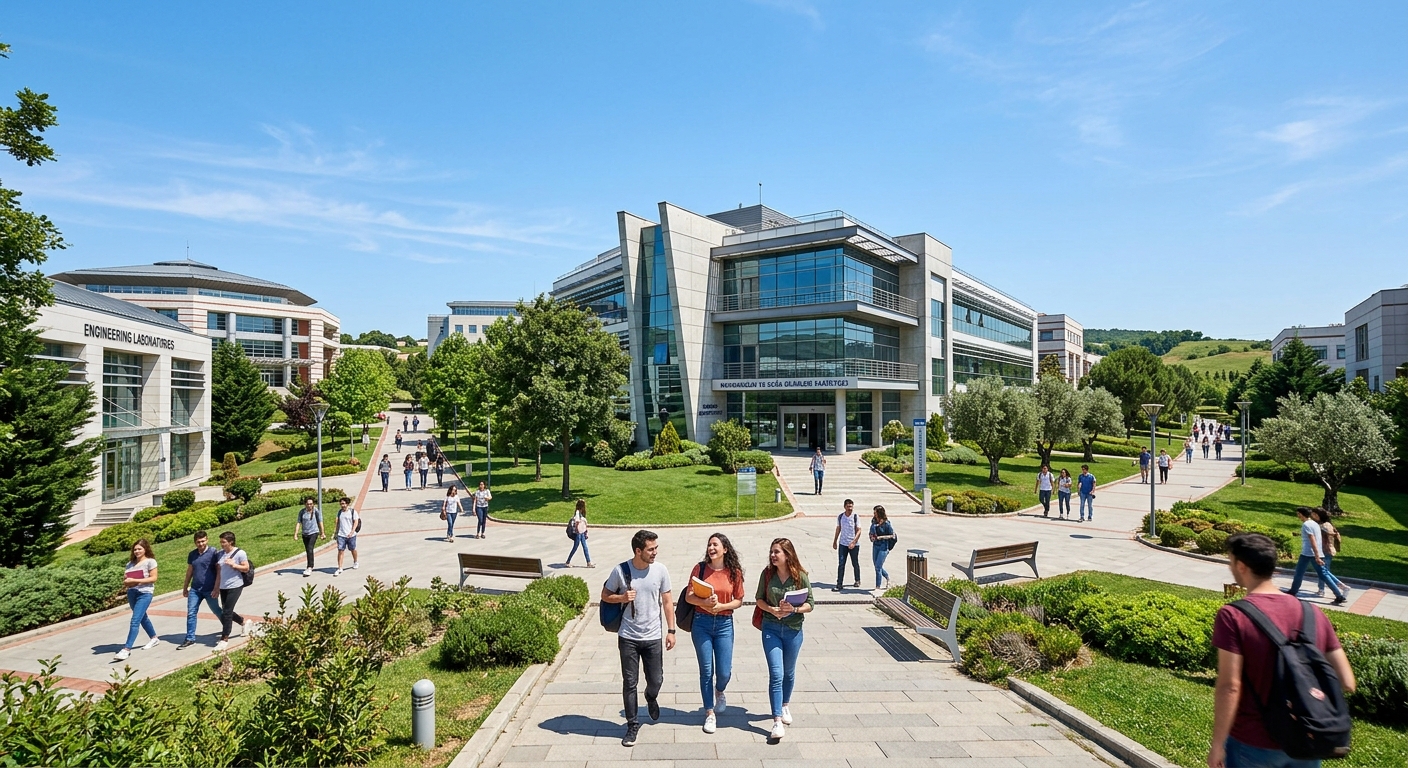
Sabanci University Tuzla Campus, Turkey
Master of Materials Science and Nano Engineering (Thesis)
Sabancı University
Materials Science and Nano Engineering
Program Overview: Materials Science and Nano Engineering at Sabancı University
The Master of Materials Science and Nano Engineering (Thesis) at Sabancı University is an interdisciplinary graduate program closely related to physics, chemistry, biology, as well as mechanical, construction, aviation, and chemical engineering. Taught entirely in English, this program equips students with the theoretical and practical skills necessary for the understanding, design, and application of advanced technology materials.
This program distinguishes itself from similar programs in Turkey by teaching experimental, theoretical, and computational materials science approaches across diverse fields including polymers, ceramics, composites, energy cycle and storage materials, carbon materials, and cement. Within the framework of nano-engineering, the program places particular concentration on nanomaterials and their applications in nanotechnology.
The program focuses on the interrelationships between structure, properties, and processing of materials for advanced technological applications. Areas of ongoing research include semiconductors, synthetic and biological polymers, ceramics, and composites at the nanometer scale, providing students with cutting-edge research opportunities.
Key Program Highlights
- Interdisciplinary curriculum spanning physics, chemistry, biology, and multiple engineering disciplines with a strong nano-engineering focus
- Comprehensive coverage of experimental, theoretical, and computational materials science approaches beyond traditional metallurgy
- Active research in semiconductors, polymers, ceramics, composites, energy materials, and carbon nanomaterials
- Thesis-based program enabling original research contributions and preparation for PhD studies or industry R&D careers
Curriculum and Modules
The Master's with Thesis program consists of 7 credit courses, non-credit courses, and a thesis totaling a minimum of 21 credits. Coursework must be completed within a maximum of 4 semesters, while the entire program must be completed within 6 semesters. Students are expected to maintain a minimum GPA of 3.00 out of 4.00 throughout the program.
Thermodynamics of Materials
3 CreditsCovers the fundamental thermodynamic principles governing phase equilibria, stability, and transformations in materials systems including metals, ceramics, and polymers.
Structure and Properties of Materials
3 CreditsExamines the relationship between atomic and molecular structure, microstructure, and the mechanical, electrical, thermal, and optical properties of engineering materials.
Nanomaterials and Nanotechnology
3 CreditsExplores the synthesis, characterization, and applications of nanoscale materials, including nanoparticles, nanotubes, thin films, and nanocomposites for advanced technological applications.
Materials Characterization Techniques
3 CreditsProvides hands-on training in advanced characterization methods such as electron microscopy, X-ray diffraction, spectroscopy, and thermal analysis for materials investigation.
Computational Materials Science
3 CreditsIntroduces computational methods including molecular dynamics, density functional theory, and finite element analysis for modeling and predicting materials behavior at multiple scales.
Master's Thesis Research
Non-creditAn original research project conducted under faculty supervision, culminating in a written thesis and oral defense demonstrating the student's ability to contribute to the field of materials science and nano engineering.
Elective Courses
Admission Requirements
Admission to the Master of Materials Science and Nano Engineering (Thesis) program is competitive and based on a holistic evaluation of academic qualifications, language proficiency, and research potential. Applications are reviewed by the Admission Committee, and candidates meeting the minimum criteria may be invited for a written exam and/or interview. Contact Uni4Edu for guidance on your application.
Academic Requirements
- Bachelor's DegreeA completed bachelor's degree in materials science, engineering, physics, chemistry, or a related field from an accredited institution
- Minimum GPA3.00 out of 4.00 or equivalent; candidates from institutions using a different grading scale must provide a conversion table
- Standardized TestGRE scores may be required or recommended; contact Uni4Edu for current requirements
- Letters of RecommendationTypically two or three academic reference letters from faculty familiar with the applicant's academic performance
- Statement of PurposeA written statement outlining research interests, academic goals, and motivation for pursuing the program
Language Requirements
- TOEFL iBTMinimum score of 80
- PTE Academic69 Minimum score accepted; contact Uni4Edu for the current threshold
- ExemptionGraduates of English-medium bachelor's programs may qualify for a language requirement waiver; contact Uni4Edu for eligibility details
Required Documents
For personalized admission guidance, document verification, and application support, please contact Uni4Edu
Scholarships and Funding
Sabancı University offers a range of financial support options for graduate students, including merit-based scholarships, tuition waivers, and research assistantships. International students are encouraged to explore funding opportunities through Uni4Edu to ensure they secure the best possible financial package for their studies.
Sabancı University Graduate Scholarship
Merit-based scholarship awarded to outstanding graduate students admitted to thesis programs, which may include tuition waivers and monthly stipends for research assistantship duties.
For detailed tuition fee information, please contact Uni4Edu — we will guide you through the costs and available funding options for this program.
Career Prospects
Graduates of the Materials Science and Nano Engineering program are well-prepared for careers in both industry and academia. Sabancı University graduates benefit from a strong employment record, with the university reporting a 97% employment rate within the first year following graduation. The interdisciplinary nature of the program opens doors to diverse sectors including nanotechnology, energy, electronics, aerospace, and advanced manufacturing.
Potential Career Roles
Typical Employers
Rankings and Recognition
Sabancı University is consistently recognized as one of Turkey's top universities in major global rankings. Its strong performance in research quality, industry collaboration, and international outlook has earned it a prominent position among both Turkish and global institutions, particularly in engineering and natural sciences.
| Subject | Ranking Body | Rank |
|---|---|---|
| Engineering and Computer Science | THE Subject Rankings | #351-400 |
| Natural Sciences | THE Subject Rankings | #401-500 |
| Materials Science | EduRank | Top 10% Globally |
| Overall in Turkey | THE World University Rankings | #1 (tied) |
How to Apply
Applying for this program is easy with Uni4Edu. Our team will guide you through every step of the process — from document preparation to final enrolment.
Contact Uni4Edu
Reach out to our team via email or phone. We will assess your profile and confirm your eligibility for this program.
Prepare Your Documents
Our advisors will provide you with a personalised checklist of required documents and help you prepare your application package.
Submit Your Application
Uni4Edu will submit your application on your behalf and keep you updated on its progress throughout the review period.
Receive Your Offer
Once accepted, we will help you understand your offer, arrange visa support if needed, and guide you through the enrolment process.
Similar Programmes

Doctoral & PhD
60 months
Materials Science, Engineering, and Commercialization (PhD)

Texas State University, San Marcos, United States
Earliest Intake
-
Gross Tuition
16380 $

Bachelor's Degree
48 months
Information Technology BS
McMurry University, Abilene, United States
Earliest Intake
December 2025
Gross Tuition
33124 $


Master's & Postgraduate
24 months
Materials Science and Engineering (MS)
University Of Arizona, Tucson, United States
Earliest Intake
May 2026
Gross Tuition
32065 $

Master's & Postgraduate
12 months
Advanced Functional Materials MSc
University of Glasgow, Glasgow, United Kingdom
Earliest Intake
January 2026
Gross Tuition
33210 £
Bachelor's Degree
48 months
Materials Science and Nano Engineering
Sabancı University, Tuzla, Turkey
Earliest Intake
December 2025
Gross Tuition
36500 $



Uni4Edu AI Assistant