
Wildlife Conservation
Bangor , United Kingdom

About This Course
The world is changing, and we are in a race against time to conserve what remains of the world’s wildlife. As climate and nature emergencies lead us deeper into an existential crisis, our own species faces challenges and opportunities. Our MSc Wildlife Conservation will help you develop tools and knowledge to design and implement effective, evidence-based, and crucially equitable, conservation projects. These skills are needed more than ever by industry, government, and society. The programme assimilates a wide range of subjects to explore the most important drivers of biodiversity loss, including natural resource use, land-use change, over exploitation, invasive species, climate change, and pollution.
You will explore how technology, research, behavioural change, economic policies, government regulations, and a robust scientific approach can be combined into a unified approach to tackle the world’s greatest threats to wildlife. Prifysgol Bangor University has a strong focus on conservation research and enjoys close links with local, national, and international organisations that employ conservation scientists, helping us to ensure that the MSc Wildlife Conservation is relevant and up to date. Bangor is surely one of the most ideally located universities for you to study wildlife conservation - with access to a wide range of natural environments ranging from the coast to the varied landscape of Parc Cenedlaethol Eryri (Snowdonia National Park).
Course Content
What will you study on this course?
This course not only covers wildlife biology, giving you an understanding of organisms, their biology and behaviour, the structure of ecological communities, and the consequences of habitat fragmentation, but also how understanding people, societies, and our relationship with nature is critical to tackling conservation problems. Crucially, the course will help you understand how conservation science, policy and practice is a truly interdisciplinary endeavour involving theories and methods from the natural, social, and applied sciences. You will learn why society needs to conserve biodiversity, critique different approaches, and how to measure the effectiveness of conservation. This unique combination of subjects, combined with many practical sessions and field trips, will provide you with an educational experience that you will find both fascinating and rewarding. Field trips are central to this degree, from the mountains of mid-Wales to the tropical rainforests and oil palm plantations of Borneo.
Similar Programmes


Bachelor's Degree
48 months
Environmental Science

Manhattan University, Bronx, United States
Earliest Intake
June 2025
Gross Tuition
44100 $


Bachelor's Degree
48 months
Environmental Science
North Park University, Chicago, United States
Earliest Intake
September 2026
Gross Tuition
36070 $

Bachelor's Degree
48 months
Environmental Sciences
University of Toledo, Toledo, United States
Earliest Intake
June 2026
Gross Tuition
37119 $

Master's & Postgraduate
12 months
Marine Systems and Policies MSc
University of Edinburgh, Edinburgh, United Kingdom
Earliest Intake
January 2026
Gross Tuition
40800 £
Bachelor's Degree
48 months
BS in Field Biology
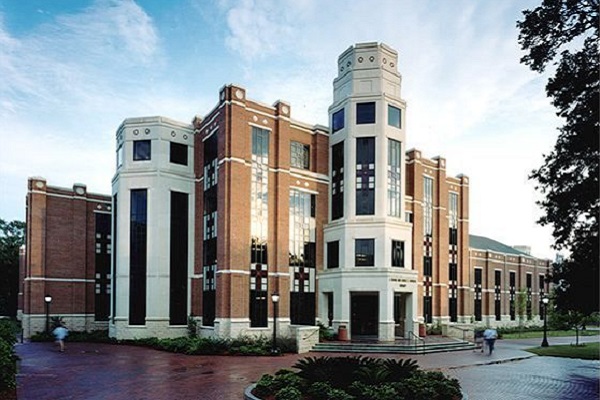
Loyola University New Orleans, New Orleans, United States
Earliest Intake
March 2027
Gross Tuition
47390 $



Uni4Edu AI Assistant