Newcastle University
United Kingdom
Newcastle University
Newcastle upon Tyne, United Kingdom
Founded
1834
Institution Type
Public Research University
Total Students
29,000+
QS World Ranking
#137 (2026)
Discover Newcastle University: A Russell Group Institution with Nearly 200 Years of History
Discover Newcastle University: A Russell Group Institution with Nearly 200 Years of History
Newcastle University traces its origins to 1834 when the School of Medicine and Surgery was established in Newcastle upon Tyne. The College of Physical Science followed in 1871, and the two colleges merged in 1937 to form King's College within the University of Durham. In 1963, an Act of Parliament granted the institution independent university status as the University of Newcastle upon Tyne.
As a founding member of the Russell Group, Newcastle University is one of the UK's leading research-intensive institutions. The university is organised into three faculties — Humanities and Social Sciences, Medical Sciences, and Science, Agriculture and Engineering — delivering over 185 undergraduate and 300 postgraduate programmes across 19 academic schools.
Newcastle welcomes more than 29,000 students from over 135 countries, creating a diverse and inclusive learning community. The university also operates branch campuses in Singapore and Malaysia, extending its global reach and collaborative research partnerships worldwide.
Key Milestones
- 1834: School of Medicine and Surgery founded in Newcastle upon Tyne
- 1871: College of Physical Science established to serve the region's growing industries
- 1937: The two colleges merged to form King's College within the University of Durham
- 1963: King's College became the independent University of Newcastle upon Tyne by Act of Parliament
Academic Structure and Faculties
Academic Structure and Faculties
Newcastle University's academic life is organised across three major faculties encompassing 19 schools, 13 research institutes, and 38 research centres. Each faculty is led by a Pro-Vice-Chancellor and a team of Deans, ensuring focused leadership in teaching and research. Students can choose from a broad range of disciplines spanning the arts, sciences, engineering, medicine, and humanities.
Faculty of Humanities and Social Sciences
This faculty brings together schools covering arts, law, business, education, languages, and social sciences. It is home to the triple-accredited Newcastle University Business School (AACSB, EQUIS, AMBA) and a vibrant community of researchers in politics, sociology, and linguistics.
- BA (Hons) Business Management
- LLB (Hons) Law
- BA (Hons) English Literature
Faculty of Medical Sciences
One of the university's founding strengths, this faculty covers medicine, dentistry, biomedical sciences, psychology, and sport sciences. It works closely with the Royal Victoria Infirmary and other NHS trusts to deliver clinical training and cutting-edge health research.
- MBBS Medicine
- BDS Dentistry
- BSc (Hons) Biomedical Sciences
Faculty of Science, Agriculture and Engineering
Rooted in the university's industrial heritage, this faculty encompasses engineering, computing, natural and environmental sciences, agriculture, and mathematics. It houses major research facilities including the Emerson Cavitation Tunnel and advanced computing laboratories.
- BEng (Hons) Civil Engineering
- BSc (Hons) Computer Science
- BSc (Hons) Environmental Science
Newcastle University Business School
Holding triple-crown accreditation from AACSB, EQUIS, and AMBA, the Business School is ranked among the top 1% of business schools worldwide. It offers undergraduate, postgraduate, and MBA programmes with a strong focus on sustainability, innovation, and responsible business practices.
- MBA Master of Business Administration
- MSc International Economics and Finance
- BSc (Hons) Accounting and Finance
School of Architecture, Planning and Landscape
This school is recognised for its strong programmes in architecture and urban planning. It combines studio-based design teaching with research into sustainable cities, heritage conservation, and landscape architecture.
- BA (Hons) Architecture
- MSc Urban Planning
- MArch Architecture
School of Engineering
Building on Newcastle's proud engineering heritage in shipbuilding and mining, this school delivers programmes in mechanical, electrical, chemical, and marine engineering. Research strengths include renewable energy, robotics, and advanced manufacturing.
- BEng (Hons) Mechanical Engineering
- BEng (Hons) Electrical and Electronic Engineering
- MSc Marine Technology
Admission Requirements for Newcastle University
Admission Requirements for Newcastle University
Undergraduate Admissions
- A-Level RequirementTypical minimum of ABB or equivalent (varies by programme)
- IELTS Score6.0–7.0 overall (minimum 5.5 in each component, varies by course)
- Application PlatformUCAS (Universities and Colleges Admissions Service)
- Personal StatementRequired, focusing on academic interests and career direction
- International QualificationsIB Diploma, SAT/ACT scores, AP exams, and country-specific qualifications accepted
Postgraduate Admissions
- Degree RequirementA minimum 2:1 honours degree (or international equivalent) in a relevant subject
- IELTS Score6.5–7.0 overall (minimum 6.0 in each component, varies by programme)
- ReferencesTypically two academic or professional references required
- Supporting DocumentsPersonal statement, CV, and academic transcripts
- Additional RequirementsSome programmes require work experience, portfolio, or GMAT/GRE scores
Undergraduate applications submitted by this date receive equal consideration from the university.
Last date to submit undergraduate applications through UCAS for most programmes.
Most postgraduate taught programmes accept applications on a rolling basis until places are filled. Apply early for popular courses.
Research degree start dates are agreed on a faculty basis, with multiple entry points throughout the year.
Tuition Fees and Scholarships at Newcastle University
Tuition Fees and Scholarships at Newcastle University
Newcastle University offers competitive tuition fees, and the city of Newcastle upon Tyne is recognised as one of the most affordable student cities in the UK. Fees vary by programme and fee status, so prospective students should check individual course pages for the most accurate figures.
| Fee Category | UK (Home) Students | International Students |
|---|---|---|
| Undergraduate Tuition (per year) | GBP 9,535 | GBP 18,600 – 44,500 |
| Postgraduate Taught (per year) | Varies by programme | GBP 7,835 – 31,700 |
| Estimated Living Costs (per year) | GBP 9,000 – 12,000 | GBP 9,000 – 12,000 |
| Placement Year Fee | GBP 1,430 – 1,905 | GBP 1,430 – 1,905 |
| Total | Contact the university for programme-specific totals | Contact the university for programme-specific totals |
Newcastle University International Scholarships
A range of scholarships are available for international students, including automatic tuition fee reductions and merit-based awards. Eligible students may receive up to GBP 7,000 per year off their undergraduate tuition fees when progressing from a pathway programme.
- Value: Up to GBP 7,000 per year (undergraduate) or GBP 8,000 per year (postgraduate)
- Eligibility: International fee-status students; some are automatically assessed at application
- Application: Many scholarships are awarded automatically; no separate application required
Early Payment and Family Discounts
Newcastle University offers a 2% discount on annual tuition fees for students who pay upfront and in full before the deadline. An International Family Discount is also available for students with a close family member who has studied at Newcastle.
- Early Payment Discount: 2% off annual tuition fees when paid in full before the deadline
- Family Discount: Available for students with a close relative who graduated from or is studying at Newcastle
- Additional Awards: Subject-specific scholarships and sports scholarships also available
Campus and Facilities at Newcastle University
Campus and Facilities at Newcastle University
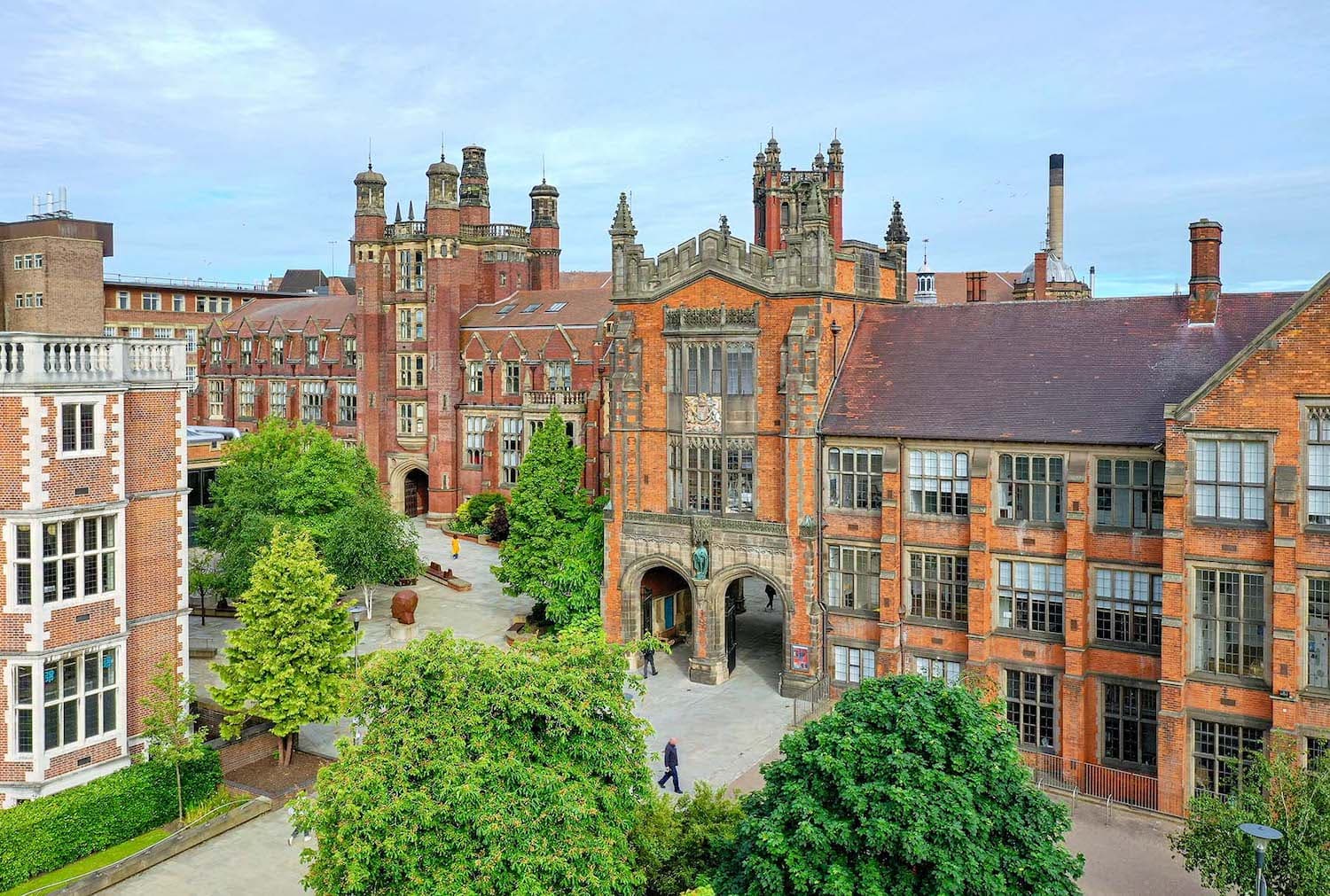
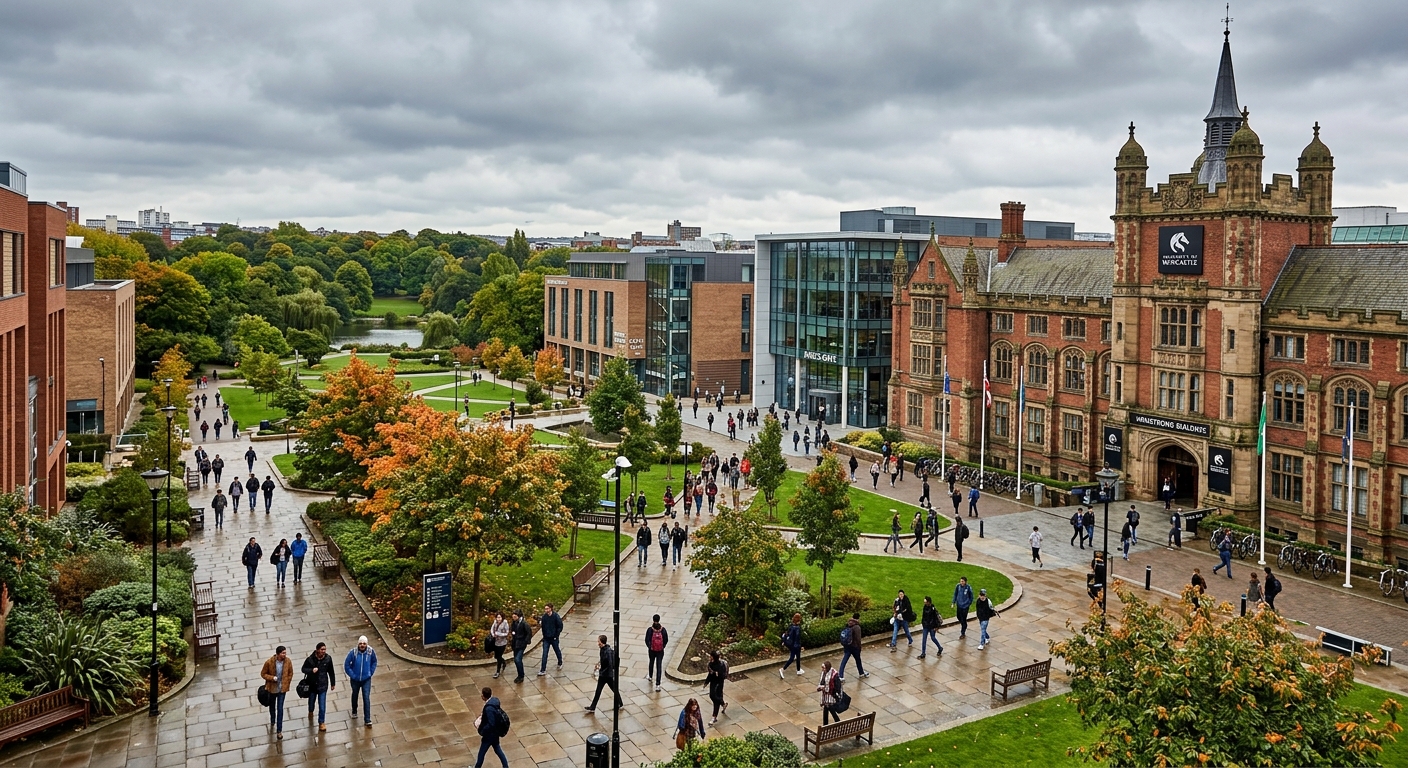
Newcastle University's campus is located in the heart of Newcastle upon Tyne, close to Haymarket and between Leazes Park and the Town Moor. The campus blends historic buildings like the Armstrong Building with modern teaching facilities, laboratories, and creative spaces, all within easy walking distance of the vibrant city centre.
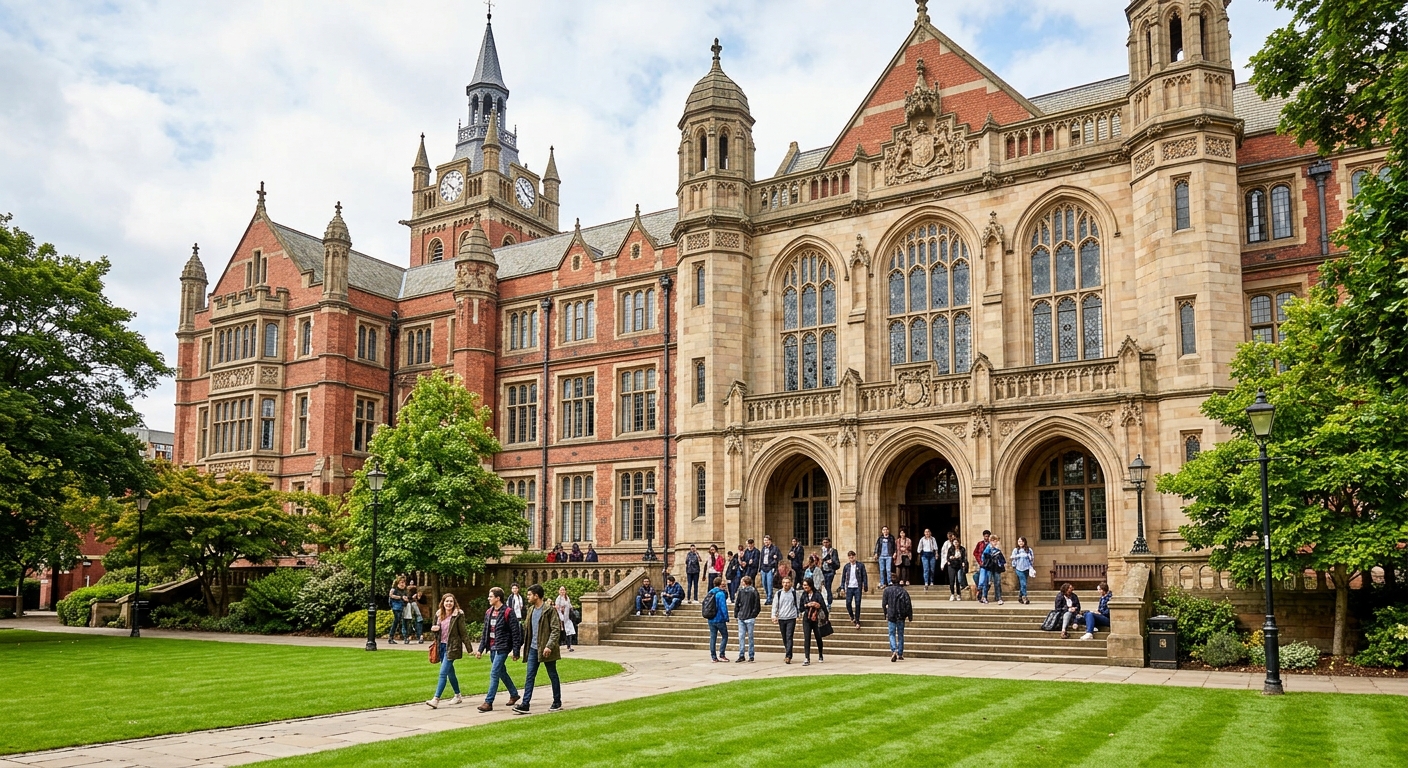
The oldest building on campus, originally home to Armstrong College, now housing lecture theatres and academic offices.

The university's main library with over a million printed books and more than 580 study spaces for students.
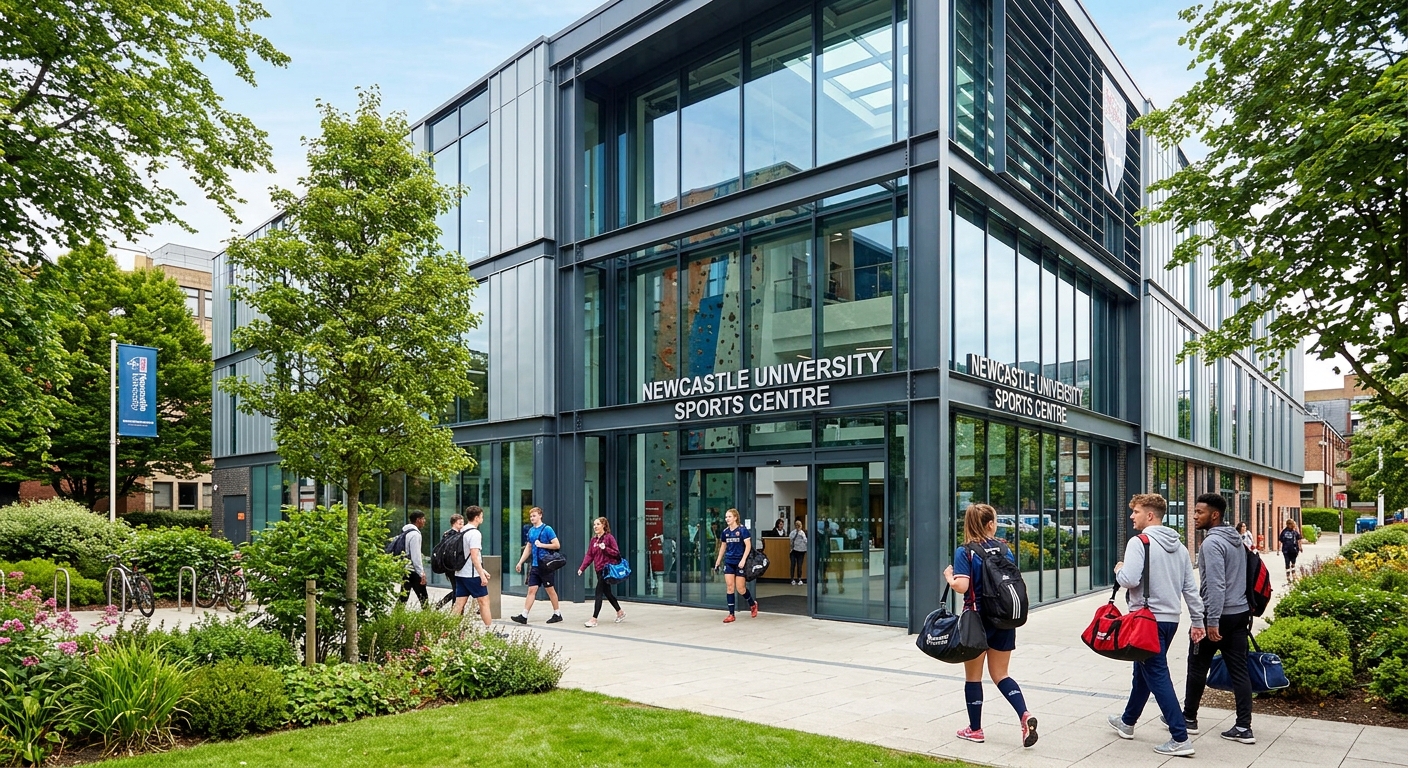
State-of-the-art indoor and outdoor sports facilities spread across four sites, supporting over 50 student-led sports clubs.
Housing and Dining
Student Accommodation
Newcastle University guarantees accommodation for first-year students who apply by the deadline. Rooms are single-occupancy with options for ensuite or shared bathrooms.
- University-managed halls of residence in popular areas including Jesmond and Heaton
- Ensuite and standard room options available with shared kitchen facilities
- Private off-campus housing in nearby Sandyford, Shieldfield, and Spital Tongues
Dining and Campus Services
The campus offers a variety of dining options from cafes and restaurants to grab-and-go outlets. The Students' Union building also houses food venues and social spaces.
- Multiple cafes and restaurants across campus with diverse cuisine options
- Students' Union building with food outlets, bars, and event spaces
- Close proximity to Newcastle city centre restaurants, markets, and shops
Student Life at Newcastle University
Student Life at Newcastle University
Newcastle University offers a vibrant student experience in one of the UK's most exciting cities. With over 160 societies and more than 50 sports clubs, there is something for everyone. The Newcastle University Students' Union, housed in a historic building dating back to 1924, serves as the hub for student activities and social life.
Newcastle upon Tyne: A Vibrant Student City
Newcastle upon Tyne: A Vibrant Student City

Life in Newcastle upon Tyne
Newcastle upon Tyne is a welcoming, multicultural city in North East England where one in six people is a student. It is recognised as one of the top 10 most affordable student cities in the UK, offering a lower cost of living that is up to 65% cheaper than London. The city is famous for its arts, culture, nightlife, and sporting heritage, and it sits close to beautiful countryside and award-winning beaches.
Affordable Living
Rents and the cost of living in Newcastle are significantly lower than in London and many other UK cities, making it an excellent choice for budget-conscious students.
Excellent Transport Links
Newcastle is less than 3 hours from London by train, and Newcastle International Airport offers direct flights to European and select US destinations.
Culture and Entertainment
From the Quayside's restaurants and bars to the BALTIC Centre for Contemporary Art and the Sage music venue in Gateshead, Newcastle offers rich cultural experiences year-round.
Natural Beauty
The city is a gateway to Northumberland's stunning coastline, historic castles, and the dramatic landscapes of Hadrian's Wall and the North Pennines.
Career Outcomes and Alumni Network
Career Outcomes and Alumni Network
Where Newcastle Graduates Work
Practical Information for Prospective Students
Practical Information for Prospective Students
For International Students
The university's international team provides guidance on student visa applications, the Immigration Health Surcharge, and pre-arrival documentation. An airport meet and greet service is available during the International Welcome period in September.
The Newcastle University International Study Centre offers International Foundation, International Year One, and Pre-Masters programmes for students who need additional academic preparation before starting their degree.
Pre-sessional English language courses are available for students who need to improve their English proficiency before the start of their academic programme. In-sessional support is also provided during the academic year.
Key Contacts
- +90 5435286292
- +44 7868736984
- [email protected]
- [email protected]
Newcastle University Worldwide Rankings
Newcastle University Worldwide Rankings
Newcastle University consistently ranks among the top 200 universities globally and within the top 30 in the UK. As a Russell Group member, it is recognised for its research intensity and teaching quality, earning 5-star ratings from QS Stars for teaching, employability, facilities, and innovation.
| Subject | Ranking Body | Rank |
|---|---|---|
| Medicine | EduRank | #158 globally |
| Dentistry | Complete University Guide | #3 in the UK |
| Architecture | QS World Rankings by Subject | Top 100 globally |
| Linguistics | QS World Rankings by Subject | Top 150 globally |


Features
A research‑intensive Russell Group institution with strong industry and civic engagement, including living labs and cross-disciplinary research institutes. The university serves as an "economic anchor" for the Newcastle region, with a focus on research in health innovation, clean energy, and industry partnerships

Accommodation
Off-Campus Accommodations Students wishing to live off-campus need to research availability on their own, and should arrive well before the start of term to do so.

Work While Studying
See guidelines on working while studying here.

Co-op/Internship Participation
Even if you do NOT meet our minimum English requirement (IELTS or TOEFL), you still can get conditionally accepted in the program of your choice with the condition of completing our English program prior to starting your chosen program.
Featured Programmes




Location
Newcastle upon Tyne NE1 7RU, United Kingdom

Map not found.

Uni4Edu AI Assistant