Materials Science and Mechanical Engineering (Ph.D.)
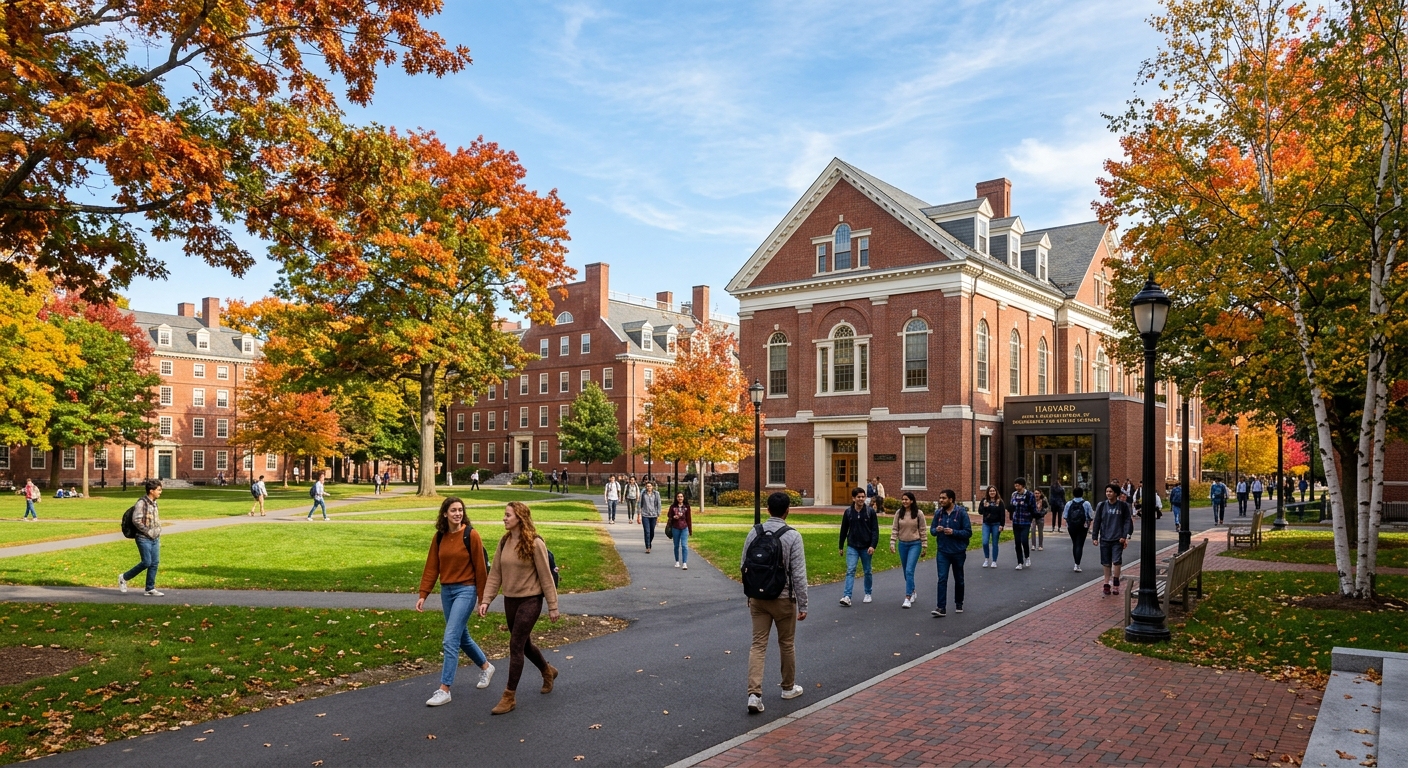
Harvard University, United States

Ph.D. in Engineering Sciences: Materials Science and Mechanical Engineering
Harvard University
Materials Science and Mechanical Engineering
Program Overview: Ph.D. in Materials Science and Mechanical Engineering at Harvard
The Ph.D. in Engineering Sciences: Materials Science and Mechanical Engineering is offered through the Harvard John A. Paulson School of Engineering and Applied Sciences (SEAS) and conferred by the Harvard Kenneth C. Griffin Graduate School of Arts and Sciences. The program spans fundamental research in solid and fluid mechanics to diverse studies in materials, metamaterials, mechanical systems, soft materials, and biomechanics.
Research within this program is strongly interdisciplinary, with robust connections to Applied Mathematics, Applied Physics, Earth and Planetary Sciences, and Chemistry and Chemical Biology. Students work closely with faculty on projects ranging from implantable brain-machine interfaces to next-generation inflatable structures and AI-driven material discovery.
The program emphasizes understanding system performance at multiple scales, including the mechanics of dislocations, imperfections, grain boundaries, interfaces, and material heterogeneity. Graduates develop strong foundations in the mathematical and physical principles underlying continuum mechanics and applied physics, preparing them for leadership roles in academia, industry, and government.
Key Program Highlights
- Full financial support guaranteed for all admitted PhD students, covering tuition, health insurance, and a living stipend for a minimum of five years.
- Highly interdisciplinary research environment with connections to Applied Mathematics, Applied Physics, Earth and Planetary Sciences, and Chemistry.
- Access to cutting-edge laboratories and resources supporting both experimental and computational research across multiple engineering domains.
- Opportunity to earn a Master of Science (S.M.) degree en route to the PhD and pursue secondary fields in Data Science or Computational Science and Engineering.
Curriculum and Course Requirements
The PhD program requires completion of 10 semester-long graduate courses, including at least 8 disciplinary courses. At least 5 of the 10 must be graduate-level SEAS technical courses, and undergraduate-level courses cannot be counted toward the degree. Students work closely with their advisors to develop a personalized program plan consistent with the school's overall PhD course requirements.
Continuum Mechanics and Solid Mechanics
Graduate-levelCovers the fundamental principles of stress, strain, constitutive behavior, and deformation in solid materials. Provides the theoretical foundation for advanced research in structural mechanics and materials behavior.
Fluid Mechanics and Thermodynamics
Graduate-levelExplores the physics of fluid flow, heat transfer, and thermodynamic systems. Emphasizes analytical and computational approaches to solving complex fluid dynamics problems.
Materials Science and Engineering
Graduate-levelExamines the structure, properties, processing, and performance of engineering materials including metals, polymers, ceramics, and composites. Covers topics such as phase transformations, defect mechanics, and material characterization.
Applied Mathematics for Engineering
Graduate-levelDevelops advanced mathematical tools essential for engineering research, including partial differential equations, numerical methods, and mathematical modeling of physical systems.
Dynamics and Control Systems
Graduate-levelCovers the principles of dynamical systems, vibration analysis, and control theory. Applications include robotics, biomechanics, and mechanical system design.
Fracture Mechanics and Material Failure
Graduate-levelStudies the mechanisms of crack initiation, propagation, and material failure under various loading conditions. Covers elasticity, plasticity, buckling, and wave motion in materials and structures.
Elective and Interdisciplinary Courses
Admission Requirements
Admission to the PhD program in Materials Science and Mechanical Engineering at Harvard is highly competitive. Applicants are evaluated holistically based on academic preparation, research experience, and alignment with faculty research interests. All students begin graduate study in the fall term only, and a master's degree is not required for admission.
Academic Requirements
- Academic BackgroundBachelor's degree in natural sciences, mathematics, computer science, or engineering from an accredited institution.
- TranscriptsCopies of all academic transcripts (unofficial copies are acceptable for the application stage).
- Statement of PurposeA statement (maximum 1,000 words) describing future research interests, relevant experience, and preferred SEAS labs.
- Letters of RecommendationThree letters of recommendation submitted electronically by academic or professional references.
- Standardized TestsGRE scores are not required for PhD applicants to SEAS programs.
English Language Requirements
- TOEFL (iBT)Minimum score of 100 (required for non-native English speakers without a degree from an English-medium institution).
- IELTS AcademicMinimum overall band score of 7.0.
- ExemptionApplicants holding a bachelor's degree from an institution where English is the language of instruction may be exempt.
Required Documents
Application Deadlines
For personalized admission guidance, document verification, and application support, please contact Uni4Edu
Scholarships and Funding
Harvard guarantees full financial support to all admitted PhD students in Engineering Sciences, making this one of the most generously funded doctoral programs available. Support is independent of financial need, provided the student remains in good academic standing and makes satisfactory progress toward the degree. Contact Uni4Edu for personalized guidance on funding options.
Harvard Griffin GSAS Full PhD Funding
Full tuition, health insurance, and living stipend for a minimum of 5 yearsAll admitted PhD students receive a comprehensive financial package including tuition grants, health insurance fees, and a monthly cost-of-living stipend. Support consists of a combination of stipends, teaching fellowships, and research assistantships.
External Fellowship Support
Varies by fellowshipStudents are encouraged to apply for prestigious external fellowships such as the NSF Graduate Research Fellowship and the Hertz Fellowship. Harvard supplements external awards to ensure students receive the full SEAS stipend amount.
Harvard Committee on General Scholarships (International Students)
Varies by country and programCountry-specific fellowships are available for international applicants planning to study at Harvard graduate schools. These awards range in amount and duration and are administered separately from the core PhD funding package.
For detailed tuition fee information, please contact Uni4Edu — we will guide you through the costs and available funding options for this program.
Career Prospects and Outcomes
Graduates of Harvard's Materials Science and Mechanical Engineering PhD program pursue diverse and impactful careers across academia, industry, government, and entrepreneurship. Alumni have founded startups in health care and robotics, secured academic positions at leading universities, and taken on leadership roles in law, policy, and technology sectors.
Potential Career Paths
Where Graduates Work
Rankings and Recognition
Harvard University is consistently ranked among the top universities in the world by every major ranking body. Its engineering programs, housed within the John A. Paulson School of Engineering and Applied Sciences, benefit from the university's exceptional research output, global employer reputation, and interdisciplinary academic environment.
| Subject | Ranking Body | Rank |
|---|---|---|
| Engineering & Technology | QS World Rankings by Subject | #9 |
| Engineering | Times Higher Education (THE) | #1 |
| Natural Sciences | QS World Rankings by Subject | #1 |
| Materials Science | QS World Rankings by Subject | Top 20 (Contact Uni4Edu for current data) |
How to Apply
Applying for this program is easy with Uni4Edu. Our team will guide you through every step of the process — from document preparation to final enrolment.
Contact Uni4Edu
Reach out to our team via email or phone. We will assess your profile and confirm your eligibility for this program.
Prepare Your Documents
Our advisors will provide you with a personalised checklist of required documents and help you prepare your application package.
Submit Your Application
Uni4Edu will submit your application on your behalf and keep you updated on its progress throughout the review period.
Receive Your Offer
Once accepted, we will help you understand your offer, arrange visa support if needed, and guide you through the enrolment process.
Similar Programmes


Doctoral & PhD
60 months
Materials Science, Engineering, and Commercialization (PhD)

Texas State University, San Marcos, United States
Earliest Intake
-
Gross Tuition
16380 $

Bachelor's Degree
48 months
Information Technology BS
McMurry University, Abilene, United States
Earliest Intake
December 2025
Gross Tuition
33124 $


Master's & Postgraduate
24 months
Materials Science and Engineering (MS)
University Of Arizona, Tucson, United States
Earliest Intake
May 2026
Gross Tuition
32065 $


Master's & Postgraduate
12 months
Advanced Functional Materials MSc
University of Glasgow, Glasgow, United Kingdom
Earliest Intake
January 2026
Gross Tuition
33210 £

Bachelor's Degree
48 months
Materials Science and Nano Engineering Program
Sabancı University, Tuzla, Turkey
Earliest Intake
January 2026
Gross Tuition
36500 $



Uni4Edu AI Assistant