Landscape Architecture (M.L.A.U.D.)
Harvard University, United States

Master of Landscape Architecture in Urban Design (M.L.A.U.D.)
Harvard University – Graduate School of Design
Landscape Architecture & Urban Design
Program Overview: M.L.A.U.D. at Harvard GSD
Jointly administered by the Department of Urban Planning and Design and the Department of Landscape Architecture, the Master of Landscape Architecture in Urban Design (M.L.A.U.D.) is a post-professional degree intended for individuals who have completed a five-year undergraduate professional program in landscape architecture or its equivalent. The program combines intense design instruction, extensive applied research, and deep knowledge of urban history and theory to prepare graduates for leadership in shaping the built environment.
Through studio and coursework, students are challenged to imagine new formal and organizational strategies for the delivery of housing, infrastructure, and a democratic public realm by taking on issues of inequality, climate change, the environment, and public health. The program takes advantage of the remarkable international makeup of the faculty and student body to establish a common intellectual ground among designers engaging the practice and theory of contemporary urbanism.
As a STEM-designated program, the M.L.A.U.D. offers international students holding F-1 visas eligibility for a 24-month Optional Practical Training (OPT) extension on top of the initial 12-month OPT, for a potential total of 36 months of post-graduation work authorization in the United States. Students also benefit from cross-registration opportunities across Harvard's schools, including the Kennedy School, Law School, School of Public Health, and neighboring MIT.
Key Program Highlights
- STEM-designated post-professional degree with up to 36 months of OPT eligibility for international graduates
- Housed within the world's oldest landscape architecture program, founded in 1893 at Harvard
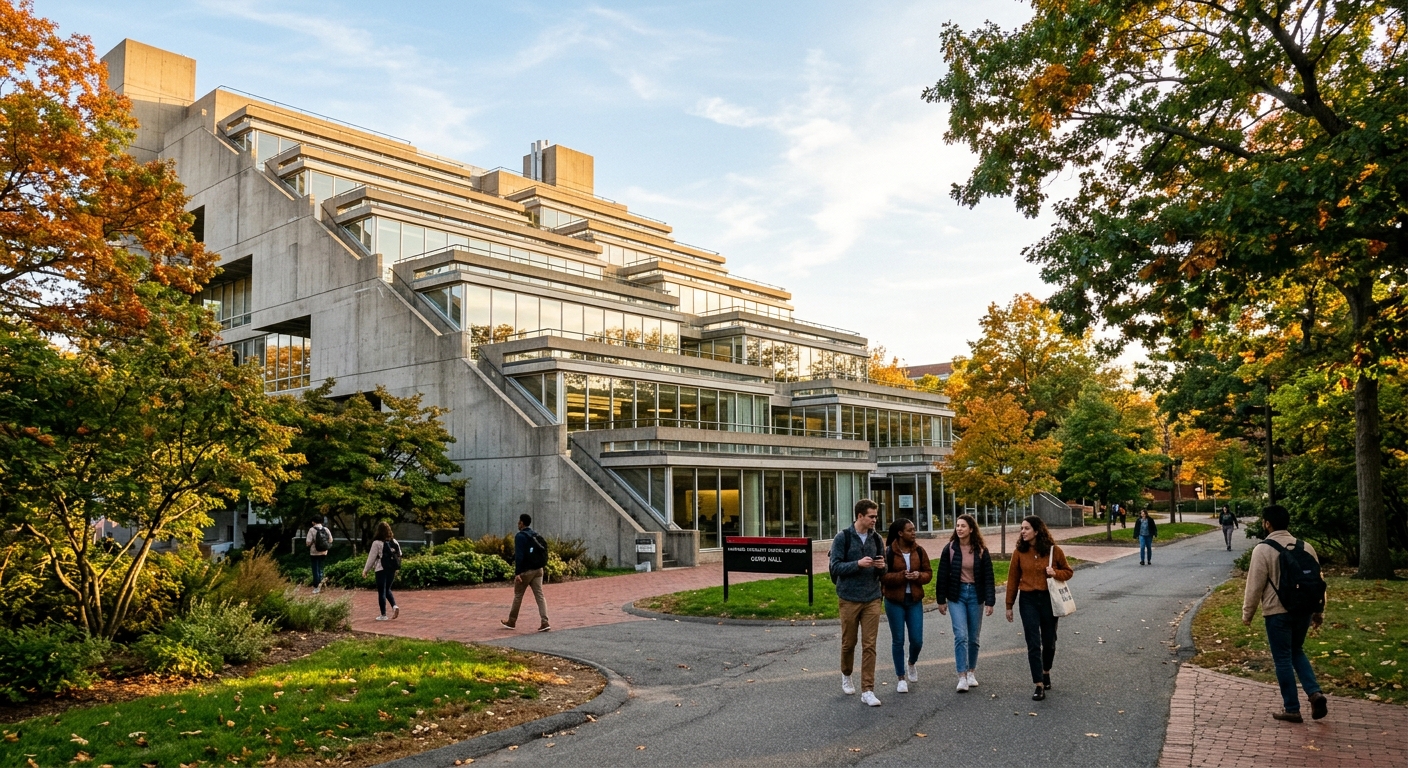
- Interdisciplinary studio-based learning in Gund Hall alongside architecture, planning, and design students
- Cross-registration access to courses at MIT and across Harvard's graduate schools
Curriculum & Core Modules
Conceived as a four-semester program, the M.L.A.U.D. core curriculum is structured around a sequence of required studios, seminars, and distributional electives. Students must complete distributional electives totaling twelve units across two subject areas — Models of Development and Urban Systems and Forms — with at least four units in each category. A flexible academic path allows engagement in advanced studios and elective courses across all three GSD departments.
Elements of Urban Design Studio
Core Studio (Fall, Year 1)An introductory core studio that establishes foundational design skills and critical frameworks for engaging with urban environments at multiple scales, from the site to the district level.
Urban Design Contexts and Operations Seminar
Core Seminar (Fall, Year 1)A seminar exploring the historical, theoretical, and operational contexts that shape urban design practice, equipping students with analytical tools for understanding complex socio-spatial dynamics.
Urban Planning and Design Studio
Core Studio (Spring, Year 1)A spring studio focused on planning and design at the urban scale, integrating landscape strategies with infrastructure, housing, and public realm considerations in real-world contexts.
Cities by Design Seminar
Core Seminar (Spring, Year 1)This seminar examines the evolution and design of cities through critical frameworks, conceptual models, and case studies spanning diverse cultures, geographies, and historical periods.
Option Studio (UPD Department)
Required Studio (Year 2)In the second year, students must complete at least one option studio offered by the Department of Urban Planning and Design, choosing from a range of advanced topics and international project sites.
Independent Thesis or Advanced Studio Pathway
Capstone (Spring, Year 2)Second-year students declare one of three pathways to meet degree requirements, including the option to pursue an independent thesis preceded by the Preparation of Independent Thesis Proposal course in the fall term.
Distributional Electives & Cross-Registration
Admission Requirements
The M.L.A.U.D. program is designed for applicants who have already completed a professional degree in landscape architecture and wish to advance their expertise in urban design. Two to three years of professional practice experience is strongly recommended. All applications are processed through Uni4Edu, your single point of contact for guidance throughout the admissions process.
Academic Requirements
- Prior DegreeFive-year undergraduate professional degree in landscape architecture (B.L.A., B.S. in Landscape Architecture, or equivalent)
- Professional ExperienceTwo to three years of professional practice experience is strongly recommended
- PortfolioDesign portfolio demonstrating ability to pursue study at an advanced level, with individually authored projects clearly identified
- GRE ScoresOptional — applications are not disadvantaged if GRE scores are not submitted
- Letters of RecommendationThree letters of recommendation, ideally at least two from college or university instructors
Language Requirements
- TOEFLRequired for international applicants; official scores must be submitted by the application deadline
- TOEFL ExemptionApplicants who completed a degree at an English-language institution may be exempt — contact Uni4Edu for details
- Instruction LanguageAll coursework and studios are conducted entirely in English
Required Documents
Application Deadlines
For personalized admission guidance, document verification, and application support, please contact Uni4Edu
Scholarships & Funding
Harvard GSD offers financial assistance in the form of grants, loans, and employment awards. The majority of grant aid is need-based, though eligibility for some awards may also factor in academic program, merit, and fund availability. There are currently over 90 endowed fellowships and financial aid funds gifted by the GSD alumni community to support students. Contact Uni4Edu for guidance on financial aid applications and timelines.
GSD Need-Based Grants
Varies based on demonstrated financial needThe primary form of GSD financial aid, these grants do not need to be repaid. Award amounts are tied to tuition and enrollment status, and the financial aid received in the first year generally remains consistent in subsequent years.
Harvard Committee on General Scholarships (CGS)
Varies by awardUniversity-wide scholarship funds administered by Harvard's CGS, available to both U.S. and international students across all Harvard schools. These require a separate application and are competitively awarded.
Landscape Architecture Foundation Scholarships
Over USD 150,000 available across 16 scholarships annuallyExternal scholarships open to undergraduate and graduate students enrolled in landscape architecture programs at U.S. institutions. Eligible GSD students are encouraged to apply through the foundation's own application process.
For detailed tuition fee information, please contact Uni4Edu — we will guide you through the costs and available funding options for this program.
Career Prospects
Graduates of the M.L.A.U.D. program are equipped to lead at the intersection of landscape architecture, urban design, and planning. The STEM designation enhances career flexibility for international graduates in the United States. Harvard GSD's network of over 13,000 alumni in 96 countries provides unmatched professional connections across the global design industry.
Potential Career Paths
Where Graduates Work
Rankings & Recognition
Harvard University consistently ranks among the top universities globally, and the Graduate School of Design is widely regarded as a leading institution in architecture, landscape architecture, and urban design. The GSD holds the distinction of having the world's oldest landscape architecture program and North America's first urban design program, established in 1960.
| Subject | Ranking Body | Rank |
|---|---|---|
| Architecture & Built Environment | QS World University Rankings by Subject | #6 |
| Architecture (BAM Ranking) | Best Architecture Masters | #1 (Score: 100/100) |
| Architecture (Architectural Record) | Architectural Record | #1 (consistently since 2014) |
| Environmental Sciences | QS World University Rankings by Subject | #1 |
How to Apply
Applying for this program is easy with Uni4Edu. Our team will guide you through every step of the process — from document preparation to final enrolment.
Contact Uni4Edu
Reach out to our team via email or phone. We will assess your profile and confirm your eligibility for this program.
Prepare Your Documents
Our advisors will provide you with a personalised checklist of required documents and help you prepare your application package.
Submit Your Application
Uni4Edu will submit your application on your behalf and keep you updated on its progress throughout the review period.
Receive Your Offer
Once accepted, we will help you understand your offer, arrange visa support if needed, and guide you through the enrolment process.
Similar Programmes


Master's & Postgraduate
21 months
Landscape Architecture MSc

University of Edinburgh, Edinburgh, United Kingdom
Earliest Intake
January 2027
Gross Tuition
32000 £


Bachelor's Degree
36 months
BA (Hons) Urban Landscape Architecture
Ravensbourne University London, London, United Kingdom
Earliest Intake
March 2027
Gross Tuition
17000 £

Master's & Postgraduate
24 months
Landscape Architecture Master
University of Genoa, Genoa, Italy
Earliest Intake
February 2027
Gross Tuition
3300 €

Bachelor's Degree
48 months
Landscape Architecture (BS)
University Of Arizona, Tucson, United States
Earliest Intake
May 2027
Gross Tuition
39958 $


Master's & Postgraduate
24 months
Landscape Architecture (M.L.A.)
Harvard University, Cambridge, United States
Earliest Intake
October 2026
Gross Tuition
59048 $



Uni4Edu AI Assistant