University of Würzburg
Würzburg, Germany
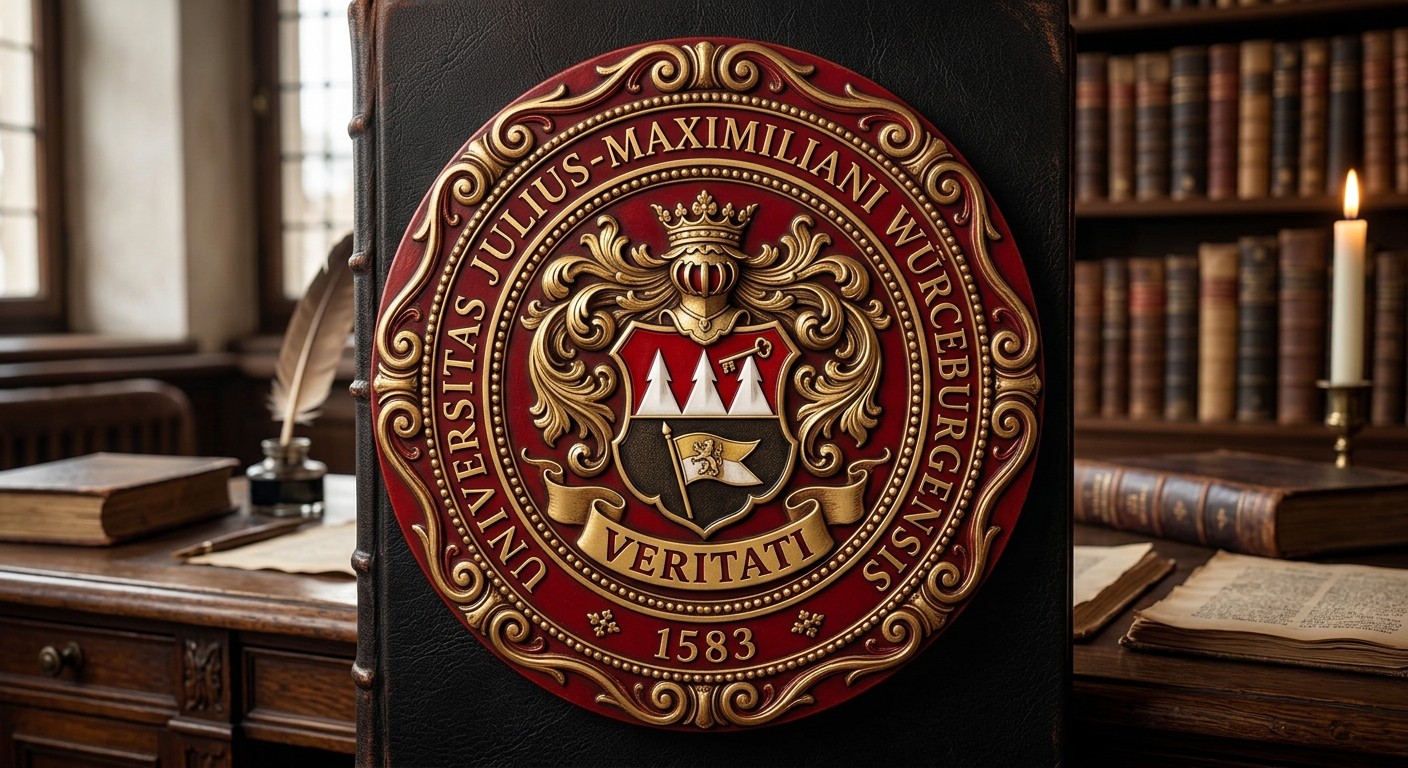
Julius-Maximilians-Universität Würzburg
Würzburg, Germany
Founded
1402
Institution Type
Public Research University
Total Students
25,000+
Nobel Laureates
14
Discover the University of Würzburg: A Legacy of Excellence Since 1402
Discover the University of Würzburg: A Legacy of Excellence Since 1402
The Julius-Maximilians-Universität Würzburg (JMU) is a public research university located in Würzburg, Bavaria, and is one of the oldest universities in Germany. Originally founded in 1402 by Prince Bishop Johann von Egloffstein through a papal privilege from Pope Boniface IX, it holds the distinction of being the oldest university in Bavaria. The university is a proud member of both the U15 group of research-intensive German universities and the prestigious Coimbra Group of European universities.
Throughout its history, 14 Nobel laureates have been associated with the University of Würzburg, including Wilhelm Conrad Röntgen, who discovered X-rays here and received the inaugural Nobel Prize in Physics in 1901. To date, 29 ERC Grants for innovative frontier research have been awarded to JMU scientists, and eleven researchers have received the Gottfried Wilhelm Leibniz Prize, Germany's most prestigious research award.
Today, JMU offers 255 degree programmes across ten faculties, covering all fundamental academic disciplines including Medicine, Law, Humanities, Life Sciences, Natural Sciences, and Social Sciences. With approximately 25,000 students, including over 3,000 international students from more than 100 countries, the university combines a rich academic tradition with cutting-edge interdisciplinary research.
Key Milestones
- 1402: Founded as the High School of Würzburg by Prince Bishop Johann von Egloffstein with papal privilege from Pope Boniface IX
- 1582: Re-founded by Prince-Bishop Julius Echter von Mespelbrunn during the Counter-Reformation, establishing the four traditional faculties
- 1895: Wilhelm Conrad Röntgen discovered X-rays while serving as professor of physics, earning the first Nobel Prize in Physics in 1901
- 2011: Opened the new 39-hectare Campus Nord on the site of the former Leighton Barracks, significantly expanding university facilities
Academic Structure and Faculties
Academic Structure and Faculties
The University of Würzburg is organized into ten faculties that span the humanities, law and economics, life sciences, and natural sciences and technology. With approximately 400 professors and 255 degree programmes, JMU offers a comprehensive academic experience that integrates teaching with cutting-edge research across classical and innovative interdisciplinary fields.
Faculty of Medicine
One of the university's founding faculties with a strong tradition dating back to 1587. The faculty operates the University Hospital and is renowned for research in immunology, oncology, and translational medicine.
- Medicine (State Examination)
- Biomedicine (B.Sc./M.Sc.)
- Translational Neuroscience (M.Sc.)
Faculty of Biology
Home to the Biocentre and interdisciplinary research centres, this faculty is recognized for strengths in genetics, immunology, neuroscience, and ecological research. It houses one of the leading infection research centres in Germany.
- Biology (B.Sc./M.Sc.)
- Biochemistry (B.Sc./M.Sc.)
- Bioinformatics (M.Sc.)
Faculty of Physics and Astronomy
A faculty with a distinguished legacy linked to Röntgen's discovery of X-rays. It is a key participant in the Cluster of Excellence ct.qmat focusing on quantum materials and topological physics.
- Physics (B.Sc./M.Sc.)
- Nanostructure Technology (B.Sc./M.Sc.)
- FOKUS Physics (Bavarian Excellence Programme)
Faculty of Arts (Philosophische Fakultät)
Covering a broad range of humanities disciplines, this faculty offers programmes in languages, literature, history, philosophy, and the emerging field of Digital Humanities. It is partially housed in historic buildings near the UNESCO-listed Würzburg Residence.
- Digital Humanities (B.A./M.A.)
- History (B.A./M.A.)
- English and American Studies (B.A./M.A.)
Faculty of Chemistry and Pharmacy
This faculty is a leader in chemical research in Germany, with strong programmes in organic, inorganic, and physical chemistry as well as pharmaceutical sciences. Recent breakthroughs include pioneering work on nanographene systems published in Nature.
- Chemistry (B.Sc./M.Sc.)
- Pharmacy (State Examination)
- Functional Materials (M.Sc.)
Faculty of Business Management and Economics
Offering programmes in business administration, economics, and interdisciplinary management, this faculty prepares graduates for careers in the global economy. Its Management International master's programme is taught in English.
- Business Administration (B.Sc./M.Sc.)
- Economics (B.Sc./M.Sc.)
- Management International (M.Sc.)
Admission Requirements for International Students
Admission Requirements for International Students
Undergraduate Admission
- Secondary EducationRecognized secondary school leaving certificate equivalent to the German Abitur, or a Studienkolleg preparatory course
- German LanguageDSH-2, TestDaF 4x4, or equivalent for German-taught programmes
- English LanguageIELTS 6.5 or TOEFL iBT 80+ for English-taught programmes
- Application PortalApply via uni-assist or directly through the university's online portal depending on programme
- Documents RequiredCertified transcripts, CV, language certificates, and passport copy
Graduate Admission
- Bachelor's DegreeCompleted bachelor's degree in a relevant field from a recognized institution
- GPA RequirementMinimum GPA of 3.0 or equivalent; varies by programme
- Language ProficiencyGerman or English proficiency depending on programme language of instruction
- Supporting DocumentsAcademic transcripts, CV, motivation letter, and letters of recommendation (programme-specific)
- Programme-Specific RequirementsSome programmes require GMAT/GRE scores, research proposals, or subject-specific prerequisites
Application deadline for most programmes starting in October for non-EU international applicants
Application deadline for programmes with summer semester intake starting in April
Deadline to apply for Studierendenwerk dormitory rooms for the winter semester
Deadline to apply for Studierendenwerk dormitory rooms for the summer semester
Tuition Fees and Cost of Studying
Tuition Fees and Cost of Studying
As a public university in Bavaria, the University of Würzburg does not charge tuition fees for undergraduate or graduate students, including international students. Students are only required to pay a modest semester contribution that covers student services and a public transportation semester ticket.
| Cost Category | EU/EEA Students | International Students |
|---|---|---|
| Tuition Fees (per semester) | EUR 0 | EUR 0 |
| Semester Contribution | Approx. EUR 170 | Approx. EUR 170 |
| Health Insurance (per month) | Approx. EUR 110 | Approx. EUR 110 |
| Living Expenses (per month) | EUR 800 - EUR 1,000 | EUR 800 - EUR 1,000 |
| Total | Approx. EUR 170 per semester + living costs | Approx. EUR 170 per semester + living costs |
DAAD Scholarships
The German Academic Exchange Service (DAAD) offers a wide range of scholarships for international students at all academic levels, covering living expenses, travel costs, and health insurance.
- Coverage: Monthly stipend, travel allowance, and health insurance
- Eligibility: International students with strong academic records
- Application: Apply through the DAAD scholarship database (www.daad.de)
JMU International Student Scholarships
The University of Würzburg offers scholarships for non-resident international students based on academic performance, which can help cover semester fees and living expenses during studies.
- Award Type: Merit-based financial support
- Eligibility: International students with excellent CGPA
- Application: Check the Scholarships for International Students section on the JMU website
Campus and Facilities
Campus and Facilities
The University of Würzburg's buildings are spread across the city, combining historic locations in the old town with modern facilities on the Hubland plateau. The campus spans over 111 hectares and includes the Old University in the city centre, the expansive Hubland South and North campuses, and the medical campus in Grombühl.
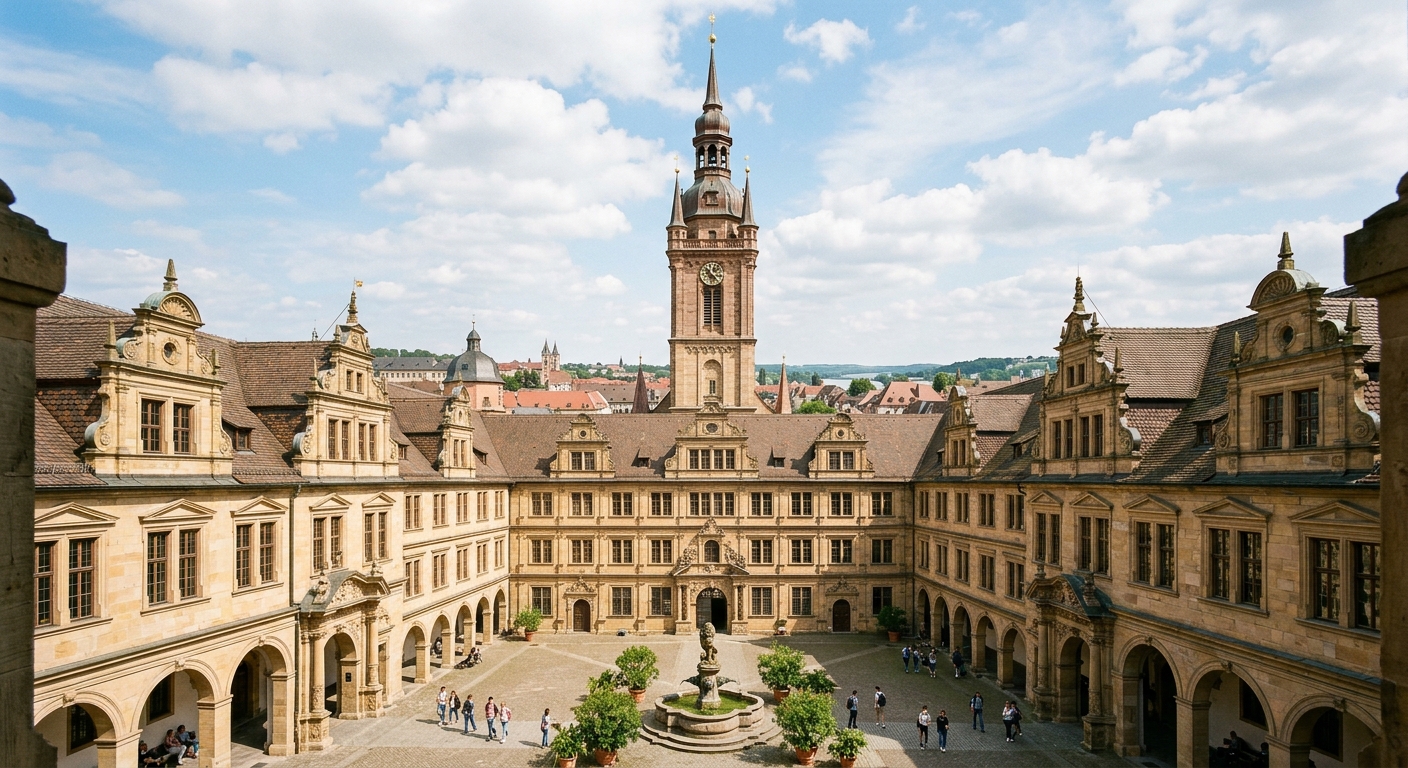
The Renaissance-style Old University, completed in 1591, houses law and humanities departments in the heart of Würzburg's historic city centre
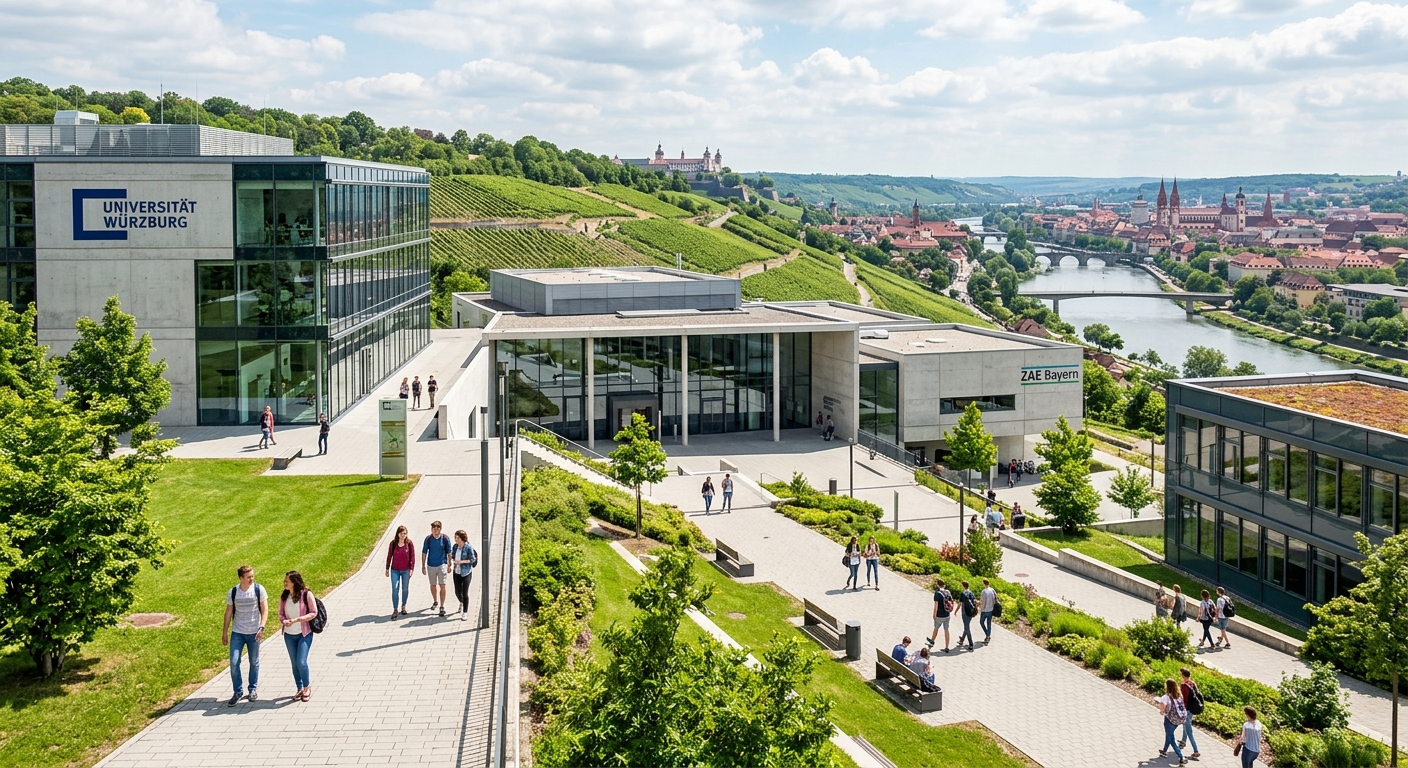
The main modern campus features the University Library, Biocentre, chemistry and physics buildings, and the central lecture hall Z6 opened in 2011

Dating back to the 17th century, the university's Botanical Garden covers nine hectares and houses thousands of plant species, open free to the public
Housing and Dining
Student Housing
The Studierendenwerk manages 12 student residences in Würzburg with a total of 2,887 rooms, offering furnished single and shared apartments at affordable rates.
- 12 student residences across the city
- Single rooms, double rooms, and shared apartments available
- Rent ranges from approximately EUR 192 to EUR 320 per month
Dining and Services
The university operates canteens (Mensa) on the Hubland campus and at other locations, providing affordable meals for students along with comprehensive IT services and sports facilities.
- Multiple Mensa locations with affordable student meal plans
- Hubland Sports Centre with indoor and outdoor facilities
- Computer centre with 100+ PCs and free courses for all students
Student Life at the University of Würzburg
Student Life at the University of Würzburg
With approximately every fourth citizen of Würzburg being a student, the city pulses with youthful energy. The university offers a vibrant student life combining academic pursuits with cultural activities, student organisations, and recreational opportunities in one of Bavaria's most charming cities.
Würzburg: A Vibrant Student City in the Heart of Bavaria
Würzburg: A Vibrant Student City in the Heart of Bavaria

Life in Würzburg
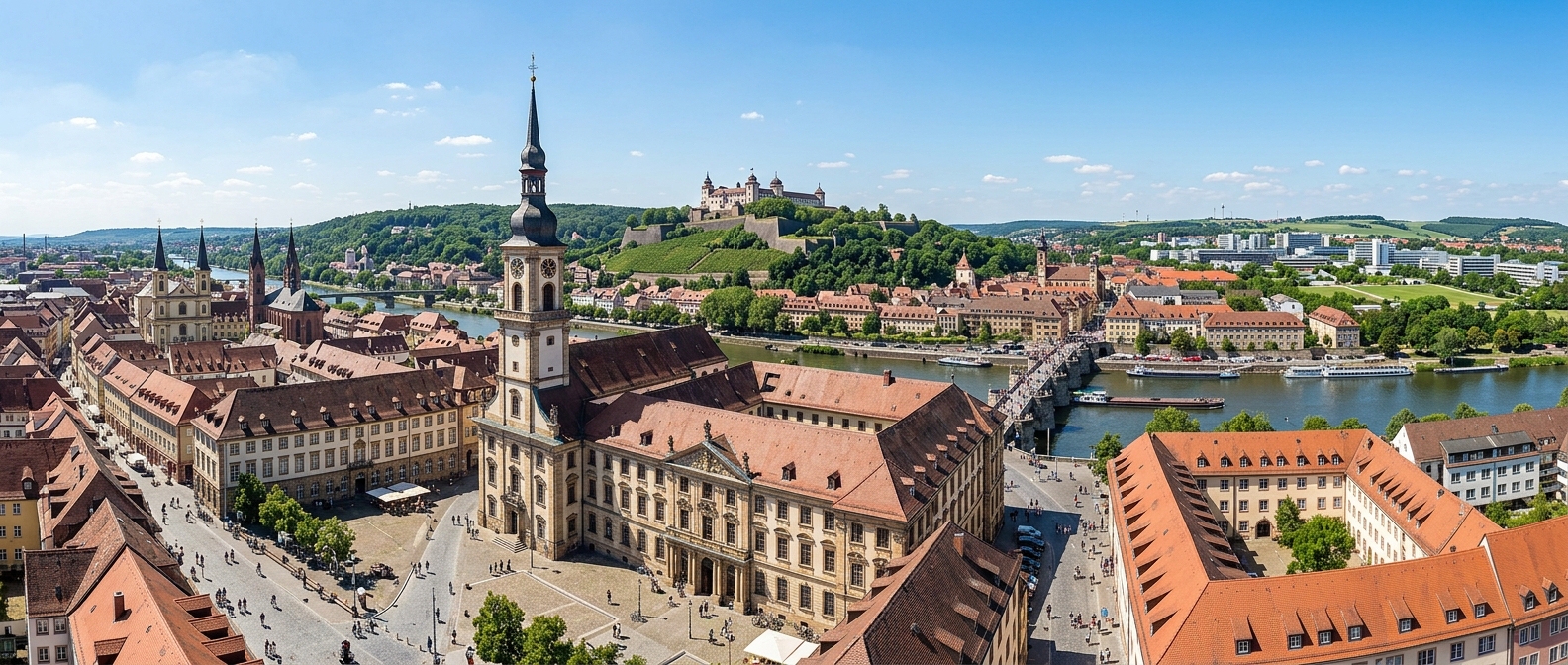
Würzburg is a picturesque city of approximately 125,000 residents situated in the Franconia wine region of northern Bavaria. Known for its remarkable baroque and rococo architecture, the city offers a Mediterranean-like atmosphere with the Main River flowing through its centre. The city combines the practical advantages of a medium-sized, safe, and affordable town with rich cultural amenities.
UNESCO World Heritage
The Würzburg Residence, an 18th-century baroque palace with the largest ceiling fresco in the world by Tiepolo, is a UNESCO World Heritage Site located near the university
Wine Culture
Würzburg is the centre of Franconian wine country, surrounded by hillside vineyards producing distinctive wines served in the traditional Bocksbeutel bottle
Excellent Connectivity
Würzburg is a major rail hub with direct ICE high-speed train connections to Frankfurt (1 hour), Munich (2 hours), and other major German cities
Affordable Living
Compared to larger German cities like Munich or Frankfurt, Würzburg offers a significantly lower cost of living, making it an attractive option for students on a budget
Career Outcomes and Alumni Network
Career Outcomes and Alumni Network
Career Services and Notable Connections
Practical Information for International Students
Practical Information for International Students
For International Students
The International Office is the first point of contact for international students, assisting with visa questions, enrollment, accommodation guidance, and administrative processes throughout your studies.
The Language and Media Centre offers intensive courses in German as a Foreign Language, helping international students improve their language skills for academic and daily life in Germany.
International students can work up to 120 full days or 240 half days per year. The university's CareerLink platform connects students with employers for part-time jobs and internships.
Key Contacts
- +90 5435286292
- +44 7868736984
- corporate@uni4edu.com
- info@uni4edu.com
University of Würzburg: Worldwide Rankings
University of Würzburg: Worldwide Rankings
The University of Würzburg consistently ranks among the top universities globally, reflecting its strong research output, distinguished faculty, and long tradition of academic excellence. The university performs particularly well in life sciences, medicine, physics, and chemistry.
| Subject | Ranking Body | Rank |
|---|---|---|
| Chemistry | EduRank | #179 World / #13 Germany |
| Biology | EduRank | #195 World / #15 Germany |
| Medicine | EduRank | #210 World / #17 Germany |
| Physics | EduRank | #273 World / #22 Germany |


Features
The University of Würzburg, founded in 1402 and re-established in 1582, is a prestigious public research university in Bavaria, Germany. It offers a broad range of programs at bachelor’s, master’s, doctoral, and state examination levels across ten faculties, including humanities, natural sciences, medicine, law, and economics. With around 27,000 students, including 2,700 international students, and 2,400 academic staff members, the university emphasizes research excellence and global collaboration. As a member of the German U15, it provides modern facilities, innovative research centers, and strong support for international students. Located in the vibrant city of Würzburg, it combines rich history with cutting-edge education.

Accommodation
Student Residences, Private Accommodation

Work While Studying
Generally allowed to work:\n\n120 full days or 240 half days per year (a half day is up to 4 hours).\n\nAlternatively, up to 20 hours per week during the semester.

Co-op/Internship Participation
The Career Centre at the University of Würzburg assists students in preparing for their careers and acquiring key professional skills.
Featured Programmes



Average Time To Receive Acceptance Letter
January - March
Location
Sanderring 2\n97070 Würzburg\nBavaria, Germany

Uni4Edu AI Assistant