

Astronomy Bachelor
University of Victoria, Canada

Bachelor of Science in Astronomy
University of Victoria
Astronomy
Program Overview: BSc in Astronomy at UVic
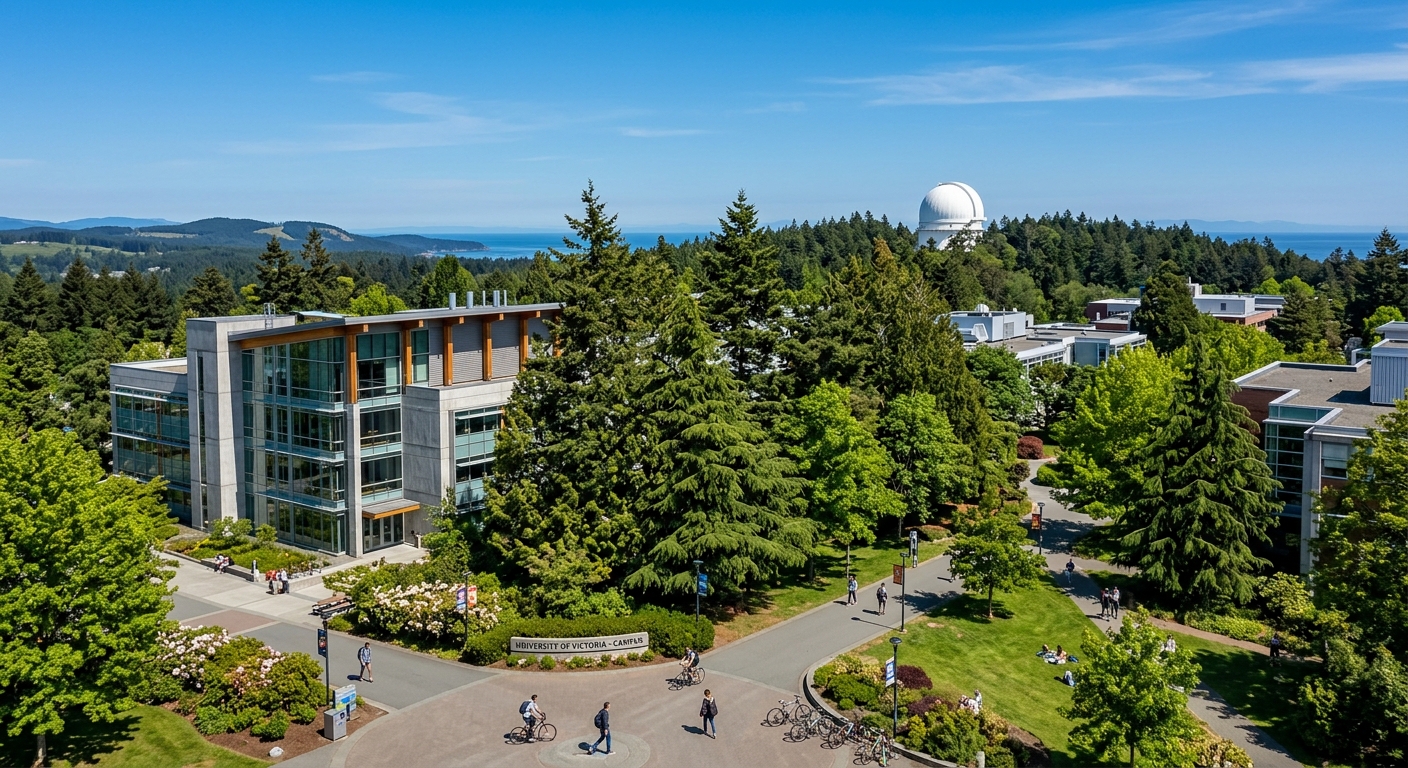
The Bachelor of Science in Astronomy at the University of Victoria offers you the opportunity to explore the universe through rigorous coursework and hands-on research. Located in Victoria, British Columbia — one of Canada's largest concentrations of astronomers — you will benefit from the university's strong links with the nearby Herzberg Astronomy and Astrophysics Research Centre, a national hub for astronomical research.
The program features one of the largest celestial telescopes on any North American university campus, giving you direct observational experience from your earliest years of study. You will develop strong quantitative, computational, and research skills while learning to analyze real astronomical data using professional-grade instruments and tools.
Through UVic's renowned Co-op program, you can apply your classroom learning in paid, career-related positions that count toward your degree. Co-op is available to all students, including international students with co-op work permits, and provides a significant advantage when entering the workforce after graduation.
Key Program Highlights
- Access to one of the largest campus telescopes in Canada, with weekly Observatory Open House events for hands-on stargazing
- Strong connections to the NRC Herzberg Astronomy and Astrophysics Research Centre, expanding research and mentorship opportunities
- Integrated Co-op program offering paid work placements in astronomy, data science, and technology fields
- Located in Victoria, BC — a major national centre for physics and astronomy research with world-renowned facilities
Curriculum and Modules
The BSc in Astronomy curriculum establishes a firm grounding in physics and mathematics during the first two years, with increasing specialization in astronomy and astrophysics in the upper years. Students choose between a Major or Honours pathway, with the Honours degree providing greater depth for those planning graduate studies.
Introduction to Astronomy
1.5 unitsAn introductory survey of the universe covering the solar system, stellar evolution, galaxies, and cosmology. This course provides the foundational context for all subsequent astronomy studies.
Introductory Physics I and II
3.0 unitsCore physics courses covering mechanics, waves, thermodynamics, electricity, magnetism, and optics. These courses build the essential physics foundation required for advanced astronomy coursework.
Calculus I and II
3.0 unitsComprehensive calculus sequence covering limits, differentiation, integration, and series. Mathematical fluency gained here is essential for modeling physical and astronomical phenomena.
Stellar Astrophysics
1.5 unitsAn in-depth study of the physics of stars, including stellar structure, energy generation, nucleosynthesis, and stellar evolution from formation to end states such as white dwarfs and neutron stars.
Galactic and Extragalactic Astronomy
1.5 unitsExplores the structure and dynamics of the Milky Way, galaxy classification, galaxy evolution, and large-scale structure of the universe. Students analyze observational data from modern surveys.
Observational Astronomy
1.5 unitsHands-on training in astronomical observation techniques, telescope operation, CCD imaging, photometry, and spectroscopy using UVic's campus observatory and professional-grade equipment.
Elective Courses
Admission Requirements
Admission to the BSc in Astronomy at the University of Victoria is competitive and based on academic performance. All applications and inquiries are handled through Uni4Edu, your dedicated partner for a seamless admissions experience.
Academic Requirements
- Secondary School DiplomaCompletion of secondary school (high school) with strong academic standing
- MathematicsPre-Calculus 12 or equivalent (Calculus 12 recommended)
- PhysicsPhysics 12 or equivalent strongly recommended
- ChemistryChemistry 11 or 12 recommended
- Academic AverageContact Uni4Edu for current minimum admission average requirements
English Language Requirements
- IELTSMinimum overall band score of 6.5 with no component below 6.0
- TOEFL iBTMinimum score of 90 with no section below 20
- PTE AcademicMinimum overall score of 65
Required Documents
For personalized admission guidance, document verification, and application support, please contact Uni4Edu
Scholarships and Funding
The University of Victoria awards more than CAD 12.5 million in scholarships and awards each year. International students are eligible for several merit-based entrance and in-course scholarships to help support their studies.
UVic International Entrance Scholarship
At least CAD 5,000Awarded to academically outstanding international students entering the first year of an undergraduate degree program. Students are automatically considered upon admission without a separate application.
In-Course Scholarships
VariesAvailable to current UVic students who have completed at least 12 units of study. Awards are based on academic performance and do not require extracurricular or leadership criteria.
For detailed tuition fee information, please contact Uni4Edu — we will guide you through the costs and available funding options for this program.
Career Prospects
Graduates of the BSc in Astronomy from UVic develop strong skills in problem solving, logic, mathematics, data management, computing, and technical writing. These transferable skills open doors to careers in space science, technology, data analytics, and many other fields. UVic's Co-op program gives many students a head start, with a strong track record of graduates receiving job offers before completing their degree.
Potential Career Roles
Top Employers and Organizations
Rankings and Recognition
The University of Victoria is consistently recognized as one of Canada's leading research universities. UVic's Department of Physics and Astronomy benefits from proximity to national observatories and has earned strong rankings in the physical sciences both nationally and internationally.
| Subject | Ranking Body | Rank |
|---|---|---|
| Physical Sciences | THE World University Rankings | Top 150 |
| Physics (Canada) | EduRank | #17 |
| Oceanography | ARWU | #29 globally, #1 in Canada |
| Atmospheric Science | ARWU | #51-75 globally, #1 in Canada |
How to Apply
Applying for this program is easy with Uni4Edu. Our team will guide you through every step of the process — from document preparation to final enrolment.
Contact Uni4Edu
Reach out to our team via email or phone. We will assess your profile and confirm your eligibility for this program.
Prepare Your Documents
Our advisors will provide you with a personalised checklist of required documents and help you prepare your application package.
Submit Your Application
Uni4Edu will submit your application on your behalf and keep you updated on its progress throughout the review period.
Receive Your Offer
Once accepted, we will help you understand your offer, arrange visa support if needed, and guide you through the enrolment process.
Similar Programmes


Master's & Postgraduate
24 months
Atmospheric Sciences (MS)

University Of Arizona, Tucson, United States
Earliest Intake
July 2026
Gross Tuition
32065 $


Master's & Postgraduate
12 months
Astrobiology and Planetary Sciences MSc
University of Edinburgh, Edinburgh, United Kingdom
Earliest Intake
January 2027
Gross Tuition
32000 £

Master's & Postgraduate
6 months
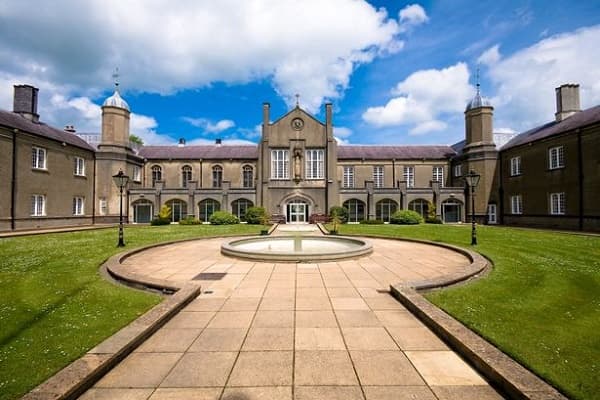
Cultural Astronomy and Astrology PGCE
University of Wales Trinity Saint David, , United Kingdom
Earliest Intake
September 2026
Gross Tuition
16800 £
Master's & Postgraduate
24 months
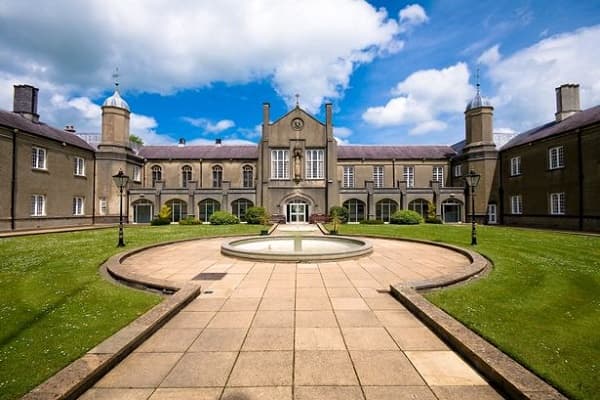
Cultural Astronomy and Astrology (2 Years) MA
University of Wales Trinity Saint David, , United Kingdom
Earliest Intake
September 2026
Gross Tuition
16800 £


Bachelor's Degree
48 months
Astrophysics (A.B.)
Harvard University, Cambridge, United States
Earliest Intake
August 2026
Gross Tuition
91634 $



Uni4Edu AI Assistant
