Ecology and Organismal Biology
Toledo, Ohio, United States, United States
Master of Science in Biology – Ecology and Organismal Biology
The University of Toledo
Ecology and Organismal Biology
Program Overview: M.S. in Ecology and Organismal Biology
The Master of Science in Ecology and Organismal Biology at The University of Toledo focuses on laboratory and field experiences in close collaboration with research-active faculty. Housed within the Department of Environmental Sciences, this program prepares you for advanced doctoral study or professional careers in the environmental and biological sciences.
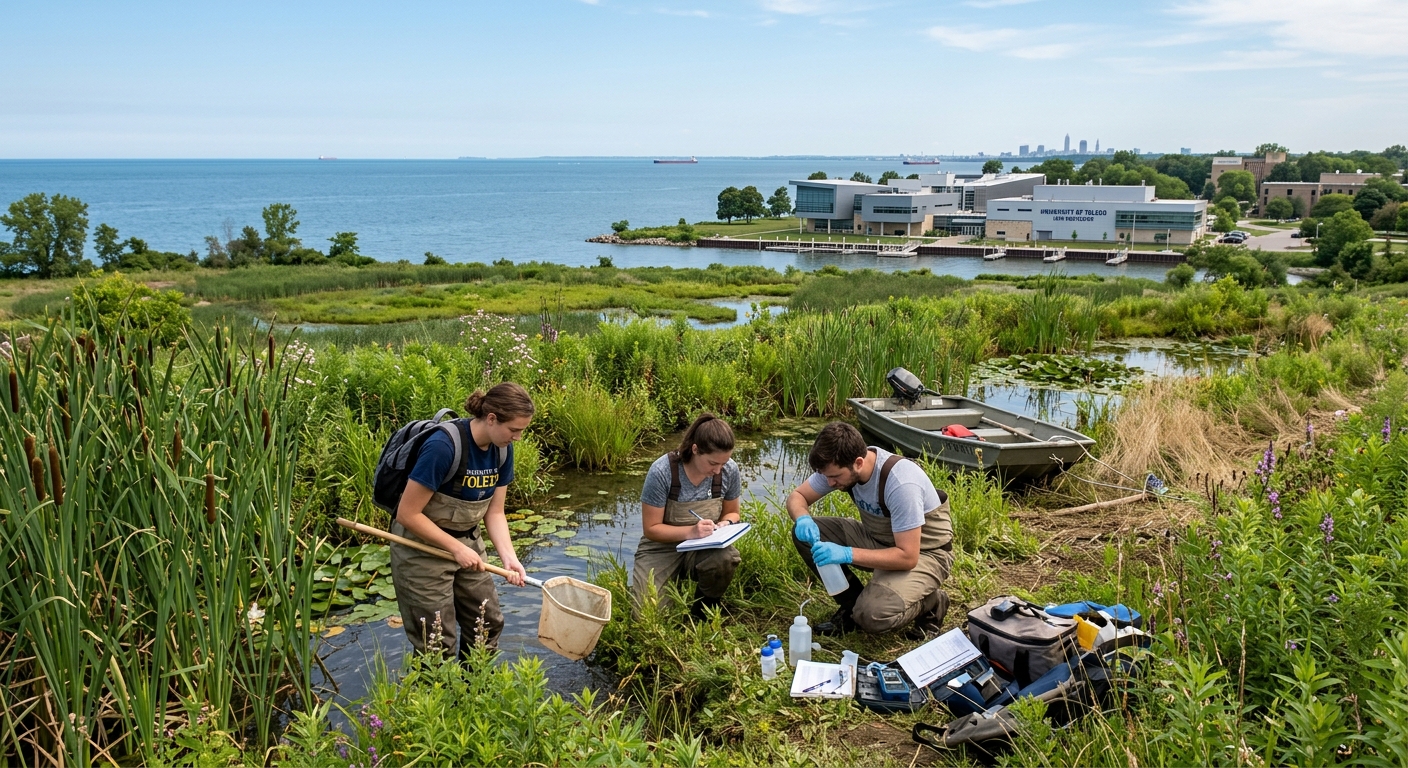
Toledo's location near Lake Erie and its diverse ecosystems — from wetlands to savannas and woodlands — provide an exceptional natural laboratory for hands-on field research. Graduate students benefit from access to facilities including the state-of-the-art Lake Erie Center, an on-campus greenhouse, and the 47-acre Stranahan Arboretum.
The program's primary research strengths include aquatic and wetland ecology, organismal and conservation biology, human impacts on the biosphere, and earth surface processes. Faculty advisors mentor students to develop independent research approaches, encouraging publication of findings and preparation for impactful careers.
Key Program Highlights
- Access to the Lake Erie Center for aquatic research, including labs, classrooms, and research boats on the Lake Erie shoreline
- Research strengths in aquatic ecology, conservation biology, earth surface processes, and microbial ecology
- Competitive graduate assistantship stipends and tuition waivers available for teaching and research assistants
- Carnegie R1 classified university with strong regional and national research reputation
Curriculum and Research Areas
The M.S. in Ecology and Organismal Biology curriculum combines advanced coursework with intensive research training. Students work directly with expert faculty in the lab and in the field, culminating in a thesis based on original research.
Advanced Ecology
3 CreditsExplores fundamental and advanced ecological principles including population dynamics, community structure, and ecosystem function through lectures and field exercises.
Conservation Biology
3 CreditsExamines the science behind preserving biodiversity, including habitat management, species recovery, and the impacts of human activities on natural systems.
Aquatic Ecology
3 CreditsFocuses on freshwater and Great Lakes ecosystems, studying water quality, harmful algal blooms, fish ecology, and wetland dynamics using the Lake Erie Center facilities.
Biostatistics and Experimental Design
3 CreditsProvides training in statistical methods and experimental design essential for ecological research, including data analysis techniques for field and laboratory studies.
Graduate Seminar in Environmental Sciences
1 CreditA discussion-based seminar where students critically evaluate current research literature and present their own findings to the department community.
Thesis Research
6 CreditsIndependent, faculty-supervised original research culminating in a written thesis and oral defense. Students are encouraged to publish their findings in peer-reviewed journals.
Elective Courses
Admission Requirements
Admission to the M.S. in Ecology and Organismal Biology program is handled through Uni4Edu. The program accepts applications on a rolling basis, and prospective students should prepare a strong application demonstrating academic readiness and research interest.
Academic Requirements
- Degree RequirementEarned four-year bachelor's degree or equivalent from an accredited institution
- Minimum GPA3.0 on a 4.0 scale (conditional admission possible for GPA 2.5–3.0)
- Relevant CourseworkBackground in biology, ecology, environmental science, or a related discipline
- GRE ScoresNot required; may be submitted optionally
- Research ExperiencePrior laboratory or field research experience is highly recommended
English Language Requirements
- TOEFL iBTMinimum score of 80
- IELTSMinimum overall band score of 6.5
- Duolingo English TestMinimum score of 105
Required Documents
Application Deadlines
For personalized admission guidance, document verification, and application support, please contact Uni4Edu
Scholarships and Funding
The Department of Environmental Sciences at The University of Toledo offers competitive funding packages for graduate students. Most funded students receive a combination of tuition waivers and monthly stipends through teaching or research assistantships.
Graduate Teaching Assistantship
Tuition waiver plus monthly stipendTeaching assistants support undergraduate courses in the Department of Environmental Sciences while receiving a full tuition waiver and a competitive monthly stipend for approximately 20 hours of work per week.
Graduate Research Assistantship
Tuition waiver plus monthly stipendResearch assistants work directly with faculty on funded research projects, receiving a full tuition waiver and stipend while gaining valuable hands-on research experience.
For detailed tuition fee information, please contact Uni4Edu — we will guide you through the costs and available funding options for this program.
Career Prospects
Graduates of the M.S. in Ecology and Organismal Biology program are well-prepared for doctoral study or professional careers in environmental science and conservation. Most M.S. students continue into Ph.D. programs at leading research universities, while others enter rewarding positions in government agencies, nonprofits, and the private sector.
Potential Career Paths
Where Graduates Work
Rankings and Recognition
The University of Toledo is a Carnegie R1 classified institution recognized for very high research activity. It is consistently ranked among the top research universities in the United States and globally, with particular strengths in environmental sciences and materials science.
| Subject | Ranking Body | Rank |
|---|---|---|
| Environmental Sciences | Carnegie Classification | R1 – Very High Research Activity |
| Materials Science | U.S. News Global | Top Quarter Globally |
| Graduate Programs Overall | U.S. News Best Graduate Schools | Ranked in 18 Subject Areas |
| Biological Sciences | Regional Recognition | Contact Uni4Edu for current data |
How to Apply
Applying for this program is easy with Uni4Edu. Our team will guide you through every step of the process — from document preparation to final enrolment.
Contact Uni4Edu
Reach out to our team via email or phone. We will assess your profile and confirm your eligibility for this program.
Prepare Your Documents
Our advisors will provide you with a personalised checklist of required documents and help you prepare your application package.
Submit Your Application
Uni4Edu will submit your application on your behalf and keep you updated on its progress throughout the review period.
Receive Your Offer
Once accepted, we will help you understand your offer, arrange visa support if needed, and guide you through the enrolment process.
Similar Programmes


Bachelor's Degree
36 months
Marine Vertebrate Conservation BSc (Hons)

Prifysgol Bangor University, Bangor, United Kingdom
Earliest Intake
May 2027
Gross Tuition
20000 £

Bachelor's Degree
36 months
Marine Biology and Zoology BSc (Hons)
Prifysgol Bangor University, Bangor, United Kingdom
Earliest Intake
May 2027
Gross Tuition
20000 £
Bachelor's Degree
48 months
Reproductive Biology BSc
University of Edinburgh, Edinburgh, United Kingdom
Earliest Intake
January 2027
Gross Tuition
38900 £

Bachelor's Degree
36 months
Ocean Science BSc (Hons)
Prifysgol Bangor University, Bangor, United Kingdom
Earliest Intake
May 2027
Gross Tuition
20000 £
Master's & Postgraduate
12 months
PGCE Secondary Science with Biology - PGCE
London Metropolitan University, London, United Kingdom
Earliest Intake
April 2026
Gross Tuition
15500 £



Uni4Edu AI Assistant