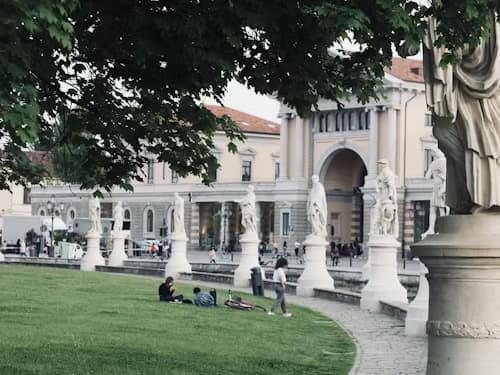
University of Padua (Padova)
Padova, Italy
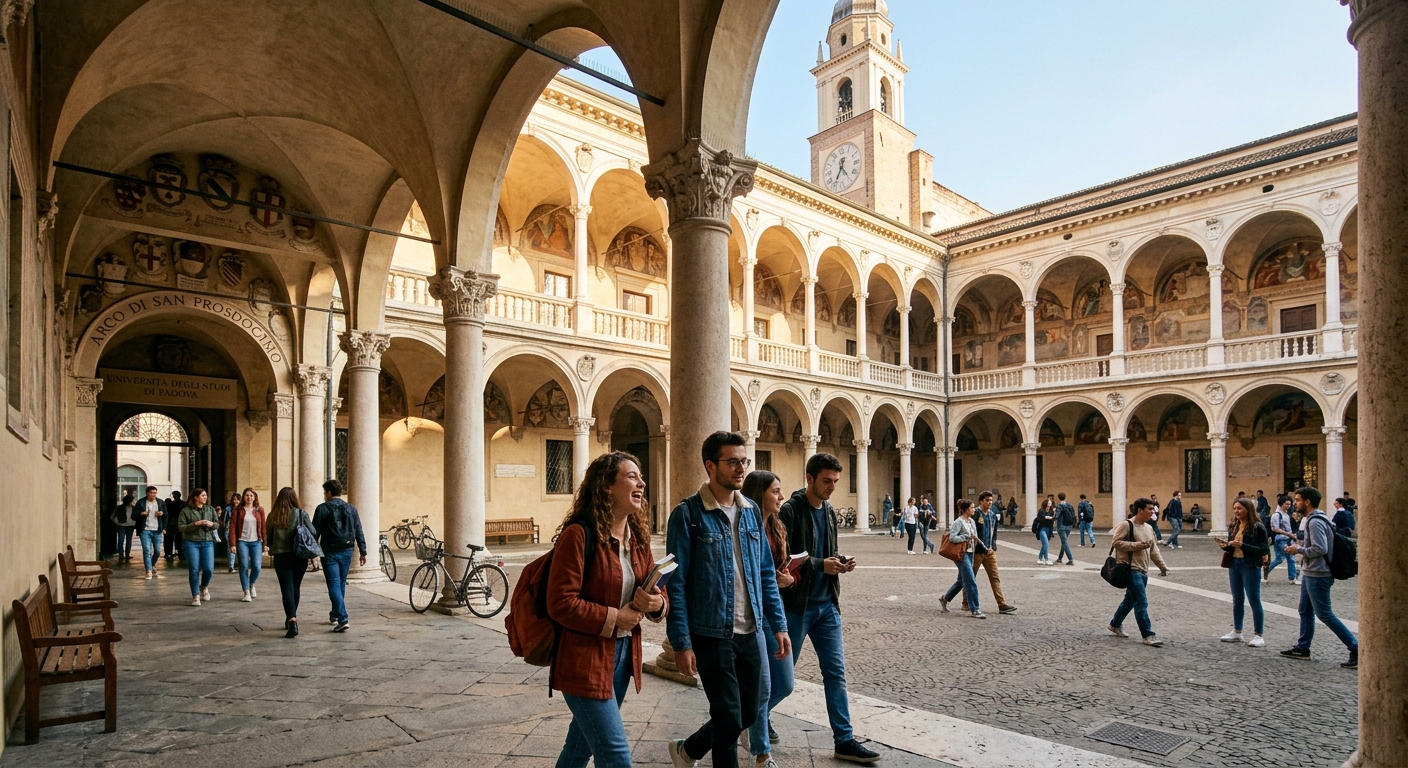
University of Padua (Università degli Studi di Padova)
Padova, Italy
Founded
1222
Institution Type
Public Research University
Total Students
72,000+
QS World Ranking
#233 (2026)
Discover the University of Padua: Over 800 Years of Academic Excellence
Discover the University of Padua: Over 800 Years of Academic Excellence
Founded in 1222 by a group of students and teachers who left the University of Bologna in pursuit of greater academic freedom, the University of Padua (UNIPD) is the second-oldest university in Italy and the fifth-oldest surviving university in the world. Its Latin motto, Universa Universis Patavina Libertas (Paduan Freedom is Universal for Everyone), reflects a centuries-long commitment to intellectual liberty that continues to define the institution today.
Throughout the Renaissance and early modern period, Padua was one of the most prominent universities in Europe, particularly renowned for its contributions to medicine, anatomy, astronomy, and law. Illustrious figures such as Galileo Galilei, Nicolaus Copernicus, Andreas Vesalius, and William Harvey studied or taught here, shaping the course of scientific history. In 1678, Elena Lucrezia Cornaro Piscopia became the first woman in the world to receive a Doctor of Philosophy degree at this university.
Today, the University of Padua comprises 32 departments and eight schools, serving over 72,000 students including more than 7,000 international students. It is a member of the prestigious Coimbra Group of historic European research universities and consistently ranks among the top universities in Italy for both teaching and research quality.
Key Milestones
- 1222: University founded by scholars and students from the University of Bologna seeking academic freedom
- 1545: Establishment of the Botanical Garden of Padua, now a UNESCO World Heritage Site
- 1595: Construction of the oldest surviving permanent anatomical theatre in Europe
- 1678: Elena Lucrezia Cornaro Piscopia becomes the first woman in the world to earn a PhD
Academic Structure and Schools
Academic Structure and Schools
The University of Padua is organized into 32 departments coordinated by eight schools. These schools oversee a broad range of undergraduate, graduate, and doctoral programs, many of which are offered in English at the master's and PhD levels. The university also runs the elite Galilean School of Higher Education, admitting 30 high-achieving students annually for supplemental coursework.
School of Medicine
One of the oldest and most distinguished medical schools in Europe, with a legacy dating back to the 13th century and pioneering contributions to anatomy and clinical medicine.
- Medicine and Surgery
- Pharmaceutical Sciences
- Biomedical Sciences
School of Engineering
Offers cutting-edge programs in engineering disciplines with strong ties to the Veneto region's industrial sector and active research in aerospace, ICT, and environmental engineering.
- Computer Engineering
- Environmental Engineering
- Mechatronics Engineering
School of Science
Covers the natural and physical sciences with internationally recognized research in physics, mathematics, chemistry, biology, and astronomy.
- Physics
- Molecular Biology
- Astrophysics and Cosmology
School of Law
Rooted in Padua's medieval tradition as a center for civil and canon law, this school offers comprehensive legal education with a focus on European and international law.
- Law (Single-Cycle Degree)
- European and Transnational Law
- Human Rights and Multi-level Governance
School of Economics and Political Science
Provides programs in economics, business, political science, and international relations, with emphasis on quantitative analysis and European policy.
- Economics and Finance
- Business Administration
- Political Science and International Relations
School of Human and Social Sciences and Cultural Heritage
Encompasses the humanities, arts, education, and cultural heritage studies, drawing on Padua's rich artistic and literary tradition.
- Cultural Heritage
- Modern Languages and Literatures
- Philosophy
Admission Requirements for International Students
Admission Requirements for International Students
Undergraduate Admission
- Academic QualificationCompletion of 12 years of education or equivalent secondary school diploma
- Language ProficiencyEnglish B2 level (IELTS 5.0+ or equivalent) for English-taught programs; Italian B2 for Italian-taught programs
- Application PortalApply online through the University of Padua official portal (Apply.unipd.it)
- Entrance ExamSome programs require an entrance exam or aptitude test; check specific program requirements
- Visa RequirementsNon-EU students must obtain a study visa through the Italian Embassy or Consulate in their home country
Graduate Admission
- Academic QualificationCompleted bachelor's degree (or equivalent) in a relevant field
- Language ProficiencyEnglish B2 level minimum (IELTS, TOEFL, or Cambridge accepted) for English-taught programs
- Supporting DocumentsAcademic transcripts, CV, motivation letter, and letters of recommendation (program-dependent)
- Credential EvaluationForeign qualifications may require validation through the Italian authorities
- Application FeeEUR 30 non-refundable application fee
First application window for international students (non-EU and EU) typically closes in early February
Second application window for international students typically closes in early May
Third call open to EU citizens and non-EU citizens already residing in Italy
Classes begin in October; the academic year runs through July with semester or trimester calendars depending on the school
Tuition Fees and Scholarships
Tuition Fees and Scholarships
The University of Padua offers highly competitive tuition fees compared to other top-ranking European universities. Annual fees are generally under EUR 3,000, with significant reductions available based on financial need. The fee structure depends on citizenship, country of residence, and degree program.
| Fee Component | EU / Resident Students | Non-EU International Students |
|---|---|---|
| First Instalment (Enrolment) | EUR 205 | EUR 205 |
| Second Instalment | Income-based (ISEE) | Program-dependent |
| Third Instalment | Income-based (ISEE) | Program-dependent |
| Regional Tax & Stamp Duty | Included | Included |
| Total | Up to approx. EUR 3,000/year (varies by ISEE) | Up to approx. EUR 3,000/year (varies by program) |
Padua International Excellence Scholarship
A prestigious merit-based award for non-EU international students offering full or partial tuition waivers plus a living stipend to support study across a wide range of degree programs.
- Eligibility: Non-EU international students with outstanding academic records
- Coverage: Full or partial tuition fee waiver plus living stipend
- Renewable: Yes, subject to academic performance review
UNIPD Merit-Based Scholarships
Merit-based scholarships specifically for non-Italian students demonstrating exceptional academic performance, covering tuition fees, living expenses, and sometimes additional allowances.
- Eligibility: International students with excellent academic achievements
- Coverage: Tuition fees, living expenses, and book allowances
- Programs: Available for both undergraduate and postgraduate programs
Campus and Facilities
Campus and Facilities
The University of Padua does not occupy a single enclosed campus but is instead woven into the historic fabric of the city of Padua itself. Its departments, schools, research centers, and libraries are spread across the city, creating a uniquely integrated university-city experience where students account for over 30% of the local population.
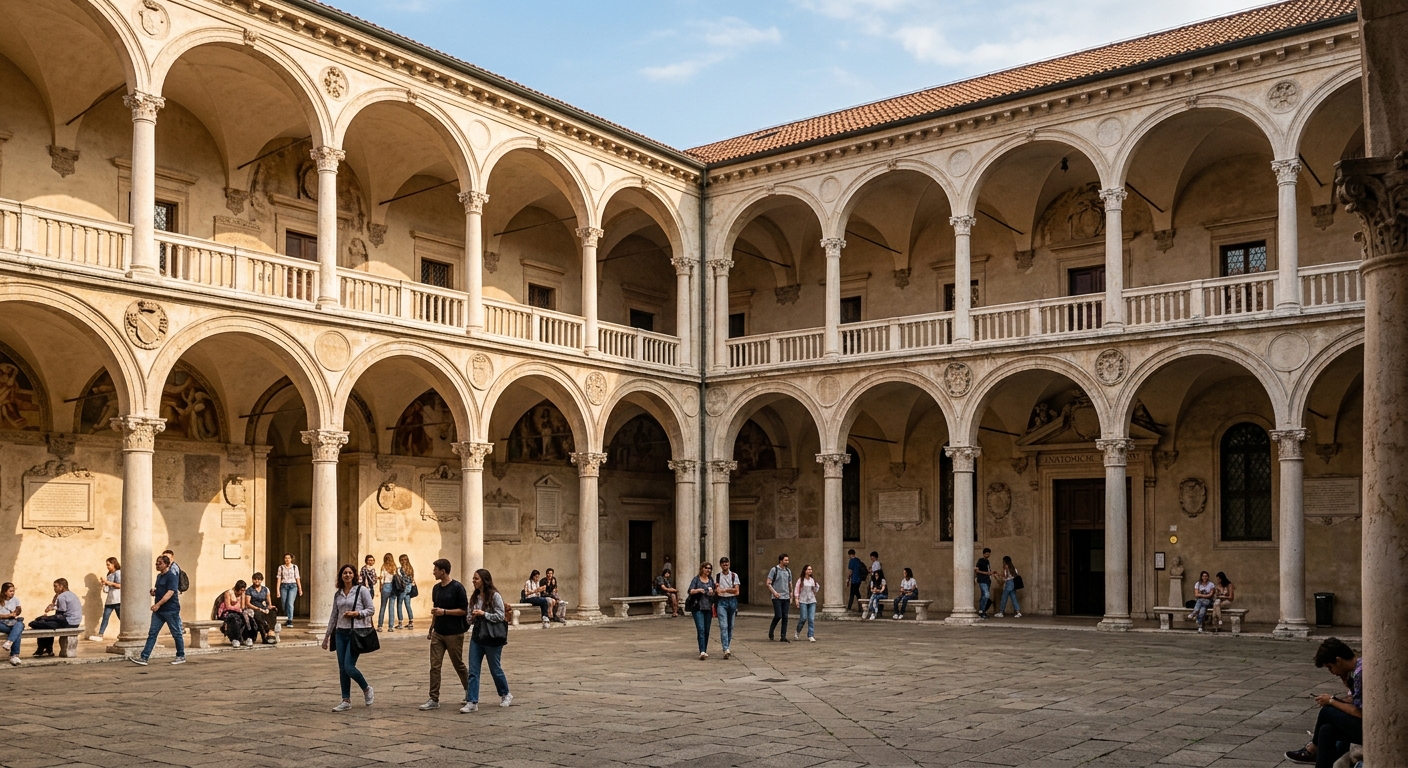
The iconic seat of the university since 1539, housing the world's oldest permanent anatomical theatre and the historic Hall of Forty
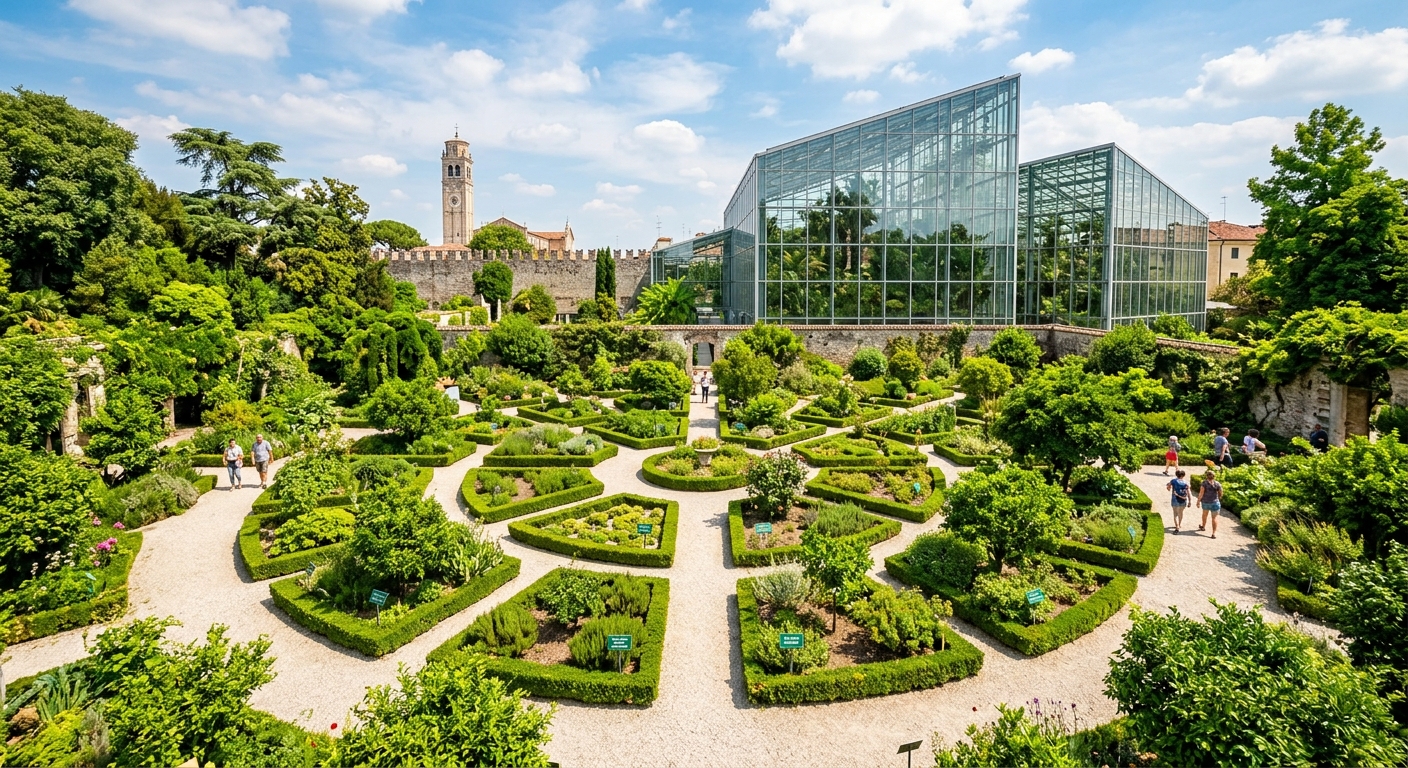
Founded in 1545, one of the oldest academic botanical gardens in the world, featuring a modern biodiversity greenhouse

An extensive network of libraries and study spaces across the city supporting research and learning in all disciplines
Housing and Dining
Student Housing
Housing is available through ESU di Padova, which manages student residences across the city. Many students also find private accommodation in Padua's affordable rental market.
- ESU di Padova managed residences
- Private apartments and shared housing
- Housing support services for international students
Dining and Services
ESU di Padova also operates student canteens offering affordable meals throughout the city. Students can access subsidized dining with their university card.
- Subsidized university canteens across the city
- Nine university museums including the Physics Museum
- Sports facilities and wellness services via CUS Padova
Student Life at the University of Padua
Student Life at the University of Padua
Student life at the University of Padua is vibrant and deeply connected to the city's culture and history. With students making up over 30% of Padua's population, the city pulses with academic, cultural, and social energy. The university offers numerous opportunities for involvement in clubs, sports, cultural events, and volunteer work.
Location: Padua, a Historic University City
Location: Padua, a Historic University City

Living in Padua
Situated in the heart of northeastern Italy, less than 40 km from Venice, Padua is one of the most beautiful and culturally rich cities in Italy with over 3,000 years of history. The city offers an exceptional quality of life with lower living costs than Rome or Milan, an extensive cycling network, and excellent rail and road connections to major Italian and European cities.
Scrovegni Chapel
Home to Giotto's celebrated 14th-century fresco cycle, a masterpiece of Western art and a must-visit cultural landmark
Prato della Valle
One of the largest squares in Europe, surrounded by a canal with statues, and a popular gathering place for students and locals
Proximity to Venice
Venice is just 25-30 minutes away by train, offering easy access to one of the world's most iconic cities for weekend excursions
Strategic European Location
Efficient air, rail, and road connections to major Italian cities and international destinations make Padua an ideal base for exploring Europe
Career Outcomes and Alumni Network
Career Outcomes and Alumni Network
Notable Alumni and Affiliated Figures
Practical Information for International Students
Practical Information for International Students
For International Students
Non-EU students must obtain a study visa through the Italian Embassy or Consulate. The university's international office provides guidance on documentation, residence permits, and pre-enrolment procedures.
The university offers Italian language courses for international students, as well as English proficiency support. Many master's and PhD programs are taught entirely in English.
ESU di Padova manages student residences and provides support for finding private housing. The university organizes orientation programs and welcome events for incoming international students.
Key Contacts
- +90 5435286292
- +44 7868736984
- corporate@uni4edu.com
- info@uni4edu.com
Worldwide University Rankings
Worldwide University Rankings
The University of Padua consistently ranks among the top universities in Italy and within the top 250 globally across major international ranking systems. It is recognized for research excellence, academic reputation, and its strong international research network, placing within the top one percent of universities worldwide.
| Subject | Ranking Body | Rank |
|---|---|---|
| Medicine | QS World University Rankings | #125 |
| Engineering and Technology | QS World University Rankings | #165 |
| Astronomy and Astrophysics | University Guru / GRAS | #21 |
| QS Sustainability Ranking | QS Quacquarelli Symonds | #121 (1st in Italy) |


Features
The University of Padua, founded in 1222, stands as one of Italy’s oldest and most prestigious public research universities. It serves over 72,000 students, including around 31,800 postgraduates and 1,480 doctoral candidates, supported by a robust staff of ~4,600 academics and 2,400 administrators. Graduate employability is strong—77.7% find work within one year, rising to 91.3% at five years post-graduation. With a notable international student presence of thousands, Padua consistently ranks among the top 250 universities worldwide, recognized by major ranking bodies—#130 global (US News), 201–250 (THE), and ~236 (QS)—and is highly ranked domestically.
Accommodation
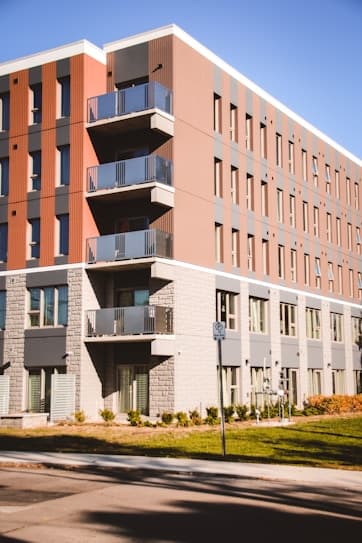
Off-Campus Accommodations Students wishing to live off-campus need to research availability on their own, and should arrive well before the start of term to do so.

Work While Studying
See guidelines on working while studying here.

Co-op/Internship Participation
Even if you do NOT meet our minimum English requirement (IELTS or TOEFL), you still can get conditionally accepted in the program of your choice with the condition of completing our English program prior to starting your chosen program.
Featured Programmes




Average Time To Receive Acceptance Letter
September - June
Location
Via VIII Febbraio, 2 – 35122 Padova (PD), Italy

Map not found.

Uni4Edu AI Assistant