University of Bonn
Bonn, Germany
University of Bonn (Rheinische Friedrich-Wilhelms-Universität Bonn)
Bonn, Germany
Founded
1818
Institution Type
Public Research University
Total Students
31,000+
International Students
5,200+
University of Bonn: A Leading German University of Excellence
University of Bonn: A Leading German University of Excellence
The University of Bonn, officially the Rheinische Friedrich-Wilhelms-Universität Bonn, was founded on 18 October 1818 by King Friedrich Wilhelm III of Prussia. It is one of Germany's largest and most prestigious research universities, offering around 200 academic programs across seven faculties to over 31,000 students from more than 130 countries.
Since 2019, the University of Bonn holds the title of University of Excellence under Germany's Excellence Strategy and boasts more Clusters of Excellence than any other German university. The university has produced more Nobel Prize and Fields Medal winners in recent decades than any other German institution, with notable laureates including physicist Wolfgang Paul and economist Reinhard Selten.
Situated in the former capital of West Germany, the university is deeply embedded in Bonn's international character. The city hosts numerous United Nations organizations and international institutions, providing students with unique networking and career opportunities in a cosmopolitan yet compact urban setting along the Rhine River.
Key Milestones
- 1818: Founded by King Friedrich Wilhelm III of Prussia as the Rhein-Universität, successor to the 1777 Academy of the Prince-elector of Cologne.
- 1989: Wolfgang Paul awarded the Nobel Prize in Physics for developing the ion trap technique.
- 1994: Reinhard Selten awarded the Nobel Memorial Prize in Economics for his contributions to game theory.
- 2019: Designated one of eleven German Universities of Excellence, with six Clusters of Excellence — more than any other German university.
Academic Structure and Faculties
Academic Structure and Faculties
The University of Bonn is organized into seven faculties covering a broad range of disciplines from theology and humanities to natural sciences and medicine. With over 200 degree programs and strong interdisciplinary Transdisciplinary Research Areas (TRAs), the university combines traditional academic strengths with innovative research-driven teaching.
Faculty of Mathematics and Natural Sciences
One of the university's flagship faculties, renowned for producing Fields Medalists and hosting the Hausdorff Center for Mathematics. Strong research in physics, chemistry, and earth sciences complements outstanding mathematics programs.
- Mathematics (BSc/MSc)
- Physics (BSc/MSc)
- Chemistry (BSc/MSc)
Faculty of Law and Economics
Home to the ECONtribute Cluster of Excellence and the Reinhard Selten Institute, this faculty offers rigorous programs in law and economics with strong ties to experimental and behavioral economics research.
- Economics (BSc/MSc)
- Law (Staatsexamen)
- Political Economy (MSc)
Faculty of Medicine
Located on the Venusberg campus, this faculty operates the University Hospital Bonn and conducts cutting-edge research in immunology, neuroscience, and medical genetics, supported by the ImmunoSensation Cluster of Excellence.
- Human Medicine (Staatsexamen)
- Dentistry (Staatsexamen)
- Neurosciences (MSc)
Faculty of Arts and Humanities
Housed in the historic Electoral Palace, this faculty spans philosophy, history, languages, and cultural studies. It maintains strong international partnerships and offers diverse programs in Asian and Oriental studies.
- Philosophy (BA/MA)
- History (BA/MA)
- English Studies (BA/MA)
Faculty of Agriculture
A unique strength of the university, this faculty is home to the PhenoRob Cluster of Excellence focusing on robotics and phenotyping for sustainable crop production. Programs blend traditional agricultural sciences with modern technology.
- Agricultural Science and Resource Management (BSc)
- Agricultural and Food Economics (MSc)
- Geodesy and Geoinformation (BSc/MSc)
Faculty of Catholic Theology / Faculty of Protestant Theology
Bonn is one of the few German universities with both Catholic and Protestant theological faculties, a tradition dating back to its founding in 1818. These faculties focus on ecumenical theology, historical theology, and theology in dialogue with human sciences.
- Catholic Theology (Magister Theologiae)
- Protestant Theology (Magister Theologiae)
- Ecumenical Studies (MA)
Admission Requirements for International Students
Admission Requirements for International Students
Undergraduate Admission
- University Entrance QualificationRecognized secondary school certificate equivalent to German Abitur (check via anabin database)
- German Language ProficiencyDSH-2 or CEFR C1 level required for enrollment in German-taught programs
- Application LanguageB2 German required at application stage; C1 at enrollment
- Application PortalDirect application via University of Bonn's own portal (no uni-assist required)
- Additional DocumentsCertified copies and translations (German, English, or French) of qualifications
Graduate Admission
- First DegreeRelevant bachelor's degree or equivalent from a recognized institution
- Language ProficiencyGerman C1 for German-taught programs; IELTS 6.0+ or TOEFL 79+ for English-taught programs
- Program-Specific RequirementsEach master's program has individual admission criteria set by the respective department
- Application ProcessApplications reviewed individually by departments; apply via the university's online portal
- Supporting DocumentsTranscripts, degree certificates, motivation letter, and language certificates as required
Application deadline for international students applying to undergraduate and most graduate programs starting in October.
Application deadline for international students applying to programs with a summer semester start in April.
The application portal for winter semester programs typically opens on this date.
Individual master's programs may have earlier or different deadlines. Check the specific program page for details.
Tuition Fees, Costs & Scholarships
Tuition Fees, Costs & Scholarships
As a public university in Germany, the University of Bonn does not charge tuition fees for undergraduate or most graduate programs, regardless of nationality. Students pay only a semester fee (social contribution) that covers student services, a public transportation pass for all of Germany (Deutschlandsemesterticket), and other amenities.
| Cost Category | EU/EEA Students | Non-EU/EEA Students |
|---|---|---|
| Tuition Fees (per semester) | EUR 0 | EUR 0 |
| Semester Fee / Social Contribution | Approx. EUR 345 per semester | Approx. EUR 345 per semester |
| Health Insurance (monthly) | Approx. EUR 120/month | Approx. EUR 120/month |
| Estimated Living Expenses (monthly) | Approx. EUR 1,000/month | Approx. EUR 1,000/month |
| Total | Approx. EUR 690/year (fees only) + living costs | Approx. EUR 690/year (fees only) + living costs |
DAAD-STIBET Scholarships
Funded by the German Academic Exchange Service (DAAD), these scholarships support international exchange students and degree-seeking students at the University of Bonn with monthly stipends.
- Award Amount: Up to EUR 650/month (exchange) or EUR 500-934/month (degree students)
- Duration: Up to 10 months (renewable subject to approval)
- Eligibility: International students enrolled at the University of Bonn with foreign citizenship
Deutschlandstipendium (Germany Scholarship)
A merit-based scholarship jointly funded by the German federal government and private donors, awarded to talented students regardless of nationality based on academic achievement and social engagement.
- Award Amount: EUR 300/month
- Duration: Typically 12 months (renewable)
- Eligibility: All students enrolled at the University of Bonn with strong academic records
Campus & Facilities
Campus & Facilities
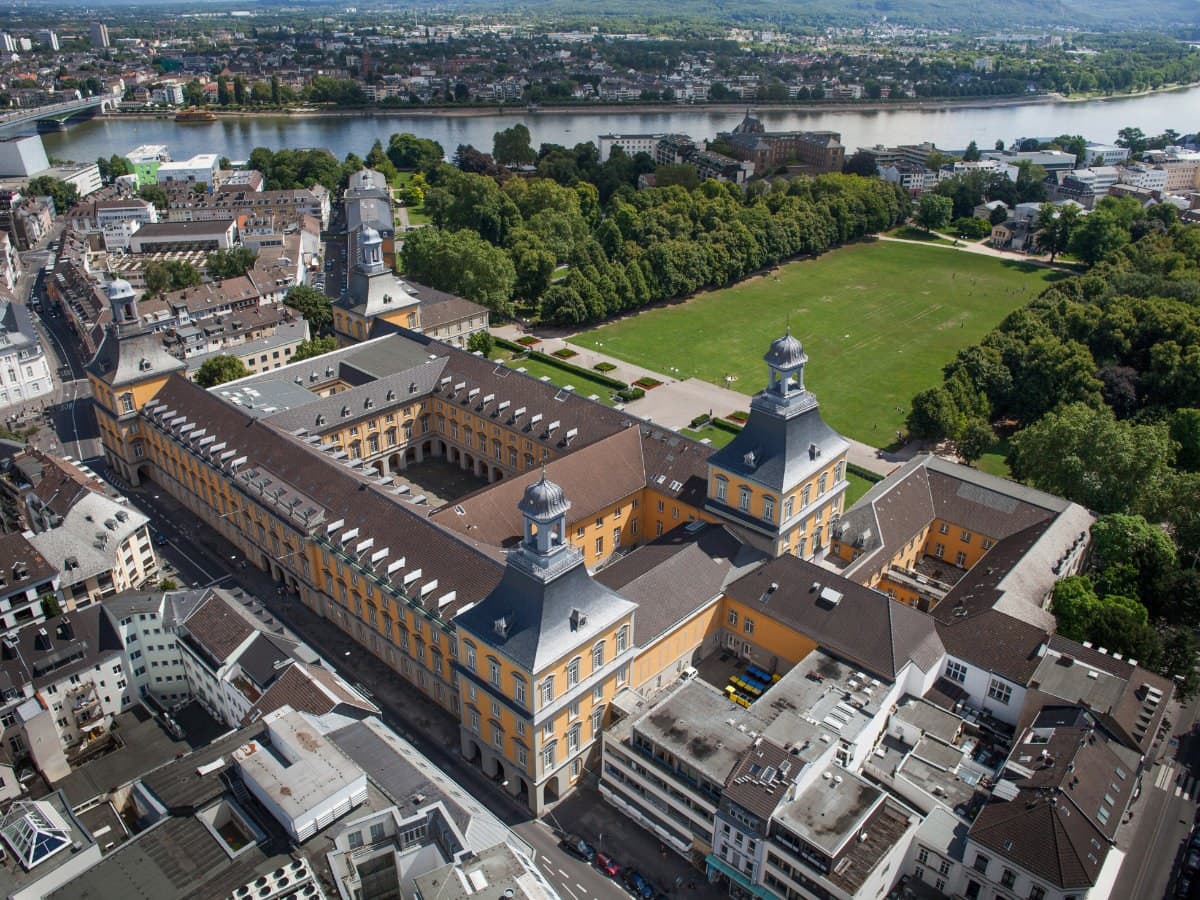
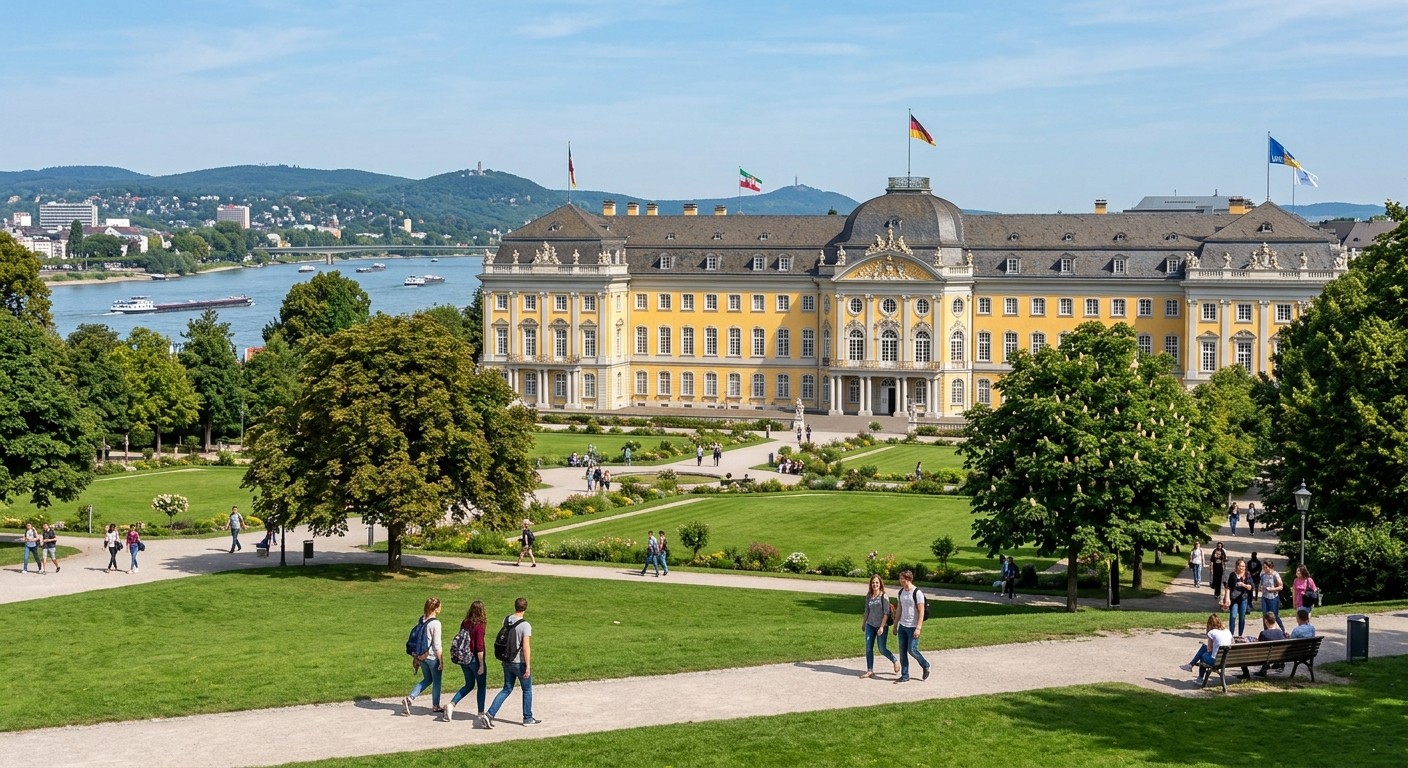
The University of Bonn spans five main campuses distributed across the city, with over 370 buildings blending historic architecture and modern research facilities. From the baroque Electoral Palace in the city center to the Poppelsdorf Palace and its botanical gardens, the campus is deeply integrated into Bonn's urban landscape.
The iconic baroque palace serves as the university's main building, housing the Faculty of Arts and theological faculties since 1818.
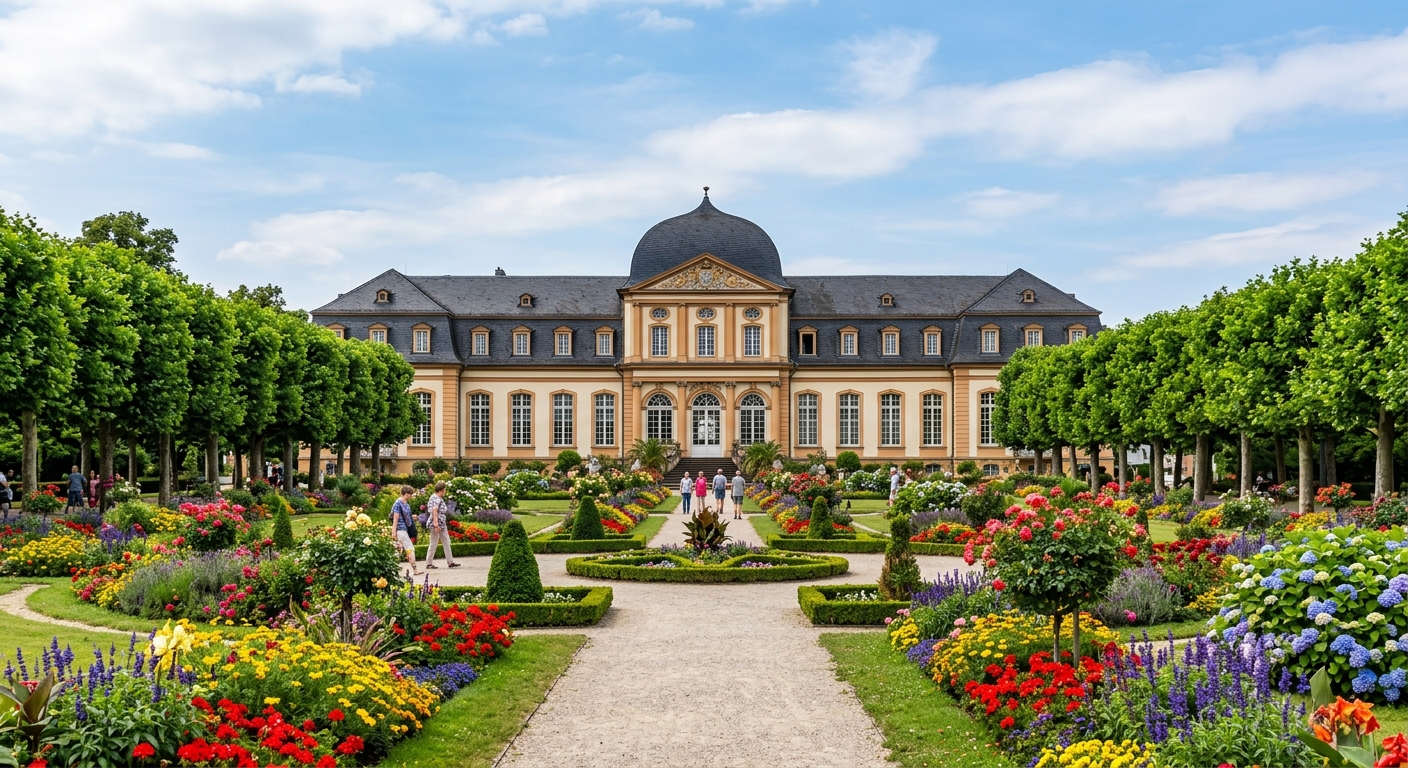
Built between 1715 and 1753, this palace houses science departments and the university's mineral collection, surrounded by the Botanical Gardens.
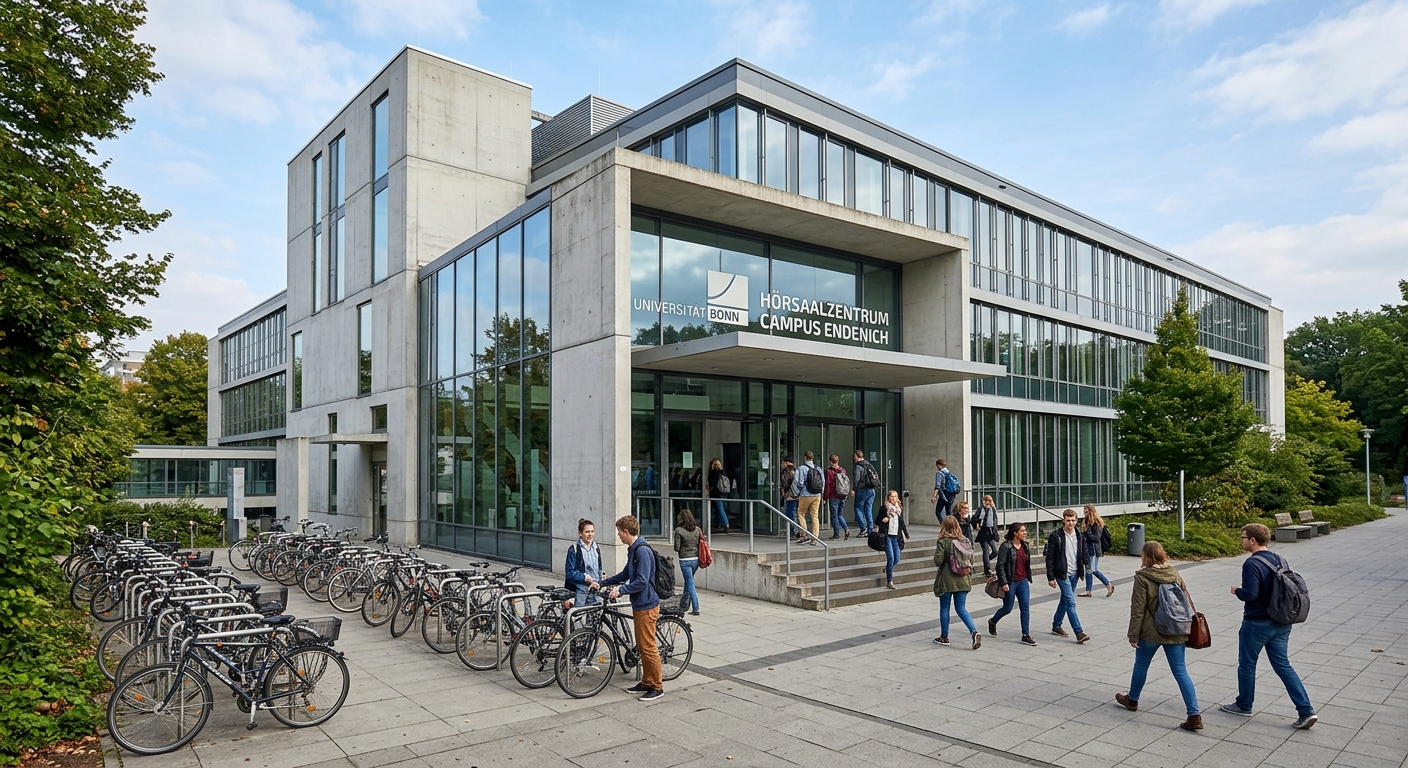
The modern science campus hosts mathematics and natural science departments alongside state-of-the-art research facilities and the main science library.
Housing & Student Services
Student Housing
The Studierendenwerk Bonn operates student residence halls across the city, offering affordable accommodation for domestic and international students.
- Multiple residence halls scattered across Bonn
- Affordable rooms starting from approx. EUR 220/month
- Early application recommended due to high demand
Libraries & Research Facilities
The University and State Library (ULB) was founded in 1818 and provides access to extensive collections and digital resources, complemented by specialized faculty libraries.
- University and State Library with millions of volumes
- Specialized faculty and departmental libraries
- Modern computer center and campus-wide WiFi
Student Life at the University of Bonn
Student Life at the University of Bonn
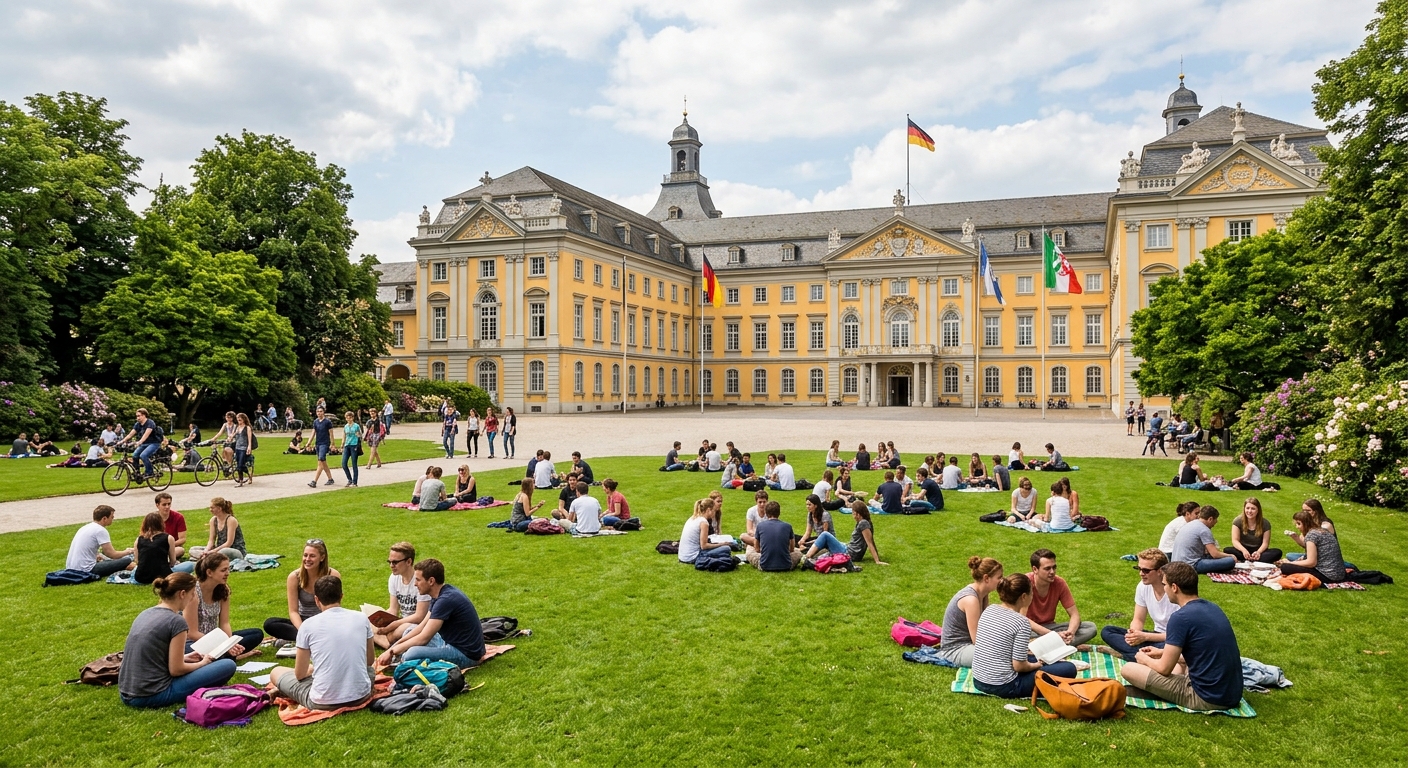
Student life in Bonn blends academic rigor with a vibrant cultural scene. The university's numerous student organizations, international clubs, and proximity to the Rhine make for a dynamic and enriching experience. The compact city and strong student community create a welcoming atmosphere for newcomers from around the world.
Bonn: The City on the Rhine
Bonn: The City on the Rhine

Living in Bonn, Germany
Bonn is a historic city of approximately 330,000 residents situated on the banks of the Rhine in western Germany. As the former capital of West Germany and birthplace of Ludwig van Beethoven, the city combines rich cultural heritage with a strong international character as the German City of the United Nations, hosting over 20 UN organizations.
International Hub
Bonn is home to over 20 United Nations organizations and numerous international institutions, creating excellent internship and career opportunities for students.
Cultural Heritage
The birthplace of Beethoven offers world-class museums including the Kunstmuseum Bonn, Haus der Geschichte, and the Beethoven House museum.
Transport & Connectivity
Excellent public transport connections, including the semester ticket covering all of Germany. Cologne is just 30 minutes away, and major European cities are easily accessible.
Quality of Life
A compact, green city along the Rhine with the scenic Siebengebirge hills nearby, Bonn offers a high quality of life with affordable living costs compared to larger German cities.
Career Outcomes & Distinguished Alumni
Career Outcomes & Distinguished Alumni
Where Graduates Work
Practical Information for International Students
Practical Information for International Students
For International Students
The International Office is the central contact point for students from abroad, providing guidance on applications, enrollment, visa requirements, housing, and integration support before, during, and after your stay.
The Welcome Centre assists visiting researchers and students with organizing their stay, including visa and entry requirements, health insurance, and language courses. Welcome Days are held before each semester.
The International Office offers German language courses from beginner (A1) to advanced (C1) levels, including a 3-week intensive orientation and language program before the start of each semester.
Key Contacts
- +90 5435286292
- +44 7868736984
- [email protected]
- [email protected]
University of Bonn: Worldwide Rankings
University of Bonn: Worldwide Rankings
The University of Bonn consistently ranks among the top universities in Germany and worldwide, reflecting its outstanding research output, Nobel Prize-winning faculty, and status as one of only eleven German Universities of Excellence. It performs particularly strongly in mathematics, physical sciences, and economics.
| Subject | Ranking Body | Rank |
|---|---|---|
| Mathematics | Shanghai ARWU | #1 in Germany |
| Physical Sciences | Times Higher Education | #46 |
| Business & Economics | Times Higher Education | #69 |
| Computer Science | Times Higher Education | #95 |


Features
-International\nAn open and intercultural approach is reflected in both everyday university operations and a range of strategic partnerships and specialist networks.\n-Excellent\nThe University of Bonn is one of eleven German Universities of Excellence and the only of our peers with six Clusters of Excellence.\n-Transdisciplinary\nOur seven faculties cover a broad range of disciplines from Agricultural Sciences to Psychology. Our strong record of research in individual disciplines is supplemented by the work of six cross-faculty, interdisciplinary Transdisciplinary Research Areas (TRA) and a range of exploration and
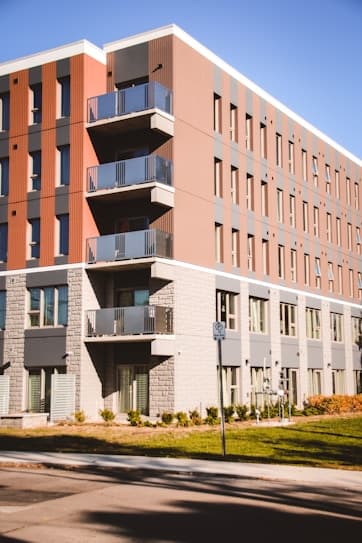
Accommodation
Accommodation service is available.\n

Work While Studying
Students can work while studying.\n

Co-op/Internship Participation
There is an internship service.\n
Featured Programmes



Location
Regina-Pacis-Weg 3, 53113 Bonn

Map not found.

Uni4Edu AI Assistant