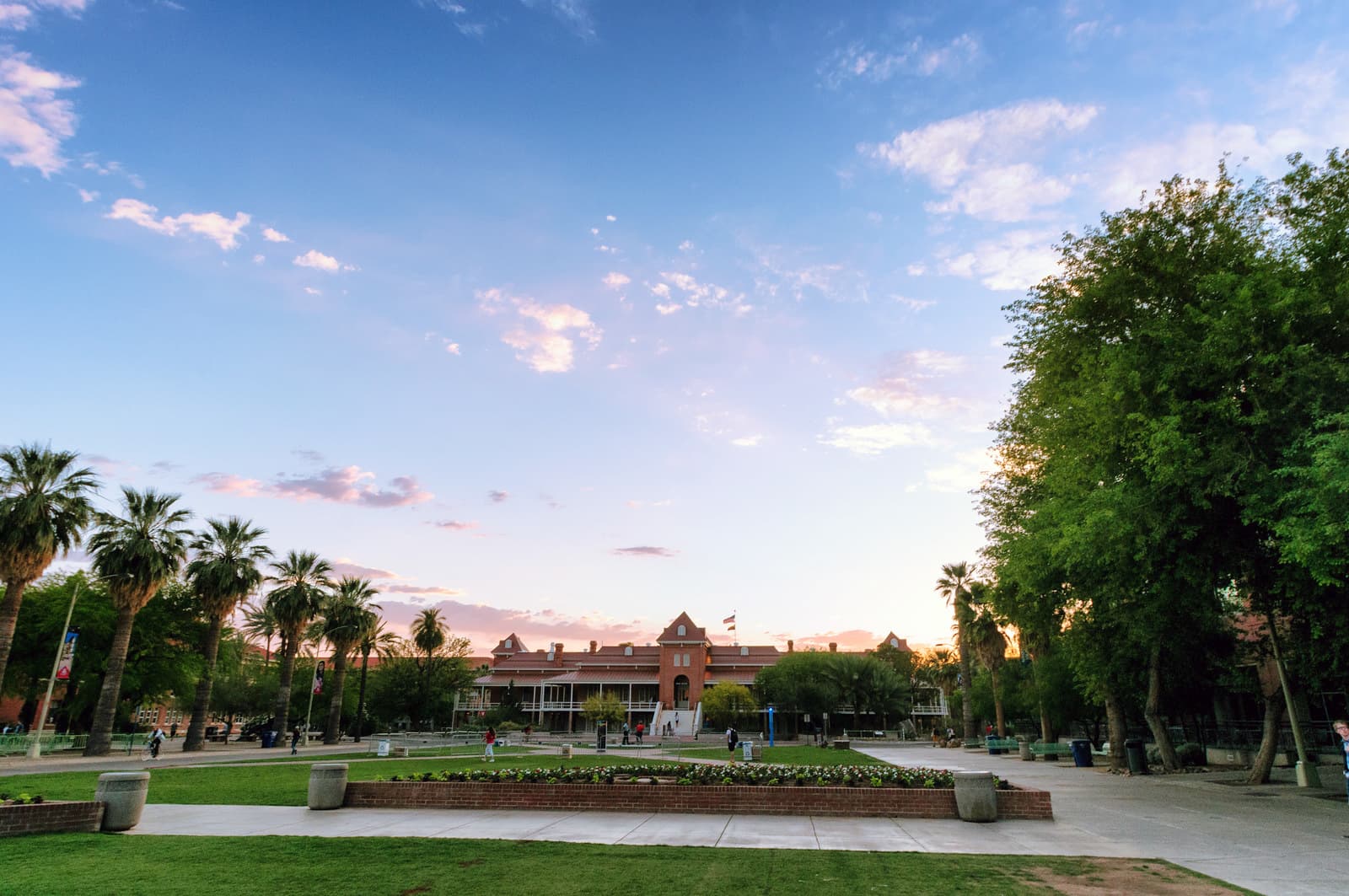
Natural Resources - Ecology, Management & Restoration of Rangelands (MS)
Main Campus, Tucson, United States


Master of Science in Natural Resources - Ecology, Management & Restoration of Rangelands
University of Arizona
Natural Resources & Rangeland Ecology
Program Overview: MS in Ecology, Management & Restoration of Rangelands
The Master of Science in Natural Resources with an emphasis in Ecology, Management, and Restoration of Rangelands at the University of Arizona prepares you to manage rangelands to meet conservation goals, maximize long-term productivity, and enhance the interaction between people and the land. Housed within the School of Natural Resources and the Environment (SNRE), this program equips you with the expertise needed for advanced governmental, nongovernmental, and academic careers.
This degree emphasis combines core courses in rangeland management planning, ecology and management of grazing, management and restoration of wildland vegetation, and rangeland inventory and monitoring. You will study the biological and physical processes of ecosystems to understand how to promote the sustainable use of rangelands and manage the diverse and complex systems they support.
The program is rooted in the University of Arizona's location in the arid Southwest, providing unparalleled access to diverse rangeland environments including deserts, grasslands, shrublands, woodlands, and meadows. Faculty research addresses drought, invasive species, and climate impacts to help restore and sustain these critical ecosystems globally.
Key Program Highlights
- Emphasis on hands-on field research in diverse arid and semi-arid rangeland ecosystems across the American West
- Faculty expertise in drought resilience, invasive species management, and climate change adaptation for rangelands
- Thesis-based research program with individualized plan of study developed with your faculty advisor
- Access to world-renowned research facilities including Biosphere 2 and extensive field stations
Curriculum & Core Modules
The MS in Ecology, Management & Restoration of Rangelands curriculum blends ecological science with practical resource management. You will develop an individual plan of study in consultation with your faculty advisor, combining required core courses with electives tailored to your research interests.
Rangeland Management Planning
3 CreditsDevelop comprehensive management plans for rangeland ecosystems, integrating ecological, economic, and social considerations for sustainable land use.
Ecology and Management of Grazing
3 CreditsStudy the ecological effects of grazing on rangeland vegetation, soils, and wildlife, and learn strategies for sustainable grazing management.
Management and Restoration of Wildland Vegetation
3 CreditsExamine techniques and principles for restoring degraded wildland vegetation communities, including seed ecology, revegetation methods, and adaptive management.
Rangeland Inventory and Monitoring
3 CreditsLearn field-based methods for inventorying and monitoring rangeland resources, including vegetation surveys, soil assessments, and ecological condition analysis.
Graduate Research Methods and Statistics
3 CreditsBuild a foundation in experimental design, data analysis, and statistical methods essential for conducting rigorous natural resources research.
Thesis Research and Defense
6 CreditsConduct original research under faculty supervision, culminating in a written thesis and oral defense before your graduate committee.
Elective Courses
Admission Requirements
Admission to the MS in Natural Resources - Ecology, Management & Restoration of Rangelands requires a faculty member to agree to serve as your major advisor and a funding plan, which is typically developed with the advisor. All applications are processed through Uni4Edu, which guides you through every step of the process.
Academic Requirements
- Bachelor's DegreeA bachelor's degree in a related field such as natural resources, ecology, biology, environmental science, or agriculture from an accredited institution
- Minimum GPA3.0 on a 4.0 scale (or equivalent) in your undergraduate studies
- GRE ScoresGRE is optional; scores may be submitted as a supplementary component but are not required for admission
- Faculty AdvisorA faculty member in SNRE must agree to serve as your major advisor prior to admission; contact Uni4Edu for guidance on identifying potential advisors
- Funding PlanA funding plan is typically required; graduate students are rarely accepted without funding to the Natural Resources program
English Language Requirements
- TOEFL iBTMinimum score of 79
- IELTS AcademicMinimum composite score of 7.0, with no subject area below 6.0
- PTE AcademicMinimum score of 60
Required Documents
Application Deadlines
For personalized admission guidance, document verification, and application support, please contact Uni4Edu
Scholarships & Funding
Funding is a critical component of admission to the MS in Natural Resources program. The School of Natural Resources and the Environment does not have departmental funding for graduate students, but multiple funding avenues are available through faculty grants, assistantships, and university-level awards. Contact Uni4Edu for personalized guidance on securing financial support.
Research Assistantship (RA)
Varies by faculty grant (typically includes stipend, tuition waiver, and health insurance)The most common form of funding for SNRE graduate students. Faculty members fund incoming students within existing research grants, providing a position to conduct a subset of their research as your graduate project.
Teaching Assistantship (TA)
Stipend plus tuition waiver and health insurance at 0.50 FTE or higherSome students work as teaching assistants within SNRE or other departments such as General Biology, which hires approximately 30 TAs each semester. Assistantships at 0.50 FTE or higher include full tuition coverage.
For detailed tuition fee information, please contact Uni4Edu — we will guide you through the costs and available funding options for this program.
Career Prospects
Graduates of the MS in Ecology, Management & Restoration of Rangelands are prepared for advanced careers in government agencies, conservation organizations, private consulting firms, and academia. The program's emphasis on applied research and field-based skills makes graduates highly competitive in the growing natural resources sector.
Potential Career Roles
Potential Employers
Rankings & Recognition
The University of Arizona is a prestigious public research university founded in 1885 in Tucson, Arizona. It is consistently ranked among the top universities globally and nationally, with particular strengths in environmental sciences, earth sciences, and natural resources management.
| Subject | Ranking Body | Rank |
|---|---|---|
| Earth Science | U.S. News & World Report | Top 30 |
| Environment / Ecology | U.S. News & World Report | Top 50 |
| Space Science | U.S. News & World Report | #10 |
| Arts & Humanities | U.S. News & World Report | #58 |
How to Apply
Applying for this program is easy with Uni4Edu. Our team will guide you through every step of the process — from document preparation to final enrolment.
Contact Uni4Edu
Reach out to our team via email or phone. We will assess your profile and confirm your eligibility for this program.
Prepare Your Documents
Our advisors will provide you with a personalised checklist of required documents and help you prepare your application package.
Submit Your Application
Uni4Edu will submit your application on your behalf and keep you updated on its progress throughout the review period.
Receive Your Offer
Once accepted, we will help you understand your offer, arrange visa support if needed, and guide you through the enrolment process.
Similar Programmes

Bachelor's Degree
48 months
Natural Resources (BS)

University Of Arizona, Tucson, United States
Earliest Intake
May 2027
Gross Tuition
39958 $


Bachelor's Degree
36 months
Archaeological Sciences (BA)
University of Erlangen–Nuremberg (FAU), Nürnberg, Germany
Earliest Intake
April 2026
Gross Tuition
144 €


Bachelor's Degree
36 months
Advanced Materials
University of Giessen (Justus Liebig University Giessen), Gießen, Germany
Earliest Intake
May 2026
Gross Tuition
805 €


Bachelor's Degree
36 months
Georesources Management
RWTH Aachen University, Aachen, Germany
Earliest Intake
November 2026
Gross Tuition
676 €
Master's & Postgraduate
24 months
Natural Resources - Fisheries Conservation & Management (MS)
University Of Arizona, Tucson, United States
Earliest Intake
May 2026
Gross Tuition
32065 $



Uni4Edu AI Assistant