Trinity College Dublin
Dublin, Ireland
Trinity College Dublin, The University of Dublin
Dublin, Ireland
Founded
1592
Institution Type
Public University
Total Students
22,000+
QS World Ranking 2026
#75
Discover Trinity College Dublin: Ireland's Oldest and Highest-Ranked University
Discover Trinity College Dublin: Ireland's Oldest and Highest-Ranked University
Trinity College Dublin was founded in 1592 by royal charter of Queen Elizabeth I, making it Ireland's oldest university in continuous operation. As the sole constituent college of the University of Dublin, it is one of the seven ancient universities of Great Britain and Ireland, with a tradition of independent intellectual inquiry spanning over four centuries.
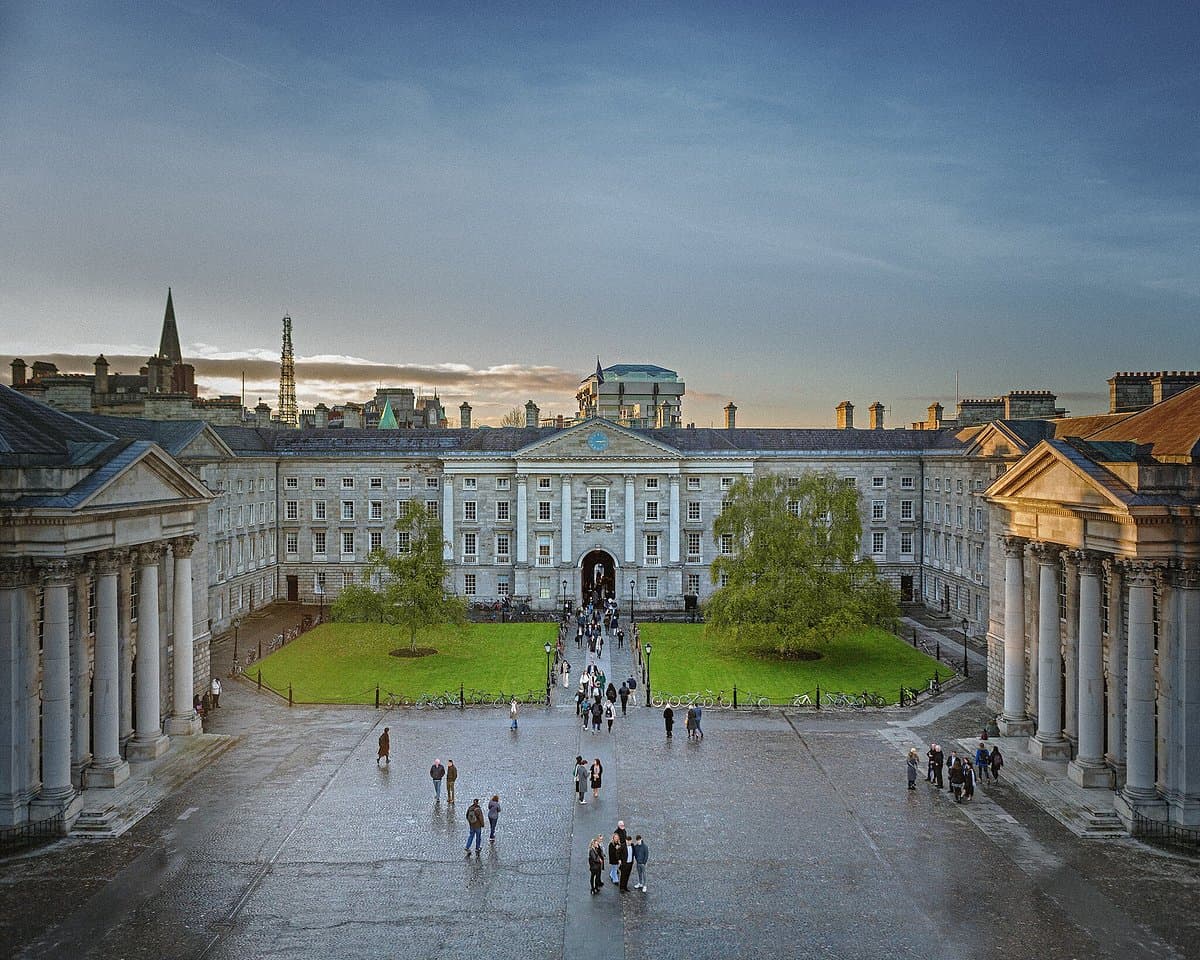
Located on an iconic 47-acre campus in the heart of Dublin's city centre, Trinity is home to over 22,000 undergraduate and postgraduate students across three faculties. The university is a member of the League of European Research Universities (LERU) and the Coimbra Group, and maintains historic academic partnerships with the University of Oxford and the University of Cambridge through mutual incorporation dating back to 1636.
Trinity's tradition of scholarship has produced notable alumni including writers Oscar Wilde and Samuel Beckett (Nobel laureate), scientists William Rowan Hamilton and Ernest Walton (Nobel laureate), political thinker Edmund Burke, and former President of Ireland Mary Robinson. The university's library is the largest in Ireland, housing over six million printed volumes and the world-famous Book of Kells.
Key Milestones
- 1592: Founded by royal charter of Queen Elizabeth I on the site of the former Priory of All Hallows
- 1904: Women admitted as full members of the college for the first time
- 1970: Catholic Church lifted its ban on Catholic students attending Trinity, transforming the student body
- 2008: Major academic restructuring consolidated the university into three faculties comprising 24 schools
Academic Structure and Faculties at Trinity College Dublin
Academic Structure and Faculties at Trinity College Dublin
Trinity College Dublin is organized into three faculties encompassing 24 academic schools that offer undergraduate and postgraduate courses across all major disciplines. The university provides a broad liberal education with opportunities for interdisciplinary study, study abroad exchanges at over 300 partner institutions, and personal tutoring for every undergraduate student.
Faculty of Arts, Humanities and Social Sciences
This faculty encompasses a wide range of disciplines from literature and languages to social sciences, law, and business. It includes schools such as English, History, Law, Business, Education, and Creative Arts.
- English Literature
- Law (LL.B.)
- Business Studies (B.B.S.)
Faculty of Engineering, Mathematics and Science
Covering STEM disciplines, this faculty includes schools of Engineering, Computer Science and Statistics, Mathematics, Natural Sciences, Chemistry, and Physics. It houses leading research centres such as CRANN (nanoscience) and CONNECT (future networks).
- Computer Science
- Engineering (Civil, Mechanical, Electronic)
- Natural Sciences
Faculty of Health Sciences
This faculty encompasses medicine, dentistry, pharmacy, nursing, and allied health disciplines. It operates in partnership with major teaching hospitals including St James's Hospital and Tallaght University Hospital.
- Medicine (M.B., B.Ch., B.A.O.)
- Dental Science
- Pharmacy
School of Business (Trinity Business School)
Trinity Business School operates from a purpose-built facility and offers undergraduate, postgraduate, and executive education programmes. Its MBA is ranked number one in Ireland and the school is known for its emphasis on live-action learning and industry engagement.
- MBA
- MSc in Finance
- MSc in Marketing
School of Social Sciences and Philosophy
This school brings together economics, political science, philosophy, and sociology, offering interdisciplinary programmes that encourage critical thinking and analytical skills. It has a strong tradition of producing public intellectuals and policy leaders.
- Philosophy, Political Science, Economics, and Sociology (PPES)
- Economics
- Political Science
School of Creative Arts
Encompassing drama, film, and music, this school includes The Lir National Academy of Dramatic Art. It offers programmes that combine academic study with practical creative training in state-of-the-art facilities.
- Drama and Theatre Studies
- Film Studies
- Music
Admission Requirements for Trinity College Dublin
Admission Requirements for Trinity College Dublin
Undergraduate Admission
- Application Route (Ireland/EU)Apply through the Central Applications Office (CAO)
- Application Route (Non-EU)Apply directly through Trinity's online portal
- English LanguageIELTS 6.5 (minimum) or equivalent; some programmes require higher
- Academic RequirementsCountry-specific entry requirements; strong academic record required
- Application FeeEUR 55
Postgraduate Admission
- Application MethodApply through Trinity's online postgraduate application portal
- Academic RequirementsBachelor's degree with upper second-class honours (2.1) or equivalent
- English LanguageIELTS 6.5 overall (minimum); some programmes require 7.0+
- Supporting DocumentsTranscripts, two academic references, personal statement, CV
- Application FeeEUR 55
Standard closing date for Irish/EU undergraduate applications through the CAO system
Typical closing date for direct non-EU undergraduate applications (varies by programme)
Postgraduate application deadlines vary by programme; early application is strongly recommended
Many scholarship applications close between March and May; check individual scholarship pages for exact dates
Tuition Fees and Scholarships at Trinity College Dublin
Tuition Fees and Scholarships at Trinity College Dublin
Tuition fees at Trinity College Dublin vary depending on your fee status (EU or non-EU) and your chosen programme. EU students benefit from Ireland's Free Fees Initiative, which covers a substantial portion of tuition, while non-EU international students pay higher fees. All figures below are approximate annual amounts for the 2025/26 academic year.
| Fee Category | EU Students (Annual) | Non-EU Students (Annual) |
|---|---|---|
| Arts, Humanities & Social Sciences | EUR 3,000 (Student Contribution) | EUR 22,580 |
| Science, Engineering & Maths | EUR 3,000 (Student Contribution) | EUR 29,570 |
| Medicine (Clinical Years) | EUR 3,000 (Student Contribution) | EUR 37,000 - EUR 55,000 |
| Student Levies & Charges | EUR 250 | EUR 250 |
| Total | Approx. EUR 3,250 per year | EUR 22,830 - EUR 55,250 per year |
Global Excellence Scholarships
Prestigious scholarships offered to outstanding non-EU international students, providing fee reductions to help make a Trinity education more accessible.
- Eligibility: Non-EU international students with excellent academic records
- Value: Partial tuition fee waiver (contact Trinity for current amounts)
- Application: Separate scholarship application required alongside programme application
Trinity Foundation Scholarships
Awarded to students who demonstrate exceptional academic performance during their studies at Trinity. Scholars receive significant benefits including free accommodation and dining rights.
- Eligibility: Current Trinity students who achieve top results in Scholarship examinations
- Value: Free rooms, commons (dining), and annual stipend for up to five years
- Selection: Based on competitive examinations held in the student's first or second year
Campus and Facilities at Trinity College Dublin
Campus and Facilities at Trinity College Dublin
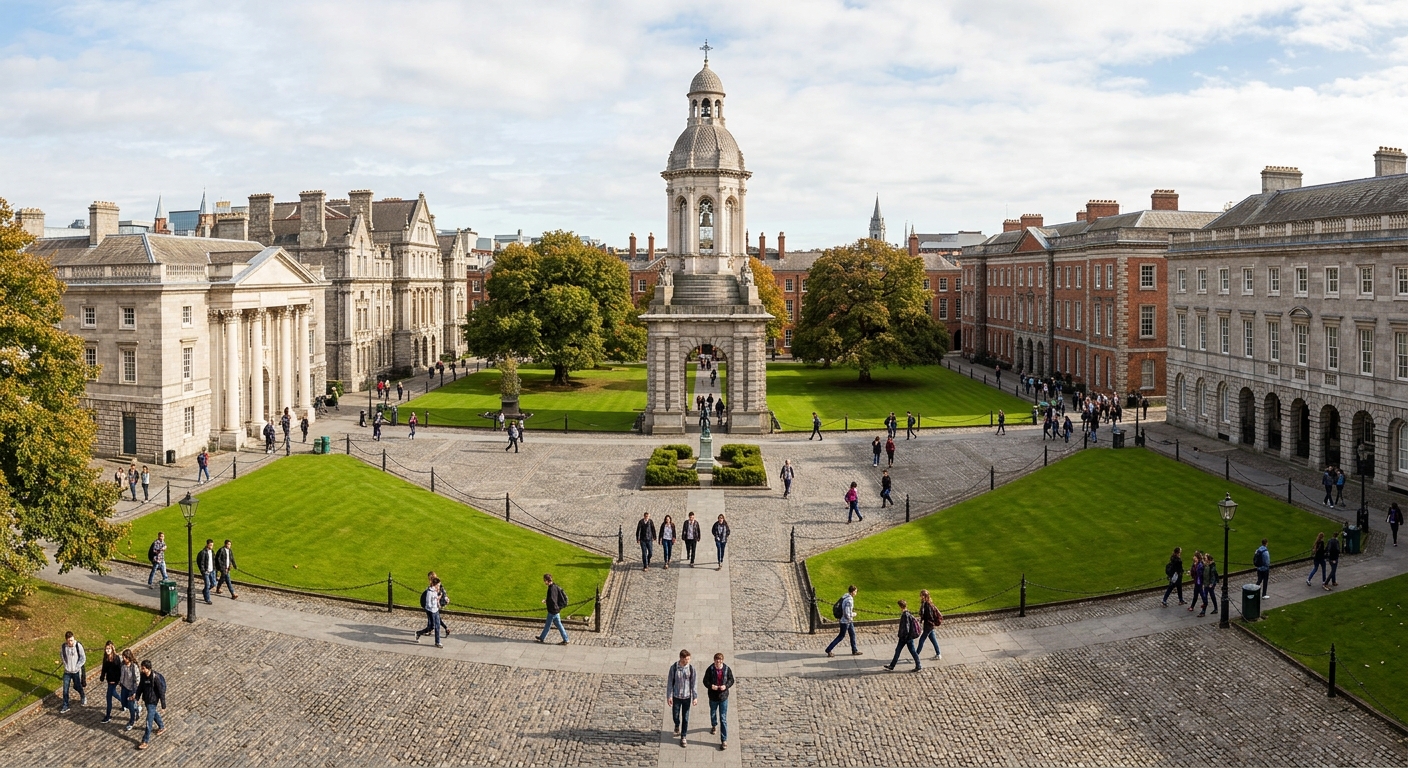
Trinity's 47-acre campus is a unique oasis in the heart of Dublin city centre, blending historic Georgian and Victorian architecture with modern research facilities. The campus includes iconic landmarks such as the Campanile bell tower, the Long Room library, and the Rubrics — the oldest surviving building on campus, dating from around 1700.
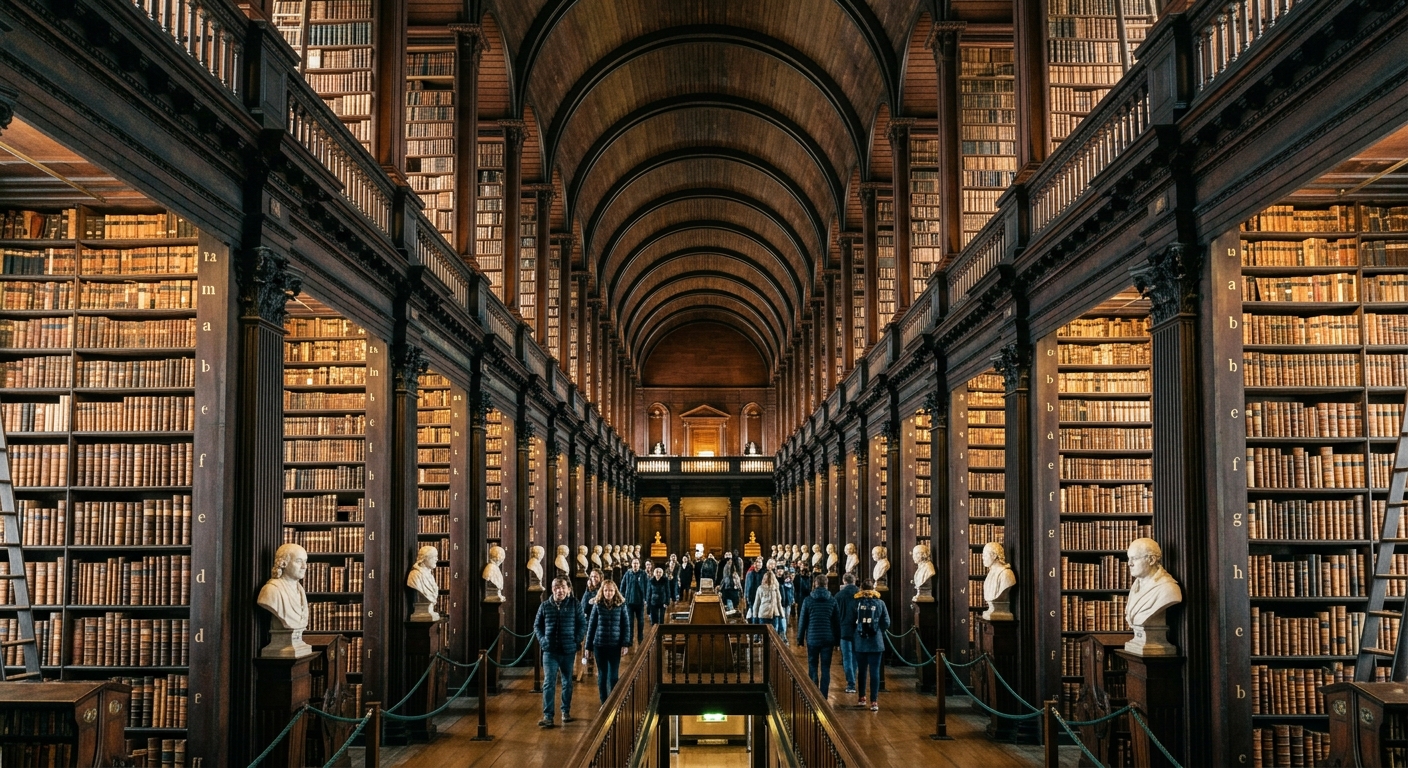
One of the world's most beautiful libraries, housing 200,000 of Trinity's oldest books and the famous Book of Kells
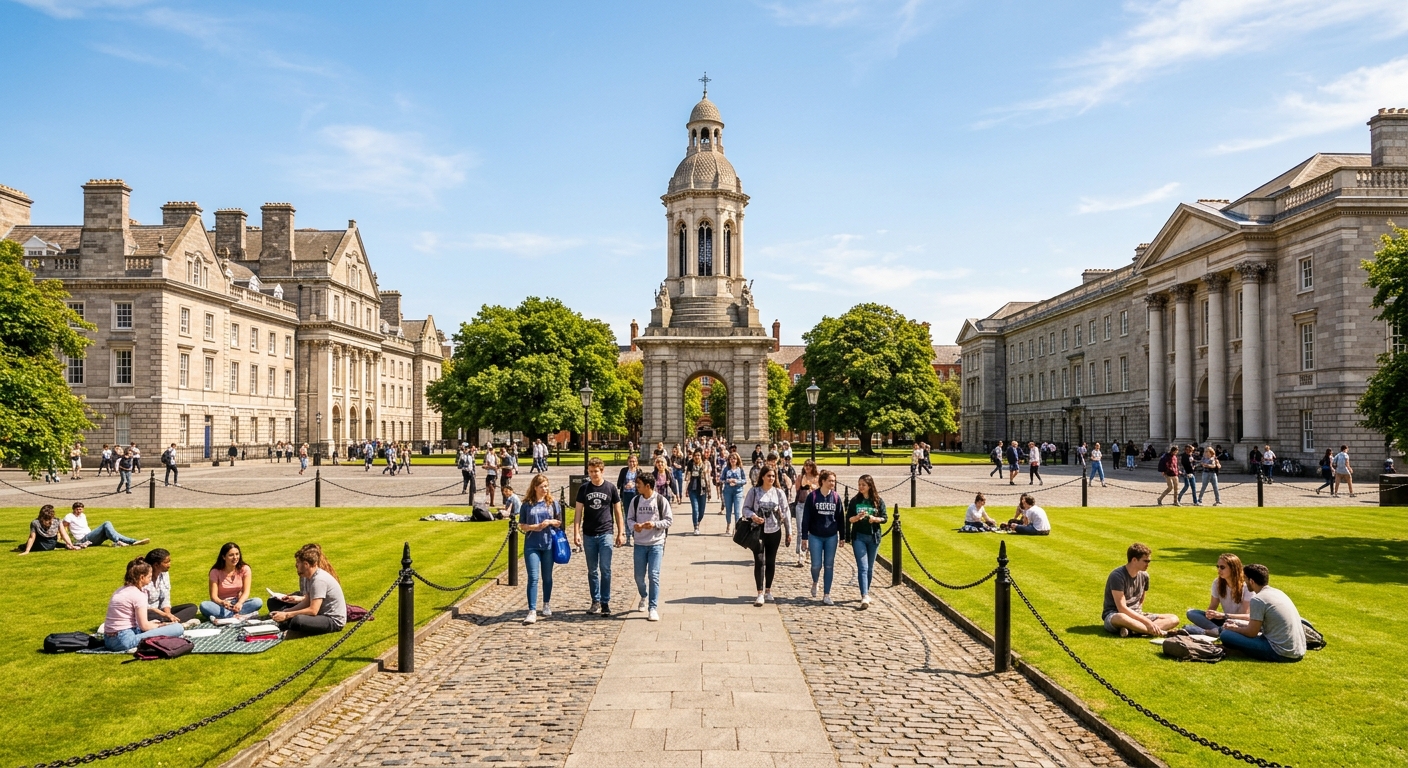
The heart of campus life, where the iconic bell tower stands between Parliament Square and Library Square
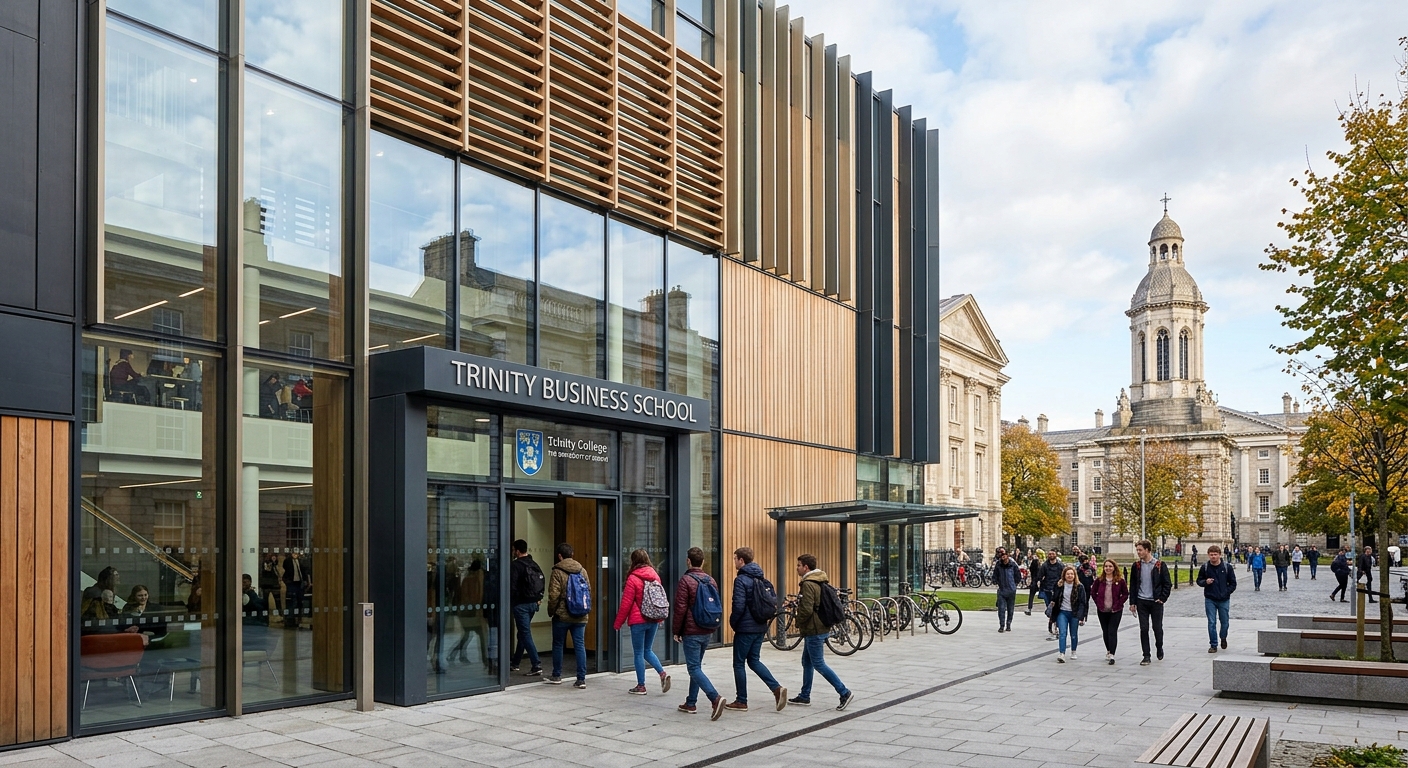
A state-of-the-art facility housing the School of Business with modern teaching spaces and collaborative areas
Housing and Dining
On-Campus Accommodation
Trinity offers on-campus and nearby residences for students. On-campus rooms are located within the historic college grounds, providing a unique living experience in the heart of Dublin.
- On-campus rooms in historic and modern residences
- Trinity Hall student village in Dartry (approx. 3 km from campus)
- Accommodation advisory service for off-campus housing
Dining and Social Spaces
The campus features multiple dining options from the historic Dining Hall to modern cafes. Students can enjoy meals in one of Ireland's most architecturally impressive college dining halls.
- Historic Dining Hall serving daily meals
- Multiple cafes and food outlets across campus
- The Buttery bar and the Pav cricket pavilion social venue
Student Life at Trinity College Dublin
Student Life at Trinity College Dublin
Student life at Trinity is vibrant and diverse, with over 120 student societies and nearly 50 sports clubs offering something for everyone. The university's city-centre location means that Dublin's cultural attractions, restaurants, theatres, and nightlife are all on your doorstep.
Dublin: A Vibrant Capital City for Students
Dublin: A Vibrant Capital City for Students
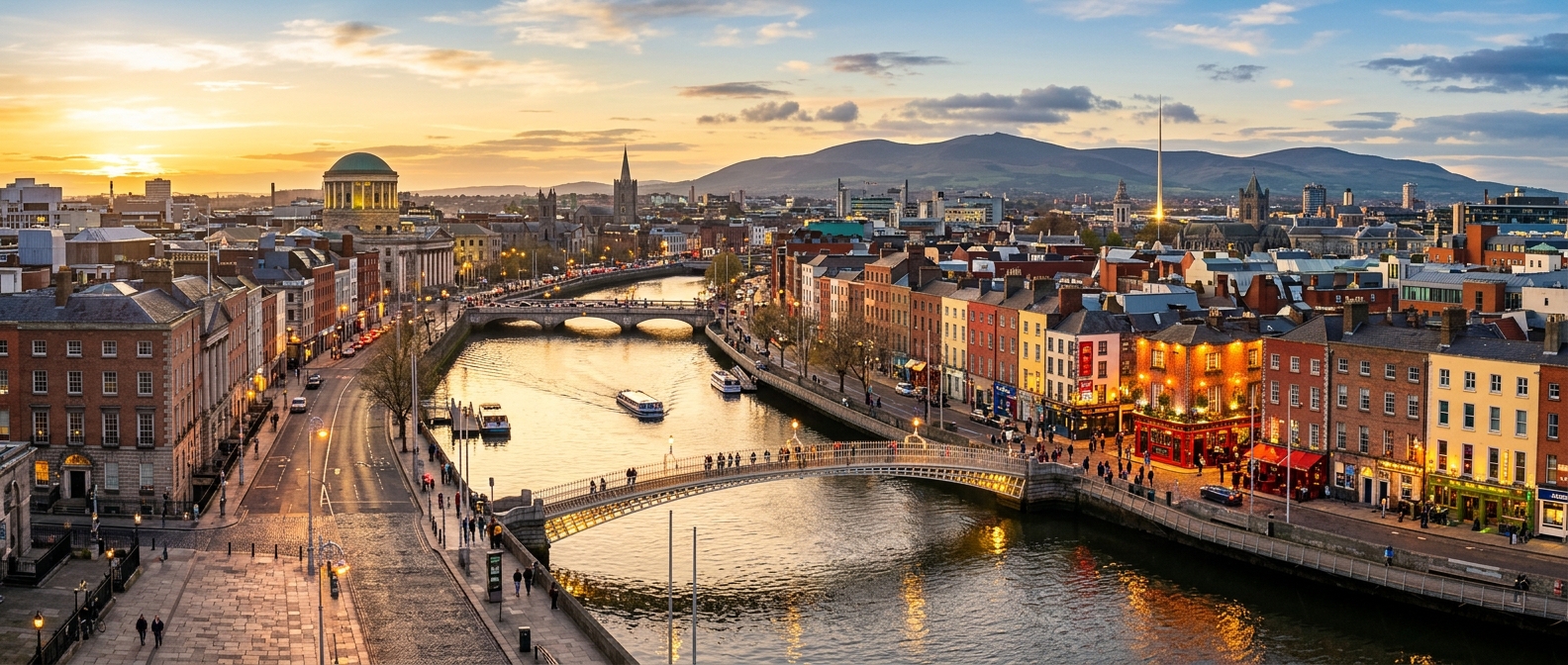
Life in Dublin
Dublin is a compact, walkable European capital city known for its rich literary heritage, vibrant cultural scene, and welcoming atmosphere. As a UNESCO City of Literature and home to the European headquarters of major tech companies like Google, Meta, and Microsoft, Dublin offers students a unique blend of cultural richness and career opportunity.
Tech Hub of Europe
Dublin hosts the European headquarters of Google, Meta, Microsoft, LinkedIn, and many other global tech companies, earning it the nickname 'Silicon Docks' and providing excellent internship and career opportunities.
Cultural Capital
From the Abbey Theatre to the National Gallery, Dublin offers a wealth of museums, galleries, theatres, and live music venues. The city's literary heritage includes connections to Joyce, Yeats, Wilde, and Beckett.
Safe and Welcoming
Dublin is consistently rated as one of the friendliest and safest capital cities in Europe, with a strong tradition of welcoming international students and a compact city centre that is easy to navigate.
Gateway to Europe and Nature
Dublin Airport connects to major European cities, while the Wicklow Mountains, coastal cliffs, and historic sites like Glendalough are within an hour's drive of the campus.
Career Outcomes and Notable Alumni
Career Outcomes and Notable Alumni
Top Employers of Trinity Graduates
Practical Information for International Students
Practical Information for International Students
For International Students
Trinity's International Student Support team assists with visa applications, immigration registration, and residency permits. Non-EU students typically require a study visa and must register with the Garda National Immigration Bureau.
Undergraduate graduates can stay in Ireland to work for one year under the Third Level Graduate Scheme. Eligible postgraduate graduates can remain for up to two years, providing valuable career-building time.
Trinity estimates approximately EUR 15,000 per academic year for basic living expenses excluding tuition. Monthly costs typically range from EUR 1,100 to EUR 1,800 depending on lifestyle and accommodation choice.
Key Contacts
- +90 5435286292
- +44 7868736984
- corporate@uni4edu.com
- info@uni4edu.com
Trinity College Dublin: Worldwide University Rankings
Trinity College Dublin: Worldwide University Rankings
Trinity College Dublin is consistently ranked as Ireland's leading university and among the top institutions in Europe. The university has demonstrated strong performance across all major global ranking systems, with particular strengths in employer reputation, research quality, and internationalization.
| Subject | Ranking Body | Rank |
|---|---|---|
| English Language & Literature | QS Subject Rankings | #21 |
| Classics & Ancient History | QS Subject Rankings | Top 50 |
| Medicine | QS Subject Rankings | Top 100 |
| Law | QS Subject Rankings | Top 100 |


Features
Trinity College Dublin, Ireland’s oldest university, offers world-class education in a historic campus located in central Dublin. Known for academic excellence, global rankings, and a diverse international student body, Trinity combines tradition with cutting-edge research. It provides outstanding graduate employability, vibrant student life, and access to leading global networks.
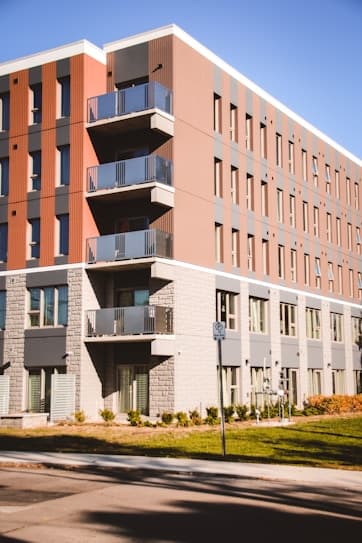
Accommodation
Off-Campus Accommodations Students wishing to live off-campus need to research availability on their own, and should arrive well before the start of term to do so.

Work While Studying
See guidelines on working while studying here.

Co-op/Internship Participation
Even if you do NOT meet our minimum English requirement (IELTS or TOEFL), you still can get conditionally accepted in the program of your choice with the condition of completing our English program prior to starting your chosen program.
Featured Programmes



Average Time To Receive Acceptance Letter
September - June
Location
College Green, Dublin 2, Ireland

Map not found.

Uni4Edu AI Assistant