Ludwig Maximilian University of Munich (LMU)
Garching bei München, Germany
Ludwig Maximilian University of Munich (LMU)
Munich, Germany
Founded
1472
Institution Type
Public Research University
Total Students
52,600+
Nobel Laureates
50+
Discover Ludwig Maximilian University of Munich (LMU)
Discover Ludwig Maximilian University of Munich (LMU)
Ludwig Maximilian University of Munich (LMU) is a public research university located in the heart of Munich, Bavaria, Germany. Originally established as the University of Ingolstadt in 1472 by Duke Ludwig IX of Bavaria-Landshut, it is Germany's sixth-oldest university in continuous operation and one of Europe's most distinguished academic institutions.
LMU is organized into 18 faculties with around 800 professors and 5,800 academic staff, covering the full spectrum of knowledge from humanities and cultural studies to law, economics, social sciences, medicine, and the natural sciences. With over 52,600 matriculated students including approximately 11,600 international students, it is the second-largest university in Germany by enrollment.
The university holds the prestigious title of University of Excellence under the German Universities Excellence Initiative and is a founding member of the League of European Research Universities (LERU). LMU is associated with over 50 Nobel laureates, including Max Planck, Werner Heisenberg, and Ferenc Krausz, reflecting its extraordinary legacy in research and academic achievement.
Key Milestones
- 1472: Founded as the University of Ingolstadt by Duke Ludwig IX of Bavaria-Landshut with faculties of philosophy, medicine, jurisprudence, and theology.
- 1826: Relocated to Munich by King Ludwig I of Bavaria, establishing its permanent home in the Bavarian capital.
- 1943: The White Rose student resistance group carried out its courageous campaign against the Nazi regime at LMU, becoming a lasting symbol of academic freedom.
- 2006: Awarded funding in all three areas of the German Excellence Initiative, earning the prestigious University of Excellence designation.
Academic Structure and Faculties at LMU Munich
Academic Structure and Faculties at LMU Munich
LMU Munich is organized into 18 faculties offering over 300 degree programs at the undergraduate, graduate, and doctoral levels. An increasing number of master's programs are taught in English, spanning fields such as psychology, physics, business, and data science. The university's broad academic portfolio and strong interdisciplinary approach foster innovation and research excellence.
Faculty of Medicine
One of Germany's largest and most prestigious medical faculties, operating the LMU University Hospital. It is renowned for clinical research, particularly in oncology, neuroscience, and infectious diseases.
- Medicine (Staatsexamen)
- MSc Epidemiology
- MSc Neuroscience
Faculty of Physics
A globally recognized faculty with deep roots in quantum mechanics and modern physics. It is home to Nobel Prize-winning research and maintains strong ties with the Max Planck Institutes.
- BSc Physics
- MSc Physics (English-taught)
- MSc Astrophysics
Faculty of Law
One of Germany's leading law faculties, offering comprehensive legal education with strengths in European law, international law, and comparative legal studies.
- Law (Staatsexamen)
- LL.M. European and International Business Law
- LL.M. Intellectual Property and Competition Law
Faculty of Business Administration
Offers rigorous programs in business and economics with a strong research orientation. The faculty emphasizes quantitative methods, innovation management, and global business perspectives.
- BSc Business Administration
- MSc Business Administration
- MSc Economics
Faculty of Biology
A leading faculty in the life sciences, conducting cutting-edge research in molecular biology, genetics, ecology, and biochemistry. It operates state-of-the-art laboratories at the HighTechCampus in Martinsried.
- BSc Biology
- MSc Biology
- MSc Biochemistry (English-taught)
Faculty of Social Sciences
Covers a wide range of disciplines including political science, sociology, and communication studies. The faculty is known for its strong empirical research tradition and international collaborations.
- BA Political Science
- MA Sociology
- MA Communication Studies
Admission Requirements for LMU Munich
Admission Requirements for LMU Munich
Undergraduate Admission
- Academic QualificationGerman Abitur or recognized equivalent; international students may need to complete a Studienkolleg preparatory year
- Language ProficiencyMost programs require German proficiency (DSH-2, TestDaF 4x4, or equivalent); select programs accept English (IELTS 6.5+ / TOEFL 90+)
- Application PortalApply via LMU's online portal or through uni-assist for international qualifications
- Numerus ClaususMany programs have restricted admission (NC) based on GPA; competitive programs like Medicine are highly selective
- Additional RequirementsSome programs require aptitude tests, portfolios, or subject-specific entrance examinations
Graduate Admission
- Undergraduate DegreeCompleted bachelor's degree in a relevant field from a recognized institution
- GPA RequirementVaries by program; competitive programs require strong academic records
- Language ProficiencyGerman or English depending on program; English-taught programs require IELTS 6.5+ or TOEFL 90+
- Supporting DocumentsTranscripts, CV, statement of purpose, letters of recommendation (program-specific)
- Standardized TestsSome programs may require GRE scores; check individual program requirements
Application deadline for programs beginning in the summer semester (April start)
Application deadline for most programs beginning in the winter semester (October start)
Programs with Numerus Clausus may have earlier deadlines; check the specific program page
PhD applications are typically accepted on a rolling basis depending on supervisor and faculty availability
Tuition Fees and Scholarships at LMU Munich
Tuition Fees and Scholarships at LMU Munich
As a public university in Bavaria, LMU Munich does not charge tuition fees for most undergraduate and consecutive master's degree programs, regardless of nationality. Students are only required to pay a modest semester contribution covering student services and administrative costs. Certain specialized and executive-level programs may have separate fee structures.
| Cost Category | EU/German Students | International Students |
|---|---|---|
| Tuition (Standard Programs) | EUR 0 per semester | EUR 0 per semester |
| Semester Contribution | Approx. EUR 140 per semester | Approx. EUR 140 per semester |
| Health Insurance | Approx. EUR 120 per month | Approx. EUR 120 per month |
| Living Costs (Munich) | Approx. EUR 1,000-1,500 per month | Approx. EUR 1,000-1,500 per month |
| Total | Approx. EUR 12,000-18,000 per year (living costs included) | Approx. EUR 12,000-18,000 per year (living costs included) |
Deutschlandstipendium (Germany Scholarship)
A national merit-based scholarship program supporting students enrolled at LMU with a monthly stipend for one year. Candidates must demonstrate excellent academic performance and above-average civic engagement.
- Award Amount: EUR 300 per month
- Duration: 12 months (renewable)
- Eligibility: Open to all enrolled students including international students
DAAD Scholarships
The German Academic Exchange Service (DAAD) offers a wide variety of scholarships for international students at all academic levels, covering living costs, travel, and insurance. DAAD is the largest funding body in Germany for international academic exchange.
- Award Amount: Varies by program (EUR 861-1,200 per month for graduate students)
- Coverage: Living expenses, travel allowance, health insurance
- Application: Apply through the DAAD portal; deadlines vary by program and country of origin
Campus and Facilities at LMU Munich
Campus and Facilities at LMU Munich
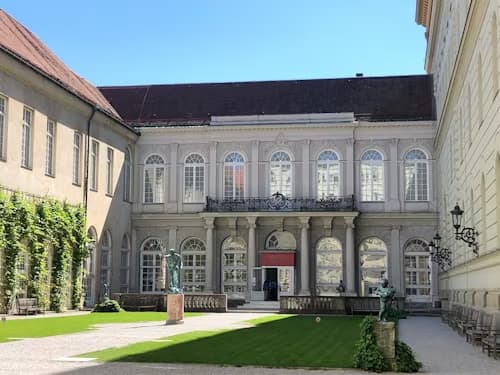
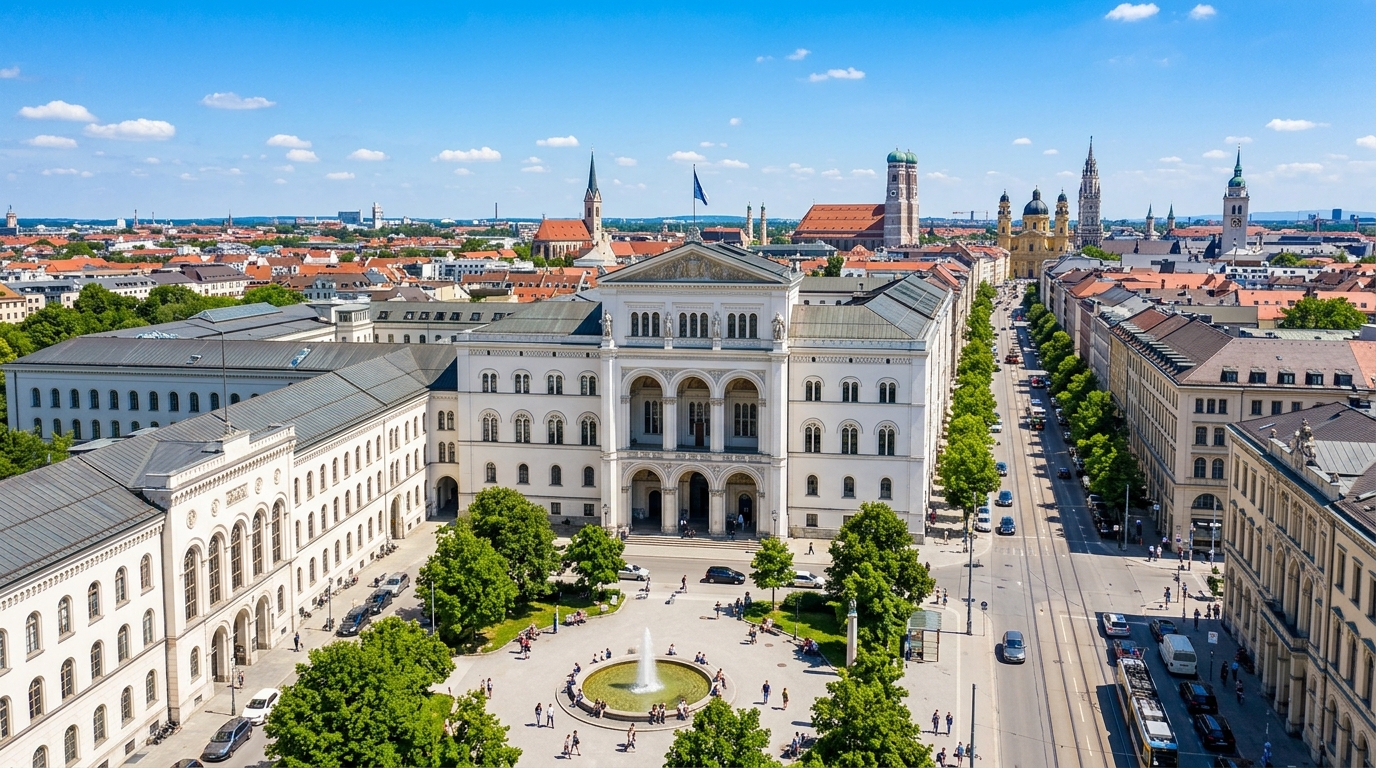
LMU Munich is not a single-campus university but rather a network of academic buildings, institutes, and research centers spread throughout the city of Munich. The main campus at Geschwister-Scholl-Platz in the Maxvorstadt district features the iconic neoclassical main building, while specialized facilities are located across the city, including the HighTechCampus in Martinsried for life sciences.
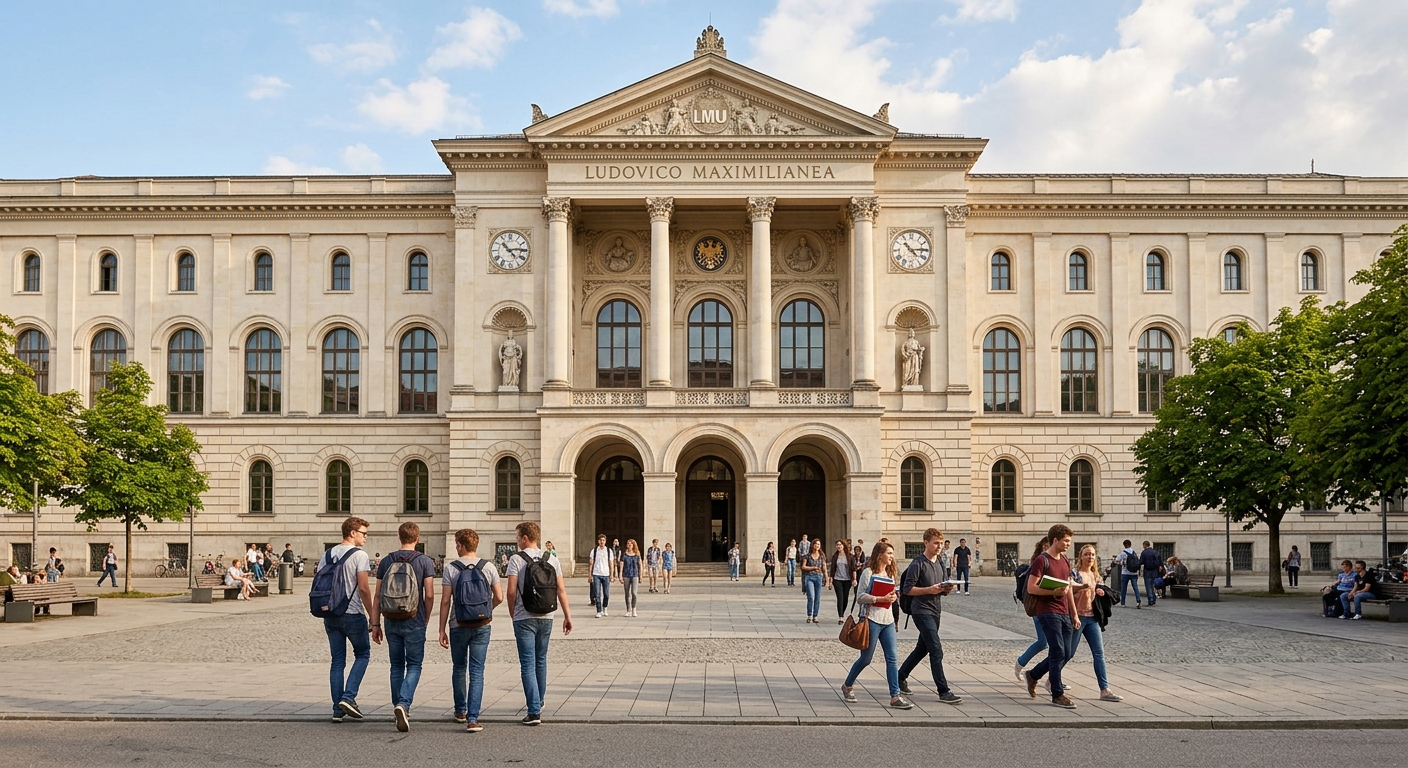
The historic heart of LMU, named in honor of the White Rose resistance movement, housing lecture halls, the university library, and administrative offices.
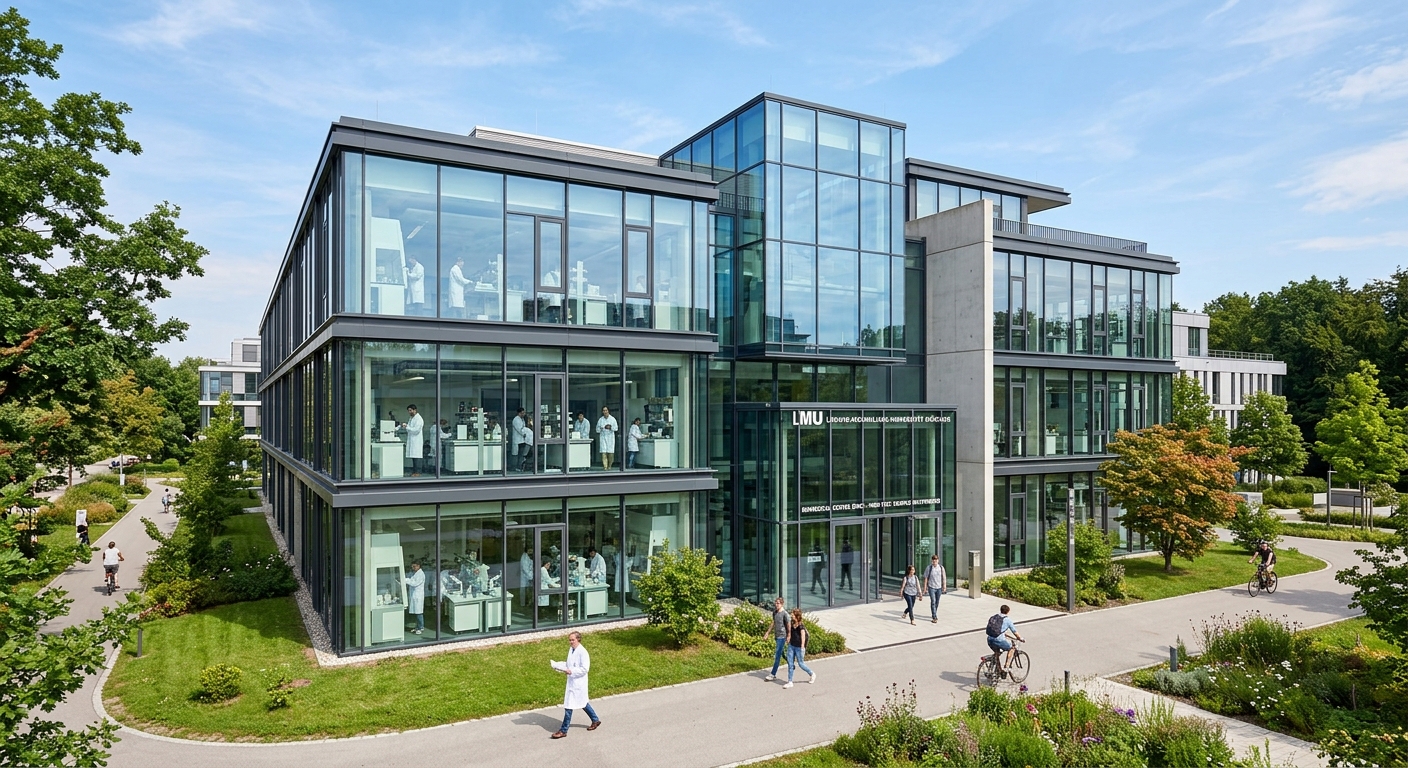
A state-of-the-art campus for life sciences and biomedical research, housing the Faculty of Biology and the Gene Center Munich.
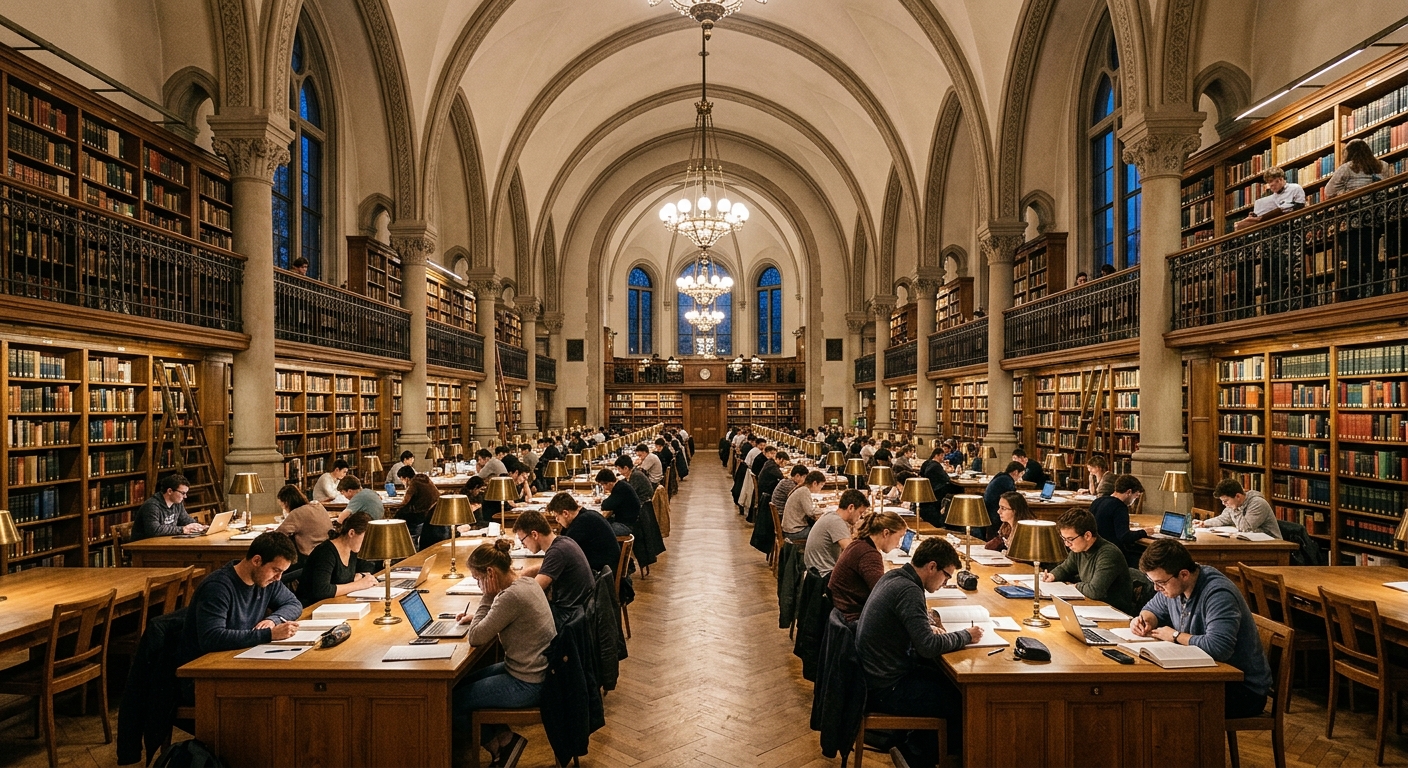
One of Germany's finest library systems, holding over 5 million volumes across the Central Repository and 13 branch libraries serving all faculties.
Housing and Dining
Student Housing
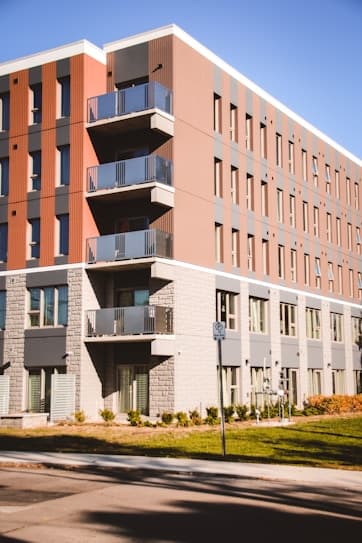
Student housing in Munich is managed by the Studierendenwerk Munchen Oberbayern (Munich Student Union). LMU does not directly provide accommodation, so students are encouraged to apply early due to high demand.
- Student dormitories managed by Studierendenwerk (EUR 200-400 per month)
- Shared apartments (WG) available throughout Munich (EUR 400-700 per month)
- Early application strongly recommended due to competitive housing market
Dining and Cafeterias
The Munich Student Union operates multiple cafeterias (Mensen) and cafes across LMU's locations, offering affordable meals with vegetarian and international options throughout the day.
- 8 large Mensen (cafeterias) at major university buildings
- Over 30 StuBistros, StuCafes, and espresso bars citywide
- Affordable daily menus with vegetarian options available online
Student Life at LMU Munich
Student Life at LMU Munich
LMU Munich offers a vibrant and diverse student experience shaped by its central Munich location and multicultural community. With over 52,600 students from more than 130 countries, the university fosters a dynamic environment for academic, social, and cultural engagement. Munich's rich cultural scene, proximity to the Alps, and thriving tech industry further enrich student life.
Munich: A Premier City for Students
Munich: A Premier City for Students
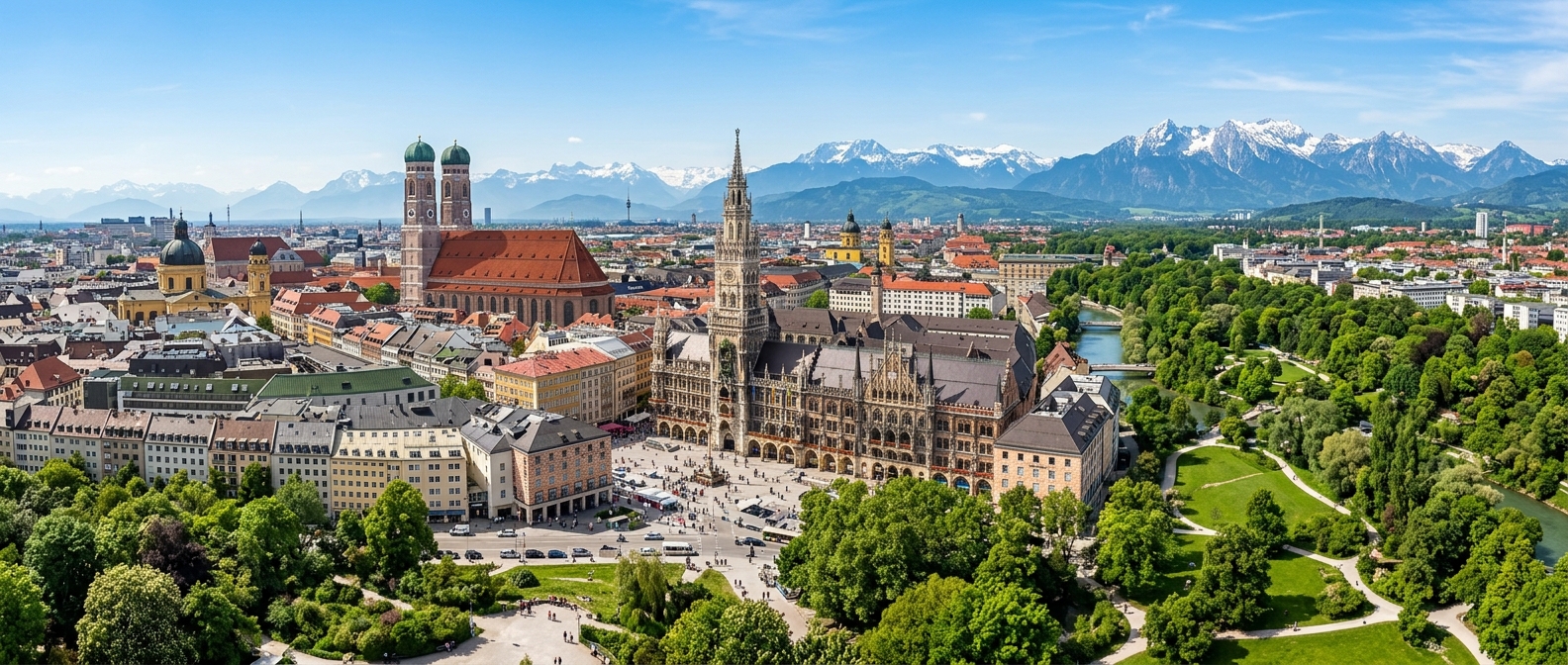
Living and Studying in Munich
Munich is Germany's third-largest city and one of Europe's most dynamic metropolitan areas. Known for its high quality of life, cultural richness, and economic strength, Munich is home to major global corporations, world-renowned museums, and a thriving startup ecosystem. Its proximity to the Bavarian Alps offers unparalleled recreational opportunities year-round.
Economic Powerhouse
Munich is a major hub for technology, automotive, finance, and media industries, hosting headquarters of BMW, Siemens, Allianz, and numerous tech startups.
Cultural Capital
The city boasts over 80 museums and galleries, including the Alte Pinakothek and Deutsches Museum, plus the renowned Bavarian State Opera and vibrant theater scene.
Outdoor Paradise
With the English Garden, Isar River, and the Alps just an hour away, Munich offers exceptional opportunities for hiking, skiing, cycling, and outdoor recreation.
Excellent Transportation
Munich's efficient public transport network of U-Bahn, S-Bahn, trams, and buses connects all university locations and makes the entire city easily accessible for students.
Career Outcomes and Alumni Network
Career Outcomes and Alumni Network
Top Employers Hiring LMU Graduates
Practical Information for International Students
Practical Information for International Students
For International Students
LMU's International Office provides comprehensive support for international students including visa guidance, orientation programs, buddy systems, and integration assistance throughout your studies.
The university offers German language courses at various levels through the Language Center, helping international students build language skills essential for daily life in Munich and academic success.
MISU offers short-term academic programs combining intensive coursework with cultural activities, providing international students a concise introduction to LMU's research environment and Munich's culture.
Key Contacts
- +90 5435286292
- +44 7868736984
- corporate@uni4edu.com
- info@uni4edu.com
LMU Munich in Worldwide University Rankings
LMU Munich in Worldwide University Rankings
LMU Munich consistently ranks among the top universities globally and is regularly placed as the number one or two university in Germany. Its strengths in research output, academic reputation, and international collaboration are reflected across all major ranking systems.
| Subject | Ranking Body | Rank |
|---|---|---|
| Physics | ARWU | #1 in Germany |
| Life Sciences | QS World Rankings | #1 in Germany |
| Law and Legal Studies | QS World Rankings | Top 50 Globally |
| Communication and Media Studies | QS World Rankings | Top 50 Globally |


Features
Academic Excellence\nDiversity\nEnvironmental Responsibility\nEqual Opportunities\nInnovation and Collaboration
Accommodation
Accommodation service is available

Work While Studying
Students can work while studying\n

Co-op/Internship Participation
There is an internship service\n
Featured Programmes




Average Time To Receive Acceptance Letter
May - July
Location
Geschwister-Scholl-Platz 1 D-80539 München

Map not found.

Uni4Edu AI Assistant