Karlsruhe Institute of Technology (KIT)
Karlsruhe, Germany
Karlsruhe Institute of Technology (KIT)
Karlsruhe, Germany
Founded
1825
Institution Type
Public Research University
Total Students
22,700+
QS World Ranking
#98 (2026)
Discover KIT: Germany's Leading Technical Research University
Discover KIT: Germany's Leading Technical Research University
The Karlsruhe Institute of Technology (KIT) is both a public research university and a national research center within the Helmholtz Association, making it a uniquely integrated institution in the German academic landscape. Founded in 1825 as the Polytechnic School by Grand Duke Ludwig I of Baden, KIT's roots make it one of the oldest technical universities in Germany, modeled after the prestigious Ecole Polytechnique in Paris.
In 2009, the University of Karlsruhe merged with the Karlsruhe Research Center (originally established in 1956 as a nuclear research facility) to form today's KIT. This strategic merger combined academic education with large-scale national research, creating a structure unique within Germany that integrates research, teaching, and innovation under one institutional roof.
KIT is a designated University of Excellence and a proud member of TU9, the alliance of nine leading technical universities in Germany. With approximately 22,761 students, over 10,000 employees, and a budget exceeding EUR 1.2 billion, KIT is renowned for its strengths in engineering, natural sciences, computer science, and energy research, producing six Nobel Prize laureates and pioneering achievements from the automobile to the first German e-mail.
Key Milestones
- 1825: Founded as the Polytechnic School (Polytechnische Schule) by Grand Duke Ludwig I of Baden, becoming a model for technical universities across Europe.
- 1972: Established the first Faculty of Computer Science in Germany, pioneering informatics education and research nationwide.
- 1984: Received the first-ever e-mail sent to Germany on August 2, marking a milestone in the country's digital communication history.
- 2009: The University of Karlsruhe merged with the Karlsruhe Research Center to form KIT, creating a unique combination of university and Helmholtz research institution.
Academic Structure and Departments at KIT
Academic Structure and Departments at KIT
KIT is organized into 11 departments covering a broad spectrum of disciplines from engineering and natural sciences to economics and humanities. With over 100 degree programs, the university offers comprehensive academic pathways at the bachelor's, master's, and doctoral levels, integrating cutting-edge research directly into its teaching.
Department of Mechanical Engineering
One of KIT's flagship departments, offering programs that build on a legacy dating back to the mid-19th century when science-based mechanical engineering was pioneered here under Ferdinand Redtenbacher.
- B.Sc. Mechanical Engineering
- M.Sc. Mechanical Engineering (English-taught)
- M.Sc. Energy Engineering
Department of Informatics
Germany's first computer science faculty, founded in 1972, now one of the most diverse and renowned informatics departments in the country, covering AI, cybersecurity, and software engineering.
- B.Sc. Computer Science
- M.Sc. Computer Science (English-taught)
- M.Sc. Information Systems Engineering and Management
Department of Electrical Engineering and Information Technology
Building on the legacy of Heinrich Hertz's groundbreaking work on electromagnetic waves, this department covers electronics, power systems, communications, and embedded systems.
- B.Sc. Electrical Engineering and Information Technology
- M.Sc. Electrical Engineering and Information Technology
- M.Sc. Optics and Photonics
Department of Physics
A top-ranked physics department globally, home to the KATRIN neutrino experiment and strong research programs in particle physics, condensed matter, and atmospheric science.
- B.Sc. Physics
- M.Sc. Physics
- M.Sc. Meteorology and Climate Physics
Department of Economics and Management
The largest department by enrollment at KIT, offering interdisciplinary programs that combine economic theory with engineering and technology perspectives for industry-ready graduates.
- B.Sc. Industrial Engineering and Management
- M.Sc. Industrial Engineering and Management
- B.Sc. Technical Economics
Department of Civil Engineering, Geo and Environmental Sciences
Covering structural engineering, environmental science, geophysics, and urban planning, this department addresses key global challenges in infrastructure and sustainability.
- B.Sc. Civil Engineering
- M.Sc. Water Science and Engineering
- B.Sc. Geodesy and Geoinformatics
Admission Requirements for International Students
Admission Requirements for International Students
Undergraduate Admission
- Academic QualificationHigh school diploma equivalent to the German Abitur or recognized university entrance qualification
- German LanguageDSH-2 or TestDaF 4x4 (most bachelor's programs are taught in German)
- English LanguageIELTS 6.5 or TOEFL 90 (for English-taught programs such as the Carl Benz School)
- Application FeeNo application fee required
- Documents RequiredCertified transcripts, school leaving certificate, CV, and language proficiency proof
Graduate Admission
- Academic QualificationRelevant bachelor's degree from a recognized university with competitive grades
- Language ProficiencyGerman (DSH-2/TestDaF) or English (IELTS 6.5/TOEFL 90) depending on program language
- Application FeeNo application fee required
- Additional DocumentsLetter of motivation, CV, certified transcripts, and letters of recommendation (program-specific)
- GRE/GMATGenerally not required; check specific program requirements
Application deadline for most bachelor's and master's programs starting in the winter semester (October).
Application deadline for programs with summer semester intake (April). Not all programs offer summer admission.
Doctoral positions are available year-round and depend on individual supervisor and project availability.
DAAD and other external scholarship applications typically have early deadlines. Check each scholarship provider for exact dates.
Tuition Fees and Scholarships at KIT
Tuition Fees and Scholarships at KIT
KIT offers an affordable education compared to many international universities. EU/EEA students pay no tuition fees, while non-EU international students are charged EUR 1,500 per semester under Baden-Wuerttemberg state law. All students pay a modest semester contribution covering administrative services and public transport.
| Fee Category | EU/EEA Students (per semester) | Non-EU Students (per semester) |
|---|---|---|
| Tuition Fees | EUR 0 | EUR 1,500 |
| Studierendenwerk Contribution | EUR 109.50 | EUR 109.50 |
| Student Union Fee | EUR 12.00 | EUR 12.00 |
| Semester Transport Ticket | Included | Included |
| Total | Approx. EUR 121.50 per semester | Approx. EUR 1,621.50 per semester |
DAAD Scholarships
The German Academic Exchange Service (DAAD) offers various scholarships for international students pursuing master's and doctoral studies in Germany, including at KIT.
- Coverage: Monthly stipend, health insurance, and travel allowance
- Eligibility: International students with excellent academic records
- Application: Apply through the DAAD portal; early deadlines apply
Baden-Wuerttemberg Scholarship (Baden-Wuerttemberg-STIPENDIUM)
Funded by the Baden-Wuerttemberg Stiftung, this scholarship supports international exchange students at KIT with monthly financial assistance.
- Award Amount: Up to EUR 600 per month
- Duration: Up to 11 months
- Eligibility: Exchange students from KIT partner universities
Campus and Facilities at KIT
Campus and Facilities at KIT
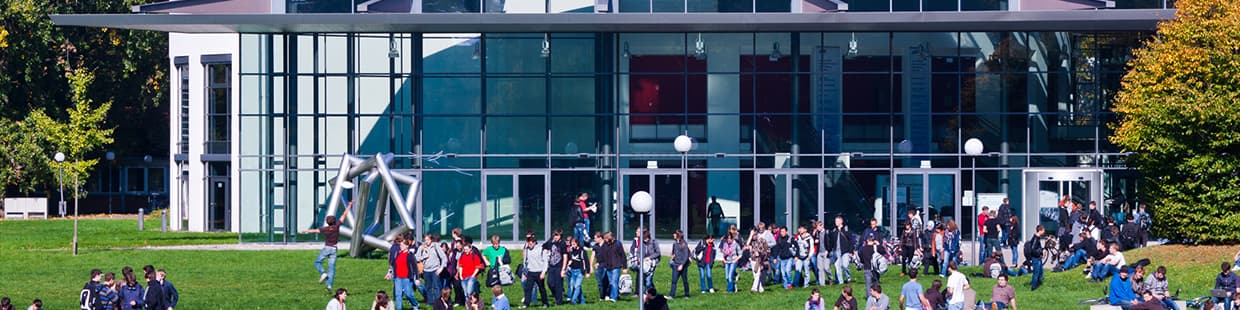
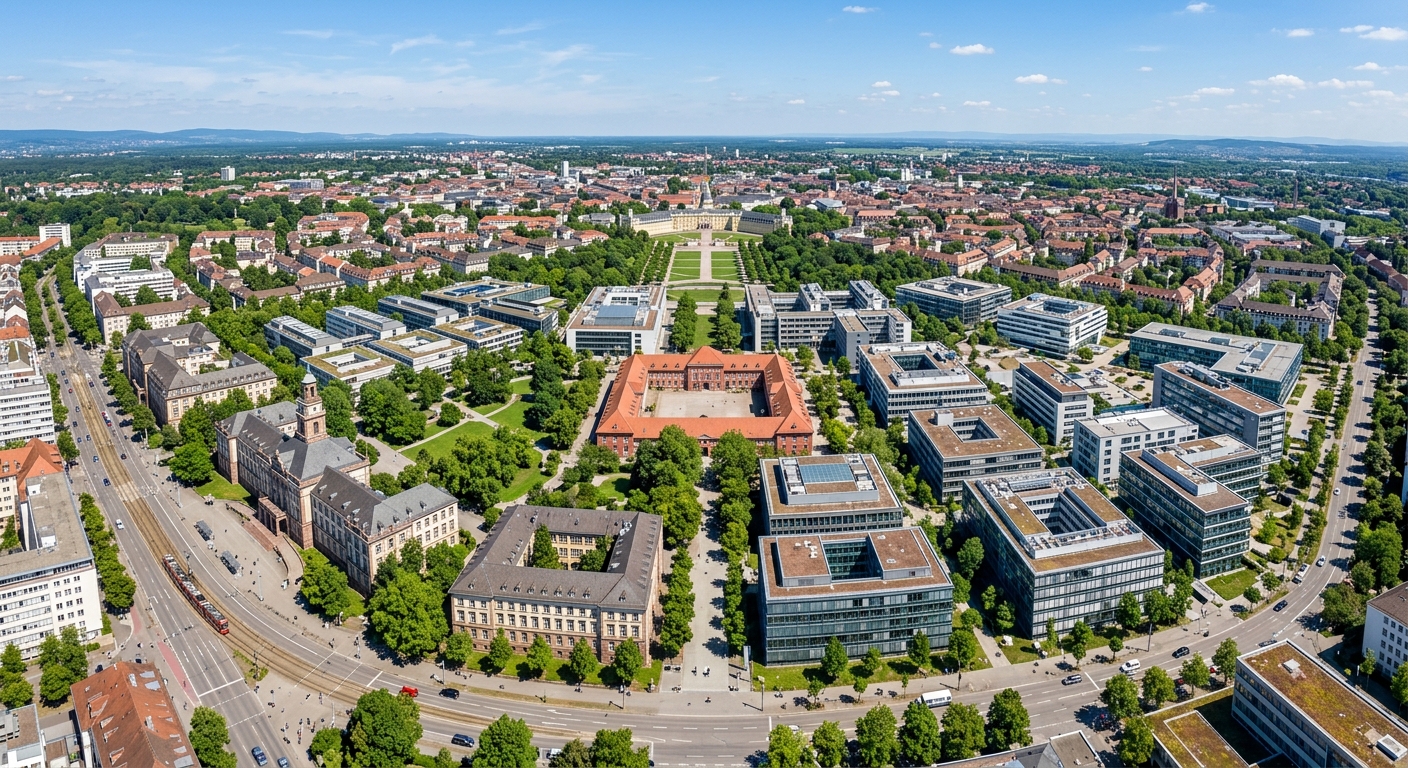
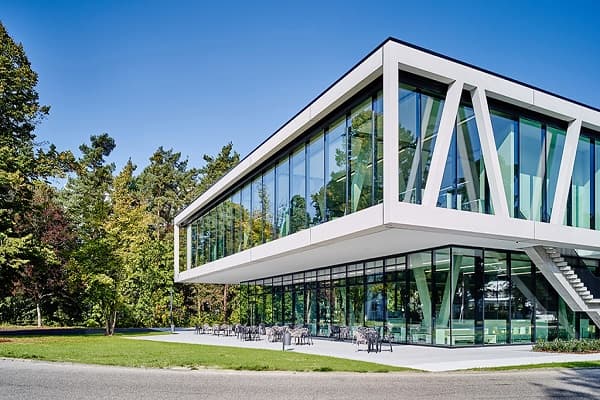
KIT operates across multiple campuses in Karlsruhe, combining historic architecture with state-of-the-art research infrastructure. Campus South is located in the heart of the city center and serves as the main teaching campus, while Campus North hosts large-scale national research facilities including nuclear engineering laboratories and the KATRIN neutrino experiment.
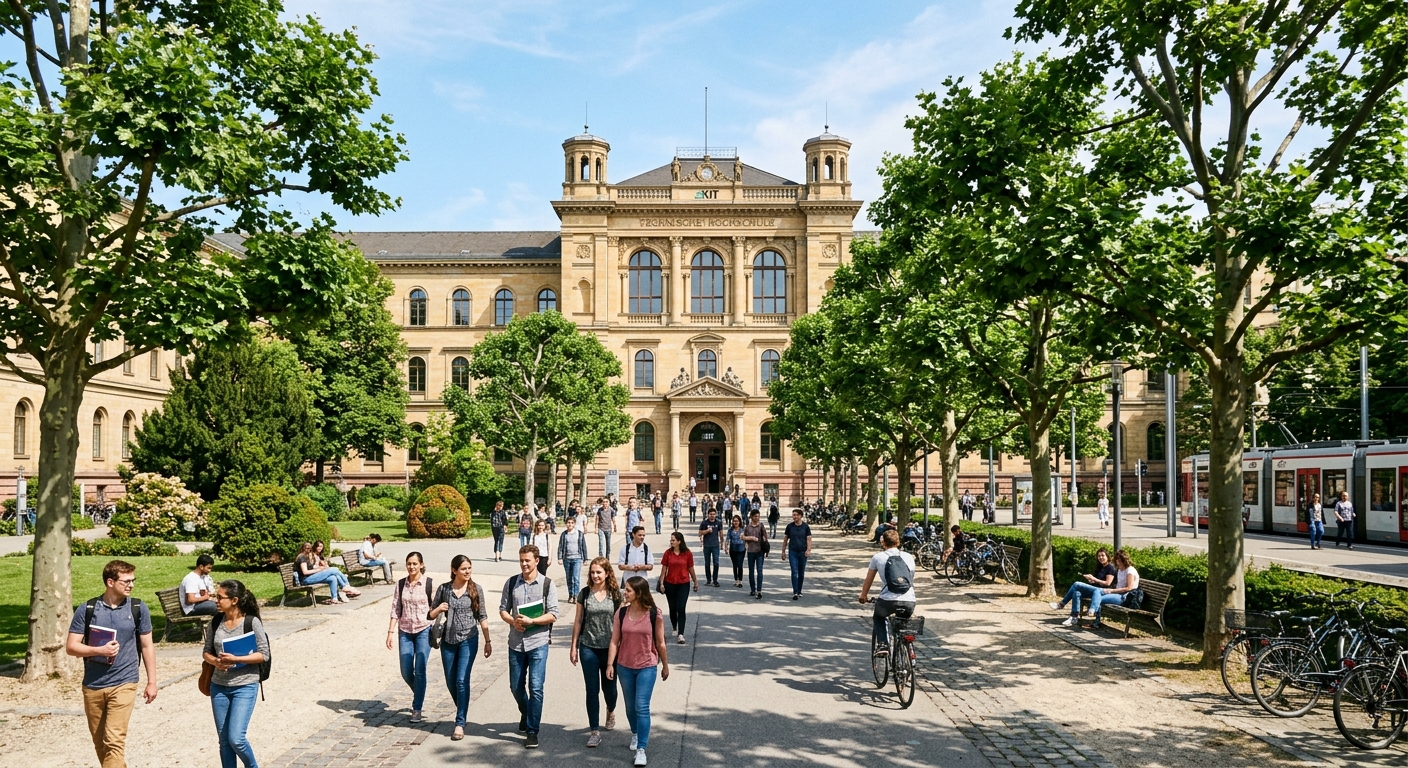
The historic city-center campus features the original 1836 building designed by Heinrich Hübsch, modern lecture halls, and green courtyards.
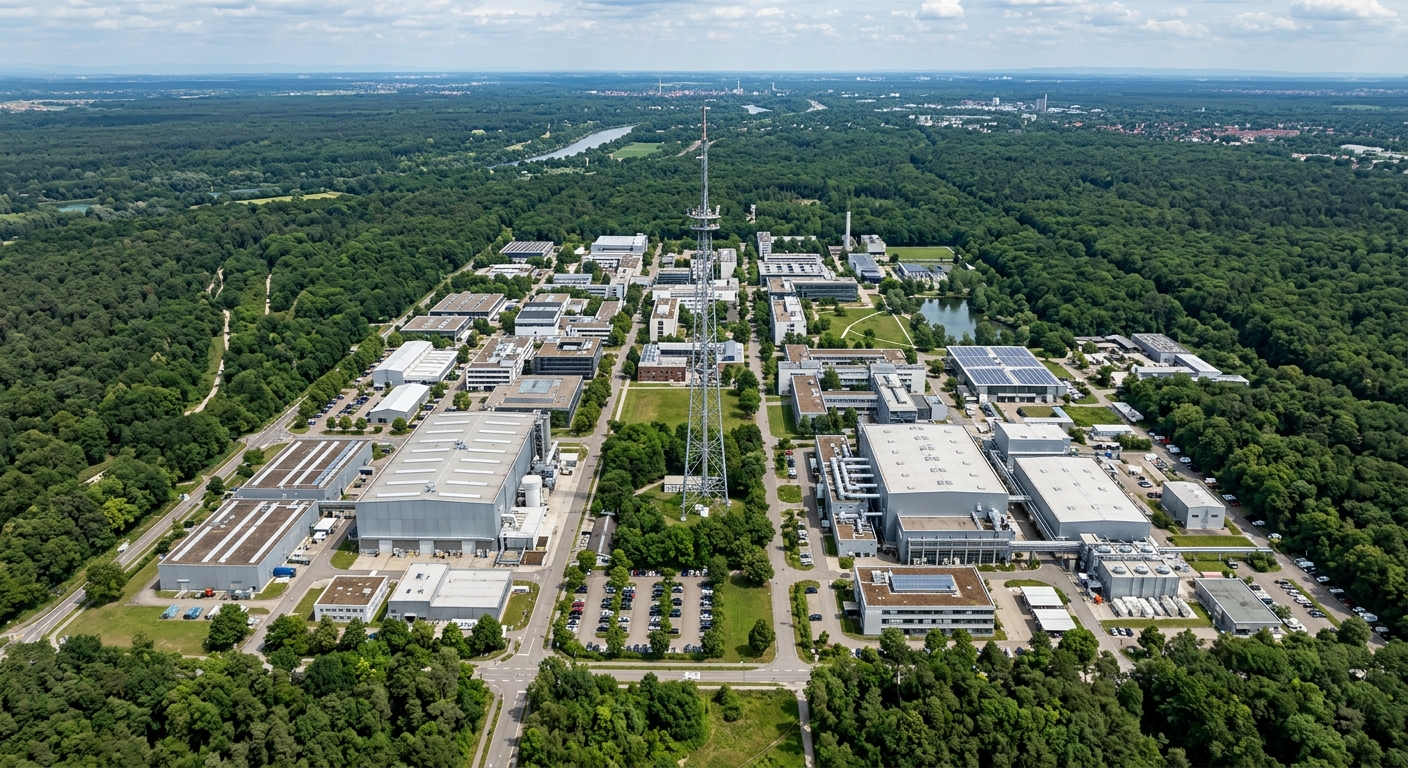
Home to Helmholtz research facilities, the KATRIN experiment, nanotechnology labs, and a 200-meter meteorological measurement mast.
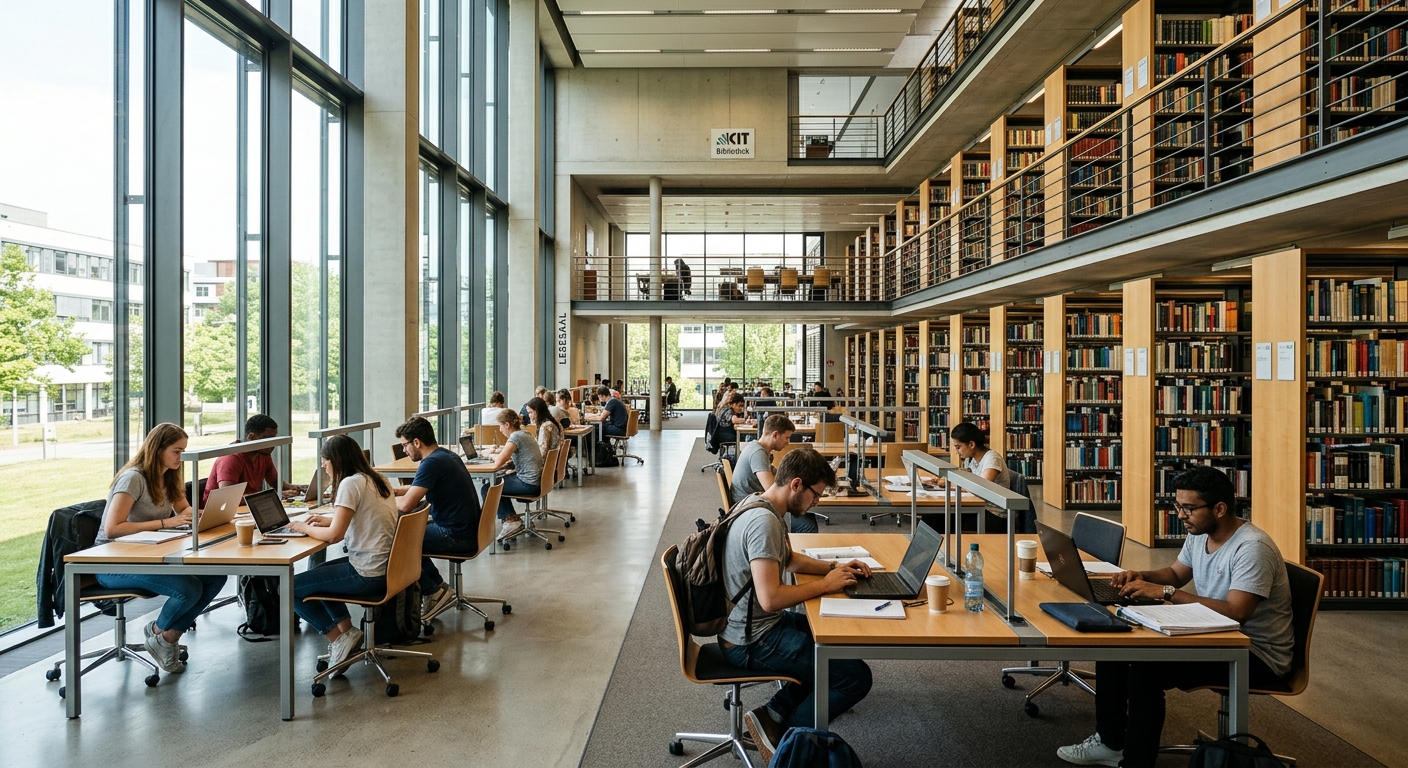
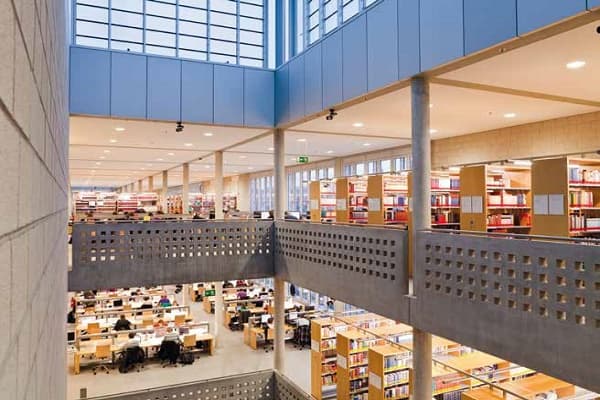
The university library provides extensive academic resources, digital databases, and modern study spaces for individual and collaborative work.
Housing and Dining
Student Housing
The Studierendenwerk Karlsruhe manages student residence halls across the city, offering affordable furnished rooms. International students are encouraged to apply for housing early as demand is high.
- Furnished single rooms with shared kitchen and bath
- Monthly rent from approximately EUR 250 to EUR 400
- Private apartments and shared flats (WGs) also available
Dining Options
KIT operates multiple student cafeterias (Mensa) across its campuses, offering subsidized meals at affordable prices. Cafes and food outlets are also available throughout the campus.
- Multiple Mensa locations on Campus South and Campus North
- Meals from approximately EUR 2.50 to EUR 5.00
- Vegetarian, vegan, and international cuisine options
Student Life at KIT
Student Life at KIT
Student life at KIT is vibrant and diverse, with over 100 student clubs and organizations, a strong entrepreneurial culture, and numerous opportunities for personal and professional development. The university fosters a welcoming international community with students from over 100 countries.
Karlsruhe: A City of Innovation and Quality of Life
Karlsruhe: A City of Innovation and Quality of Life
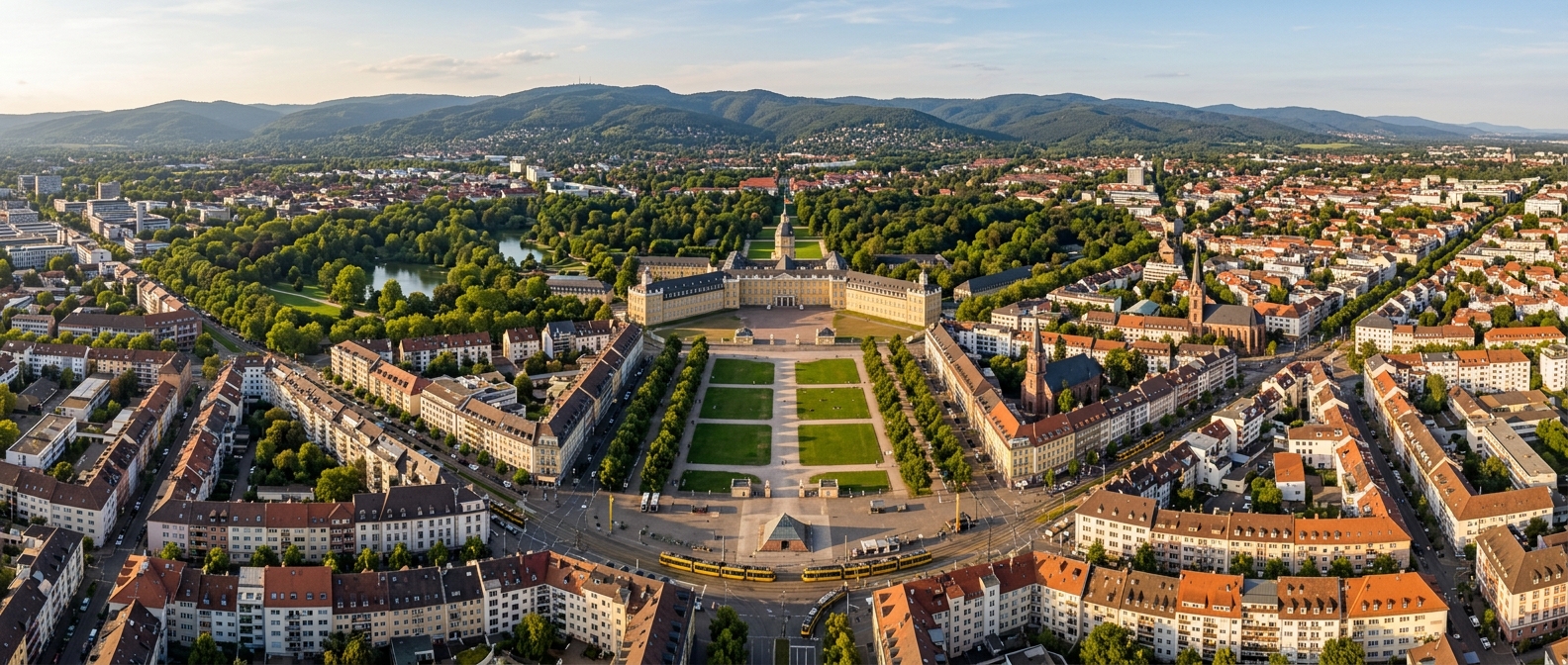
Living in Karlsruhe
Karlsruhe is the second-largest city in Baden-Wuerttemberg, known for its sunny climate, bike-friendly streets, and high quality of life. Located in the Rhine Valley and sheltered by nearby mountains, it is one of the warmest and sunniest cities in Germany. The city is a major technology and innovation hub, home to the Federal Constitutional Court and a thriving IT industry.
Strategic Location
Situated near the French and Swiss borders, Karlsruhe offers easy access to Strasbourg, the Black Forest, and the Alps, making it ideal for weekend travel and cultural exploration.
Technology Hub
Karlsruhe is a leading center for IT and innovation in Germany, with numerous tech companies, research institutes, and startups providing excellent career opportunities for graduates.
Affordable Living
With an average monthly living cost of approximately EUR 650, Karlsruhe is more affordable than major German cities like Munich or Frankfurt, making it attractive for students on a budget.
Culture and Recreation
The city features the ZKM Center for Art and Media, the Karlsruhe Palace and gardens, vibrant festivals, and extensive cycling paths, offering a balanced lifestyle for students.
Career Outcomes and Alumni Network
Career Outcomes and Alumni Network
Top Employers of KIT Graduates
Practical Information for International Students
Practical Information for International Students
For International Students
KIT's International Students Office assists with visa and immigration matters, cultural integration, housing guidance, and orientation programs to help you settle into life in Karlsruhe.
The university offers German and other language courses to help international students improve language skills and adapt to the academic and social environment. One course per semester is free for KIT students.
KIT's buddy programs connect incoming international students with current students for guidance, while orientation weeks provide essential information about campus life, registration, and local resources.
Key Contacts
- +90 5435286292
- +44 7868736984
- [email protected]
- [email protected]
Worldwide University Rankings
Worldwide University Rankings
KIT consistently ranks among the top universities globally, particularly excelling in engineering, natural sciences, and computer science. As a designated University of Excellence in Germany, KIT is recognized internationally for its research output, employer reputation, and academic quality.
| Subject | Ranking Body | Rank |
|---|---|---|
| Chemical Engineering | QS Subject Rankings | #25 |
| Mechanical Engineering | QS Subject Rankings | #45 |
| Physics and Astronomy | QS Subject Rankings | #57 |
| Computer Science | THE Subject Rankings | #78 |


Features
Karlsruhe Institute of Technology (KIT) is a leading German research university, renowned for its excellence in science, engineering, and innovation. Located in Karlsruhe, Baden-Württemberg, KIT offers a wide range of bachelor's, master's, and doctoral programs across eleven faculties, including engineering, natural sciences, economics, and humanities. With over 22,000 students, including more than 5,000 international students, KIT emphasizes research-based learning and maintains strong collaborations with industry partners. As a member of the Helmholtz Association and the German Universities Excellence Initiative, KIT is committed to addressing global challenges in energy, mobility, and information through interdisciplinary research. Its entrepreneurial ecosystem supports numerous startups annually, fostering innovation and technology transfer. KIT's dedication to academic excellence and societal impact positions it as a pivotal institution in shaping sustainable futures.
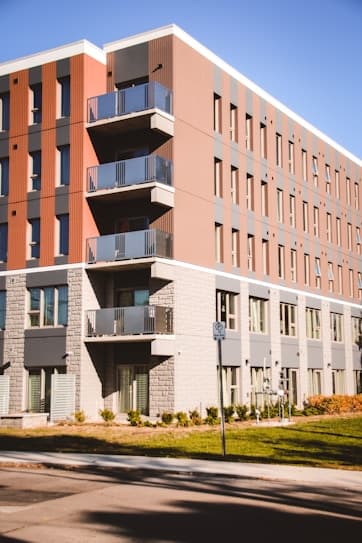
Accommodation
On-Campus Housing, Student Residences, Shared Flats, Temporary Accommodation

Work While Studying
Yes

Co-op/Internship Participation
Yes
Featured Programmes


Location
Kaiserstraße 12, 76131 Karlsruhe, Germany

Uni4Edu AI Assistant