University of Hamburg
Hamburg, Germany
University of Hamburg (Universität Hamburg)
Hamburg, Germany
Founded
1919
Institution Type
Public Research University
Total Students
44,000+
Nobel Laureates
7
Discover the University of Hamburg: A University of Excellence
Discover the University of Hamburg: A University of Excellence
The University of Hamburg (Universität Hamburg, UHH) is a leading public research university and the largest institution for research and education in northern Germany. Founded on 28 March 1919, it was the first university in Germany to be founded on democratic principles, established by the newly elected Hamburg Parliament during the Weimar Republic.
As a designated University of Excellence since 2019, UHH offers approximately 180 degree programs across eight faculties to more than 44,000 students, including over 5,000 international students from more than 130 countries. The university's main campus is centrally located in the Rotherbaum district, with affiliated institutes and research centers spread throughout the city-state of Hamburg.
The university is home to four clusters of excellence funded by the German Research Foundation: CUI: Advanced Imaging of Matter, Climate Climatic Change and Society (CLICCS), Understanding Written Artefacts, and Quantum Universe. Its researchers collaborate closely with renowned institutions such as DESY, the German Climate Computing Center, and three Max Planck Institutes.
Key Milestones
- 1919: Founded on 28 March 1919 as the first democratically founded university in Germany, with initial faculties in Law, Political Science, Medicine, and Natural Sciences.
- 1969: Major structural reform dissolved traditional faculties in favor of interdisciplinary departments, increasing student and staff involvement in university governance.
- 2005: The Hamburg University of Economy and Politics was merged into the University of Hamburg, and 17 departments were restructured into six faculties.
- 2019: Awarded the prestigious status of University of Excellence under Germany's Excellence Strategy, with four distinct clusters of excellence recognized.
Academic Structure and Faculties
Academic Structure and Faculties
The University of Hamburg is organized into eight faculties encompassing 27 departments, offering approximately 180 degree programs at the bachelor's, master's, and doctoral levels. Several English-taught master's programs are available for international students, particularly in fields such as international business, environmental sciences, and public policy.
Faculty of Law
One of the university's founding faculties, the Faculty of Law offers comprehensive legal education covering civil, criminal, public, and international law, with strong ties to Hamburg's legal and commercial sectors.
- Law (Staatsexamen)
- European and International Law
- Commercial Law
Faculty of Business, Economics and Social Sciences
This faculty combines economics, social sciences, and political science, offering interdisciplinary programs that prepare students for careers in government, business, and research organizations.
- Economics (B.Sc./M.Sc.)
- Political Science
- Sociology
Faculty of Medicine
Located at the University Medical Center Hamburg-Eppendorf (UKE), the Faculty of Medicine provides cutting-edge medical education and is a leader in infection research, structural biology, and neurosciences.
- Medicine (Staatsexamen)
- Dentistry
- Molecular Life Sciences
Faculty of Humanities
The Faculty of Humanities covers a wide range of disciplines from history and philosophy to cultural studies and theology, with notable strengths in manuscript research and African studies.
- History
- Philosophy
- Media and Communication Studies
Faculty of Mathematics, Informatics and Natural Sciences
This large faculty spans mathematics, computer science, physics, chemistry, biology, and earth sciences, with world-renowned research in particle physics, climate science, and photon sciences through partnerships with DESY.
- Physics (B.Sc./M.Sc.)
- Computer Science
- Chemistry
Faculty of Psychology and Human Movement Science
This faculty integrates psychology, sports science, and kinesiology, examining cognitive processes, behavioral dynamics, and physical performance through both research and applied programs.
- Psychology (B.Sc./M.Sc.)
- Human Movement Science
- Sport, Exercise and Health Sciences
Admission Requirements for International Students
Admission Requirements for International Students
Undergraduate Admission
- Educational QualificationSecondary school certificate equivalent to the German Abitur (university entrance qualification)
- German Language ProficiencyTestDaF Level 4 in all sections, DSH-2, or Goethe-Zertifikat C1 (most programs taught in German)
- Application PortalInternational students apply through uni-assist for bachelor's programs
- Application FeeEUR 75 via uni-assist for non-EU applicants
- Additional RequirementsStudienkolleg preparatory year may be required for applicants from certain countries
Graduate Admission
- First University DegreeA recognized bachelor's degree or equivalent in a relevant field
- Language ProficiencyGerman (TestDaF/DSH) for German-taught programs; IELTS or TOEFL for English-taught programs
- Application PortalApply directly through the University of Hamburg online portal for master's programs
- TranscriptsOfficial transcripts and degree certificates (translated into German or English)
- Program-Specific RequirementsAdditional requirements vary by program; check specific program pages for details
Application period for bachelor's programs runs from June 1 to July 15 for the winter semester starting in October.
Application period for the summer semester runs from December 1 to January 15. Not all programs accept summer intake.
International master's programs have a special application period from February 15 to March 31 for the winter semester.
General master's programs for winter semester have an application period from May 1 to June 15.
Tuition Fees, Semester Contribution and Scholarships
Tuition Fees, Semester Contribution and Scholarships
The University of Hamburg abolished tuition fees in 2012, making it one of the most affordable options for higher education in Europe. All students, including international students, are only required to pay a semester contribution that covers student services and public transportation.
| Cost Item | EU/EEA Students | Non-EU/EEA Students |
|---|---|---|
| Tuition Fees (per semester) | EUR 0 | EUR 0 |
| Semester Contribution (per semester) | EUR 384 | EUR 384 |
| Public Transport Ticket (included in contribution) | Included | Included |
| Estimated Living Costs (per year) | EUR 9,000 - EUR 12,000 | EUR 9,000 - EUR 12,000 |
| Total | EUR 768 per year (semester contributions only) | EUR 768 per year (semester contributions only) |
Deutschlandstipendium (Germany Scholarship)
A merit-based scholarship awarded to enrolled students with strong academic records. Open to both German and international students after at least two semesters of enrollment at the University of Hamburg.
- Amount: EUR 300 per month
- Eligibility: Enrolled for at least 2 semesters with a good academic record; no citizenship requirement
- Application Period: Every fall semester; not available for doctoral studies
DAAD Scholarships
The German Academic Exchange Service (DAAD) offers a wide range of scholarships for international students at all academic levels, funding study, research, and internship opportunities in Germany.
- Amount: Varies by program (typically EUR 861 - EUR 1,200 per month for graduate students)
- Eligibility: International students with strong academic qualifications and relevant experience
- Coverage: Monthly stipend, travel allowance, health insurance, and study allowance
Campus and Facilities
Campus and Facilities
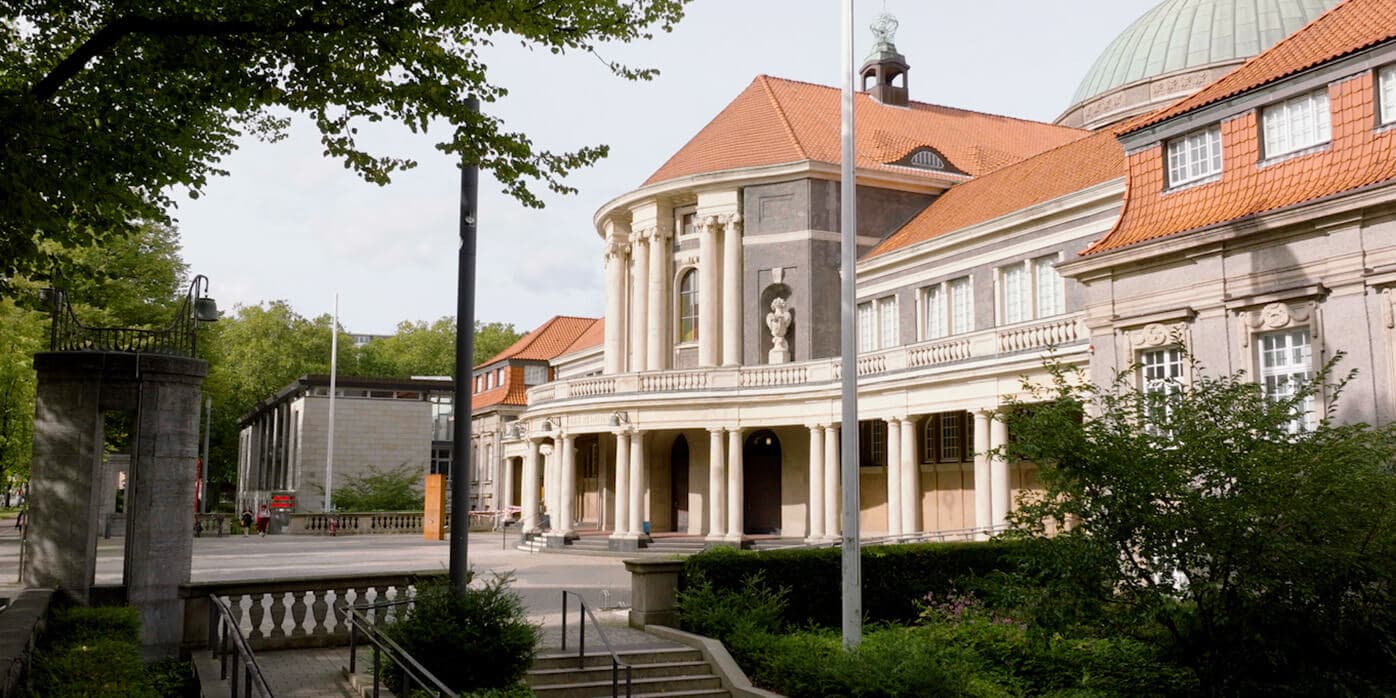
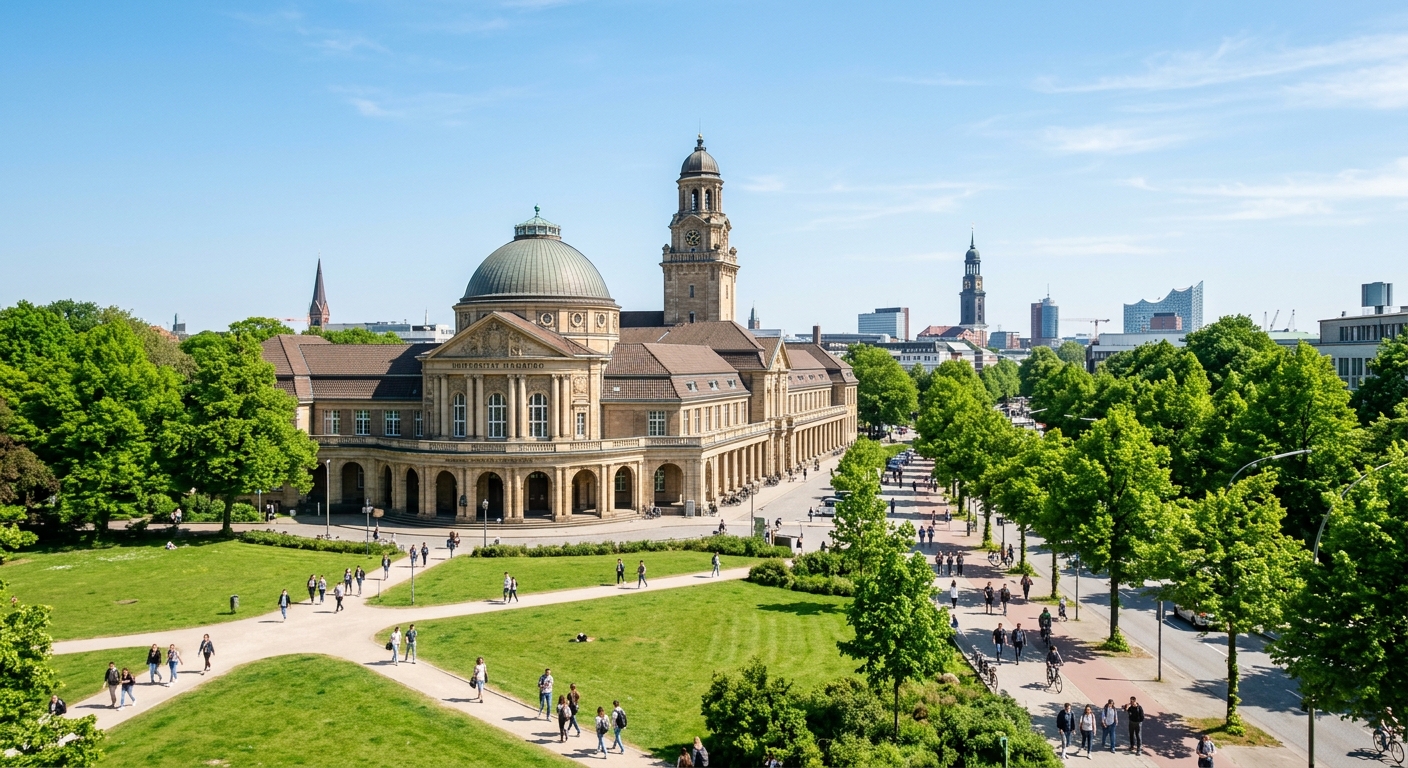
The University of Hamburg's main campus is centrally located in the Rotherbaum and Grindel neighborhoods, near Hamburg Dammtor station. The university comprises over 180 properties scattered throughout the city, including specialized research facilities, museums, botanical gardens, and the renowned Hamburg Observatory.
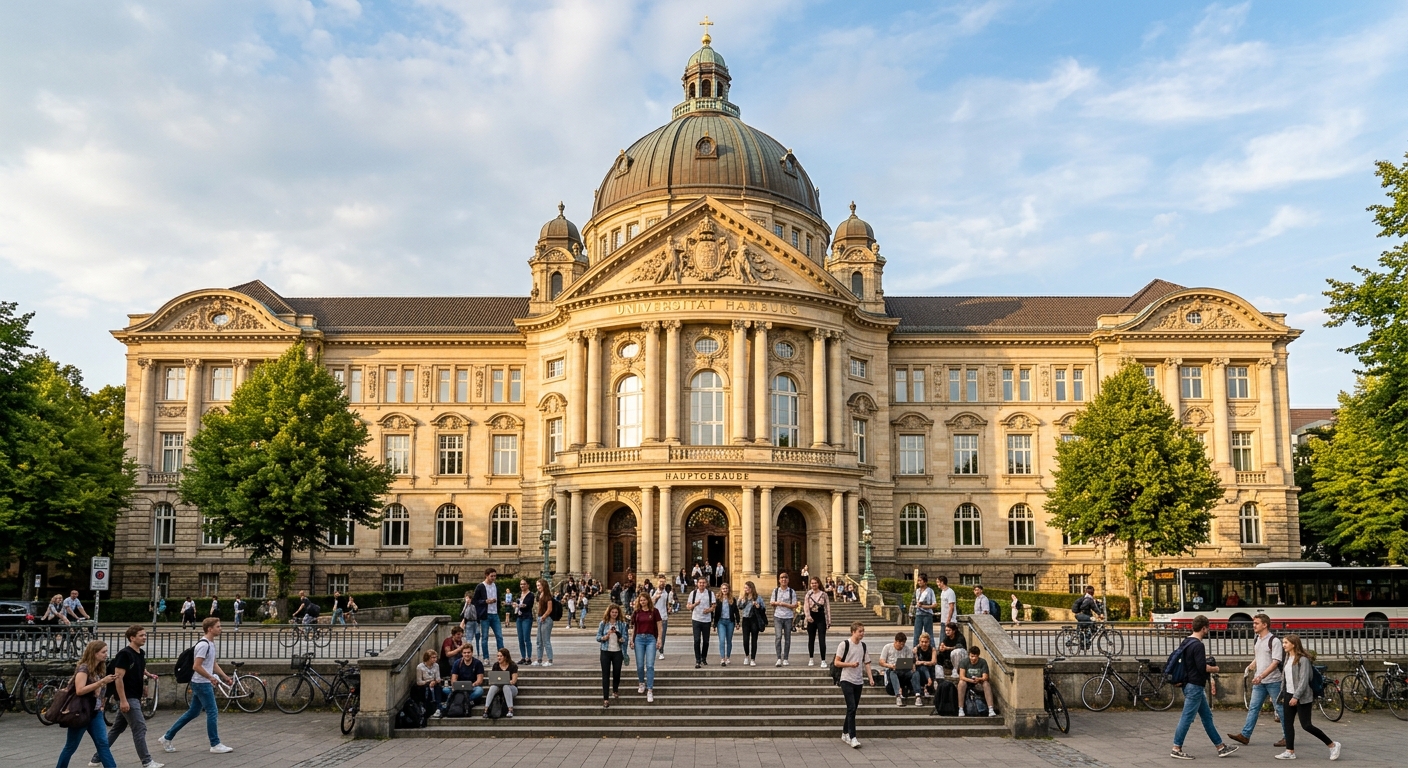
The iconic 1911 Main Building, donated by merchant Edmund Siemers, serves as the university's central landmark with its Neo-Baroque dome and seven lecture halls.

Founded in 1479, the Hamburg State and University Library Carl von Ossietzky contains over five million volumes and is the largest academic library in the Hamburg metropolitan area.

The university's botanical garden in Klein Flottbek offers students and the public a green oasis featuring diverse plant collections from around the world.
Housing and Student Services
Student Housing
Studierendenwerk Hamburg provides 23 housing facilities accommodating approximately 4,000 students. All rooms are furnished with rent including utilities starting at around EUR 230 per month.
- 23 student housing facilities across Hamburg
- Furnished rooms with utilities from EUR 230/month
- Private rental market also available throughout the city
Dining and Services
Studierendenwerk Hamburg operates multiple dining halls (Mensen) and cafeterias on campus, offering affordable meals for students. Additional student services include counseling, career advice, and childcare.
- Multiple campus dining halls with affordable meals
- Academic and psychological counseling services
- Family-friendly university with childcare support
Student Life at the University of Hamburg
Student Life at the University of Hamburg
The University of Hamburg offers a vibrant student life in one of Germany's most dynamic and multicultural cities. With a wide range of clubs, cultural activities, sports programs, and student organizations, there is something for every interest and background.
Hamburg: Germany's Gateway to the World
Hamburg: Germany's Gateway to the World
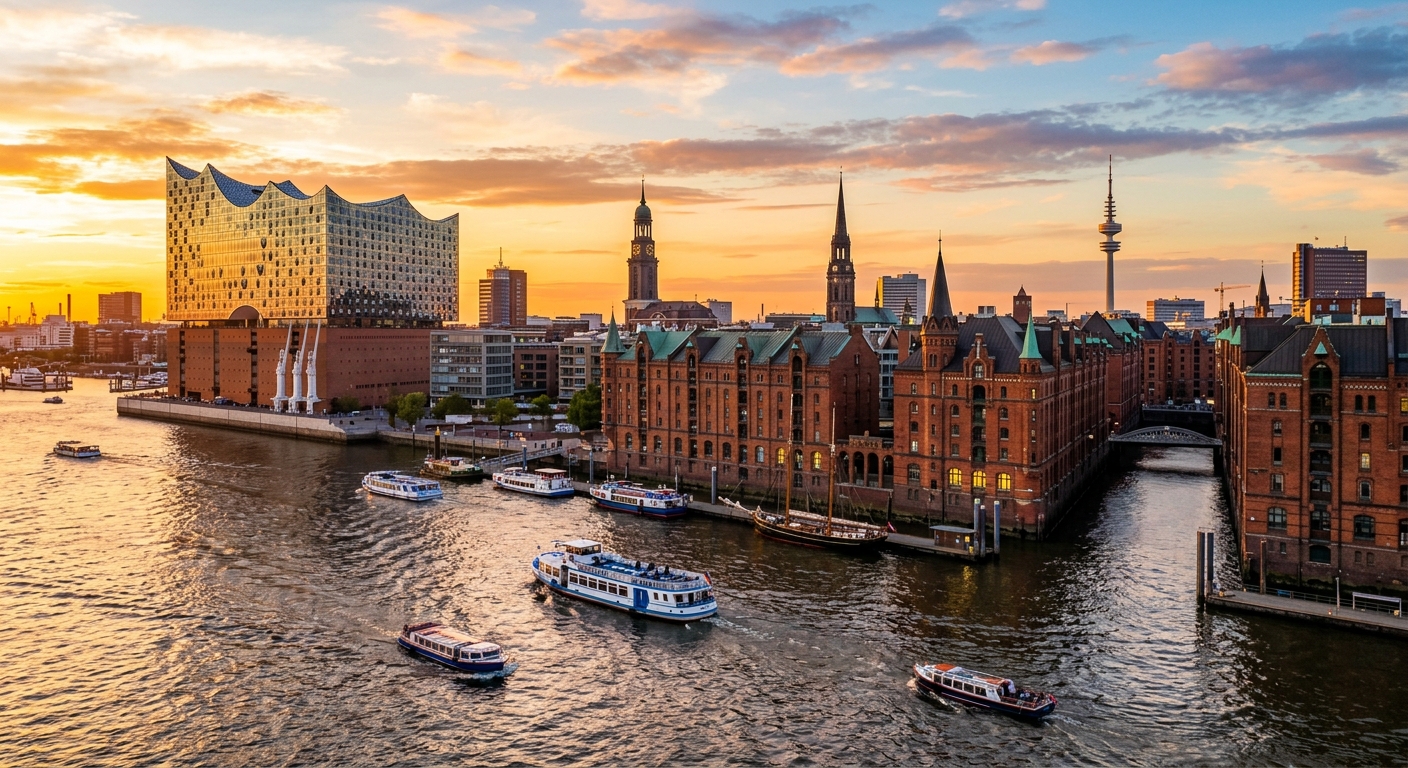
Life in Hamburg
Hamburg is Germany's second-largest city and one of Europe's most important port cities, known as the Gateway to the World. With its maritime flair, vibrant cultural scene, and strong economy, Hamburg offers international students an exceptional quality of life alongside excellent career opportunities.
Cultural Hub
Hamburg boasts a thriving cultural scene with theatres, the world-famous Elbphilharmonie concert hall, opera houses, musicals, festivals, museums, and galleries offering endless entertainment.
Economic Powerhouse
Home to major corporations, Hamburg is a leading center for media, aviation, logistics, and renewable energy, providing abundant internship and career opportunities for students.
Green and Livable
With the Alster Lake, the Elbe River, and numerous parks including Planten un Blomen, Hamburg offers a unique blend of urban life and natural beauty with excellent public transport.
International Atmosphere
As a major port city with a long history of global trade, Hamburg is one of Germany's most diverse and internationally oriented cities, welcoming students from around the world.
Career Outcomes and Alumni Network
Career Outcomes and Alumni Network
Notable Employers and Research Partners
Practical Information for International Students
Practical Information for International Students
For International Students
Non-EU students need a German student visa. You must provide proof of financial resources (a blocked account of approximately EUR 11,904 per year). After graduation, you can apply for an 18-month post-study residence permit to seek employment.
While many master's programs are available in English, learning German is highly recommended for daily life. The university and various institutions in Hamburg offer German language courses for international students.
Studierendenwerk Hamburg provides comprehensive support including housing assistance, dining services, financial counseling, BAföG advising, and psychological support for all enrolled students.
Key Contacts
- +90 5435286292
- +44 7868736984
- corporate@uni4edu.com
- info@uni4edu.com
University of Hamburg: Worldwide Rankings
University of Hamburg: Worldwide Rankings
The University of Hamburg consistently ranks among the top universities in Germany and worldwide, reflecting its strong research output, academic reputation, and international outlook. As one of only 11 Universities of Excellence in Germany, it is also ranked first in Germany for sustainability by the QS Sustainability Ranking.
| Subject | Ranking Body | Rank |
|---|---|---|
| Law | THE Subject Rankings | #66 |
| Physics and Astronomy | QS Subject Rankings | #97 |
| Arts and Humanities | THE Subject Rankings | #97 |
| Education | THE Subject Rankings | #82 |


Features
The University of Hamburg was founded in 1919 and is the largest university in northern Germany, enrolling over 42,800 students across eight faculties. It employs more than 15,300 academic and administrative staff and holds the title of University of Excellence under Germany's national excellence program.

Accommodation
Off-Campus Accommodations Students wishing to live off-campus need to research availability on their own, and should arrive well before the start of term to do so.

Work While Studying
See guidelines on working while studying here.

Co-op/Internship Participation
Even if you do NOT meet our minimum English requirement (IELTS or TOEFL), you still can get conditionally accepted in the program of your choice with the condition of completing our English program prior to starting your chosen program.
Average Time To Receive Acceptance Letter
June - July
4 week
Location
Mittelweg 177, 20148 Hamburg, Germany

Map not found.

Uni4Edu AI Assistant