
Nanotechnology (spec. Nanostructures and computer simulations in materials science) MSc
Wrzeszcz Campus, Poland

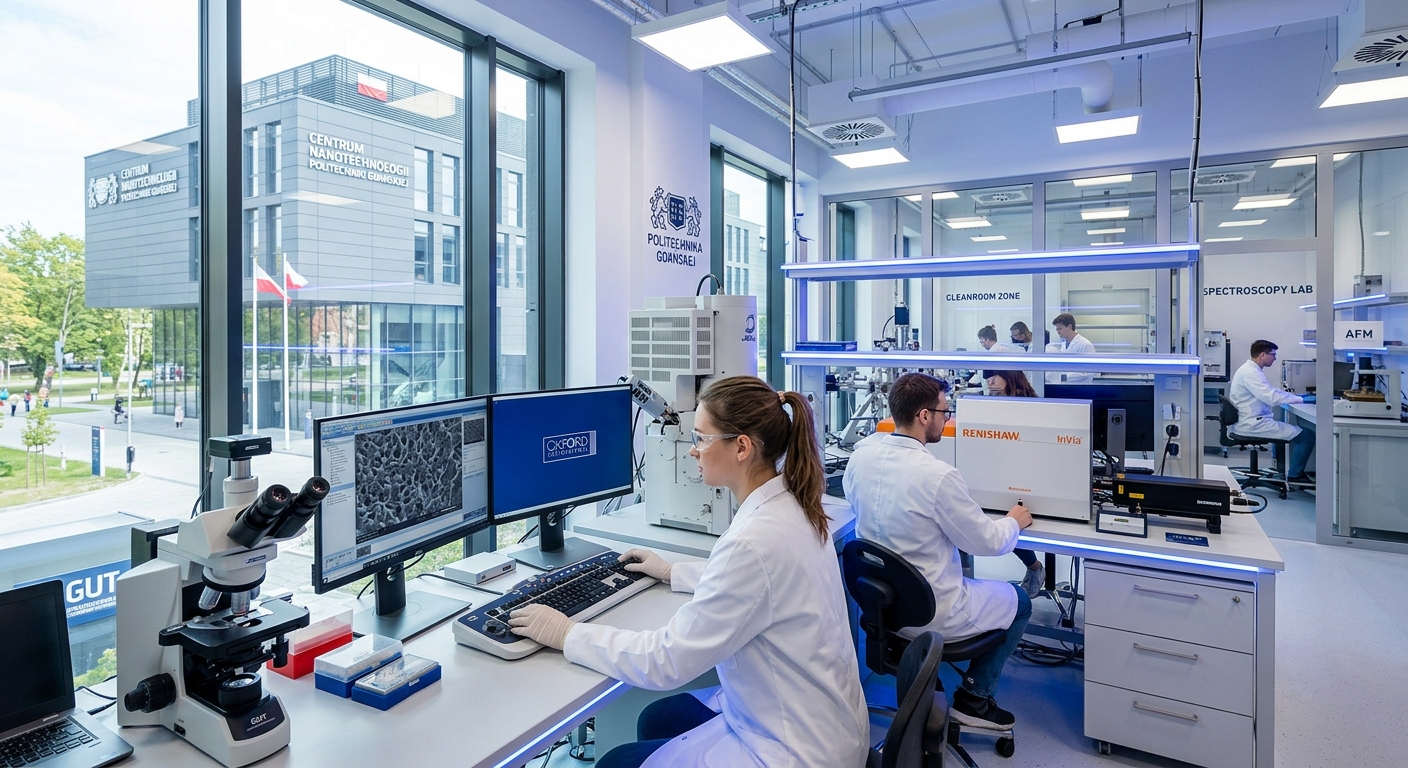
Nanotechnology (spec. Nanostructures and Computer Simulations in Materials Science) MSc
Gdansk University of Technology
Nanotechnology / Materials Science
Program Overview: Nanotechnology MSc at Gdansk University of Technology
The Nanotechnology MSc with specialization in Nanostructures and Computer Simulations in Materials Science at Gdansk University of Technology focuses on the design and analysis of innovative nanomaterials and functional materials. Upon successful completion, you are awarded the Master of Science in Engineering (magister inzynier) in Nanotechnology, a highly valued qualification across research and industry sectors.
This interdisciplinary program equips you with knowledge and skills in nanomaterials synthesis, advanced characterization techniques, and computer-aided materials modeling using classical and quantum molecular dynamics simulations. You will gain hands-on experience with state-of-the-art equipment including X-ray diffraction, electron microscopy, scanning probe microscopy, and various spectroscopy methods at the university's dedicated Nanotechnology Centre.
The program addresses global challenges in energy conversion and storage, electronics, spintronics, sensors, environmental protection, and biomedicine through nanoscale innovation. Top-performing graduates may also be eligible to pursue PhD studies, and select candidates can apply for interdisciplinary double-degree programs offered in collaboration with European partner universities.
Key Program Highlights
- Access to the dedicated Nanotechnology Centre with state-of-the-art laboratories and advanced experimental equipment
- Hands-on training in quantum and classical molecular dynamics simulations using the Academic Computer Centre in Gdansk (CI TASK)
- Interdisciplinary double-degree program opportunities with European partner universities for top candidates
- Pathway to PhD studies for the highest-achieving graduates in nanotechnology and materials science
Curriculum and Modules
The curriculum blends advanced theoretical knowledge with intensive laboratory practice and computational methods. You will study core modules covering the physics of materials, quantum methods, experimental nanotechnology, and simulation techniques across four semesters, culminating in a master's thesis research project.
Physics of Materials
6 ECTSCovers the fundamentals of materials physics with particular attention to relationships between atomic structure and macroscopic physical properties, including crystalline and glassy materials, phase transitions, and glass transition phenomena.
Computational Methods in Materials Science
6 ECTSIntroduces classical computational particle methods, primarily molecular dynamics simulations including integration of equations of motion, interatomic potentials, boundary conditions, thermostats, barostats, and the Ewald method.
Quantum Methods in Materials Science
6 ECTSFocuses on the application of quantum methods to electronic-structure problems in molecules and crystals, covering Hartree-Fock, DFT, CI, MCSCF, coupled cluster, and perturbation theory approaches along with basis set selection.
Experimental Nanotechnology
4 ECTSProvides hands-on laboratory experience with advanced characterization techniques including electron microscopy, scanning probe microscopy, X-ray diffraction, and various spectroscopy methods for nanomaterial analysis.
Nanotechnology and Society
5 ECTSExamines current developments, controversies, and publications in the field of nanotechnology, exploring the societal impact and ethical considerations of nanoscale research and applications.
Master's Thesis Research
24 ECTSAn independent research project conducted under faculty supervision, culminating in a thesis that demonstrates your ability to apply nanotechnology knowledge and computational or experimental methods to solve a materials science problem.
Elective Modules
Admission Requirements
Admission to the Nanotechnology MSc program is competitive and based on your academic background and qualifications. Candidates should hold a relevant bachelor's degree and demonstrate a strong foundation in the natural sciences. All applications and inquiries are handled through Uni4Edu.
Academic Requirements
- Bachelor's DegreeBSc in Nanotechnology, Materials Engineering, Technical Physics, or a closely related field
- Academic BackgroundStrong background in mathematics, physics, and chemistry at university level is highly recommended
- Minimum GPAContact Uni4Edu for current GPA requirements
- Related Fields AcceptedGraduates from other engineering or science programs may be considered if they demonstrate sufficient background in core subjects
- Double-Degree OptionTop candidates may apply for interdisciplinary double-degree programs with European partner universities
Language Requirements
- IELTSMinimum 6.0 overall (contact Uni4Edu for current requirements)
- TOEFL iBTMinimum 72 (contact Uni4Edu for current requirements)
- Alternative ProofPrevious degree taught in English or other recognized English proficiency certificates may be accepted
Required Documents
Application Deadlines
For personalized admission guidance, document verification, and application support, please contact Uni4Edu
Scholarships and Funding
Several scholarship and funding opportunities are available to international students pursuing the Nanotechnology MSc at Gdansk University of Technology. Uni4Edu can help you identify and apply for the most suitable financial support options based on your profile and eligibility.
Polish National Agency for Academic Exchange (NAWA) Scholarships
NAWA offers various scholarship programs for international students studying in Poland, covering living expenses and sometimes tuition. Eligibility criteria vary by program and nationality.
For detailed tuition fee information, please contact Uni4Edu — we will guide you through the costs and available funding options for this program.
Career Prospects
Graduates of the Nanotechnology MSc program are well-prepared for careers in research, industry, and academia. The program's focus on both experimental techniques and computational simulations gives you a versatile skill set that is in high demand across multiple sectors, from advanced manufacturing to biomedical innovation.
Potential Career Roles
Potential Employers and Sectors
Rankings and Recognition
Gdansk University of Technology (Gdansk Tech) is one of the oldest and most respected technical universities in Poland, founded in 1904. It holds international accreditations including EUA-IEP and is a member of the ENHANCE Alliance, CESAER, and EUA, reflecting its commitment to high-quality education and research.
| Subject | Ranking Body | Rank |
|---|---|---|
| Engineering & Technology | QS World University Rankings by Subject | #353 (3rd in Poland) |
| Natural Sciences | QS World University Rankings by Subject | #451-500 |
| Sustainability | QS Sustainability Rankings | #424 |
| Overall in Poland | Perspektywy University Ranking | #5 in Poland |
How to Apply
Applying for this program is easy with Uni4Edu. Our team will guide you through every step of the process — from document preparation to final enrolment.
Contact Uni4Edu
Reach out to our team via email or phone. We will assess your profile and confirm your eligibility for this program.
Prepare Your Documents
Our advisors will provide you with a personalised checklist of required documents and help you prepare your application package.
Submit Your Application
Uni4Edu will submit your application on your behalf and keep you updated on its progress throughout the review period.
Receive Your Offer
Once accepted, we will help you understand your offer, arrange visa support if needed, and guide you through the enrolment process.
Similar Programmes


Master's & Postgraduate
30 months
Computer Science (Conversion) (30 Months) MSc

London South Bank University, London, United Kingdom
Earliest Intake
October 2026
Gross Tuition
18750 £

Bachelor's Degree
12 months
Computer Science (Top-up)
University of Roehampton, London, United Kingdom
Earliest Intake
January 2027
Gross Tuition
17628 £

Bachelor's Degree
12 months
Web Design and Development (Top-up)
University of Roehampton, London, United Kingdom
Earliest Intake
June 2027
Gross Tuition
16950 £


Bachelor's Degree
48 months
Software Engineering BEng (Hons)
University of Bradford, Bradford, United Kingdom
Earliest Intake
June 2026
Gross Tuition
24456 £


Bachelor's Degree
48 months
Computer Information Systems
Loyola University New Orleans, New Orleans, United States
Earliest Intake
October 2026
Gross Tuition
47390 $



Uni4Edu AI Assistant