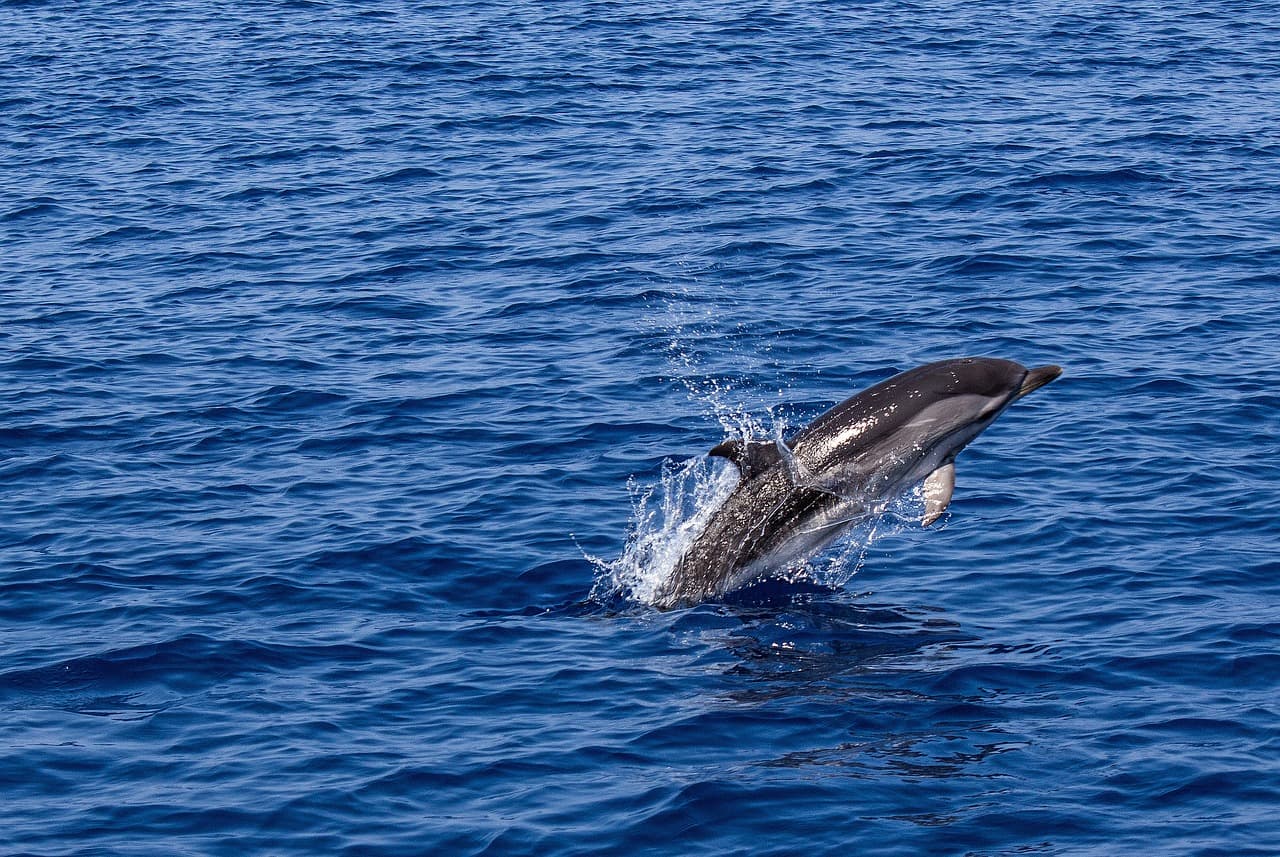
Wasserressourcen
San Marcos, Texas, USA, Vereinigte Staaten

Aquatic Resources
The aquatic resources program is a multidisciplinary program of study and research based on aquatic sciences and aquatic resource management.
Program Overview
Texas State's proximity to the San Marcos River and Spring Lake, the Meadows Center and the Freeman Aquatic Biology Building provides students with a unique opportunity for study and research. The location also offers students access to a diversity of exceptional aquatic ecosystems throughout the Texas Hill Country and the Edwards Aquifer.
Course Work
The Department of Biology at Texas State offers a Master of Science (M.S.) in Aquatic Resources, a thesis-based degree that requires a minimum of 30 credit hours of course work. Students take courses in statistics, seminars and elective courses, which include the ecology of aquatic ecosystems. They also carry out their own research project mentored by a biology faculty member and often in collaboration with state or federal agencies.
Program Details
Local resources give students the ability to study habitats for threatened or endangered species, develop and promote programs and techniques to ensure sustainable water resources.
Program Mission
The overall mission of the aquatic resources program is to:
- pursue questions related to aquatic resources at all levels of organization, from molecules to the biosphere, across a diversity of fields, including ecology, geology, hydrology, molecular and organismal biology, toxicology and resource management
- improve collective knowledge and literacy in the science of aquatic resources through experimental, theoretical and field research and disseminate this knowledge to the general public, academics, government and non-governmental organizations
- utilize knowledge of aquatic sciences and resources to address environmental, biological and societal issues the world currently faces
Related Programs: Ph.D. in Aquatic Resources and Integrative Biology
Career Options
Graduates enter careers in the fields of aquatic resource management, aquatic ecology and hydrogeology. Graduates are also able to find
research-oriented positions in government agencies, non-governmental organizations or the private sector. The program prepares students to teach at the community college level or to continue their education by pursuing doctoral studies.
Program Faculty
Faculty, as well as students, conduct research in the 30,000-square-foot Freeman Aquatic Biology Building which overlooks experimental ponds and the San Marcos River. It contains laboratories, a wet lab and an array of instruments for aquatic studies. The wet lab is equipped with holding troughs, artificial stream systems and aquaria for laboratory studies. Artesian well water from the Edwards Aquifer is continuously supplied to the wet lab and bioassay lab, ensuring a constant supply of high-quality water for research.
Ähnliche Programme
Bachelor-Abschluss
48 Monate
Biologie

McKendree Universität, Libanon, Vereinigte Staaten
Frühester Beginn
April 2026
Bruttostudiengebühren
34070 $

Master- und Postgraduiertenstudiengänge
24 Monate
Bachelor of Science in Aquatischer Biologie
Texas State University, San Marcos, Vereinigte Staaten
Frühester Beginn
Februar 2027
Bruttostudiengebühren
16380 $

Bachelor-Abschluss
48 Monate
Bachelor of Science (BSc Hons) in Biologischen Wissenschaften
Universität Dundee, Dundee City, Vereinigtes Königreich
Frühester Beginn
Juli 2026
Bruttostudiengebühren
27400 £
Bachelor-Abschluss
48 Monate
Biologie
Texas State University, San Marcos, Vereinigte Staaten
Frühester Beginn
Februar 2027
Bruttostudiengebühren
24520 $
Master- und Postgraduiertenstudiengänge
24 Monate
Ecology and Evolutionary Biology (MS)
Universität von Arizona, Tucson, Vereinigte Staaten
Frühester Beginn
Mai 2026
Bruttostudiengebühren
32065 $



Uni4Edu KI-Assistent