
University of Toronto
Toronto, Canada
University of Toronto
Toronto, Canada
Founded
1827
Institution Type
Public Research University
Total Students
102,000+
Acceptance Rate
~43%
Discover the University of Toronto: Canada's Leading Research University
Discover the University of Toronto: Canada's Leading Research University
Founded by royal charter in 1827 as King's College, the University of Toronto is Canada's largest university and one of the most prestigious research institutions in the world. Originally controlled by the Church of England, it became a secular institution and adopted its current name in 1850, evolving into a public research university with three campuses across the Greater Toronto Area.
The university operates as a collegiate institution on its historic downtown St. George campus, comprising 11 colleges each with substantial autonomy and distinct character. Two additional suburban campuses in Mississauga and Scarborough extend its reach, and together the three campuses offer over 700 undergraduate and more than 300 graduate programs across dozens of disciplines.
The University of Toronto is renowned for groundbreaking discoveries, including the discovery of insulin by Banting and Best in 1921 and the identification of stem cells in 1963. With over 720,000 alumni from 200 countries, 13 Nobel laureates, and 6 Turing Award winners affiliated with the institution, U of T continues to shape global research, innovation, and public life.
Key Milestones
- 1827: Founded as King's College by royal charter, becoming the first institution of higher learning in Upper Canada.
- 1850: Secularized and renamed the University of Toronto, opening its doors beyond Anglican affiliation.
- 1921: Frederick Banting and Charles Best discovered insulin at the university, transforming diabetes treatment worldwide.
- 1963: Stem cells were discovered at U of T, forming the basis for bone marrow transplantation and all subsequent stem cell research.
Academic Faculties and Programs at the University of Toronto
Academic Faculties and Programs at the University of Toronto
The University of Toronto is organized into numerous faculties and divisions spanning the full spectrum of academic disciplines. As of Fall 2025, the university offers over 700 undergraduate programs and more than 300 graduate programs, providing students with exceptional breadth and depth of study options across its three campuses.
Faculty of Arts and Science
The largest faculty at U of T, offering a comprehensive liberal arts education across the humanities, social sciences, and natural sciences on the St. George campus.
- Computer Science
- Economics
- Psychology
Faculty of Applied Science and Engineering
One of Canada's leading engineering schools, offering undergraduate and graduate programs in a wide range of engineering and applied science disciplines.
- Electrical and Computer Engineering
- Mechanical and Industrial Engineering
- Civil and Mineral Engineering
Temerty Faculty of Medicine
Canada's largest medical faculty, known for pioneering research in insulin, stem cells, and surgical innovation, with affiliations to ten fully affiliated teaching hospitals.
- Doctor of Medicine (MD)
- Medical Science (MSc/PhD)
- Rehabilitation Sciences
Rotman School of Management
A globally recognized business school offering undergraduate commerce, MBA, and specialized master's programs with strengths in finance, innovation, and leadership.
- Rotman Commerce (BCom)
- Master of Business Administration (MBA)
- Master of Financial Risk Management
Faculty of Law
One of Canada's top law schools, offering the Juris Doctor (JD) program and various combined degree options with a strong emphasis on interdisciplinary legal scholarship.
- Juris Doctor (JD)
- Master of Laws (LLM)
- Doctor of Juridical Science (SJD)
Ontario Institute for Studies in Education (OISE)
A leading graduate school of education dedicated to research and teacher training, offering programs in educational policy, curriculum studies, and developmental psychology.
- Master of Teaching (MT)
- Master of Arts in Education
- Doctor of Education (EdD)
Admission Requirements for the University of Toronto
Admission Requirements for the University of Toronto
Undergraduate Admission
- Academic StandingHigh school diploma with strong grades; competitive programs typically require mid-80s to 90s average
- English ProficiencyTOEFL iBT 89+ (with 22+ in writing) or IELTS 6.5+ (with 6.0+ in each band)
- Application PortalOntario Universities' Application Centre (OUAC) for all applicants
- Supplementary MaterialsSome programs require supplementary applications (e.g., Engineering personal profile, Rotman Commerce video interview)
- TranscriptsOfficial transcripts from all secondary and post-secondary institutions attended
Graduate Admission
- Degree RequirementBachelor's degree or equivalent from a recognized institution
- Minimum GPAB+ average (approximately 3.3/4.0) in the final two years of study, or equivalent
- English ProficiencyTOEFL iBT 93+ or IELTS 7.0+ (requirements vary by program)
- Supporting DocumentsLetters of recommendation, statement of purpose, CV/resume, and transcripts
- Standardized TestsGRE or GMAT may be required depending on the program
Early deadline for specific programs and scholarship applicants, including the Lester B. Pearson International Scholarship.
Standard deadline for most undergraduate programs for both domestic and international applicants via OUAC.
Graduate deadlines vary by department and program. Most fall between December and February. Check the School of Graduate Studies for specifics.
Deadline to indicate interest in on-campus residence for first-year students to qualify for the housing guarantee.
Tuition Fees and Scholarships at the University of Toronto
Tuition Fees and Scholarships at the University of Toronto
Tuition at the University of Toronto varies significantly depending on your program, citizenship status, and level of study. Domestic students benefit from government-subsidized rates, while international students pay substantially higher fees. All figures below are approximate for the 2025-2026 academic year in Canadian dollars.
| Fee Category | Domestic (CAD) | International (CAD) |
|---|---|---|
| Arts & Science (Undergraduate) | CAD 6,100 - 8,000 | CAD 60,000 - 62,000 |
| Engineering (Undergraduate) | CAD 16,090 | CAD 70,060 |
| Rotman Commerce (Undergraduate) | CAD 13,000 - 16,000 | CAD 60,000 - 65,000 |
| Graduate Programs (Typical Range) | CAD 5,940 - 46,270 | CAD 6,210 - 70,730 |
| Total | CAD 6,100 - 46,270 per year | CAD 48,090 - 70,730 per year |
Lester B. Pearson International Scholarship
The university's most prestigious award for international undergraduate students, recognizing exceptional academic achievement, creativity, and leadership. Approximately 37 scholars are selected each year.
- Coverage: Full tuition, books, incidental fees, and residence for 4 years
- Eligibility: International students nominated by their secondary school
- Application: School nomination required; separate scholarship application after U of T admission application
University of Toronto Scholars Program
Merit-based admission scholarships automatically awarded to outstanding incoming students based on academic performance. No separate application is required for most awards.
- Value: Varies; typically CAD 2,000 - 10,000 per year
- Eligibility: Domestic and international students with outstanding academic records
- Application: Automatic consideration upon admission application; some awards require a separate profile
Campus and Facilities at the University of Toronto
Campus and Facilities at the University of Toronto
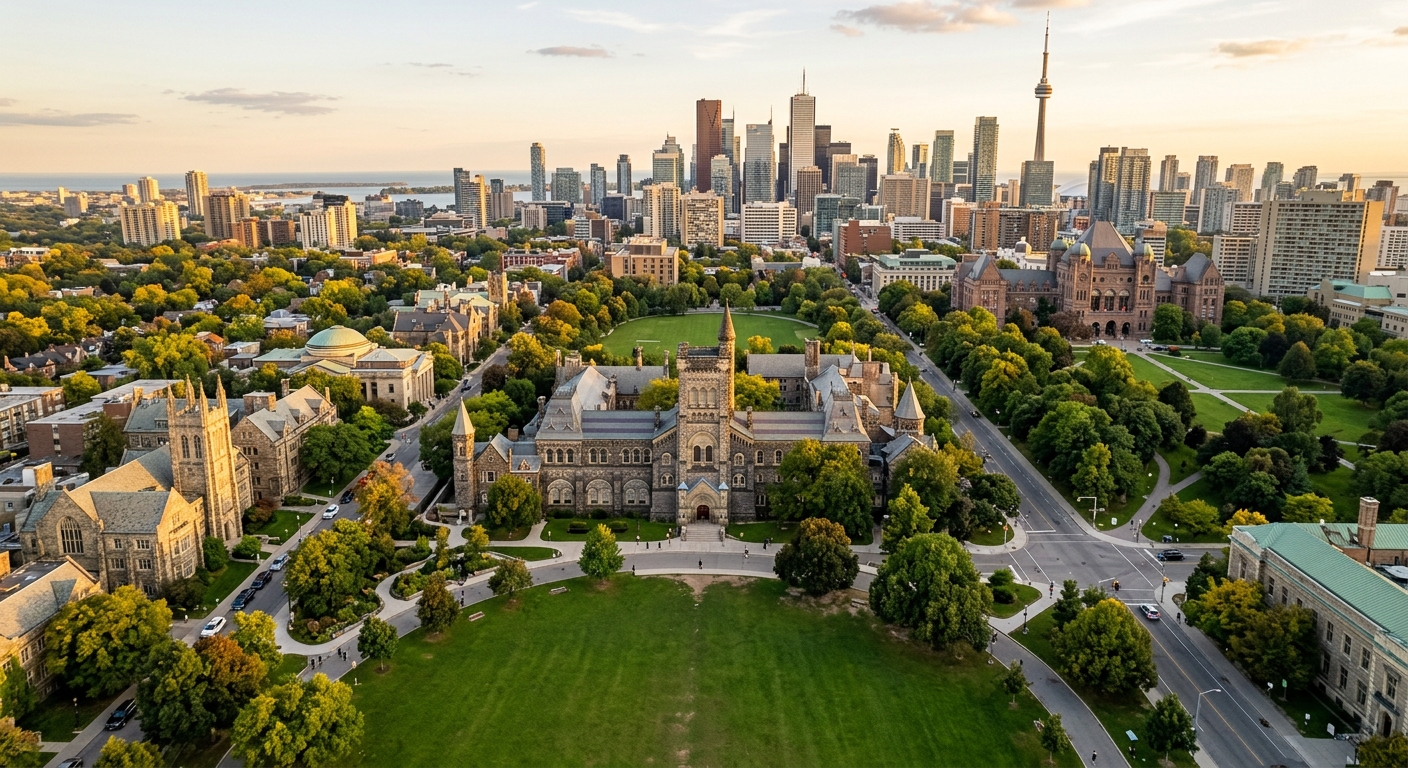
The University of Toronto operates three distinct campuses across the Greater Toronto Area, each offering a unique environment and academic community. The historic St. George campus in downtown Toronto is the university's largest and most iconic location, while the Mississauga and Scarborough campuses provide a more intimate suburban setting with modern facilities.
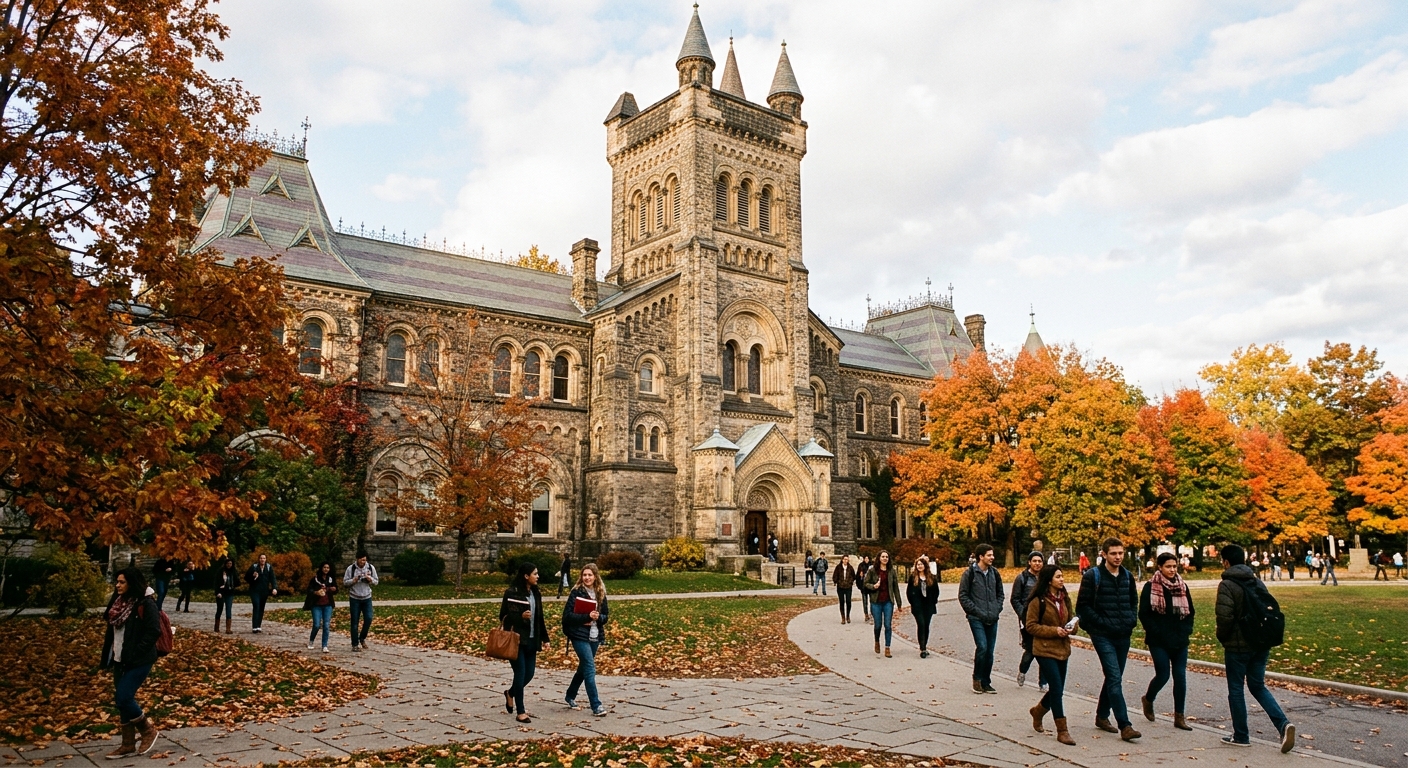
A National Historic Site and one of Canada's finest examples of Romanesque Revival architecture, University College has been the heart of the St. George campus since 1859.
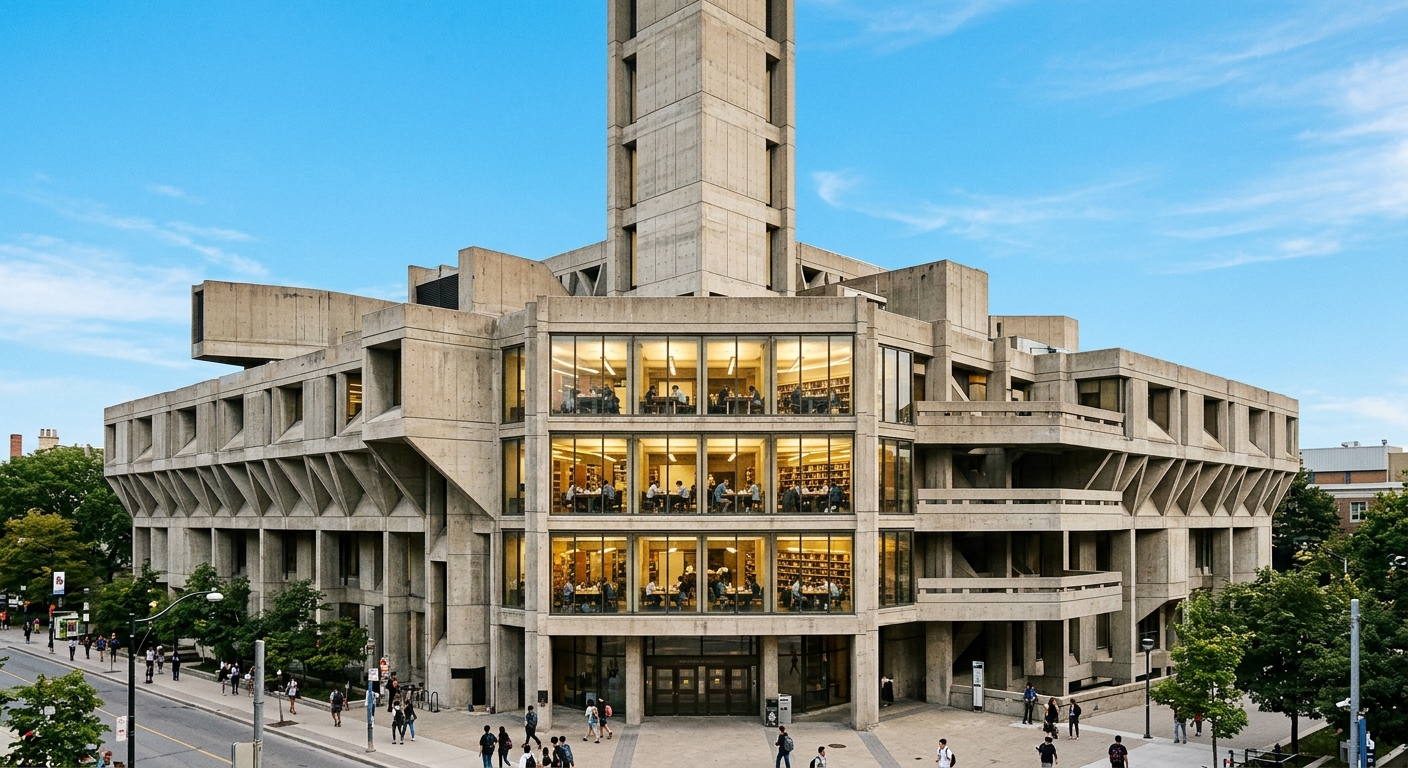
One of North America's largest academic libraries, Robarts Library houses millions of volumes and serves as a major research hub for students and scholars across all disciplines.
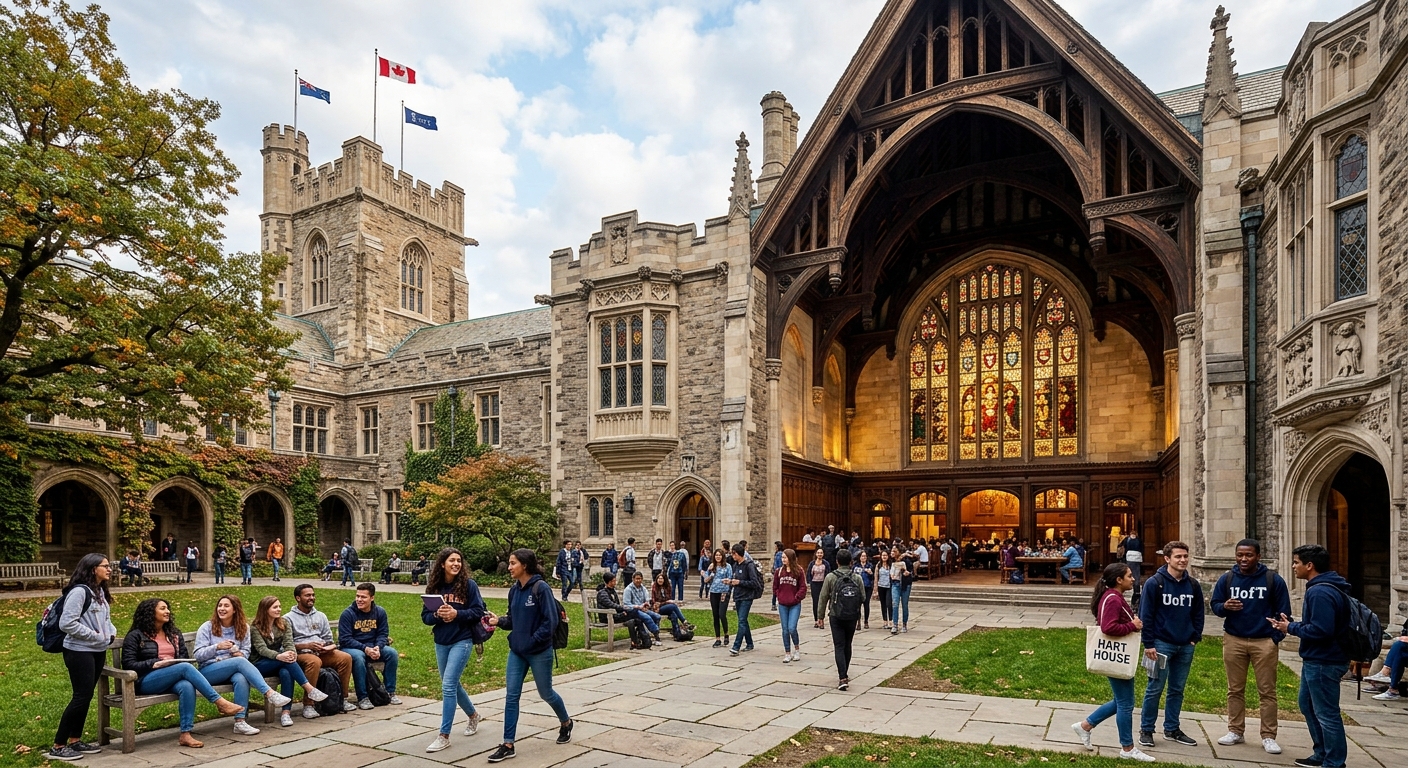
A cherished cultural and recreational center since 1919, Hart House hosts art galleries, a theatre, fitness facilities, debates, and student clubs in a stunning Gothic Revival setting.
Housing and Dining
On-Campus Residence
U of T guarantees residence for all new full-time first-year undergraduate students who apply by the March 31 deadline and accept their offer of admission by June 2.
- 11 residential colleges on St. George campus with distinct traditions
- Over 1,500 residence spaces at U of T Scarborough
- Modern townhouse and suite-style residences at U of T Mississauga
Dining and Meal Plans
Dining options range from traditional college dining halls to modern food courts and cafes spread across all three campuses, catering to diverse dietary needs.
- Multiple dining halls within residential colleges on St. George campus
- Flexible meal plan options for residence students
- Numerous cafes, restaurants, and food vendors across all campuses
Student Life at the University of Toronto
Student Life at the University of Toronto
Student life at U of T is vibrant and diverse, reflecting the multicultural character of Toronto itself. With hundreds of student organizations, cultural events, and recreational activities, students can find communities that match virtually any interest or passion across the university's three campuses.
Toronto: A World-Class City for Students
Toronto: A World-Class City for Students

Living and Studying in Toronto
Toronto is Canada's largest and most diverse city, home to over 2.9 million residents representing more than 200 ethnic groups. As a global hub for finance, technology, arts, and culture, it offers students unmatched access to internships, career opportunities, and a rich urban experience.
Cultural Diversity
Toronto is one of the most multicultural cities in the world, with over half its population born outside Canada. Neighborhoods like Kensington Market, Chinatown, and Little Italy reflect this rich cultural tapestry.
Economic Opportunities
As Canada's financial capital and a growing tech hub, Toronto hosts the headquarters of major banks, tech companies, and startups, providing abundant internship and employment prospects for students.
Transportation and Accessibility
The TTC subway, streetcar, and bus system connects the city efficiently. The St. George campus sits at a major subway interchange, making commuting convenient for students living off campus.
Arts, Entertainment, and Nature
From the Royal Ontario Museum and Toronto International Film Festival to the Toronto Islands and nearby Niagara Falls, the city offers world-class entertainment, dining, and easy access to natural landscapes.
Career Outcomes and Alumni Network
Career Outcomes and Alumni Network
Where U of T Graduates Work
Practical Information for Prospective Students
Practical Information for Prospective Students
For International Students
Provides comprehensive support for international students, including immigration advising, study permit guidance, cultural transition programs, and the mandatory University Health Insurance Plan (UHIP) enrollment.
The university offers English language support through writing centres, academic English courses, and conversation programs to help international students strengthen their academic communication skills.
International students can access merit-based scholarships, emergency bursaries, and work-study opportunities. A financial planning calculator is available on the university website to help estimate total costs.
Key Contacts
- +90 5435286292
- +44 7868736984
- corporate@uni4edu.com
- info@uni4edu.com
University of Toronto: World University Rankings
University of Toronto: World University Rankings
The University of Toronto consistently ranks as Canada's top university and among the leading public research institutions globally. It is the only university in the world to place in the top 50 across 46 specific subjects in the QS World University Rankings, and it ranks number one globally in the QS Sustainability Rankings.
| Subject | Ranking Body | Rank |
|---|---|---|
| Nursing | QS Subject Rankings | #4 |
| Data Science and AI | QS Subject Rankings | #10 |
| Computer Science | QS Subject Rankings | #12 |
| Education | QS Subject Rankings | #10 |


Features
Established in 1827, the University of Toronto is Canada’s leading public research institution. For the current academic cycle, the university supports a total enrollment of 102,431 students across its St. George, Mississauga, and Scarborough campuses. This massive academic community is supported by a workforce of approximately 26,700 faculty and staff members, including both full-time and part-time personnel. As a global leader in innovation and higher education, the institution continues to maintain its historic legacy while fostering a rigorous research environment in the heart of Canada’s largest city.

Accommodation
Off-Campus Accommodations Students wishing to live off-campus need to research availability on their own, and should arrive well before the start of term to do so.

Work While Studying
See guidelines on working while studying here.

Co-op/Internship Participation
Even if you do NOT meet our minimum English requirement (IELTS or TOEFL), you still can get conditionally accepted in the program of your choice with the condition of completing our English program prior to starting your chosen program.
Average Time To Receive Acceptance Letter
September - January
5 week
Location
27 King's College Cir, Toronto, ON M5S 1A1, Canada

Map not found.

Uni4Edu AI Assistant